Loading…
← All schools
University of Advancing Technology
Tempe, AZprivate forprofituat.edu
Acceptance
98%
Avg net price
$28,522
Earnings (10 yr)
$50,719
Graduation rate
35%
Admit rate has ranged 81%–95% over the last 5 years — notably volatile, though the latest figure above (98%) falls outside that window. Source: IPEDS via Urban Institute.
Acceptance & SAT from Common Data Set / IPEDS; net price, earnings & graduation from the U.S. Dept. of Education College Scorecard. Figures lag ~1–2 years — verify with the school.
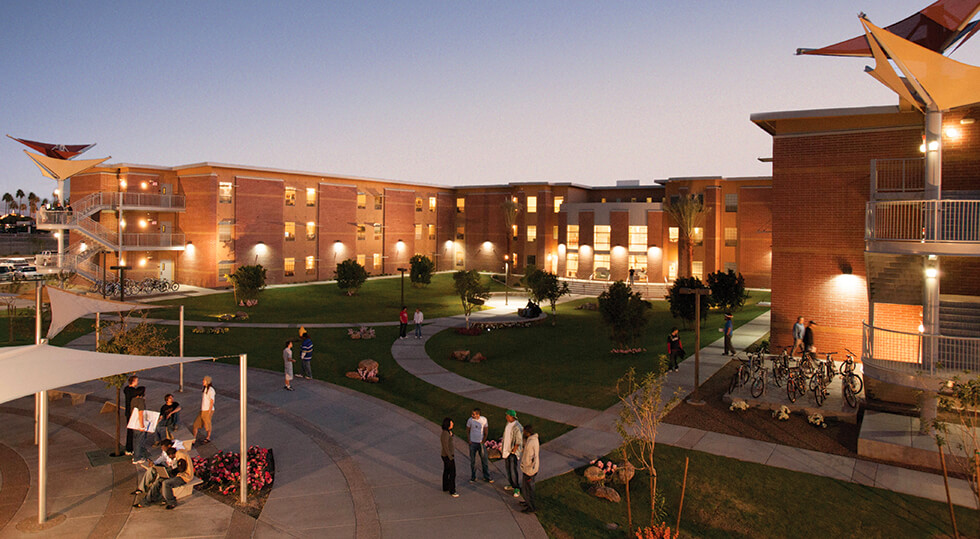
The University of Advancing Technology (UAT) is a small, for-profit tech school in Tempe, Arizona, that operates like a specialized incubator for gamers, coders, and cyber wizards. It’s defined by an almost open-door admissions policy and a curriculum laser-focused on applied tech degrees—from AI and robotics to game design—delivered in a hands-on, project-driven environment. The vibe is a tight-knit, slightly quirky campus where building robots and developing video games is the social currency, but students should be prepared for a high sticker price and graduation rates that lag behind the national average.
Admission requirements
Test-optional — scores considered if submitted
Required
- TOEFL (non-native English)
Considered (not required)
- High school transcript
- Grade point average
- Letters of recommendation
- Test scores (SAT/ACT)
- College-prep program
- Demonstrated competencies
Source: IPEDS Admissions survey (2022) via Urban Institute. Covers formal factors only — it does not reflect essays, extracurriculars, or other holistic criteria.
More details
- Undergrad enrollment
- 855
- In-state tuition
- $19,365
- Out-of-state tuition
- $19,365
- Campus Vibe
- Tech-focused, project-driven, small community
- Graduation Rate
- 35%
- Notable Feature
- Official campus cat
- Specialized Majors
- Game Design, AI, Cyber Security, Robotics
- Early Decision Plan
- Not offered
- Median Earnings (10yr)
- $50,719
- Student-to-Faculty Ratio
- 13:1
Outcomes & value
Outcomes & value
- Median earnings (10 yr)
- $50,719
- Value (earnings ÷ net price)
- 1.8×
- Median debt at graduation
- $28,812
- Graduation rate
- 35%
- First-year retention
- 77%
- Reducing loan balance (3 yr)
- 50%
- Pell (lower-income) share
- 57%
- First-gen share (among federal-aid recipients)
- 35%
Top-earning majors
Median earnings by field of study (highest credential), ~2 years after completion.
- Computer and Information Sciences, General$86,129
- Computer Programming$52,941
- Computer Software and Media Applications$25,580
Source: U.S. Dept. of Education College Scorecard (field-of-study earnings). Figures cover graduates who received federal aid and lag ~2 years; not all programs report data.
Compare on earnings: best colleges for Computer Science · best colleges for Information Technology
Campus & location
Campus safety
- On-campus violent crimes (2024)
- 0
- Per 1,000 students
- 0.00
On-campus criminal offenses classed as violent (murder/non-negligent manslaughter, rape, robbery, aggravated assault) for the most recent reported year. Source: U.S. Dept. of Education Campus Safety and Security (Clery Act). Counts reflect what’s reported to the school, and urban campuses often report more partly due to non-student incidents nearby — read alongside campus size and setting, not as a standalone safety verdict.
Climate
- Pleasant days / yr
- 93
- Summer high
- 105°F
- Winter low
- 42°F
- Annual rain
- 12.4"
- Natural-hazard risk
- Very High
Pleasant days counts days per year with a mean temperature of 55–75°F, a high at or below 90°F, a low at or above 45°F, and little precipitation — a transparent comfort measure, not a weighting we invented. Computed from Open-Meteo ERA5 daily history (2019–2023). Natural-hazard risk is the county’s composite rating from the FEMA National Risk Index.
Deep dive — research, future-scholar output & economic mobility
Research output
- Institutional h-index
- 21
- Scholarly works
- 175
Institutional research volume and impact from OpenAlex. The h-index reflects large research universities and will be low for teaching-focused liberal-arts colleges — not a measure of undergraduate quality.
Quick answers
- What is the acceptance rate at University of Advancing Technology?
- University of Advancing Technology's acceptance rate is approximately 98% (Tempe, AZ), based on the most recent figures we compiled from public and primary sources.
- How much does University of Advancing Technology cost?
- At University of Advancing Technology, the average net price (after aid) is about $28,522 per year. Actual cost varies with financial aid and residency.
- How many undergraduates attend University of Advancing Technology?
- University of Advancing Technology enrolls approximately 855 undergraduate students.
- Where is University of Advancing Technology located?
- University of Advancing Technology is located in Tempe, AZ.
Admissions
UAT’s admissions process is decidedly non-selective, functioning more as a gateway for students passionate about technology than a competitive filter. With an of 98%, the university is accessible to nearly all applicants. The process is test-flexible; while SAT or ACT scores are recommended, they are not required, and applicants can submit their high school GPA, a GED, or other forms of academic history to meet requirements. The university does not offer an Early Decision or Early Action plan, so all applicants are considered within a regular decision framework. There is no available data on whether UAT considers demonstrated interest in its admissions decisions. The admissions office emphasizes a for students who have completed at least four semesters of high school, seeking those with a clear inclination toward technology fields.
Compare University of Advancing Technology
vs Arizona Christian Universityvs Southwestern Collegevs Marian Universityvs Northwest Nazarene University
See colleges similar to University of Advancing Technology →Sources
- Common Data Set - GradGPT
- Common Data Set: Home
- Is there a common data set for graduate schools? - Facebook
- University of Advancing Technology - Data USA
- Common Data Set Ultimate Guide: Use It to Find the Right College
- UAT Student Achievement Data - University of Advancing Technology
- Admissions Requirements - University of Advancing Technology
- University of Advancing Technology - BigFuture College Search
- University of Advancing Technology Admissions - USNews.com
- University of Advancing Technology (UAT) (UAT)
- University of Advancing Technology Admissions & Acceptance - Niche