Admit rate has ranged 70%–84% over the last 5 years — notably volatile. Source: IPEDS via Urban Institute.
Acceptance & SAT from Common Data Set / IPEDS; net price, earnings & graduation from the U.S. Dept. of Education College Scorecard. Figures lag ~1–2 years — verify with the school.
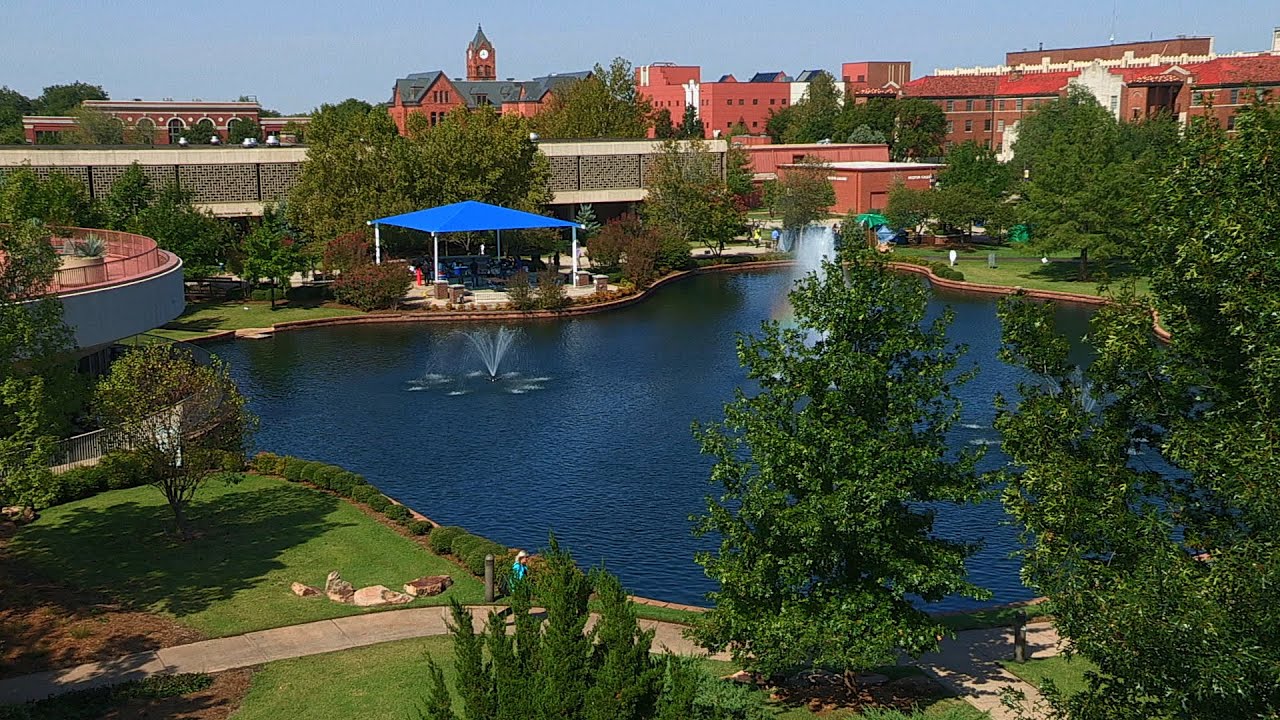
The University of Central Oklahoma (UCO) is a public university in Edmond, OK, known for its accessible admissions, hands-on learning approach, and strong regional reputation. With a 78% acceptance rate and a focus on undergraduate education, UCO attracts a mix of commuter and residential students, offering over 200 student organizations and a practical academic curriculum. Its affordability and emphasis on career readiness make it a solid choice for Oklahoma students seeking value.
Admission requirements
Test scores required
Required
High school transcript
Grade point average
Test scores (SAT/ACT)
TOEFL (non-native English)
Considered (not required)
Class rank
Letters of recommendation
College-prep program
Demonstrated competencies
Source: IPEDS Admissions survey (2022) via Urban Institute. Covers formal factors only — it does not reflect essays, extracurriculars, or other holistic criteria.
More details
Undergrad enrollment
10,170
In-state tuition
$8,818
Out-of-state tuition
$19,704
Notable Programs
Nursing, Business, Actuarial Science, Museum Studies
Student-Faculty Ratio
17:1
6-Year Graduation Rate
41%
Median 10-Year Earnings
$48,351
Outcomes & value
Outcomes & value
Median earnings (10 yr)
$48,351
Value (earnings ÷ net price)
2.6×
Median debt at graduation
$21,000
Graduation rate
37%
First-year retention
65%
Reducing loan balance (3 yr)
55%
Pell (lower-income) share
36%
First-gen share (among federal-aid recipients)
37%
Top-earning majors
Median earnings by field of study (highest credential), ~2 years after completion.
Electrical, Electronics, and Communications Engineering$68,499
Registered Nursing, Nursing Administration, Nursing Research and Clinical Nursing$61,192
Accounting and Related Services$55,625
Mechanical Engineering$55,512
Computer and Information Sciences, General$54,661
Public Health
Campus & location
Campus safety
On-campus violent crimes (2024)
1
Per 1,000 students
0.08
On-campus criminal offenses classed as violent (murder/non-negligent manslaughter, rape, robbery, aggravated assault) for the most recent reported year. Source: U.S. Dept. of Education Campus Safety and Security (Clery Act). Counts reflect what’s reported to the school, and urban campuses often report more partly due to non-student incidents nearby — read alongside campus size and setting, not as a standalone safety verdict.
Climate
Pleasant days / yr
79
Summer high
92°F
Winter low
33°F
Annual rain
36.8"
Annual snow
7.5"
Natural-hazard risk
Relatively High
Pleasant days counts days per year with a mean temperature of 55–75°F, a high at or below 90°F, a low at or above 45°F, and little precipitation — a transparent comfort measure, not a weighting we invented. Computed from Open-Meteo ERA5 daily history (2019–2023). Natural-hazard risk is the county’s composite rating from the FEMA National Risk Index.
Deep dive — research, future-scholar output & economic mobility▾
Research output
Institutional h-index
108
Scholarly works
3,520
Institutional research volume and impact from OpenAlex. The h-index reflects large research universities and will be low for teaching-focused liberal-arts colleges — not a measure of undergraduate quality.
Economic mobility
Mobility rate
1.7%
Bottom → top quintile
19%
From bottom quintile
9%
Mobility rate = the share of students who both start in the bottom household-income quintile and reach the top quintile; bottom → top is that chance conditional on starting at the bottom. Source: Opportunity Insights Mobility Report Cards (Chetty, Friedman, Saez, Turner & Yagan). Reflects 1980–82 birth cohorts, so it’s directional, not current.
Quick answers
What is the acceptance rate at University of Central Oklahoma?
University of Central Oklahoma's acceptance rate is approximately 78% (Edmond, OK), based on the most recent figures we compiled from public and primary sources.
How much does University of Central Oklahoma cost?
At University of Central Oklahoma, the average net price (after aid) is about $18,309 per year. Actual cost varies with financial aid and residency.
How many undergraduates attend University of Central Oklahoma?
University of Central Oklahoma enrolls approximately 10,170 undergraduate students.
Where is University of Central Oklahoma located?
University of Central Oklahoma is located in Edmond, OK.
Admissions
UCO maintains an accessible admissions process, with an of 78.1% (2024 data), admitting 4,574 out of 5,855 applicants. Test scores are considered but not required, with middle 50% ranges of ACT 19–24 and SAT 950–1140. The university emphasizes a , though applicants with a 2.7 GPA and top 50% class ranking (or ACT 20/SAT 1030) qualify for assured admission. While not highly selective, UCO’s acceptance rate has dipped slightly from earlier reports of 81–84%, reflecting modestly increasing competition.
Earnings = median of students working ~10 years after entry; debt = median of graduates. Value divides 10-yr earnings by one year’s net price — read it as earnings per dollar of annual cost, not a full lifetime ROI; it favors lower-cost schools. Source: U.S. Dept. of Education College Scorecard. Figures lag ~2 years and reflect all students, not your intended major.
$44,216
Management Information Systems and Services$43,426
Funeral Service and Mortuary Science$41,789
Source: U.S. Dept. of Education College Scorecard (field-of-study earnings). Figures cover graduates who received federal aid and lag ~2 years; not all programs report data.
UCO offers 120+ undergraduate programs across six colleges, with popular majors including General Studies, Nursing, and Business. The university emphasizes hands-on learning, notably in Actuarial Science, Addictions Counseling, and Museum Studies. Small class sizes (a 17:1 student-faculty ratio) and a focus on undergraduate research distinguish UCO from larger state schools. While its 4-year graduation rate is 26%, the 6-year rate climbs to 41%, reflecting its commuter-heavy student body. The College of Liberal Arts houses niche programs like Women’s, Gender, and Sexuality Studies, while the College of Business is a regional standout.
UCO’s campus vibe is commuter-dominated, with many students attending classes before returning home. Still, 200+ student organizations—from Greek life to leadership programs—provide engagement opportunities. Reddit users describe the social scene as "low-key but friendly," with on-campus housing catering to a smaller residential population. The Office of Student Engagement organizes events to foster community, though the lack of a robust football culture (unlike OU or OSU) keeps weekends quieter. Edmond’s suburban location offers easy access to Oklahoma City’s internships and entertainment.
UCO’s 6-year graduation rate is 41%, below the national midpoint for 4-year schools (59%), though its retention rate (65%) suggests students who persist find value. Alumni median 10-year earnings are $48,351, with the Wall Street Journal noting UCO’s strength in graduate salary growth and affordability. The university touts rankings for "best value" in Oklahoma, particularly for in-state students. Career-ready programs like Nursing and Accounting drive placement, though the extended time-to-degree reflects its non-traditional student base.
UCO’s average net price is $18,893/year after aid, with 81% of undergraduates receiving grants or scholarships. In-state tuition is a relative bargain, and the university promotes tools like its Net Price Calculator to estimate costs. While total attendance (including room/board) can reach ~$20K annually, UCO’s aid packages—often combining federal loans and institutional scholarships—make it one of Oklahoma’s more affordable 4-year options. The "College Affordability Estimator" helps families budget, though students should note the 65% retention rate may impact long-term costs.
UCO carves a niche as Oklahoma’s practical-choice university: accessible but steadily improving in selectivity, with a hands-on curriculum that prioritizes job readiness over prestige. Its Nursing and Business programs draw regional employers, while quirky offerings like Museum Studies and Addictions Counseling cater to specialized interests. The commuter vibe isn’t for everyone, but its 200+ clubs and Edmond location offer balance. For in-state students, UCO delivers solid ROI—ranking in the top 100 for affordability and graduate salaries—without the cutthroat competition of flagship schools.
University of Central Oklahoma logo · sourceUCO: About the University of Central Oklahoma · sourceUCO: About the University of Central Oklahoma · sourceCampus Tours - The University of Central Oklahoma · source