Loading…
← All schools
University of Connecticut-Stamford
Stamford, CTpublicstamford.uconn.edu
Acceptance
83%
SAT 25–75
930–1260
Avg net price
$16,798
Earnings (10 yr)
$73,997
Graduation rate
57%
Admit rate has ranged 76%–92% over the last 5 years — notably volatile. Source: IPEDS via Urban Institute.
Acceptance & SAT from Common Data Set / IPEDS; net price, earnings & graduation from the U.S. Dept. of Education College Scorecard. Figures lag ~1–2 years — verify with the school.
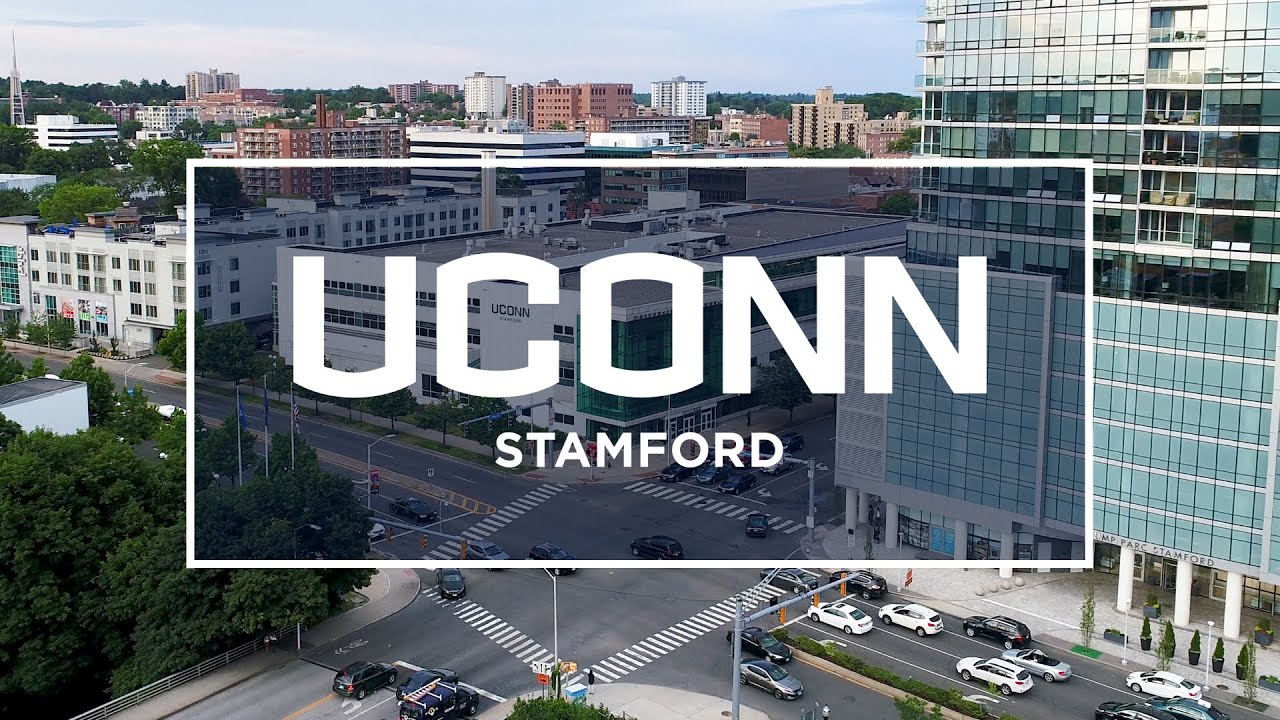
UConn-Stamford is the urban, career-focused satellite of Connecticut's flagship university, offering a pragmatic, high-access alternative to the sprawling main campus. It trades the classic college-town experience for immediate proximity to corporate internships and a downtown Stamford lifestyle, serving a notably diverse student body with a slate of business and tech-oriented majors. Think of it as a commuter-friendly, professionally-embedded launchpad where the classroom is steps away from the boardroom.
Admission requirements
Test scores required
Required
- High school transcript
- Grade point average
- Test scores (SAT/ACT)
- College-prep program
- TOEFL (non-native English)
Considered (not required)
- Class rank
- Letters of recommendation
Source: IPEDS Admissions survey (2022) via Urban Institute. Covers formal factors only — it does not reflect essays, extracurriculars, or other holistic criteria.
More details
- Undergrad enrollment
- 2,432
- In-state tuition
- $18,150
- Out-of-state tuition
- $40,818
- Graduation Rate
- 57%
- Student-Faculty Ratio
- 19:1
- Median Earnings (10yr)
- $73,997
- Positive Outcomes Rate
- 91%
Outcomes & value
Outcomes & value
- Median earnings (10 yr)
- $73,997
- Value (earnings ÷ net price)
- 4.4×
- Median debt at graduation
- $21,500
- Graduation rate
- 57%
- First-year retention
- 82%
- Reducing loan balance (3 yr)
- 78%
- Pell (lower-income) share
- 51%
- First-gen share (among federal-aid recipients)
- 27%
Earnings = median of students working ~10 years after entry; debt = median of graduates. divides 10-yr earnings by net price — read it as earnings per dollar of annual cost, not a full lifetime ROI; it favors lower-cost schools. Source: U.S. Dept. of Education College Scorecard. Figures lag ~2 years and reflect all students, not your intended major.
Top-earning majors
Median earnings by field of study (highest credential), ~2 years after completion.
- Industrial Engineering$82,440
- Computer Science$79,473
- Computer Engineering$74,262
- Electrical, Electronics, and Communications Engineering$70,917
- Registered Nursing, Nursing Administration, Nursing Research and Clinical Nursing$70,783
- Applied Mathematics
Campus & location
Campus safety
- On-campus violent crimes (2024)
- 0
On-campus criminal offenses classed as violent (murder/non-negligent manslaughter, rape, robbery, aggravated assault) for the most recent reported year. Source: U.S. Dept. of Education Campus Safety and Security (Clery Act). Counts reflect what’s reported to the school, and urban campuses often report more partly due to non-student incidents nearby — read alongside campus size and setting, not as a standalone safety verdict.
Climate
- Pleasant days / yr
- 95
- Summer high
- 82°F
- Winter low
- 28°F
- Annual rain
- 55.9"
- Annual snow
- 22.1"
Pleasant days counts days per year with a mean temperature of 55–75°F, a high at or below 90°F, a low at or above 45°F, and little precipitation — a transparent comfort measure, not a weighting we invented. Computed from Open-Meteo ERA5 daily history (2019–2023).
Quick answers
- What is the acceptance rate at University of Connecticut-Stamford?
- University of Connecticut-Stamford's acceptance rate is approximately 83% (Stamford, CT), based on the most recent figures we compiled from public and primary sources.
- What SAT score do you need for University of Connecticut-Stamford?
- Admitted students at University of Connecticut-Stamford typically score 930–1260 on the SAT (the middle-50% range). Scores outside this band are still admitted, especially with strong applications.
- How much does University of Connecticut-Stamford cost?
- At University of Connecticut-Stamford, the average net price (after aid) is about $16,798 per year. Actual cost varies with financial aid and residency.
- How many undergraduates attend University of Connecticut-Stamford?
- University of Connecticut-Stamford enrolls approximately 2,432 undergraduate students.
- Where is University of Connecticut-Stamford located?
- University of Connecticut-Stamford is located in Stamford, CT.
Admissions
Admission to UConn-Stamford is markedly less selective than to the flagship Storrs campus, functioning as a critical access point for Connecticut residents. The campus reports an around 80%, a figure that aligns with the broader university's high in-state acceptance rate—about 89% of in-state applicants were accepted to one of UConn's campuses for fall 2025. For the admitted class, the middle 50% SAT range is 930–1260, significantly lower than the university-wide average reported for Storrs. The campus does participate in UConn's binding Early Decision program, which historically has had an acceptance rate around 60% for the university overall, compared to a regular decision rate near 52%. Demonstrated interest is a factor in admissions, as the Section C7 is used by colleges to rank its importance, though the specific UConn-Stamford rating is not detailed in the provided sources. The process is standardized-, with ranges representing only those admitted students who chose to submit scores.
Compare University of Connecticut-Stamford
vs CUNY Graduate School and University Centervs Rutgers University-Camdenvs Rutgers University-Newarkvs Ramapo College of New Jersey
See colleges similar to University of Connecticut-Stamford →Sources
- [PDF] Common Data Set 2024-2025 - University of Connecticut
- [PDF] Common Data Set 2022-2023
- Stanford Common Data Set
- Common Data Set: Home
- Common Data Set - GradGPT
- Common Data Set Repository - College Transitions
- University Of Connecticut Stamford Admissions - BigFuture
- University of Connecticut-Stamford Acceptance Rate & Average GPA
- This Year's UConn Admission Requirements - PrepScholar
- University of Connecticut-Stamford | Class of 2030 Community
- University of Connecticut-Stamford Acceptance Rate - College Raptor