Loading…
← All schools
University of Maine at Augusta
Augusta, MEpublicwww.uma.edu/
Avg net price
$10,924
Earnings (10 yr)
$40,342
Graduation rate
27%
Acceptance & SAT from Common Data Set / IPEDS; net price, earnings & graduation from the U.S. Dept. of Education College Scorecard. Figures lag ~1–2 years — verify with the school.
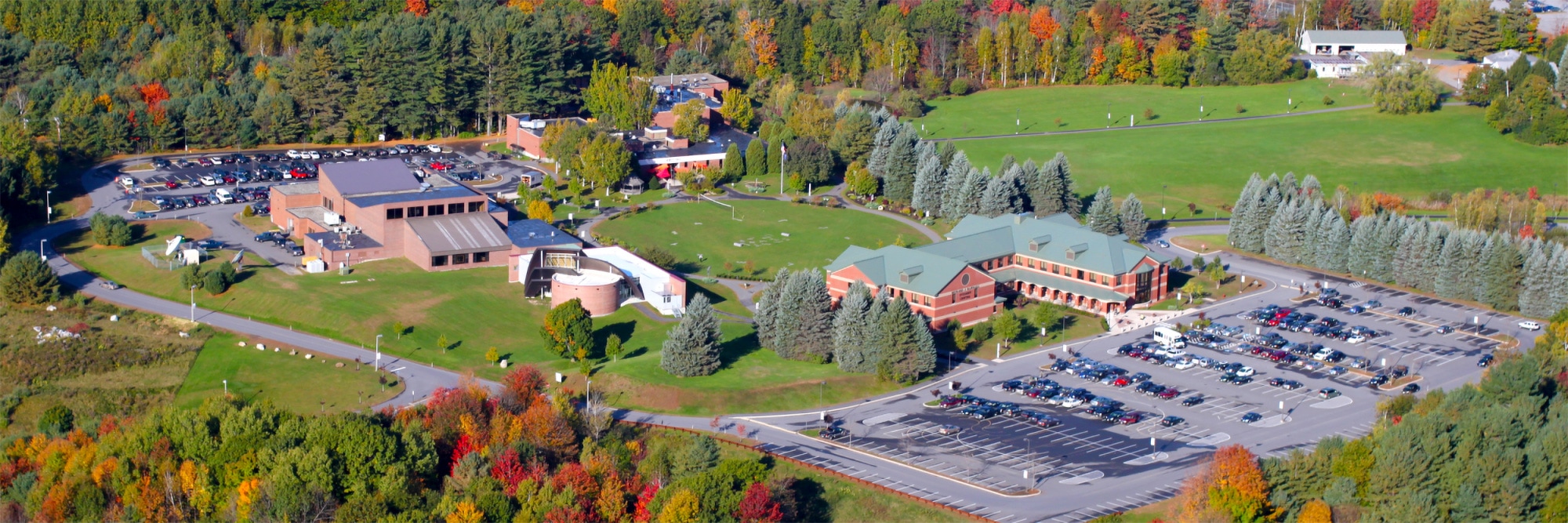
The University of Maine at Augusta is Maine's public university for adult learners, commuters, and career-changers—a place where open admissions meet practical, career-focused degrees. With campuses in Augusta and Bangor and a robust online presence, UMA operates less as a traditional residential college and more as a statewide engine for workforce development and upward mobility. Its character is defined by accessibility, flexibility, and a mission to serve students who might not fit the mold of a typical four-year undergraduate.
More details
- Undergrad enrollment
- 2,659
- In-state tuition
- $8,888
- Out-of-state tuition
- $22,178
- Graduation Rate
- 27%
- Notable Program
- Aviation (competitive, 20 slots/year)
- Application Deadline
- Rolling
- Median Earnings (10yr)
- $40,342
Outcomes & value
Outcomes & value
- Median earnings (10 yr)
- $40,342
- Value (earnings ÷ net price)
- 3.7×
- Median debt at graduation
- $22,734
- Graduation rate
- 27%
- First-year retention
- 60%
- Reducing loan balance (3 yr)
- 40%
- Pell (lower-income) share
- 33%
- First-gen share (among federal-aid recipients)
- 51%
Top-earning majors
Median earnings by field of study (highest credential), ~2 years after completion.
- Registered Nursing, Nursing Administration, Nursing Research and Clinical Nursing$53,358
- Computer and Information Sciences, General$49,937
- Business Administration, Management and Operations$33,637
- Accounting and Related Services$33,281
- Liberal Arts and Sciences, General Studies and Humanities$29,956
- Mental and Social Health Services and Allied Professions
Campus & location
Campus safety
- On-campus violent crimes (2024)
- 0
- Per 1,000 students
- 0.00
On-campus criminal offenses classed as violent (murder/non-negligent manslaughter, rape, robbery, aggravated assault) for the most recent reported year. Source: U.S. Dept. of Education Campus Safety and Security (Clery Act). Counts reflect what’s reported to the school, and urban campuses often report more partly due to non-student incidents nearby — read alongside campus size and setting, not as a standalone safety verdict.
Climate
- Pleasant days / yr
- 90
- Summer high
- 78°F
- Winter low
- 17°F
- Annual rain
- 49.9"
- Annual snow
- 52.8"
- Natural-hazard risk
- Relatively Low
Pleasant days counts days per year with a mean temperature of 55–75°F, a high at or below 90°F, a low at or above 45°F, and little precipitation — a transparent comfort measure, not a weighting we invented. Computed from Open-Meteo ERA5 daily history (2019–2023). Natural-hazard risk is the county’s composite rating from the FEMA National Risk Index.
Deep dive — research, future-scholar output & economic mobility
Research output
- Institutional h-index
- 50
- Scholarly works
- 569
Institutional research volume and impact from OpenAlex. The h-index reflects large research universities and will be low for teaching-focused liberal-arts colleges — not a measure of undergraduate quality.
Quick answers
- How much does University of Maine at Augusta cost?
- At University of Maine at Augusta, the average net price (after aid) is about $10,924 per year. Actual cost varies with financial aid and residency.
- How many undergraduates attend University of Maine at Augusta?
- University of Maine at Augusta enrolls approximately 2,659 undergraduate students.
- Where is University of Maine at Augusta located?
- University of Maine at Augusta is located in Augusta, ME.
Admissions
UMA's admissions process is designed for maximum accessibility, reflecting its mission as a public, open-enrollment institution serving a non-traditional student body. The university reports an of 99% for the 2025-26 academic year, with 40% of accepted students ultimately enrolling. There is no Early Decision or Early Action program mentioned in the available s for the University of Maine system; admissions operate on a rolling basis. The process appears straightforward, with the admissions team positioned as a resource to "help you explore your options and take the next step." Standardized test scores (SAT/ACT) are not a focal point of admissions discourse; the emphasis is instead on providing a pathway to higher education for a broad range of applicants, including many who may be returning to school or balancing studies with work and family.
Academics
Academics at UMA are unapologetically pragmatic, built around programs that lead directly to professional careers. The university offers 25 different baccalaureate programs, 9 post-baccalaureate programs, 3 master's degrees, and 3 graduate certificates. Its academic portfolio is a mix of applied sciences and liberal arts, designed to provide career mobility. Signature and notable programs include:
Compare University of Maine at Augusta
vs Coppin State Universityvs Lincoln Universityvs SUNY College at Potsdamvs University of West Alabama
See colleges similar to University of Maine at Augusta →Sources
- Common Data Set - Office of Institutional Research and ...
- Common Data Set 2022-2023
- Common Data Set Archive - University of Southern Maine
- Common Data Set: Home
- Student Facts
- University of Maine Common Data Set, 2020-2021
- University of Maine at Augusta: Augusta • Bangor • Online • Statewide
- University of Maine--Augusta
- University of Maine at Augusta
- Acceptance Rate, SAT, ACT & GPA
- GPA requirements