Admit rate has ranged 66%–77% over the last 5 years — notably volatile. Source: IPEDS via Urban Institute.
Acceptance & SAT from Common Data Set / IPEDS; net price, earnings & graduation from the U.S. Dept. of Education College Scorecard. Figures lag ~1–2 years — verify with the school.
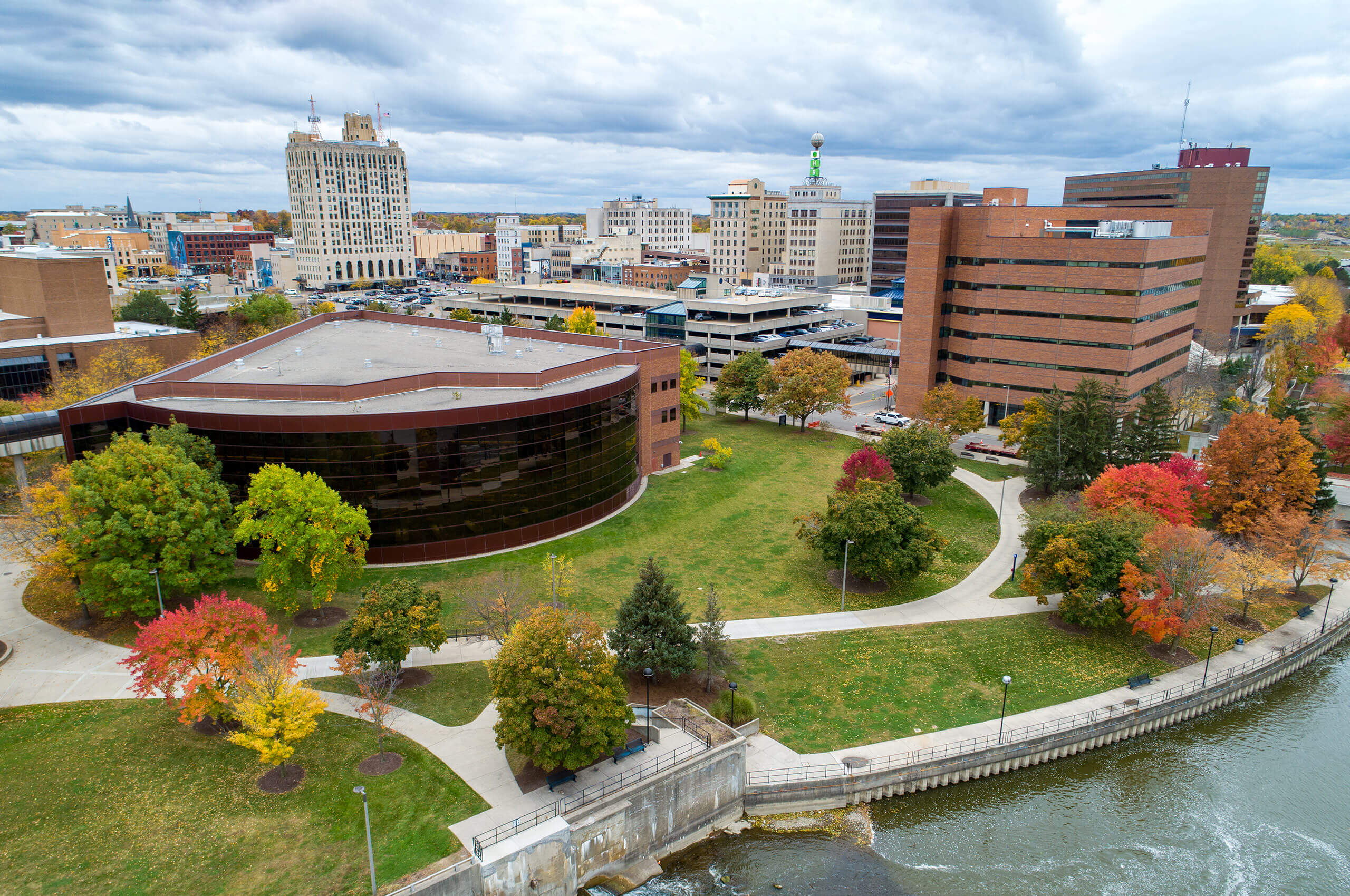
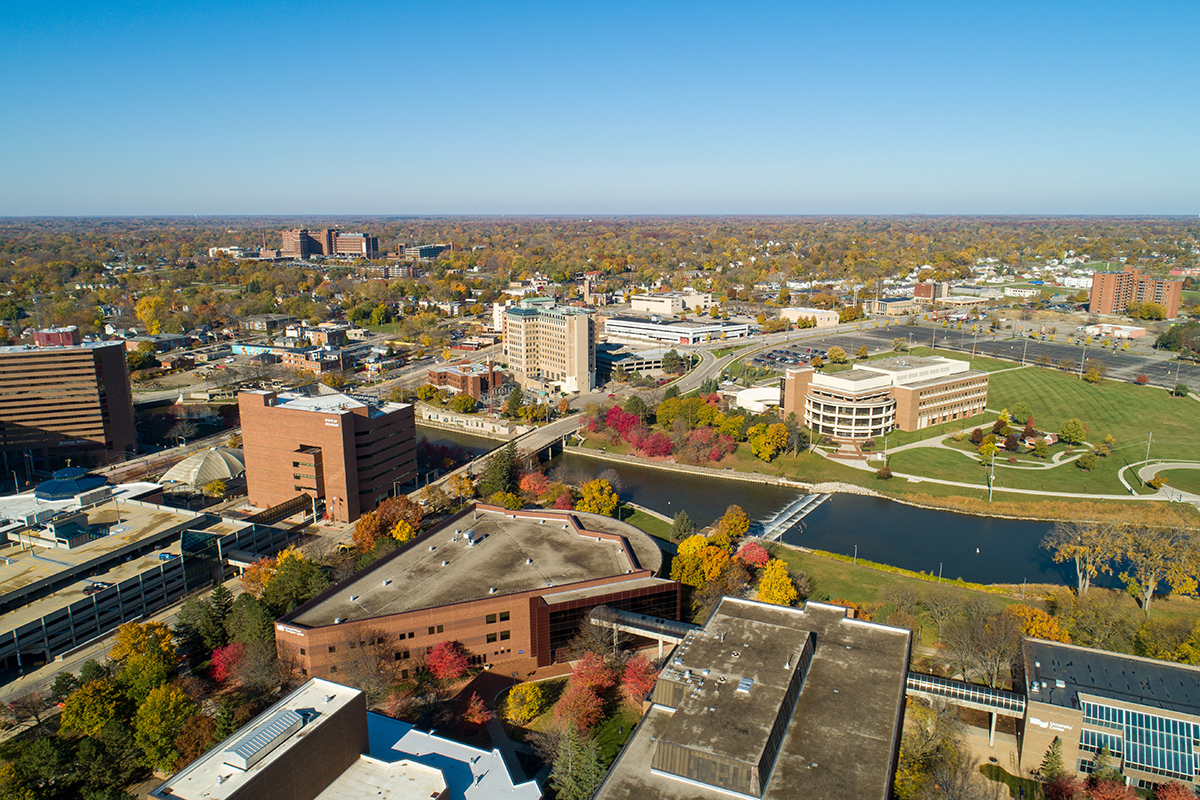
The University of Michigan-Flint carves out a distinct identity as the accessible, urban, and pragmatic sibling in the vaunted University of Michigan system. It’s a commuter-centric campus where the academic focus is intensely practical, anchored by health professions, business, and engineering programs designed for working adults and first-generation students. The vibe is no-frills and career-focused, offering a genuine Michigan degree at a public-university price, with a student life that’s more about finding community in over 100 clubs than a traditional residential college experience.
Admission requirements
Test-optional — scores considered if submitted
Required
High school transcript
Grade point average
TOEFL (non-native English)
Considered (not required)
Test scores (SAT/ACT)
Source: IPEDS Admissions survey (2022) via Urban Institute. Covers formal factors only — it does not reflect essays, extracurriculars, or other holistic criteria.
More details
Undergrad enrollment
4,411
In-state tuition
$14,704
Out-of-state tuition
$28,320
Popular Majors
Health Professions, Business
Graduation Rate
40%
Key Aid Program
Go Blue Guarantee (free tuition for eligible MI students)
Student Organizations
100+
Median Earnings (10yr)
$53,230
Average Need-Based Grant (First-Year)
$10,817
First-Year Students Receiving Need-Based Aid
74%
Outcomes & value
Outcomes & value
Median earnings (10 yr)
$53,230
Value (earnings ÷ net price)
7.6×
Median debt at graduation
$25,000
Graduation rate
40%
First-year retention
78%
Reducing loan balance (3 yr)
41%
Pell (lower-income) share
39%
First-gen share (among federal-aid recipients)
37%
Top-earning majors
Median earnings by field of study (highest credential), ~2 years after completion.
Mechanical Engineering$70,776
Registered Nursing, Nursing Administration, Nursing Research and Clinical Nursing$65,937
Information Science/Studies$63,005
Computer Science$54,869
Multi/Interdisciplinary Studies, Other$46,087
Finance and Financial Management Services
Campus & location
Campus safety
On-campus violent crimes (2024)
1
Per 1,000 students
0.17
On-campus criminal offenses classed as violent (murder/non-negligent manslaughter, rape, robbery, aggravated assault) for the most recent reported year. Source: U.S. Dept. of Education Campus Safety and Security (Clery Act). Counts reflect what’s reported to the school, and urban campuses often report more partly due to non-student incidents nearby — read alongside campus size and setting, not as a standalone safety verdict.
Climate
Pleasant days / yr
92
Summer high
81°F
Winter low
21°F
Annual rain
36.2"
Annual snow
33.4"
Natural-hazard risk
Relatively Moderate
Pleasant days counts days per year with a mean temperature of 55–75°F, a high at or below 90°F, a low at or above 45°F, and little precipitation — a transparent comfort measure, not a weighting we invented. Computed from Open-Meteo ERA5 daily history (2019–2023). Natural-hazard risk is the county’s composite rating from the FEMA National Risk Index.
Deep dive — research, future-scholar output & economic mobility▾
Research output
Institutional h-index
127
Scholarly works
4,995
Institutional research volume and impact from OpenAlex. The h-index reflects large research universities and will be low for teaching-focused liberal-arts colleges — not a measure of undergraduate quality.
Economic mobility
Mobility rate
1.6%
Bottom → top quintile
26%
From bottom quintile
6%
Mobility rate = the share of students who both start in the bottom household-income quintile and reach the top quintile; bottom → top is that chance conditional on starting at the bottom. Source: Opportunity Insights Mobility Report Cards (Chetty, Friedman, Saez, Turner & Yagan). Reflects 1980–82 birth cohorts, so it’s directional, not current.
Quick answers
What is the acceptance rate at University of Michigan-Flint?
University of Michigan-Flint's acceptance rate is approximately 70% (Flint, MI), based on the most recent figures we compiled from public and primary sources.
What SAT score do you need for University of Michigan-Flint?
Admitted students at University of Michigan-Flint typically score 970–1243 on the SAT (the middle-50% range). Scores outside this band are still admitted, especially with strong applications.
How much does University of Michigan-Flint cost?
At University of Michigan-Flint, the average net price (after aid) is about $7,007 per year. Actual cost varies with financial aid and residency.
How many undergraduates attend University of Michigan-Flint?
University of Michigan-Flint enrolls approximately 4,411 undergraduate students.
Where is University of Michigan-Flint located?
University of Michigan-Flint is located in Flint, MI.
Admissions
UM-Flint’s admissions process is defined by accessibility, serving as a point of entry to the University of Michigan system for a broad range of students. With a 70% acceptance rate, the university is classified as "less selective" or "somewhat selective." The process is test-optional, though the university encourages submitting SAT or ACT scores for full scholarship consideration. The middle 50% SAT range for admitted students is 970–1243, and the ACT range is 18–24. Academic preparation is a key factor, with a significant portion of admitted students presenting strong high school GPAs; data shows 40% of enrolled first-years had a GPA of 3.75 or higher, and another 16% were in the 3.50–3.74 range. The university does not offer an Early Decision program, a point of contrast with the highly competitive early rounds at the Ann Arbor campus. The admissions office emphasizes a straightforward online application, and while specific data on demonstrated interest is not detailed in the provided sources, the overall selectivity suggests a process that evaluates applicants holistically rather than on demonstrated engagement alone.
Earnings = median of students working ~10 years after entry; debt = median of graduates. Value divides 10-yr earnings by one year’s net price — read it as earnings per dollar of annual cost, not a full lifetime ROI; it favors lower-cost schools. Source: U.S. Dept. of Education College Scorecard. Figures lag ~2 years and reflect all students, not your intended major.
$46,087
Economics$43,798
Accounting and Related Services$42,682
Source: U.S. Dept. of Education College Scorecard (field-of-study earnings). Figures cover graduates who received federal aid and lag ~2 years; not all programs report data.
Academics at UM-Flint are unapologetically geared toward career readiness and flexibility, a necessity for its largely non-traditional student body. The most popular majors cluster in Health Professions and Related Programs and Business, Management, Marketing, and Related Support Services, reflecting the university's role as a pipeline for the regional workforce. The College of Innovation & Technology offers practical bachelor’s degrees in fields like Software Engineering, Mechanical Engineering, and Smart Manufacturing and Automation. A defining characteristic, repeatedly noted by students, is the "flexibility of class hours" which suits work schedules, supported by a myriad of online courses and an overall schedule designed for commuters. The curriculum is applied and direct, with programs like Actuarial Mathematics, Molecular Biology & Biotechnology, and a Doctor of Anesthesia Practice appealing to students seeking a clear path from classroom to career. This pragmatic approach extends to special admissions offers, such as full-tuition scholarships for high-achieving local students, which are used to attract talent to the campus.
Student life at UM-Flint is what you make of it, centered around a commuter campus in an urban setting rather than a self-contained residential college town. The university promotes a "vibrant and welcoming community" with over 100 student organizations covering a range of interests, from cultural groups to professional clubs. Leadership development is actively encouraged through the Division of Student Affairs. However, the setting is acknowledged as modest; as one online comment notes, "Flint is very small. It doesn't have its own culture like Ann Arbor. There's not much around." The experience is heavily dependent on students diving into campus resources, which include a variety of dining options and arts and cultural venues in the broader Flint and Genesee County area. Move-in days and orientation events are highlighted as key moments for building community, particularly for those in campus housing. The overall vibe is one of a supportive, if somewhat quiet, campus where engagement requires initiative, offering a starkly different social and cultural environment from its flagship sibling in Ann Arbor.
Outcomes for UM-Flint graduates tell a story of strong economic mobility, particularly within the local context, though graduation rates indicate academic persistence is a challenge. The six-year graduation rate for full-time, first-time students has hovered between 40% and 46% for recent cohorts. Despite this, the economic payoff for those who complete their degrees is significant. According to federal data, median earnings 10 years after entry are $53,230. Other sources cite a higher median salary of $65,600 for graduates, which the university notes is 73% higher than the median household income in Flint. This underscores the value of a UM-Flint degree as a powerful engine for upward mobility in the region. Popular and lucrative fields like those from the School of Management contribute to these strong earnings outcomes, offering a high return on investment, especially when combined with the university's relatively low .
Affordability is a cornerstone of the UM-Flint proposition, making a University of Michigan degree accessible through a combination of low and targeted aid programs. The average net price after aid is $7,007. A high percentage of students receive financial aid, with 74% of first-year students receiving need-based scholarships or grants, averaging $10,817. is also substantial, with the First-Year Merit Scholarship program offering awards up to $10,000 a year and limited full-ride awards. The most significant affordability initiative is the Go Blue Guarantee, a free-tuition program that covers full undergraduate tuition and mandatory fees for qualified in-state students from families with specific income levels. This is complemented by local programs like the Flint Promise Scholarship, aimed at city residents facing financial barriers. The university provides a net price calculator for families to estimate their actual cost, which typically shows a stark difference between the sticker price and the net price paid, especially for lower-income students.
UM-Flint stands out as a deliberate and necessary counterpoint within the elite University of Michigan system. It is not a miniature Ann Arbor; it is an urban-access institution with a distinct mission. Its standout features are its unapologetic practicality and transformative affordability. It delivers rigorous, career-focused programs in health, business, and technology on a schedule designed for working adults and commuters. The Go Blue Guarantee makes a Michigan degree tuition-free for eligible Michigan families, a powerful commitment to in-state accessibility. Furthermore, it serves as a critical economic engine for the Flint region, with its graduates earning median salaries far above the local average, demonstrating that the value of its degree is both real and relative. For a student seeking the pedigree of a University of Michigan diploma, a direct path to a profession, and a cost structure that doesn't require a lifetime of debt, UM-Flint offers a compelling, no-frills proposition that few other institutions in the state can match.
University of Michigan-Flint seal · sourceCampus Tours – Admissions · sourceUM-Flint embarks on a transitional journey: seeking input for comprehensive campus plan | University of Michigan-Flint · sourceUniversity of Michigan--Flint (UM Flint) - Profile, Rankings and Data | US News Best Colleges · source
.jpg?width=1600)