Admit rate has ranged 56%–83% over the last 5 years — notably volatile. Source: IPEDS via Urban Institute.
Acceptance & SAT from Common Data Set / IPEDS; net price, earnings & graduation from the U.S. Dept. of Education College Scorecard. Figures lag ~1–2 years — verify with the school.
The University of New Orleans is a public research university that serves as a pragmatic, accessible gateway to one of America's most culturally electric cities. It's a place where the academic focus is often on practical, career-oriented programs like engineering and business, set against a campus life described as relatively quiet and low-key compared to the city's legendary energy. While its graduation rates and alumni earnings reflect its role as a broad-access institution, its value proposition lies in affordable, specialized education in a uniquely vibrant urban setting.
Admission requirements
Test-optional — scores considered if submitted
Required
High school transcript
Grade point average
TOEFL (non-native English)
Considered (not required)
Test scores (SAT/ACT)
Source: IPEDS Admissions survey (2022) via Urban Institute. Covers formal factors only — it does not reflect essays, extracurriculars, or other holistic criteria.
More details
Undergrad enrollment
4,638
In-state tuition
$9,172
Out-of-state tuition
$14,008
Graduation Rate
38%
Median Earnings (10yr)
$47,872
Students Receiving Grant/Scholarship Aid
88%
Outcomes & value
Outcomes & value
Median earnings (10 yr)
$47,872
Value (earnings ÷ net price)
3.9×
Median debt at graduation
$18,750
Graduation rate
38%
First-year retention
67%
Reducing loan balance (3 yr)
63%
Pell (lower-income) share
39%
First-gen share (among federal-aid recipients)
41%
Top-earning majors
Median earnings by field of study (highest credential), ~2 years after completion.
Mechanical Engineering$62,012
Electrical, Electronics, and Communications Engineering$61,516
Computer Science$57,318
Civil Engineering$50,606
Accounting and Related Services$44,356
Teacher Education and Professional Development, Specific Levels and Methods
Campus & location
Campus safety
On-campus violent crimes (2024)
2
Per 1,000 students
0.35
On-campus criminal offenses classed as violent (murder/non-negligent manslaughter, rape, robbery, aggravated assault) for the most recent reported year. Source: U.S. Dept. of Education Campus Safety and Security (Clery Act). Counts reflect what’s reported to the school, and urban campuses often report more partly due to non-student incidents nearby — read alongside campus size and setting, not as a standalone safety verdict.
Climate
Pleasant days / yr
113
Summer high
88°F
Winter low
51°F
Annual rain
67.6"
Natural-hazard risk
Relatively High
Pleasant days counts days per year with a mean temperature of 55–75°F, a high at or below 90°F, a low at or above 45°F, and little precipitation — a transparent comfort measure, not a weighting we invented. Computed from Open-Meteo ERA5 daily history (2019–2023). Natural-hazard risk is the county’s composite rating from the FEMA National Risk Index.
Deep dive — research, future-scholar output & economic mobility▾
Research output
Institutional h-index
370
Scholarly works
20,732
Institutional research volume and impact from OpenAlex. The h-index reflects large research universities and will be low for teaching-focused liberal-arts colleges — not a measure of undergraduate quality.
Economic mobility
Mobility rate
3.1%
Bottom → top quintile
19%
From bottom quintile
17%
Mobility rate = the share of students who both start in the bottom household-income quintile and reach the top quintile; bottom → top is that chance conditional on starting at the bottom. Source: Opportunity Insights Mobility Report Cards (Chetty, Friedman, Saez, Turner & Yagan). Reflects 1980–82 birth cohorts, so it’s directional, not current.
Quick answers
What is the acceptance rate at University of New Orleans?
University of New Orleans's acceptance rate is approximately 74% (New Orleans, LA), based on the most recent figures we compiled from public and primary sources.
What SAT score do you need for University of New Orleans?
Admitted students at University of New Orleans typically score 935–1241 on the SAT (the middle-50% range). Scores outside this band are still admitted, especially with strong applications.
How much does University of New Orleans cost?
At University of New Orleans, the average net price (after aid) is about $12,384 per year. Actual cost varies with financial aid and residency.
How many undergraduates attend University of New Orleans?
University of New Orleans enrolls approximately 4,638 undergraduate students.
Where is University of New Orleans located?
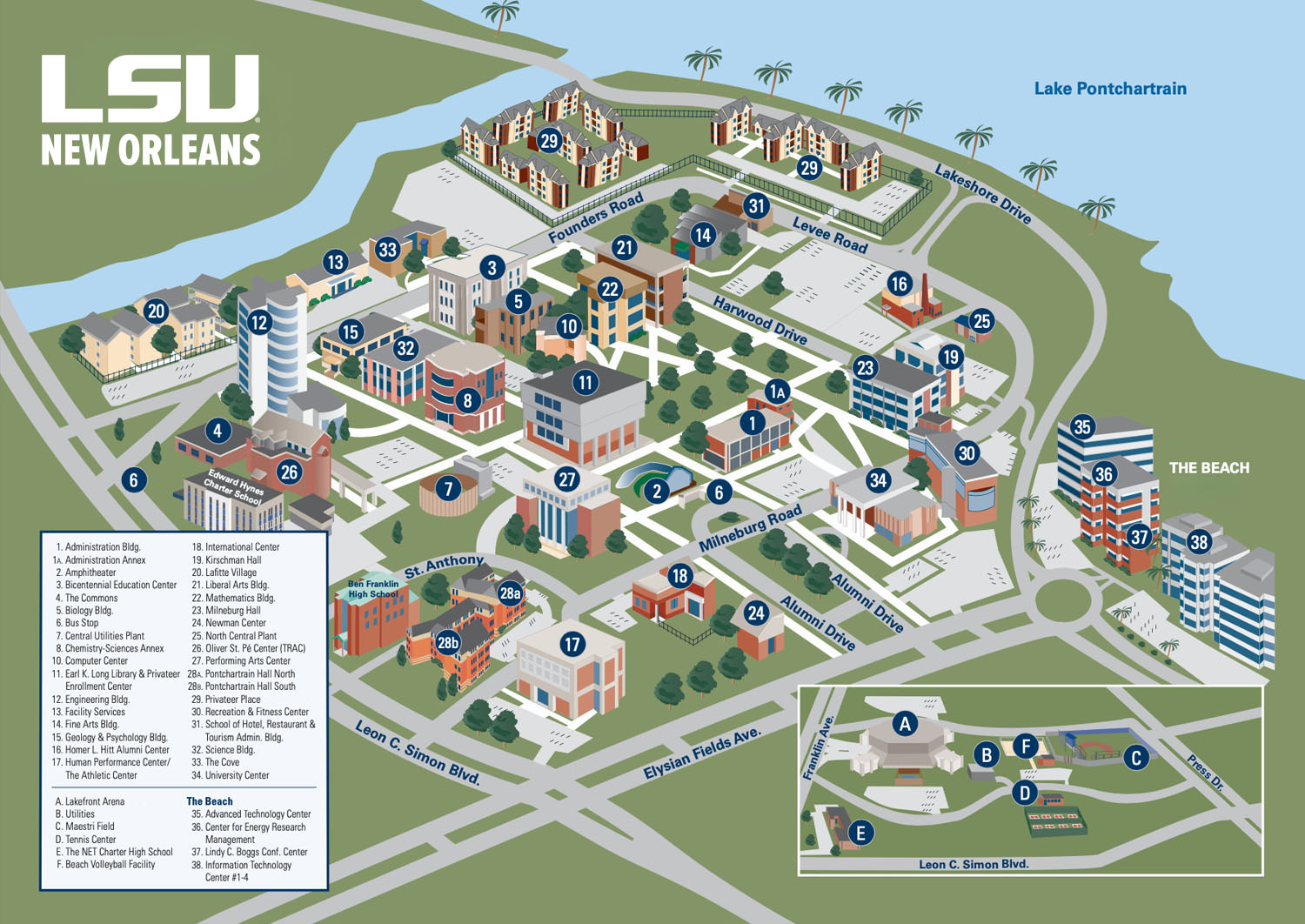
University of New Orleans is located in New Orleans, LA.
Admissions
UNO's admissions process is characterized by its accessibility, with a high that reflects its mission as a public, urban-serving university. The university does not have an open admission policy, but its selectivity is moderate, with admitted students typically presenting a range of academic credentials. The middle 50% SAT range for admitted students spans from the 900s to the mid-1200s, indicating a broad academic profile among the incoming class. While the is a standard source for detailed admission factors, specific data points like the relative importance of class rank, essays, or interviews for UNO are not detailed in the provided sources. The university does not appear to offer a binding Early Decision program, as discussions of such programs in the sources are focused on other New Orleans institutions like Tulane, which has multiple early rounds. Demonstrated interest—how much a student's engagement with the university influences admissions decisions—is a factor reported in the Common Data Set (section C7), but the specific rating for UNO is not provided in these snippets.
Earnings = median of students working ~10 years after entry; debt = median of graduates. Value divides 10-yr earnings by one year’s net price — read it as earnings per dollar of annual cost, not a full lifetime ROI; it favors lower-cost schools. Source: U.S. Dept. of Education College Scorecard. Figures lag ~2 years and reflect all students, not your intended major.
$38,061
Urban Studies/Affairs$36,183
Finance and Financial Management Services$35,060
Source: U.S. Dept. of Education College Scorecard (field-of-study earnings). Figures cover graduates who received federal aid and lag ~2 years; not all programs report data.
UNO's academic portfolio is built around practical, career-focused programs, with over 60 majors and minors spanning engineering, business, the arts, sciences, and education. The most popular majors include Business Administration, Management and Operations; Biology, General; and Multi/Interdisciplinary Studies. The university's identity as a public research institution in a major metropolitan area provides a backdrop for applied learning. Online discussions from prospective students highlight specific interest in programs like Electrical Engineering, suggesting these are key draws. Greater New Orleans is home to a consortium of 13 higher education institutions, which may offer opportunities for cross-registration or specialized resources in fields like medicine, communications, and law, though UNO's direct involvement in such consortia is not specified in the sources.
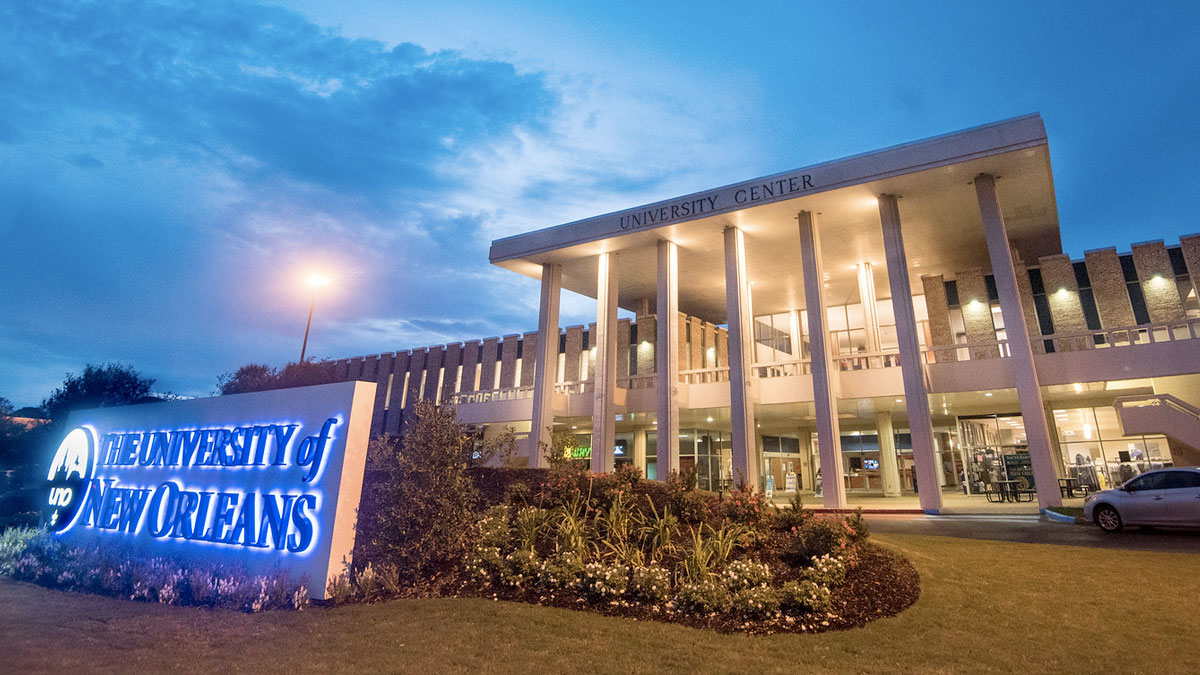
Campus life at UNO is often described as relatively quiet and low-key, with a significant number of students prioritizing academics over a constant party scene. This creates a focused, supportive environment where professors are known to be accessible and students support one another. The university fosters involvement through student organizations and activities designed to complement the academic journey, though the specific number of clubs is not quantified in these sources. The campus provides welcoming spaces for social, recreational, and cultural activities. Its location in New Orleans means students have immediate access to the city's abundant talent, rich culture, and daily events, offering a stark contrast to the more serene campus atmosphere. This duality allows students to choose their level of immersion in one of the world's most vibrant cities.
Outcomes data for UNO graduates reflects the profile of a broad-access public university. The six-year graduation rate for first-time, full-time students is a key metric, though the sources provide varying figures; the canonical graduation rate is 38%. Post-graduation earnings also show a range in the data, with one source citing a median alumni salary around $39,311, while another reports median earnings of $56,037. The canonical figure for median earnings ten years after entry is $47,872. For context, research on New Orleans school reforms has indicated that such initiatives can positively impact college graduation rates by several percentage points. Specific data on undergraduate career outcomes rates (like placement within six months of graduation) for UNO is not provided in these snippets.
Affordability is a central part of UNO's value proposition. The average after aid—the estimated cost a student actually pays—is a critical figure. The canonical average net price is $12,384. A significant majority (88%) of full-time beginning undergraduates at UNO receive some form of grant or scholarship aid. The university utilizes net price calculators to help families estimate their financial aid package and out-of-pocket costs. While the university states a commitment to meeting the demonstrated financial need of undergraduate students, the provided sources do not specify if UNO has a "no-loan" policy, where loans are replaced with grants for students below certain income thresholds. Such policies are typically detailed in a school's official financial aid materials.
UNO carves out a distinct niche by offering an affordable, practical public university education squarely within the cultural heartbeat of New Orleans. It stands apart from its more selective, private neighbors (like Tulane and Loyola) by prioritizing access and career-focused programs in engineering, business, and the sciences. The campus culture is self-described as supportive and involved, yet notably quieter than the surrounding city, appealing to students who want proximity to world-class music, food, and festivals without feeling pressured to live in a constant party atmosphere. It's a university for the pragmatic student: one who seeks a specialized degree, values professor accessibility, and wants to leverage the professional opportunities and immersive cultural experience of a major city, all without the sticker shock of a private institution. Its identity is inextricably linked to its location, serving as both an academic institution and a gateway to the unique life of New Orleans.
University of New Orleans seal · sourceTake a Tour of the University of New Orleans! · sourceCampus Map | LSU New Orleans · sourceWill the university of New Orleans return to the LSU System? - Reveille · source