Admit rate has ranged 73%–85% over the last 5 years — notably volatile. Source: IPEDS via Urban Institute.
Acceptance & SAT from Common Data Set / IPEDS; net price, earnings & graduation from the U.S. Dept. of Education College Scorecard. Figures lag ~1–2 years — verify with the school.
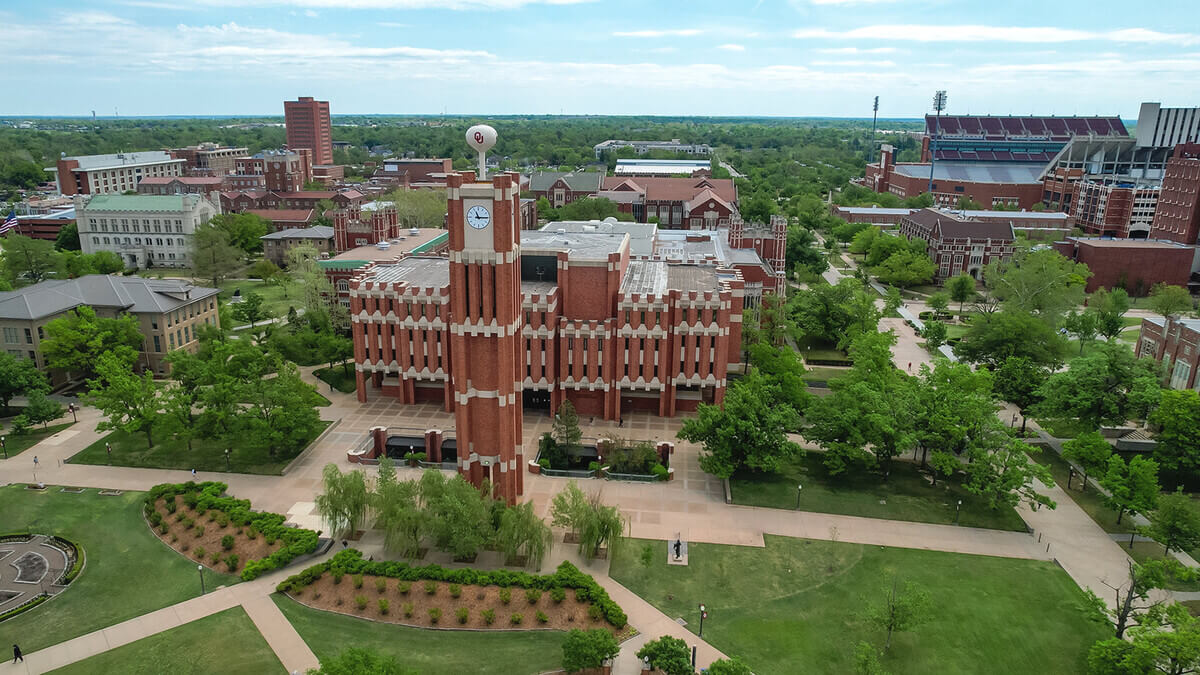
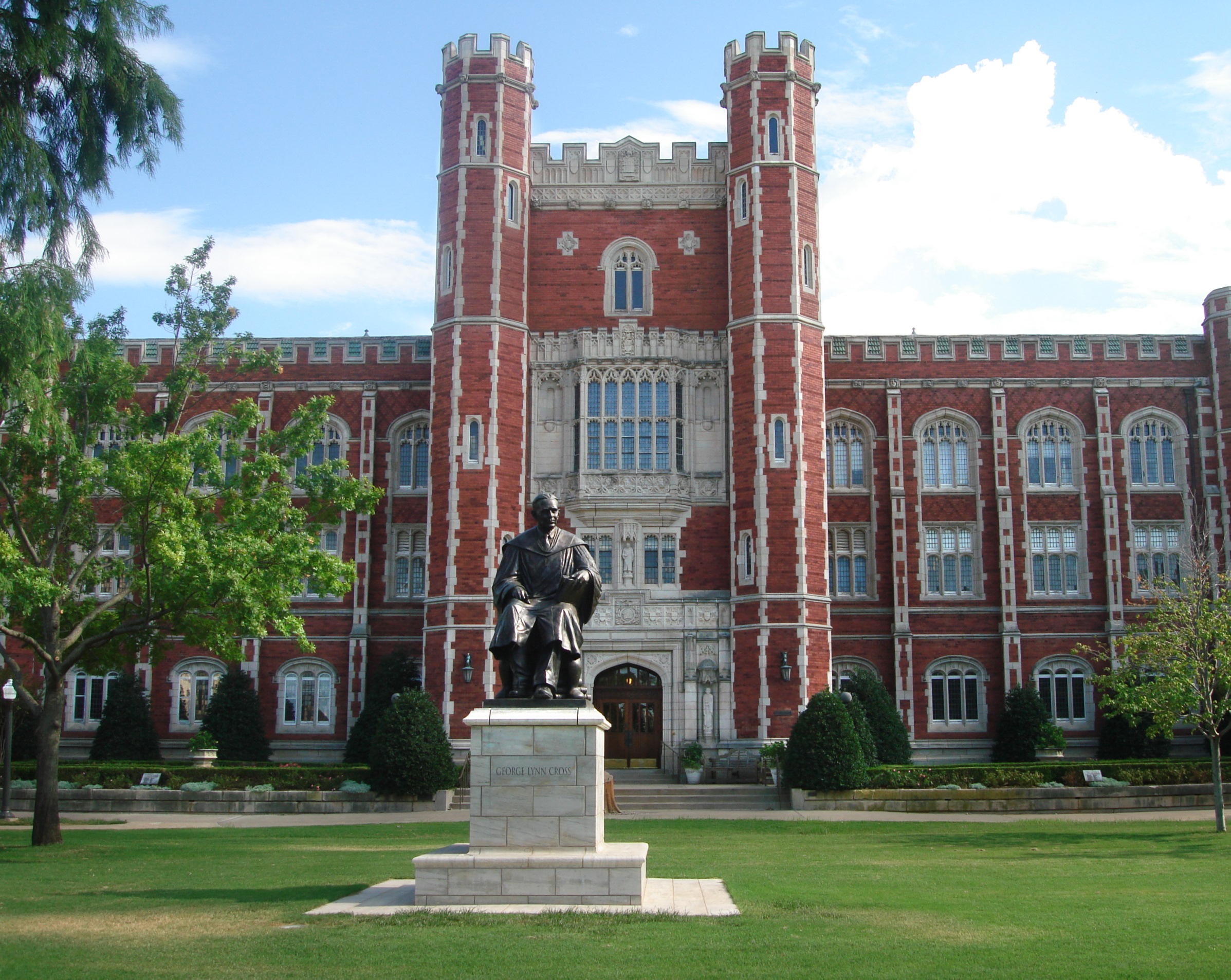
The University of Oklahoma-Norman Campus is a large, public flagship where crimson-and-cream football fervor and a sprawling Greek scene define the social landscape as much as its surprisingly robust academic portfolio does. It's a place where you can chase tornadoes in a top-tier meteorology program one minute and join 20,000 fans in chanting 'Boomer Sooner' the next, all while benefiting from a notably accessible admissions process and a sticker price that, after aid, lands well below the national average for public universities. This is a school of big spirit and pragmatic outcomes, where the line between campus and community blurs in the college town of Norman.
Admission requirements
Test-optional — scores considered if submitted
Required
High school transcript
Grade point average
TOEFL (non-native English)
Considered (not required)
Class rank
Letters of recommendation
Test scores (SAT/ACT)
College-prep program
Demonstrated competencies
Source: IPEDS Admissions survey (2022) via Urban Institute. Covers formal factors only — it does not reflect essays, extracurriculars, or other holistic criteria.
More details
Undergrad enrollment
22,734
In-state tuition
$9,797
Out-of-state tuition
$27,377
Graduation Rate
75%
Most Popular Major
Business (29% of grads)
Median Earnings (10yr)
$63,126
First-Generation Students
26.8%
Outcomes & value
Outcomes & value
Median earnings (10 yr)
$63,126
Value (earnings ÷ net price)
4.1×
Median debt at graduation
$20,654
Graduation rate
75%
First-year retention
90%
Reducing loan balance (3 yr)
68%
Pell (lower-income) share
25%
First-gen share (among federal-aid recipients)
28%
Top-earning majors
Median earnings by field of study (highest credential), ~2 years after completion.
Petroleum Engineering$91,017
Industrial Engineering$70,176
Construction Management$69,338
Aerospace, Aeronautical, and Astronautical/Space Engineering$68,666
Electrical, Electronics, and Communications Engineering$67,660
Dental Support Services and Allied Professions
Campus & location
Campus safety
On-campus violent crimes (2024)
16
Per 1,000 students
0.53
On-campus criminal offenses classed as violent (murder/non-negligent manslaughter, rape, robbery, aggravated assault) for the most recent reported year. Source: U.S. Dept. of Education Campus Safety and Security (Clery Act). Counts reflect what’s reported to the school, and urban campuses often report more partly due to non-student incidents nearby — read alongside campus size and setting, not as a standalone safety verdict.
Climate
Pleasant days / yr
86
Summer high
92°F
Winter low
34°F
Annual rain
36.6"
Annual snow
7.3"
Natural-hazard risk
Relatively Moderate
Pleasant days counts days per year with a mean temperature of 55–75°F, a high at or below 90°F, a low at or above 45°F, and little precipitation — a transparent comfort measure, not a weighting we invented. Computed from Open-Meteo ERA5 daily history (2019–2023). Natural-hazard risk is the county’s composite rating from the FEMA National Risk Index.
Quick answers
What is the acceptance rate at University of Oklahoma-Norman Campus?
University of Oklahoma-Norman Campus's acceptance rate is approximately 77% (Norman, OK), based on the most recent figures we compiled from public and primary sources.
What SAT score do you need for University of Oklahoma-Norman Campus?
Admitted students at University of Oklahoma-Norman Campus typically score 1140–1330 on the SAT (the middle-50% range). Scores outside this band are still admitted, especially with strong applications.
How much does University of Oklahoma-Norman Campus cost?
At University of Oklahoma-Norman Campus, the average net price (after aid) is about $15,300 per year. Actual cost varies with financial aid and residency.
How many undergraduates attend University of Oklahoma-Norman Campus?
University of Oklahoma-Norman Campus enrolls approximately 22,734 undergraduate students.
Where is University of Oklahoma-Norman Campus located?
University of Oklahoma-Norman Campus is located in Norman, OK.
Admissions
OU's admissions process is characterized by high accessibility, with a 77% acceptance rate for the most recent cycle. The university received 24,893 undergraduate applications for the 2024 entering class, admitting 19,069 of them. Test scores are officially optional for admission, though submitting them can contribute to a superscore for the SAT. For those who do submit, the middle 50% SAT range is 1140–1330, and the middle 50% ACT range is 23–29. The academic profile of the admitted class is solid, with an average weighted GPA of 3.84 and an average unweighted GPA of 3.64 for the Fall 2025 freshman cohort. A significant portion of the student body—26.8%—are college students. The rate (the percentage of admitted students who enroll) was 41.2% for one recent cycle. While the is the definitive source for understanding how heavily OU weighs various factors like demonstrated interest, the provided source snippets do not contain the specific rating (e.g., 'Important,' 'Considered') from OU's CDS section C7 to confirm its policy.
Earnings = median of students working ~10 years after entry; debt = median of graduates. Value divides 10-yr earnings by one year’s net price — read it as earnings per dollar of annual cost, not a full lifetime ROI; it favors lower-cost schools. Source: U.S. Dept. of Education College Scorecard. Figures lag ~2 years and reflect all students, not your intended major.
$66,461
Mechanical Engineering$66,355
Computer Science$64,990
Source: U.S. Dept. of Education College Scorecard (field-of-study earnings). Figures cover graduates who received federal aid and lag ~2 years; not all programs report data.
OU offers a vast academic smorgasbord with more than 170 undergraduate programs, a figure frequently cited in official materials. The university's catalog details an extensive array of majors, minors, and combined degree pathways. In terms of popularity, business is the undisputed king: 29% of 2024 graduates majored in Business, Management, Marketing, and Related Support Services. Engineering follows at a distant second (10%), with Communication, Journalism, and related programs also among the most popular. This breadth allows students to pursue everything from classic liberal arts disciplines to highly specialized fields. The scale of offerings is further underscored by institutional data showing OU provides 174 baccalaureate programs, 199 master's programs, 101 doctoral programs, and 88 certificate programs across its campuses.
Life at OU is dominated by two powerful, often intertwined forces: football and Greek life. The campus culture is deeply rooted in these traditions, creating a highly spirited and communal environment. Student organizations abound, offering resources and engagement opportunities both on and off campus. The mission of the Office of Student Life is to guide students toward academic, professional, and personal goals. First-hand accounts from students describe the community as "really positive and welcoming," with campus events "always happening." Norman provides a classic Big 12 college town backdrop, where the energy of game days permeates the community. The line between campus life and the town is fluid, with internships and networking opportunities readily available in the broader area.
OU graduates enter the workforce with competitive starting salaries. According to the university's most recent undergraduate outcomes report, the average full-time salary for a graduate was $59,244. This figure is noted as a slight decrease from the prior year and sits just below the reported national average of $60,028 at the time. The graduation rate is a strong 75%, which places the university in the top 20% nationally for this metric. Historical data shows a positive trend, with the six-year graduation rate rising from 44.0% for the 1990 cohort to 51.1% for the 1995 cohort. While specific first-year retention rates are not provided in the snippets, the strong graduation rate suggests successful student progression. Alumni anecdotes highlight the potential for high-earning outcomes, with one report citing a starting salary of $130,000 for a dual-degree graduate.
The University of Oklahoma is a notable value, especially for in-state students, with an average net price after aid of $15,300. This reflects costs after scholarships and grants are applied. A significant portion of the student body—47.58%—receives financial aid, with the average aid package totaling $16,189. The university provides a Net Price Calculator to help families estimate their individual out-of-pocket costs and aid opportunities. OU offers a variety of scholarships for prospective and current students through its Student Financial Center, which states a focus on "eliminating unnecessary barriers to college access and completion." The provided source snippets do not contain explicit information confirming a "meets full need" or a "no-loan" policy for any income bracket; one source notes that "program limitations may not allow us to meet all your need, but additional loan options may exist."
OU carves out a distinct identity by seamlessly merging the expansive resources and research profile of a major public flagship with the intense, tradition-bound community spirit of a Southern football powerhouse. It's a place where academic ambition—evident in its 170+ programs and strong graduation rate—exists alongside a social life orchestrated by game-day rituals and a pervasive Greek system. This combination creates a specific type of student experience: one that is highly communal, spirited, and oriented toward practical outcomes, as reflected in the strong placement of business graduates and competitive early-career salaries. The value proposition is central to its appeal, with a that undercuts many peers and an admissions process that is open to a broad range of students, including a sizable cohort. For students seeking a classic, big-university experience defined by school spirit, a wide academic menu, and a clear path to the workforce, OU delivers in a way that few other schools in its region can match.
University of Oklahoma-Norman Campus seal · sourceUniversity of Oklahoma-Norman Campus — Admissions, Tuition & Acceptance Rate | Appily · sourceThe University of Oklahoma | Norman, OK · sourceThe University of Oklahoma · source