Admit rate has ranged 36%–56% over the last 5 years — notably volatile. Source: IPEDS via Urban Institute.
Acceptance & SAT from Common Data Set / IPEDS; net price, earnings & graduation from the U.S. Dept. of Education College Scorecard. Figures lag ~1–2 years — verify with the school.
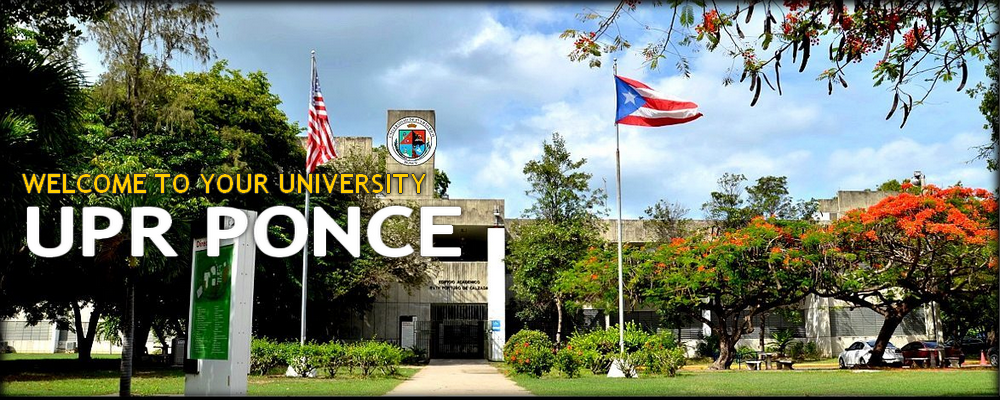
The University of Puerto Rico at Ponce is a public, Hispanic-serving institution that offers a focused, career-oriented education in the heart of Puerto Rico's second-largest city. With a moderately selective admissions process and a strong emphasis on biomedical sciences, it serves a primarily local student body navigating the practical realities of affordability and post-graduate employment. Its character is defined by its role as a regional access point to higher education, where academic pursuits are woven into the island's rich cultural fabric.
Admission requirements
Test-blind — scores not considered
Required
High school transcript
Grade point average
Considered (not required)
Demonstrated competencies
Source: IPEDS Admissions survey (2022) via Urban Institute. Covers formal factors only — it does not reflect essays, extracurriculars, or other holistic criteria.
More details
Undergrad enrollment
2,278
In-state tuition
$5,354
Out-of-state tuition
$5,354
Graduation Rate
46%
Most Popular Major
Biomedical Sciences, General
Median Earnings (10yr)
$31,394
Student-to-Faculty Ratio
21:1
Outcomes & value
Outcomes & value
Median earnings (10 yr)
$31,394
Value (earnings ÷ net price)
2.9×
Median debt at graduation
$5,500
Graduation rate
46%
First-year retention
73%
Reducing loan balance (3 yr)
51%
Pell (lower-income) share
83%
First-gen share (among federal-aid recipients)
21%
Top-earning majors
Median earnings by field of study (highest credential), ~2 years after completion.
Computer and Information Sciences, General$16,169
Clinical, Counseling and Applied Psychology$12,776
Biological and Biomedical Sciences, Other$12,221
Business Operations Support and Assistant Services$9,167
Allied Health Diagnostic, Intervention, and Treatment Professions$6,765
Source: U.S. Dept. of Education College Scorecard (field-of-study earnings). Figures cover graduates who received federal aid and lag ~2 years; not all programs report data.
Campus & location
Campus safety
On-campus violent crimes (2024)
0
On-campus criminal offenses classed as violent (murder/non-negligent manslaughter, rape, robbery, aggravated assault) for the most recent reported year. Source: U.S. Dept. of Education Campus Safety and Security (Clery Act). Counts reflect what’s reported to the school, and urban campuses often report more partly due to non-student incidents nearby — read alongside campus size and setting, not as a standalone safety verdict.
Climate
Pleasant days / yr
8
Summer high
88°F
Winter low
71°F
Annual rain
36.6"
Pleasant days counts days per year with a mean temperature of 55–75°F, a high at or below 90°F, a low at or above 45°F, and little precipitation — a transparent comfort measure, not a weighting we invented. Computed from Open-Meteo ERA5 daily history (2019–2023).
Quick answers
What is the acceptance rate at University of Puerto Rico at Ponce?
University of Puerto Rico at Ponce's acceptance rate is approximately 52% (Ponce, PR), based on the most recent figures we compiled from public and primary sources.
How much does University of Puerto Rico at Ponce cost?
At University of Puerto Rico at Ponce, the average net price (after aid) is about $10,990 per year. Actual cost varies with financial aid and residency.
How many undergraduates attend University of Puerto Rico at Ponce?
University of Puerto Rico at Ponce enrolls approximately 2,278 undergraduate students.
Where is University of Puerto Rico at Ponce located?
University of Puerto Rico at Ponce is located in Ponce, PR.
Admissions
Admissions at UPR-Ponce are moderately selective, with the university accepting roughly half of its applicants. For the most recent cycle, 1,426 students applied and 748 were admitted. The process appears to be test-flexible, with reported SAT score ranges for admitted students spanning from 930 to 1,220 on the 1600 scale, or an ACT range of 17 to 25. The university does not appear to have an Early Decision program, and sources discussing demonstrated interest in admissions suggest it is a factor tracked by some colleges, though specific data for UPR-Ponce on this point is not provided in the given sources. The gender breakdown of admitted students is nearly even, with women accepted at a rate of 52% and men at 52%.
UPR-Ponce offers a focused slate of 19 undergraduate majors, with a clear strength in the health sciences. Its most popular major is Biomedical Sciences, General, to which it grants about 52 degrees annually. Other popular majors include Psychology, Molecular Medicine, and Athletic Training. The academic environment is characterized by a 21:1 student-to-faculty ratio. The institution's primary mission seems geared toward preparing students for professional careers and advanced studies, particularly in medical and scientific fields.
Earnings = median of students working ~10 years after entry; debt = median of graduates. Value divides 10-yr earnings by one year’s net price — read it as earnings per dollar of annual cost, not a full lifetime ROI; it favors lower-cost schools. Source: U.S. Dept. of Education College Scorecard. Figures lag ~2 years and reflect all students, not your intended major.
Student life at Puerto Rican universities is deeply infused with the island's vibrant culture, featuring festivals, music, and cuisine that reflect its Spanish, Taíno, and African heritage. While specific details about clubs or organizations at UPR-Ponce are not provided in the sources, a cultural immersion activity for non-resident students at a related institution highlights a focus on community building. Housing patterns at similar universities in Puerto Rico suggest a heavily commuter-based population, with one source indicating 99% of students live off-campus. The university recommends living on campus for security reasons and because it is convenient, suggesting that on-campus housing may be available and guaranteed for some students, like exchange participants.
Graduation and post-graduate earnings present a mixed picture. The six-year graduation rate is reported at 46%, with some data suggesting a gender gap: female students graduate at a 54% rate while male students graduate at 46%. A very small percentage (14%) of undergraduates complete their degree "on-time" within two or four years. Post-graduation, median earnings start at about $22,404 six years after entry and rise to a median of $31,394 ten years after entry. One analysis notes that the six-year earnings figure sits about 49% below the national median.
UPR-Ponce is a relatively low-cost public institution, with an annual tuition listed at $5,354. The total is reported as $23,509. Financial aid plays a significant role in reducing the for students. The average aid package is reported to be between $5,429 and $6,357. This aid brings the average net price—the cost after grants and scholarships—down to $10,990 per year. Students typically apply for aid using the Free Application for Federal Student Aid (FAFSA), and cannot exceed a student's demonstrated financial need.
The University of Puerto Rico at Ponce stands out as a mission-driven, access-oriented campus within the broader UPR system. Its identity is anchored in two distinct pillars. First, it has carved a notable niche in health sciences education, particularly in biomedical sciences, serving as a critical pipeline for medical and scientific professionals on the island. Second, it embodies the practical, community-centered role of a regional public university, offering an affordable pathway to a bachelor's degree—with a under $11,000—for a predominantly local student body. Unlike flagship research campuses, UPR-Ponce's value proposition is less about prestige and more about providing tangible, career-focused education deeply connected to the cultural and economic life of southern Puerto Rico.
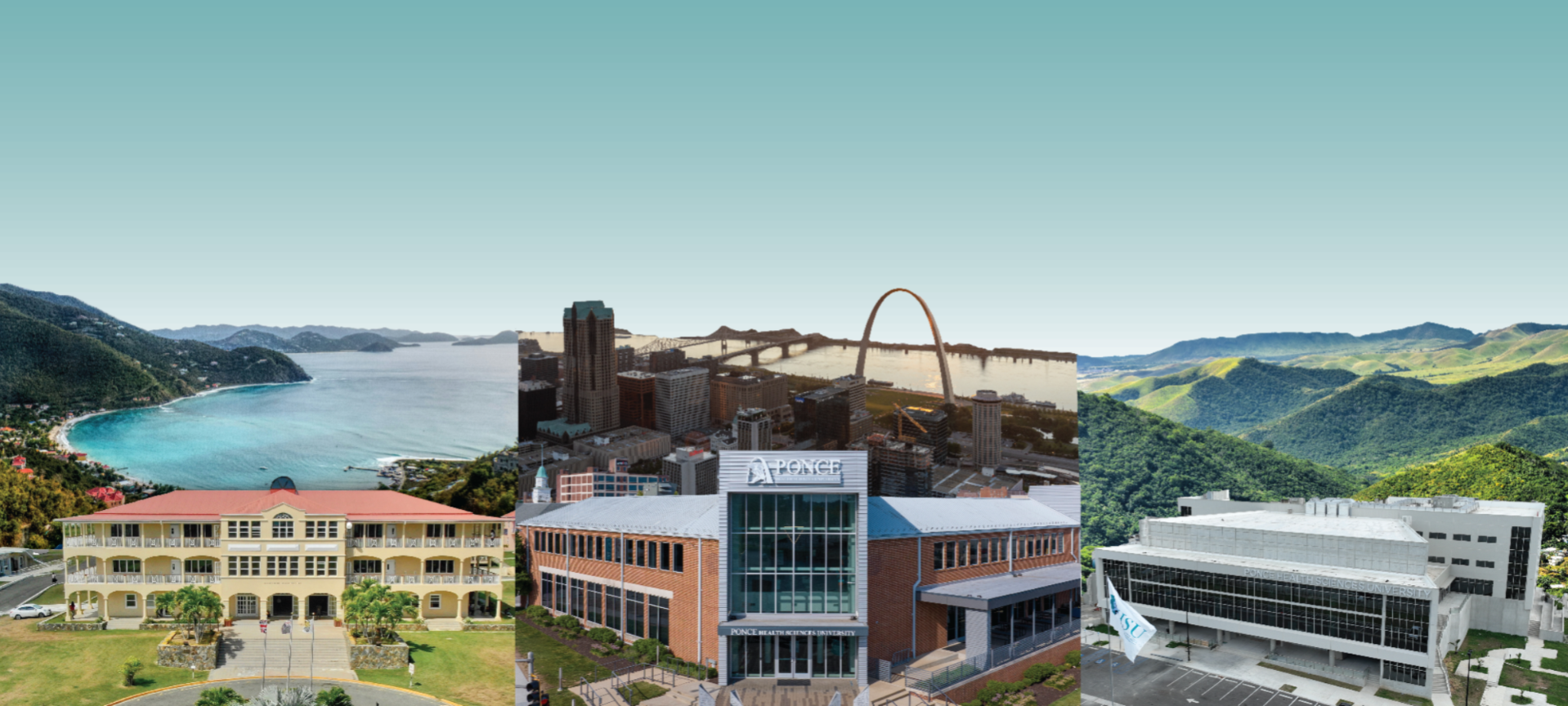
University of Puerto Rico at Ponce seal · sourceUniversidad de Puerto Rico en Ponce – ¡Rojo y Negro Siempre! · sourcePonce - Interamerican University of Puerto Rico · sourceLocations & Campus Visits | Ponce Health Sciences University · source
_y_PR-12%2C_Bo._Playa%2C_Ponce%2C_Puerto_Rico%2C_mirando_al_suroeste_(DSC02050).jpg?width=1600)