Admit rate has ranged 49%–80% over the last 5 years — notably volatile. Source: IPEDS via Urban Institute.
Acceptance & SAT from Common Data Set / IPEDS; net price, earnings & graduation from the U.S. Dept. of Education College Scorecard. Figures lag ~1–2 years — verify with the school.
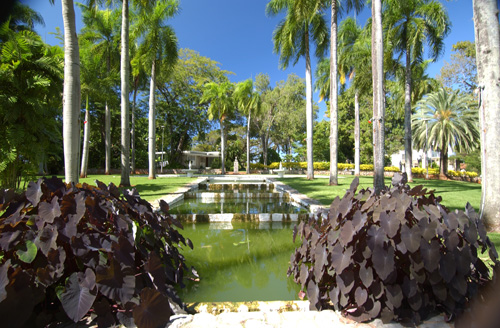
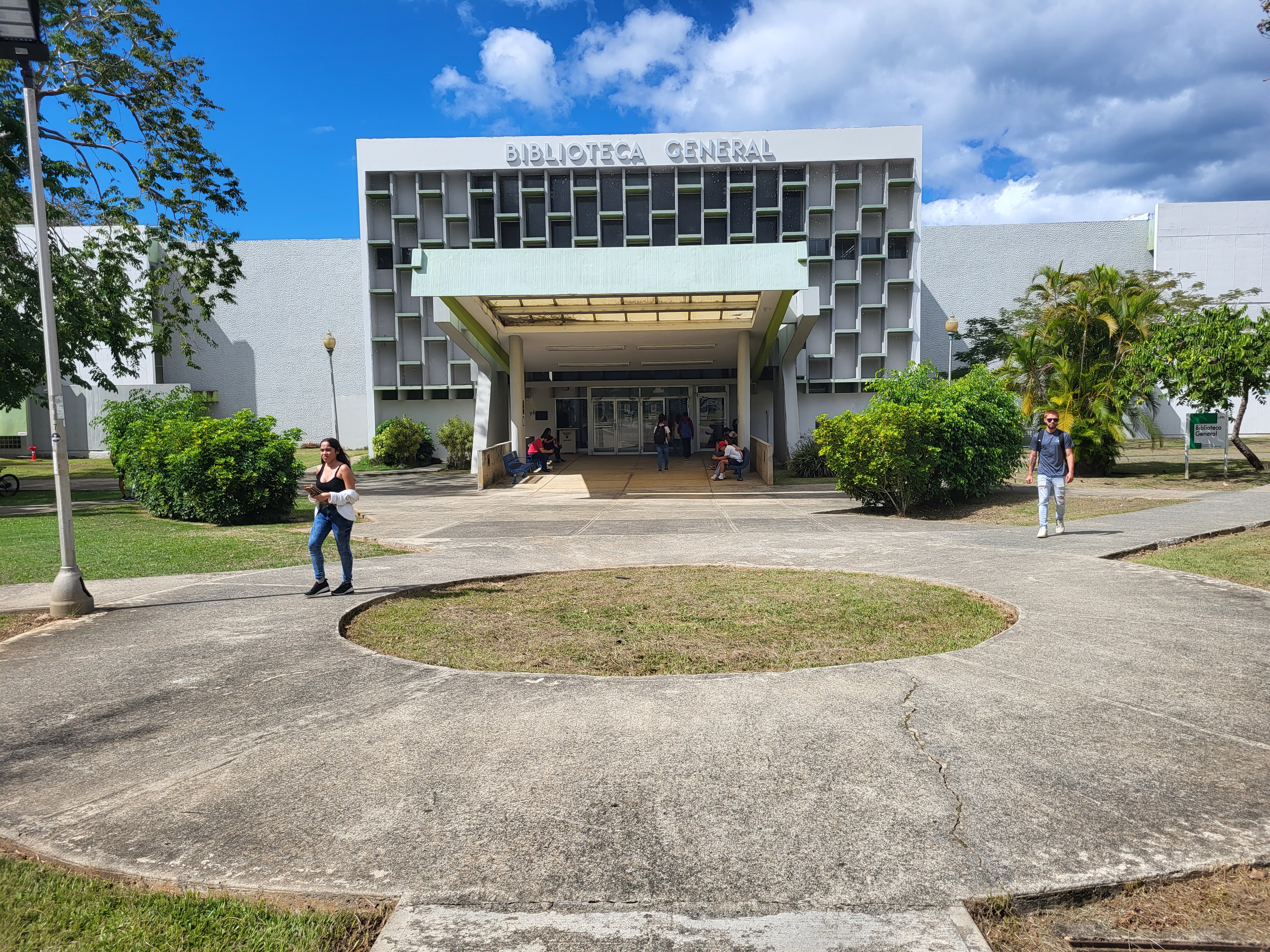
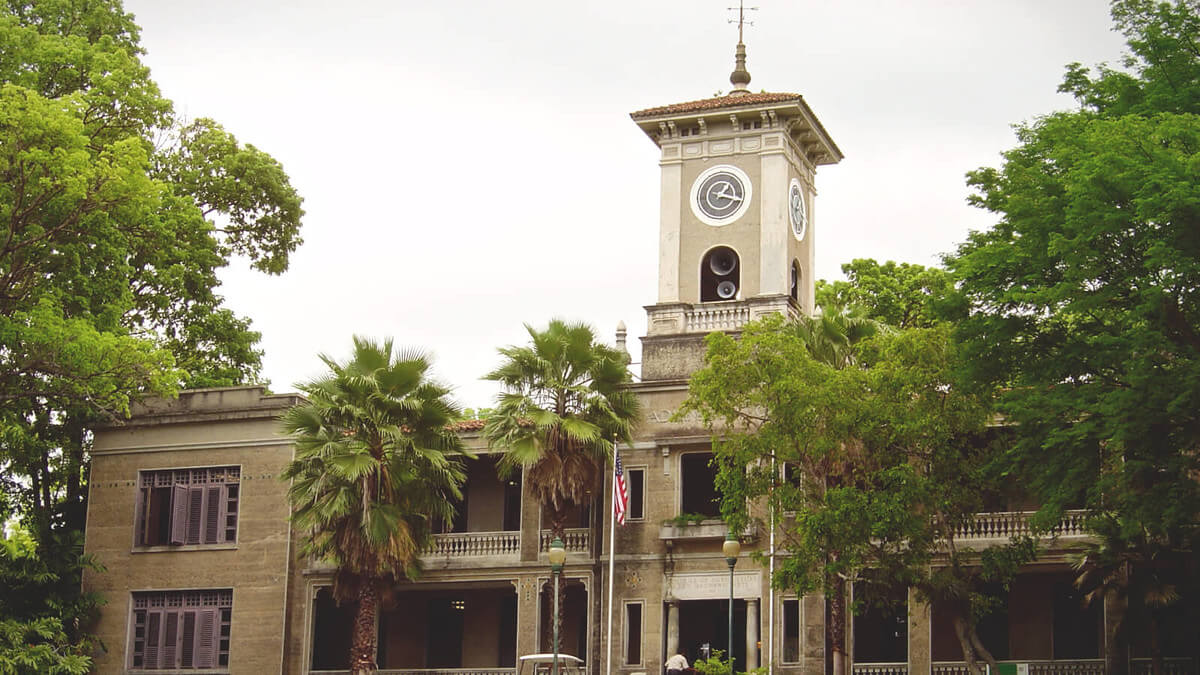
The University of Puerto Rico-Mayagüez (UPRM) is the public engineering and agricultural powerhouse of the Caribbean, a sprawling 315-acre campus where the vibe is more practical workshop than ivory tower. Known locally as 'El Colegio,' it's a place where students get their hands dirty—whether in labs, on research vessels, or in the field—preparing for careers that build Puerto Rico's infrastructure and economy. With a focus on accessibility and social mobility, it offers a rigorous, no-frills education where the vast majority of students receive financial aid, and the most popular paths lead directly to in-demand STEM jobs.
Admission requirements
Test-blind — scores not considered
Required
High school transcript
Grade point average
Source: IPEDS Admissions survey (2022) via Urban Institute. Covers formal factors only — it does not reflect essays, extracurriculars, or other holistic criteria.
More details
Undergrad enrollment
9,539
In-state tuition
$5,274
Out-of-state tuition
$5,274
Campus Size
315 acres
Graduation Rate
49%
Median Earnings (10yr)
$48,992
Student-to-Faculty Ratio
19:1
First-Year Retention Rate
92%
Average Grant/Scholarship Award
$6,446
Freshmen Receiving Financial Aid
83%
Outcomes & value
Outcomes & value
Median earnings (10 yr)
$48,992
Value (earnings ÷ net price)
2.7×
Median debt at graduation
$8,250
Graduation rate
49%
First-year retention
87%
Reducing loan balance (3 yr)
67%
Pell (lower-income) share
65%
First-gen share (among federal-aid recipients)
17%
Top-earning majors
Median earnings by field of study (highest credential), ~2 years after completion.
Computer Engineering$71,734
Computer Science$68,320
Mechanical Engineering$63,302
Electrical, Electronics, and Communications Engineering$62,579
Chemical Engineering$54,463
Civil Engineering$46,673
Campus & location
Campus safety
On-campus violent crimes (2024)
0
Per 1,000 students
0.00
On-campus criminal offenses classed as violent (murder/non-negligent manslaughter, rape, robbery, aggravated assault) for the most recent reported year. Source: U.S. Dept. of Education Campus Safety and Security (Clery Act). Counts reflect what’s reported to the school, and urban campuses often report more partly due to non-student incidents nearby — read alongside campus size and setting, not as a standalone safety verdict.
Climate
Pleasant days / yr
28
Summer high
89°F
Winter low
69°F
Annual rain
51.7"
Pleasant days counts days per year with a mean temperature of 55–75°F, a high at or below 90°F, a low at or above 45°F, and little precipitation — a transparent comfort measure, not a weighting we invented. Computed from Open-Meteo ERA5 daily history (2019–2023).
Quick answers
What is the acceptance rate at University of Puerto Rico-Mayaguez?
University of Puerto Rico-Mayaguez's acceptance rate is approximately 57% (Mayaguez, PR), based on the most recent figures we compiled from public and primary sources.
How much does University of Puerto Rico-Mayaguez cost?
At University of Puerto Rico-Mayaguez, the average net price (after aid) is about $17,936 per year. Actual cost varies with financial aid and residency.
How many undergraduates attend University of Puerto Rico-Mayaguez?
University of Puerto Rico-Mayaguez enrolls approximately 9,539 undergraduate students.
Where is University of Puerto Rico-Mayaguez located?
University of Puerto Rico-Mayaguez is located in Mayaguez, PR.
Admissions
UPR-Mayagüez operates with a moderately selective admissions process, accepting roughly half to just over half of its applicants. The most recent figures show an of 56.5% (2,513 admissions from 4,446 applications). While some sources list SAT score ranges (like 1290–1550 or 1110–1360), other authoritative sources explicitly state that SAT and ACT scores are not considered for admission. The primary academic factor appears to be high school GPA, with a significant portion of admitted students—nearly 70%—reporting a GPA of 3.75 or higher. There is no mention of an Early Decision program in the provided sources for UPRM; the admissions process appears to be regular decision. The provided sources do not contain a specific for UPRM that would clarify the consideration of factors like demonstrated interest, class rank, or recommendations.
Earnings = median of students working ~10 years after entry; debt = median of graduates. Value divides 10-yr earnings by one year’s net price — read it as earnings per dollar of annual cost, not a full lifetime ROI; it favors lower-cost schools. Source: U.S. Dept. of Education College Scorecard. Figures lag ~2 years and reflect all students, not your intended major.
Industrial Engineering
$43,575
Business Administration, Management and Operations$39,648
Source: U.S. Dept. of Education College Scorecard (field-of-study earnings). Figures cover graduates who received federal aid and lag ~2 years; not all programs report data.
Academics at UPRM are dominated by science, technology, engineering, and agriculture, reflecting its identity as a land-grant, sea-grant, and space-grant institution. It offers 68 majors to its approximately 9,855 undergraduates. The student-to-faculty ratio is 19:1. The College of Engineering is the largest of its kind in Puerto Rico and is the island's top producer of engineers. The most popular majors are intensely practical:
Mechanical Engineering (175 graduates)
Biology (124 graduates)
Animal Sciences and Husbandry (98 graduates)
Chemical Engineering (93 graduates)
Industrial Engineering (93 graduates)
The curriculum is hands-on and career-focused, with notable accredited programs in chemistry and engineering. The first-year retention rate is a strong 92%, indicating students who enroll are generally satisfied and engaged with the academic environment. The campus itself spans 315 acres, providing ample space for its agricultural and engineering facilities.
Life on the Mayagüez campus is described as vibrant and active, with a strong sense of community. Students report that professors are caring and that peers are polite and engaged. The campus hosts numerous student organizations, cultural events, and sports activities, contributing to a lively social scene. As the second-largest campus in the UPR system, it has the critical mass to support a diverse array of clubs and activities. New students participate in a general orientation that covers student services, a campus tour, and cultural information to help them acclimate. The setting in western Puerto Rico offers a distinct environment, different from the more metropolitan feel of the Río Piedras campus in San Juan, which is noted for its own 'vibrant cultural and sports activity.'
Outcomes for UPRM graduates are a mixed picture, heavily influenced by Puerto Rico's economic context. The graduation rate stands at 49% (per canonical figures). This rate is consistent with trends across the University of Puerto Rico system, where most campuses have rates above 45%. In terms of earnings, early-career salaries for graduates are reported at various levels: about $39,000 on average in early career, $35,731 on average, and $51,164 four years after graduation. One analysis notes that these early earnings are about $14,000 worse than might be expected when compared to similar colleges, likely reflecting local economic conditions. The university is ranked #7 in Top Performers on Social Mobility by U.S. News, indicating it successfully enrolls and graduates a significant number of Pell Grant-eligible students, helping them advance economically.
UPR-Mayagüez is a public university with a mission of accessibility, and this is reflected in its financial aid profile. A very high percentage of students receive aid: 83% of freshmen and 76% of all undergraduates get financial aid. The average grant and scholarship award is $6,446. The average after aid—what students actually pay—is $10,657 according to one source, though the canonical figure is $17,936. The aid package typically consists of federal grants (average $6,704), state grants (average $842), and institutional grants (average $2,468). The average Pell Grant award is $6,472. The university provides a net price calculator for prospective students to estimate their individual cost. The provided sources do not indicate that UPRM has a 'no-loan' policy or a policy of meeting 100% of demonstrated financial need without loans; aid appears to be packaged from a mix of grants and loans based on federal and institutional guidelines.
UPR-Mayagüez stands out as the indispensable STEM and agricultural engine of Puerto Rico. It’s not a liberal arts college; it’s a place where theory meets the tropical soil and machinery. Its singular identity is built on being a triple-threat land-grant, sea-grant, and space-grant university—a rare combination that directs its research and teaching toward practical, island-specific challenges in engineering, agriculture, and marine sciences. The culture is one of pragmatic problem-solving, producing the majority of the island's engineers. While its graduation rates and graduate earnings are tempered by the broader Puerto Rican economy, its #7 ranking in Social Mobility underscores its profound role as a ladder of opportunity. For students in Puerto Rico and the Caribbean seeking an affordable, rigorous, and hands-on technical education that leads directly to careers, 'El Colegio' is in a class of its own.
University of Puerto Rico-Mayaguez seal · sourceUniversity of Puerto Rico at Mayagüez - Wikipedia · sourceUniversity of Puerto Rico - Mayaguez – ISEP Study Abroad · sourceUniversity of Puerto Rico-Mayaguez — Admissions, Tuition & Acceptance Rate | Appily · source