Admit rate has ranged 79%–88% over the last 5 years — notably volatile. Source: IPEDS via Urban Institute.
Acceptance & SAT from Common Data Set / IPEDS; net price, earnings & graduation from the U.S. Dept. of Education College Scorecard. Figures lag ~1–2 years — verify with the school.
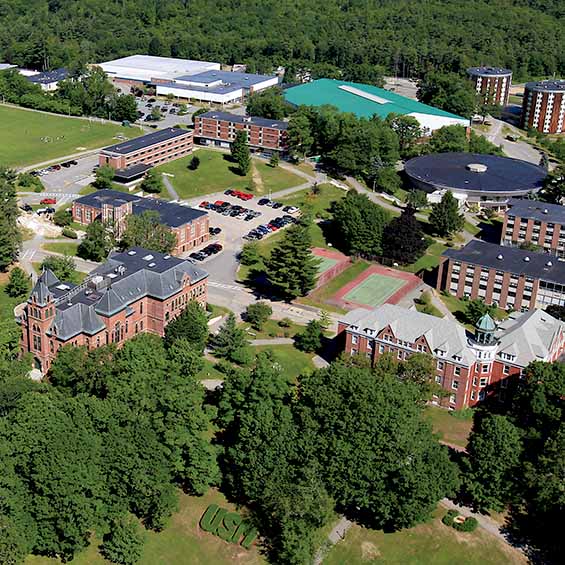
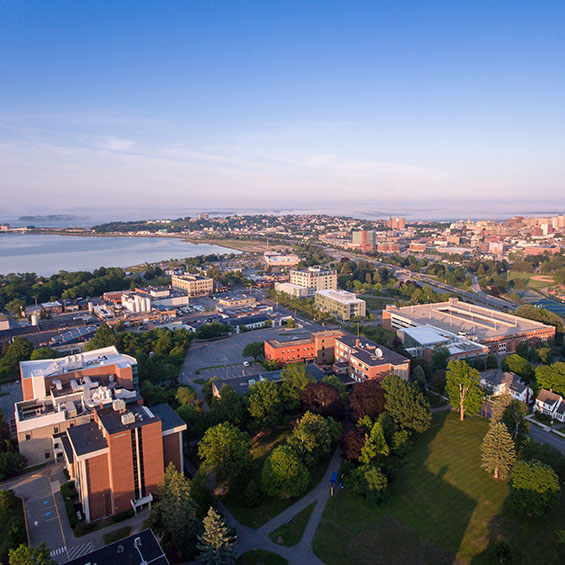
The University of Southern Maine is a public, urban-commuter university that serves as Maine's practical, accessible engine for workforce development. Its identity is split between a traditional residential campus in Gorham and a professional, downtown hub in Portland, offering over 300 programs with a particular reputation for turning out nurses, teachers, social workers, and business professionals for the state. This is not a cloistered, high-selectivity liberal arts college; it's a place where a diverse, often non-traditional student body—many balancing work and family—comes for a direct, affordable path to a stable career in the region.
Admission requirements
Test scores required
Required
High school transcript
Letters of recommendation
Test scores (SAT/ACT)
TOEFL (non-native English)
Considered (not required)
Class rank
College-prep program
Source: IPEDS Admissions survey (2022) via Urban Institute. Covers formal factors only — it does not reflect essays, extracurriculars, or other holistic criteria.
More details
Undergrad enrollment
4,222
In-state tuition
$11,284
Out-of-state tuition
$27,944
No-Loan Policy
No
Graduation Rate
40%
Meets Full Need
No
ED Share of Class
N/A
First-Year Retention
N/A
Demonstrated Interest
Not considered
Median Earnings (10yr)
$49,958
Outcomes & value
Outcomes & value
Median earnings (10 yr)
$49,958
Value (earnings ÷ net price)
3.7×
Median debt at graduation
$19,060
Graduation rate
40%
First-year retention
74%
Reducing loan balance (3 yr)
65%
Pell (lower-income) share
28%
First-gen share (among federal-aid recipients)
33%
Top-earning majors
Median earnings by field of study (highest credential), ~2 years after completion.
Electrical, Electronics, and Communications Engineering$64,493
Mechanical Engineering$61,728
Registered Nursing, Nursing Administration, Nursing Research and Clinical Nursing$57,422
Finance and Financial Management Services$54,869
Industrial Production Technologies/Technicians$50,231
Accounting and Related Services
Campus & location
Campus safety
On-campus violent crimes (2024)
10
Per 1,000 students
1.59
On-campus criminal offenses classed as violent (murder/non-negligent manslaughter, rape, robbery, aggravated assault) for the most recent reported year. Source: U.S. Dept. of Education Campus Safety and Security (Clery Act). Counts reflect what’s reported to the school, and urban campuses often report more partly due to non-student incidents nearby — read alongside campus size and setting, not as a standalone safety verdict.
Climate
Pleasant days / yr
96
Summer high
76°F
Winter low
21°F
Annual rain
50.5"
Annual snow
48.3"
Natural-hazard risk
Relatively Low
Pleasant days counts days per year with a mean temperature of 55–75°F, a high at or below 90°F, a low at or above 45°F, and little precipitation — a transparent comfort measure, not a weighting we invented. Computed from Open-Meteo ERA5 daily history (2019–2023). Natural-hazard risk is the county’s composite rating from the FEMA National Risk Index.
Deep dive — research, future-scholar output & economic mobility▾
Research output
Institutional h-index
159
Scholarly works
4,955
Institutional research volume and impact from OpenAlex. The h-index reflects large research universities and will be low for teaching-focused liberal-arts colleges — not a measure of undergraduate quality.
Quick answers
What is the acceptance rate at University of Southern Maine?
University of Southern Maine's acceptance rate is approximately 79% (Portland, ME), based on the most recent figures we compiled from public and primary sources.
What SAT score do you need for University of Southern Maine?
Admitted students at University of Southern Maine typically score 990–1250 on the SAT (the middle-50% range). Scores outside this band are still admitted, especially with strong applications.
How much does University of Southern Maine cost?
At University of Southern Maine, the average net price (after aid) is about $13,596 per year. Actual cost varies with financial aid and residency.
How many undergraduates attend University of Southern Maine?
University of Southern Maine enrolls approximately 4,222 undergraduate students.
Where is University of Southern Maine located?
University of Southern Maine is located in Portland, ME.
Admissions
USM operates with an accessible admissions philosophy, prioritizing broad access over high selectivity. The process is straightforward and does not employ binding Early Decision rounds, focusing instead on a standard application timeline. Academic preparation is the primary consideration, with the high school academic record being the most important factor in the evaluation. The university receives thousands of applications each year and admits a significant majority, creating a student body with a wide range of academic backgrounds. Admitted students typically present solid academic credentials, with the middle 50% scoring between 990 and 1250 on the SAT. The admissions office does not track or consider demonstrated interest as a formal part of its evaluation process, aligning with its mission of accessibility.
Earnings = median of students working ~10 years after entry; debt = median of graduates. Value divides 10-yr earnings by one year’s net price — read it as earnings per dollar of annual cost, not a full lifetime ROI; it favors lower-cost schools. Source: U.S. Dept. of Education College Scorecard. Figures lag ~2 years and reflect all students, not your intended major.
$45,852
Business Administration, Management and Operations$43,160
Criminology$41,565
Source: U.S. Dept. of Education College Scorecard (field-of-study earnings). Figures cover graduates who received federal aid and lag ~2 years; not all programs report data.
Academics at USM are defined by practicality, breadth, and a strong connection to Maine's professional community. The university offers over 300 majors, minors, certificates, and graduate degrees, creating a sprawling catalog geared toward direct career pathways. Its most specialized and highly regarded programs are in fields critical to the state's infrastructure. The nursing program is consistently described as "very reputable" and "very demanding," while business programs are noted as "extremely strong." Education is another powerhouse, with hundreds of degrees awarded annually, feeding the state's K-12 system. Other standout areas include engineering, social work, and legal studies (through its robust criminology program). The faculty mix includes both dedicated teachers and professionals from the field, with students often citing "fantastic professors" who bring real-world experience. This is not a heavily theoretical or graduate-research-focused institution; the curriculum is applied, designed to get graduates job-ready for "regular' degreed jobs anywhere" in Maine, particularly in teaching, nursing, social work, local government, and engineering.
Student life at USM reflects its identity as a commuter and non-traditional student hub, with a more subdued residential atmosphere compared to classic college towns. The university operates across two distinct campuses: the traditional, leafy Gorham campus with residence halls and athletics, and the urban, professional Portland campus integrated into the city's downtown. This split creates varied experiences. The institution actively promotes a "welcoming and supportive learning environment" and a "vibrant community that thrives on diversity, access, and inclusion." Students range dramatically in age, experiences, backgrounds, and culture, from recent high school graduates living on campus to working adults taking evening classes. Campus life includes cultural collections, community events, and gathering spaces, but the social fabric is often built around academic cohorts and off-campus lives. For traditional-aged students in Gorham, there are clubs, organizations, and NCAA Division III athletics, but the overall vibe is quieter and more self-directed than at a large residential state university.
Outcomes for USM graduates are best understood through the lens of its mission: providing accessible education that leads to stable, in-demand careers within Maine. The six-year graduation rate reflects the challenges of its diverse, often part-time student body, but the payoff for those who persist is tangible. A decade after starting, median earnings for alumni are solid for the region. The university is a primary feeder into key state professions. Its graduates reliably enter teaching, nursing, social work, local government, and engineering roles across Maine. Data shows that graduates from certain high-demand programs, like some two-year credentials, can see strong initial wages. The return on investment calculation suggests that given the relatively low , graduates can recoup their educational costs in a reasonable timeframe. Success here is measured less by prestigious graduate school placements and more by reliable employment in the community-serving fields the university is built to support.
Affordability is a cornerstone of USM's value proposition. As a public university, its sticker price is lower than private institutions, and it aggressively uses aid to further reduce the net cost for most students. The university awards over $30 million in grants and scholarships annually, with the average undergraduate financial aid package exceeding $14,000 per year. This results in a low average after aid. A significant majority (73%) of full-time undergraduates receive some form of financial aid, which includes grants, scholarships, loans, and Federal Work-Study. The financial aid process is need-aware, requiring students to demonstrate financial need for many programs by filing the FAFSA. It is important to note that USM does not advertise a "no-loan" policy that meets 100% of need without loans; loans are a standard component of aid packages for those who qualify. The net price calculator is a emphasized tool for prospective students to estimate their individual cost.
The University of Southern Maine stands out as Maine's unpretentious, workhorse public university. It forsakes the bells and whistles of highly selective, residential colleges to fulfill a clear and critical social mission: providing broad access to career-oriented education for the state's population. Its distinctiveness lies in its dual-campus model—offering both a traditional college setting in Gorham and an urban, professional outpost in Portland—and its unwavering focus on the fields that keep Maine running. You come to USM not for a curated "college experience" but for a direct, affordable, and respected pathway into the state's nursing stations, classrooms, social service agencies, engineering firms, and municipal offices. Its reputation is built on utility and community connection, producing graduates who are immediately functional in the regional economy. For students seeking a no-frills, practical education with a strong local ROI, particularly those from Maine or committed to building a life there, USM is an institution of singular purpose and value.
University of Southern Maine seal · sourceAbout Our University · sourceAbout Our University · sourceUniversity of Southern Maine Transforms Its Portland Campus - Urban Land Magazine · source