Loading…
← All schools
University of Wisconsin-Milwaukee
Milwaukee, WIpublicuwm.edu/
Acceptance
91%
Avg net price
$15,014
Earnings (10 yr)
$54,990
Graduation rate
49%
Admit rate has ranged 77%–89% over the last 5 years — notably volatile, though the latest figure above (91%) falls outside that window. Source: IPEDS via Urban Institute.
Acceptance & SAT from Common Data Set / IPEDS; net price, earnings & graduation from the U.S. Dept. of Education College Scorecard. Figures lag ~1–2 years — verify with the school.
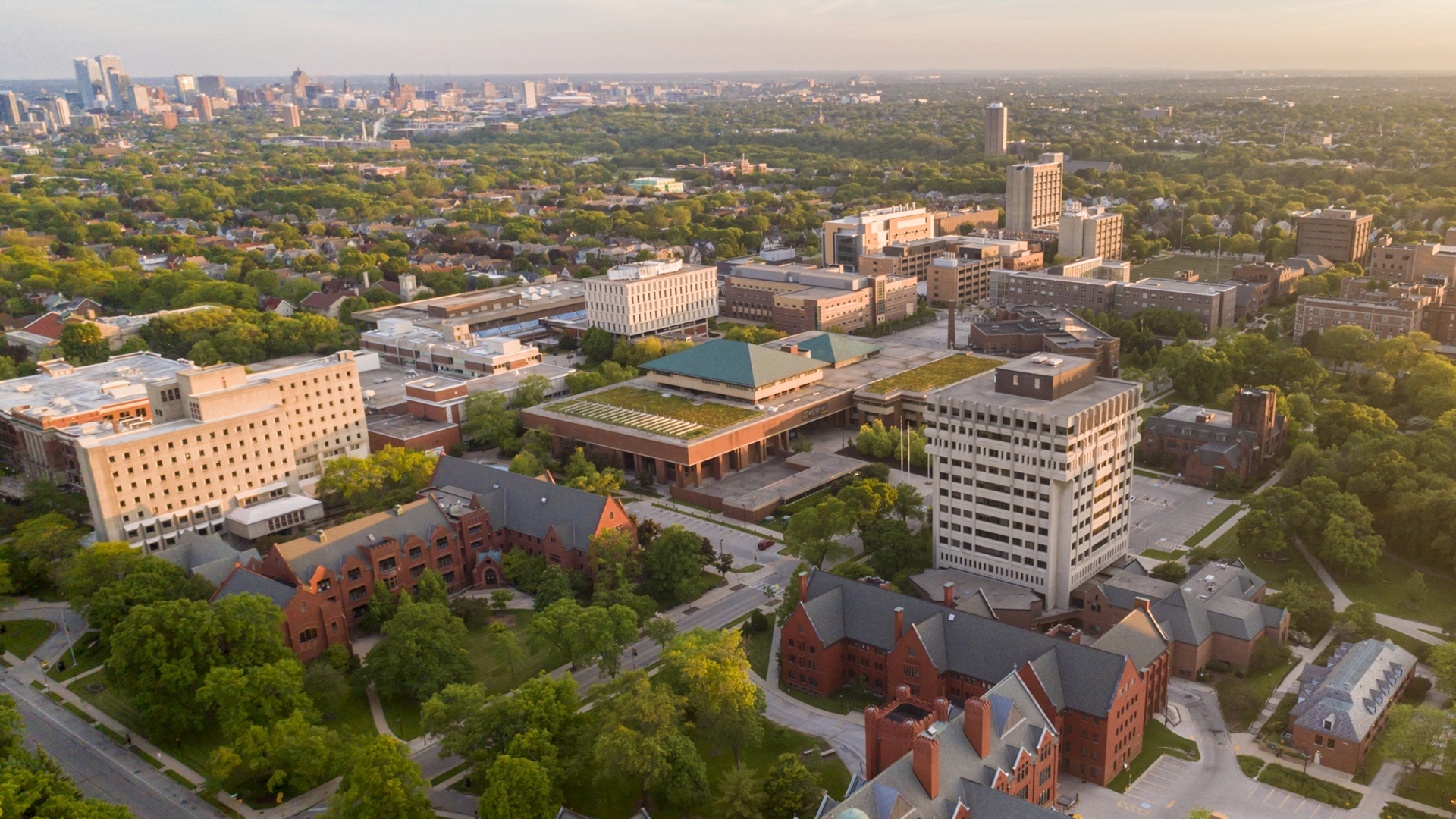
The University of Wisconsin-Milwaukee is a sprawling, urban public research university that trades the manicured-quad aesthetic for a gritty, hands-on education in the heart of a major industrial city. It’s a place where access is a core mission—evidenced by its open admissions—and where students dive directly into the city’s professional fabric through co-ops, research, and a vast menu of 202 academic programs. The vibe is commuter-heavy and self-directed, offering the freedom and resources of a big university but demanding that students carve out their own path to graduation and a career.
Admission requirements
Test-optional — scores considered if submitted
Required
- High school transcript
- Grade point average
Considered (not required)
- Class rank
- Letters of recommendation
- Test scores (SAT/ACT)
- College-prep program
- Demonstrated competencies
Source: IPEDS Admissions survey (2022) via Urban Institute. Covers formal factors only — it does not reflect essays, extracurriculars, or other holistic criteria.
More details
- Undergrad enrollment
- 16,758
- In-state tuition
- $10,398
- Out-of-state tuition
- $22,398
- Campus Housing
- 19% live on campus
- Popular Majors
- Education, Engineering, Social Sciences
- Graduation Rate
- 49%
- Financial Aid Reach
- 91% of first-year students receive grants/scholarships
- Median Earnings (10yr)
- $54,990
Outcomes & value
Outcomes & value
- Median earnings (10 yr)
- $54,990
- Value (earnings ÷ net price)
- 3.7×
- Median debt at graduation
- $23,000
- Graduation rate
- 49%
- First-year retention
- 73%
- Reducing loan balance (3 yr)
- 61%
- Pell (lower-income) share
- 33%
- First-gen share (among federal-aid recipients)
- 33%
Top-earning majors
Median earnings by field of study (highest credential), ~2 years after completion.
- Computer Engineering$72,482
- Electrical, Electronics, and Communications Engineering$67,812
- Mechanical Engineering$66,247
- Industrial Engineering$64,196
- Registered Nursing, Nursing Administration, Nursing Research and Clinical Nursing$60,851
- Clinical/Medical Laboratory Science/Research and Allied Professions
Campus & location
Campus safety
- On-campus violent crimes (2024)
- 15
- Per 1,000 students
- 0.72
On-campus criminal offenses classed as violent (murder/non-negligent manslaughter, rape, robbery, aggravated assault) for the most recent reported year. Source: U.S. Dept. of Education Campus Safety and Security (Clery Act). Counts reflect what’s reported to the school, and urban campuses often report more partly due to non-student incidents nearby — read alongside campus size and setting, not as a standalone safety verdict.
Climate
- Pleasant days / yr
- 92
- Summer high
- 79°F
- Winter low
- 20°F
- Annual rain
- 38.3"
- Annual snow
- 38.1"
- Natural-hazard risk
- Relatively High
Pleasant days counts days per year with a mean temperature of 55–75°F, a high at or below 90°F, a low at or above 45°F, and little precipitation — a transparent comfort measure, not a weighting we invented. Computed from Open-Meteo ERA5 daily history (2019–2023). Natural-hazard risk is the county’s composite rating from the FEMA National Risk Index.
Deep dive — research, future-scholar output & economic mobility
Research output
- Institutional h-index
- 857
- Scholarly works
- 49,448
Institutional research volume and impact from OpenAlex. The h-index reflects large research universities and will be low for teaching-focused liberal-arts colleges — not a measure of undergraduate quality.
Quick answers
- What is the acceptance rate at University of Wisconsin-Milwaukee?
- University of Wisconsin-Milwaukee's acceptance rate is approximately 91% (Milwaukee, WI), based on the most recent figures we compiled from public and primary sources.
- How much does University of Wisconsin-Milwaukee cost?
- At University of Wisconsin-Milwaukee, the average net price (after aid) is about $15,014 per year. Actual cost varies with financial aid and residency.
- How many undergraduates attend University of Wisconsin-Milwaukee?
- University of Wisconsin-Milwaukee enrolls approximately 16,758 undergraduate students.
- Where is University of Wisconsin-Milwaukee located?
- University of Wisconsin-Milwaukee is located in Milwaukee, WI.
Admissions
UWM’s admissions process is defined by accessibility, functioning as a broad-access public institution within the University of Wisconsin System. The university does not require applicants to submit ACT or SAT scores as part of the application process. While specific details on factor importance are not provided in the accessible sources, the high indicates a review that is likely focused on minimum eligibility requirements rather than competitive selection. There is no mention of an Early Decision program in the provided sources, suggesting admissions operates on a regular decision timeline with a rolling or standard deadline. The process appears designed to provide a pathway to higher education for a wide range of Wisconsin students, aligning with its urban mission.
Academics
With 202 academic programs to choose from, UWM offers a sprawling, almost overwhelming catalog that leans heavily into professional, applied, and health sciences, alongside a strong arts presence. The academic identity is that of a comprehensive urban research university, where students are encouraged to "gain hands-on" experience and dive into cutting-edge research. Popular undergraduate majors, as reported, include Education, Engineering, Social Sciences, Biological and Biomedical Sciences, and Communication. A notable number of students also pursue Research and Experimental Psychology. The scale means resources are vast, but it also requires proactive students to navigate and connect with faculty, who are described in student reviews as approachable and invested in student success. This isn't a liberal arts college with a prescribed core; it's a toolkit for building a career, with the city of Milwaukee serving as an extended campus for internships, clinical placements, and co-ops.
Compare University of Wisconsin-Milwaukee
See colleges similar to University of Wisconsin-Milwaukee →Sources
- Common Data Set (CDS) - UW-Milwaukee
- [PDF] 2023-2024 Common Data Set Template - UW-Milwaukee
- [PDF] Common Data Set 2021-2022 - UW-Milwaukee
- Common Data Set - UW-Parkside
- Common Data Set - Data, Academic Planning & Institutional Research
- Common Data Set 2021-2022 for University of Wisconsin - Milwaukee
- University Of Wisconsin-Milwaukee Admissions - BigFuture
- University of Wisconsin - Milwaukee SAT Scores and GPA
- University of Wisconsin - Milwaukee Admissions & Acceptance - Niche