Admit rate has ranged 50%–83% over the last 5 years — notably volatile. Source: IPEDS via Urban Institute.
Acceptance & SAT from Common Data Set / IPEDS; net price, earnings & graduation from the U.S. Dept. of Education College Scorecard. Figures lag ~1–2 years — verify with the school.
Vermont State University is a sprawling, five-campus public institution forged from a recent merger, offering a pragmatic, career-focused education deeply rooted in the state's communities. It's a university of access and affordability, where nearly half the students are the first in their families to attend college, and the academic portfolio is a direct pipeline to in-demand fields like healthcare, education, and applied technology. The vibe is unpretentious and close-knit, defined by small-campus intimacy, Division III athletics, and a strong draw for Vermonters seeking a low-cost, high-value degree.
Admission requirements
Test-blind — scores not considered
Required
High school transcript
Grade point average
College-prep program
TOEFL (non-native English)
Considered (not required)
Letters of recommendation
Source: IPEDS Admissions survey (2022) via Urban Institute. Covers formal factors only — it does not reflect essays, extracurriculars, or other holistic criteria.
More details
Undergrad enrollment
3,590
In-state tuition
$11,952
Out-of-state tuition
$22,296
Graduation Rate
47%
In-State Students
72%
First-Year Retention
67%
Median Earnings (10yr)
$50,331
First-Generation Students
47%
Merit Scholarship (Out-of-State)
Up to $10,000
Outcomes & value
Outcomes & value
Median earnings (10 yr)
$50,331
Value (earnings ÷ net price)
2.8×
Median debt at graduation
$15,000
Graduation rate
47%
First-year retention
68%
Reducing loan balance (3 yr)
79%
Pell (lower-income) share
34%
First-gen share (among federal-aid recipients)
38%
Top-earning majors
Median earnings by field of study (highest credential), ~2 years after completion.
Business Administration, Management and Operations$33,459
Source: U.S. Dept. of Education College Scorecard (field-of-study earnings). Figures cover graduates who received federal aid and lag ~2 years; not all programs report data.
On-campus criminal offenses classed as violent (murder/non-negligent manslaughter, rape, robbery, aggravated assault) for the most recent reported year. Source: U.S. Dept. of Education Campus Safety and Security (Clery Act). Counts reflect what’s reported to the school, and urban campuses often report more partly due to non-student incidents nearby — read alongside campus size and setting, not as a standalone safety verdict.
Climate
Pleasant days / yr
82
Summer high
76°F
Winter low
13°F
Annual rain
44.8"
Annual snow
68.4"
Natural-hazard risk
Very Low
Pleasant days counts days per year with a mean temperature of 55–75°F, a high at or below 90°F, a low at or above 45°F, and little precipitation — a transparent comfort measure, not a weighting we invented. Computed from Open-Meteo ERA5 daily history (2019–2023). Natural-hazard risk is the county’s composite rating from the FEMA National Risk Index.
Quick answers
What is the acceptance rate at Vermont State University?
Vermont State University's acceptance rate is approximately 82% (Randolph, VT), based on the most recent figures we compiled from public and primary sources.
How much does Vermont State University cost?
At Vermont State University, the average net price (after aid) is about $18,212 per year. Actual cost varies with financial aid and residency.
How many undergraduates attend Vermont State University?
Vermont State University enrolls approximately 3,590 undergraduate students.
Where is Vermont State University located?
Vermont State University is located in Randolph, VT.
Admissions
Vermont State University operates with a distinctly open and accessible admissions philosophy, particularly for in-state students. The university maintains an open admission policy for most students, though it practices selective admission for out-of-state applicants and for some specific programs. This two-tiered approach reflects its core mission as a public institution serving Vermont. The overall is high, indicating a primary goal of providing educational access.
Admitted student profiles are broad. The university states that a high school 'B' average (a 3.0 GPA or 85%) is a typical benchmark. For students who submit them, standardized test scores for admitted students often fall within the SAT range of 860–1060 or an ACT range of 15–21. The admissions process does not appear to hinge on a single metric, aligning with its accessible posture. Notably, the university runs a robust Early College program for Vermont high school students, with data showing that 81% of participants continue into a second year of postsecondary education, suggesting the program is an effective pipeline.
Earnings = median of students working ~10 years after entry; debt = median of graduates. Value divides 10-yr earnings by one year’s net price — read it as earnings per dollar of annual cost, not a full lifetime ROI; it favors lower-cost schools. Source: U.S. Dept. of Education College Scorecard. Figures lag ~2 years and reflect all students, not your intended major.
The academic identity of Vermont State is defined by breadth, practicality, and flexibility. The university offers over 105 academic programs across its five campuses, with a clear emphasis on direct career pathways. The curriculum is heavily weighted toward applied technology, engineering, healthcare, education, business, psychology, and computer science. This isn't a liberal arts college in the traditional sense; it's a training ground for the regional workforce.
Popular majors, as indicated by degrees conferred, include Education (7%), Social Sciences (4%), and Liberal Arts and Sciences/General Studies (3%), though the vast array of career-technical programs likely accounts for a significant share of enrollments. The university promotes its programs as "rigorous and rewarding," designed to "launch or advance your career." The learning formats are flexible, catering to both traditional and non-traditional students. The small size of the institution, as noted in community discussions, means classes are likely intimate and faculty accessible, but the resources and campus culture are best suited for students who prioritize proximity to home, affordability, and Division III athletics alongside their studies.
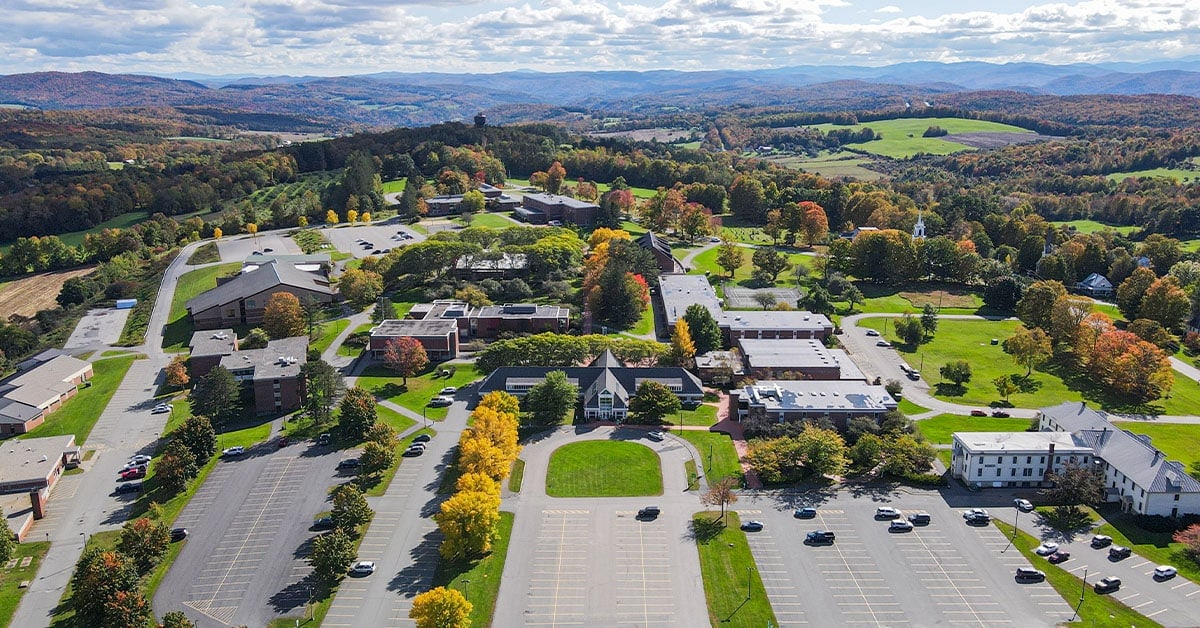
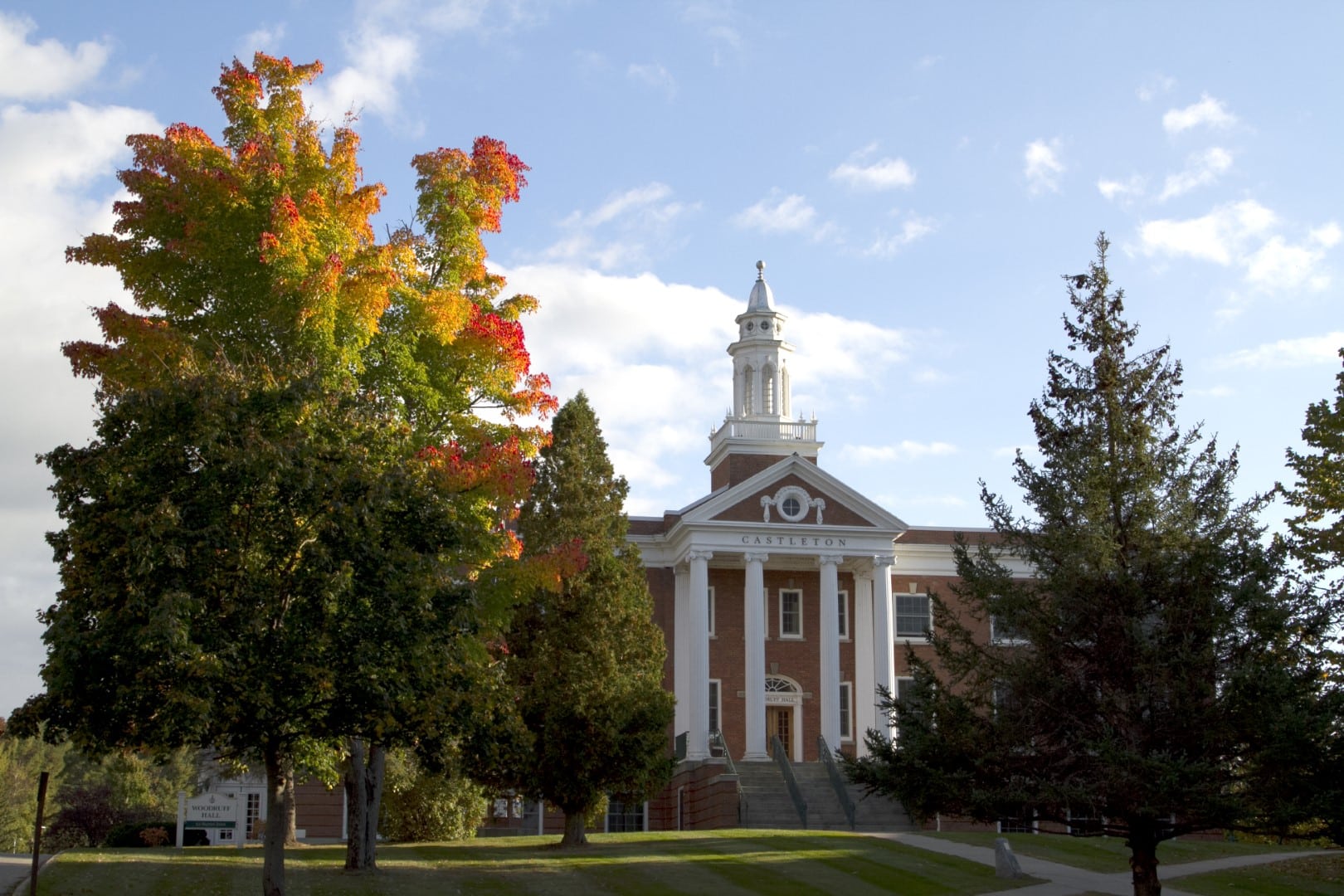
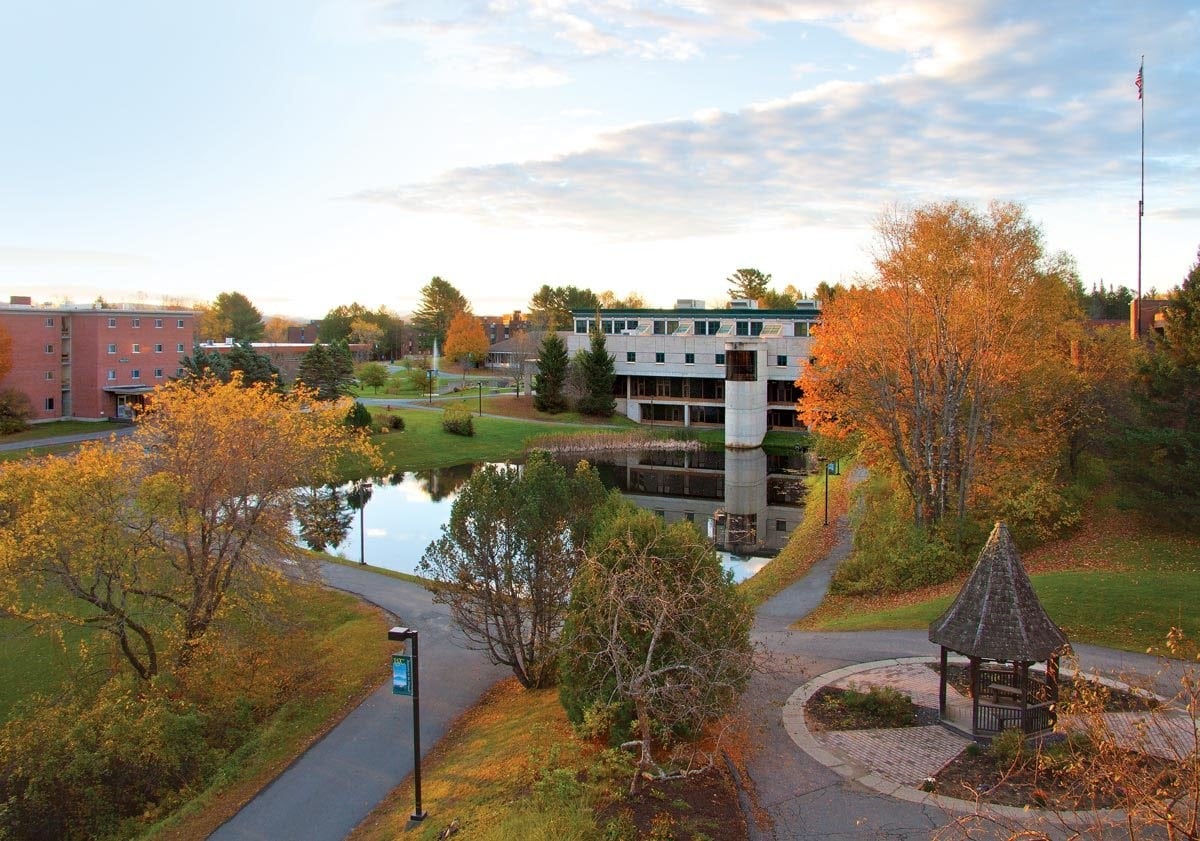
Life at Vermont State is fundamentally decentralized and defined by its five unique campuses: Castleton, Johnson, Lyndon, Randolph, and Williston. Each location has its own character—described as everything from a "cozy New England village" to a "regional hub of culture." The unifying theme across all sites is a close-knit community feel. This is not a monolithic, sprawling university experience; it's a collection of smaller colleges under one banner.
Student life revolves around the amenities and opportunities specific to each campus. This includes on-campus housing, dining halls, and a range of clubs and organizations. Division III athletics are a significant part of the culture, particularly at campuses like Castleton. The surrounding Vermont landscape provides a year-round abundance of outdoor activities, from hiking and skiing to exploring small towns. The student body is predominantly from Vermont (72% in-state), which reinforces the local, community-oriented vibe. college students make up a notable 47% of the undergraduate population, creating a peer environment where many are navigating higher education for the first time together.
Outcomes data for Vermont State University tells a story of a university serving a population where persistence and completion are significant challenges, but where a degree provides a clear financial return. The first-year retention rate is 67%, indicating some difficulty keeping students enrolled after the initial transition. Graduation rates are a central challenge, with various sources reporting figures between 33% and 58%; the university's own quick facts cite a 51% graduation rate.
However, for those who persist and graduate, the economic payoff is tangible. The median earnings ten years after entry are $50,331. This is roughly $8,500 more per year than the median earnings of a high school graduate. Data on earnings six years after graduation shows a median of $41,340. These figures suggest that the career-focused programs, particularly in fields like healthcare and technology, do lead to stable, middle-class employment. The outcomes profile is consistent with its mission: providing an accessible on-ramp to postsecondary education and workforce readiness for a population where college completion is not a foregone conclusion.
Affordability is the cornerstone of Vermont State University's value proposition. The average net price after aid is $18,212, a figure that positions it as a relatively low-cost option, especially for in-state students. The university emphasizes that students can receive financial aid—including loans, grants, scholarships, and work-study—up to the full cost of attendance.
Aid packages typically blend sources. On average, students receive $6,715 in federal grant aid, $2,869 in state grant aid, and $8,492 in institutional grant aid. The university offers merit-based scholarships, notably a renewable award of up to $10,000 for out-of-state students and up to $2,000 for in-state students. It's important to note that while the university meets demonstrated financial need with a package that may include grants, there is no indication of a "no-loan" policy where loans are eliminated from aid awards. Federal and institutional grants are awarded based on financial need as determined by the FAFSA. The financial aid policy is straightforward: it aims to make attendance possible through a combination of aid sources, with loans remaining a common component for many students.
Vermont State University stands out not for selectivity or prestige, but for its unwavering commitment to a specific, vital mission: serving as Vermont's accessible, affordable, and community-embedded public university. Its identity is multifaceted:
A Merger with a Mission: It is a new entity forged from the consolidation of several state colleges, deliberately designed to sustain public higher education across Vermont's regions. The five-campus model is its defining—and perhaps most challenging—feature, offering localized education but without a single, unified "university" campus feel.
The First-Gen University: With 47% of its undergraduates being first-generation college students, it is an engine of social mobility for Vermont families. Its academic programs, student support, and cost structure are built for this population.
Career Education, Plain and Simple: There is no pretense of a classical liberal arts core. Its portfolio of 105+ programs is a direct response to state and regional workforce needs in healthcare, education, technology, and business. You come here to get a job in Vermont or the Northeast.
The Value Proposition: For in-state students (who make up 72% of the population), it represents a potentially debt-conscious path to a degree with a proven salary premium. The high , coupled with a under $20k and median earnings over $50k a decade later, creates a compelling return-on-investment case for students who might not have other options.
In essence, Vermont State is the anti-boutique college. It's pragmatic, unglamorous, and essential—a university built for the students who need it most, offering a solid education that leads directly to a working life.
Vermont State University seal · sourceVermont State University Locations - Vermont State University · sourceVermont State University Locations - Vermont State University · sourceVermont State University Locations - Vermont State University · source