Admit rate has ranged 68%–81% over the last 5 years — notably volatile. Source: IPEDS via Urban Institute.
Acceptance & SAT from Common Data Set / IPEDS; net price, earnings & graduation from the U.S. Dept. of Education College Scorecard. Figures lag ~1–2 years — verify with the school.
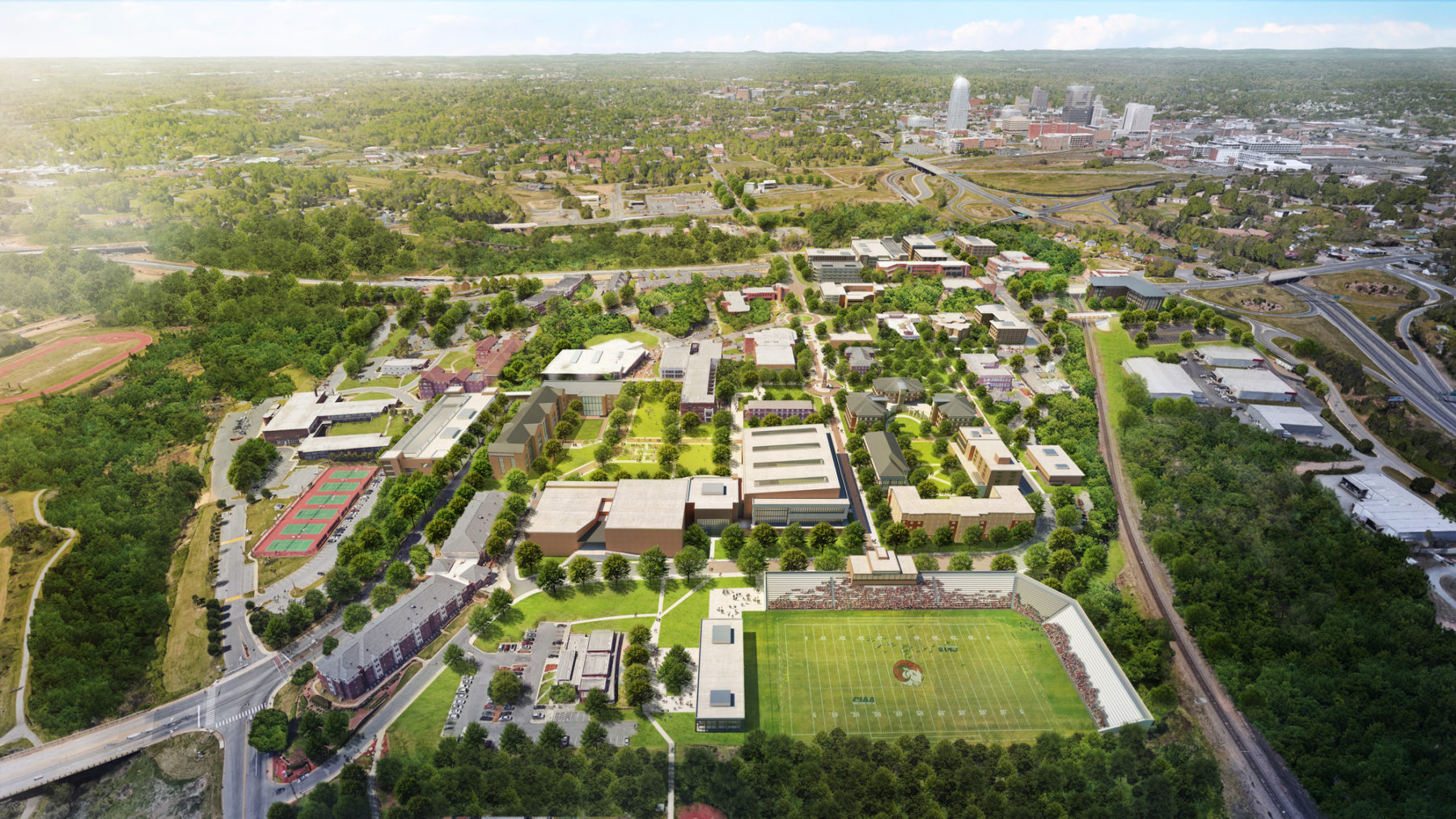
Winston-Salem State University (WSSU) is a public HBCU in North Carolina with a strong emphasis on healthcare, business, and education. Known for its tight-knit 'Ram Family' culture and accessible admissions, it combines affordability with solid outcomes—particularly in nursing and social services. The campus buzzes with tradition, from its 1892 founding to its lively student life.
Admission requirements
Test-optional — scores considered if submitted
Required
High school transcript
Grade point average
TOEFL (non-native English)
Considered (not required)
Class rank
Test scores (SAT/ACT)
Source: IPEDS Admissions survey (2022) via Urban Institute. Covers formal factors only — it does not reflect essays, extracurriculars, or other holistic criteria.
More details
Undergrad enrollment
4,170
In-state tuition
$6,126
Out-of-state tuition
$16,782
4-Year Grad Rate
33%
Notable Programs
Nursing, Social Work, Healthcare Management
Early-Career Earnings
$41,000
Student-Faculty Ratio
16:1
Need-Based Aid Recipients
92%
Outcomes & value
Outcomes & value
Median earnings (10 yr)
$45,344
Value (earnings ÷ net price)
3.4×
Median debt at graduation
$25,000
Graduation rate
47%
First-year retention
77%
Reducing loan balance (3 yr)
34%
Pell (lower-income) share
65%
First-gen share (among federal-aid recipients)
35%
Top-earning majors
Median earnings by field of study (highest credential), ~2 years after completion.
Registered Nursing, Nursing Administration, Nursing Research and Clinical Nursing$62,067
Clinical/Medical Laboratory Science/Research and Allied Professions$47,930
Accounting and Related Services$42,682
Computer and Information Sciences, General$40,647
Finance and Financial Management Services$35,420
Political Science and Government
Campus & location
Campus safety
On-campus violent crimes (2024)
20
Per 1,000 students
4.20
On-campus criminal offenses classed as violent (murder/non-negligent manslaughter, rape, robbery, aggravated assault) for the most recent reported year. Source: U.S. Dept. of Education Campus Safety and Security (Clery Act). Counts reflect what’s reported to the school, and urban campuses often report more partly due to non-student incidents nearby — read alongside campus size and setting, not as a standalone safety verdict.
Climate
Pleasant days / yr
99
Summer high
87°F
Winter low
34°F
Annual rain
45.5"
Annual snow
4.9"
Natural-hazard risk
Relatively Moderate
Pleasant days counts days per year with a mean temperature of 55–75°F, a high at or below 90°F, a low at or above 45°F, and little precipitation — a transparent comfort measure, not a weighting we invented. Computed from Open-Meteo ERA5 daily history (2019–2023). Natural-hazard risk is the county’s composite rating from the FEMA National Risk Index.
Deep dive — research, future-scholar output & economic mobility▾
Research output
Institutional h-index
119
Scholarly works
3,051
Institutional research volume and impact from OpenAlex. The h-index reflects large research universities and will be low for teaching-focused liberal-arts colleges — not a measure of undergraduate quality.
Economic mobility
Mobility rate
3.0%
Bottom → top quintile
14%
From bottom quintile
21%
Mobility rate = the share of students who both start in the bottom household-income quintile and reach the top quintile; bottom → top is that chance conditional on starting at the bottom. Source: Opportunity Insights Mobility Report Cards (Chetty, Friedman, Saez, Turner & Yagan). Reflects 1980–82 birth cohorts, so it’s directional, not current.
Quick answers
What is the acceptance rate at Winston-Salem State University?
Winston-Salem State University's acceptance rate is approximately 78% (Winston-Salem, NC), based on the most recent figures we compiled from public and primary sources.
What SAT score do you need for Winston-Salem State University?
Admitted students at Winston-Salem State University typically score 830–1020 on the SAT (the middle-50% range). Scores outside this band are still admitted, especially with strong applications.
How much does Winston-Salem State University cost?
At Winston-Salem State University, the average net price (after aid) is about $13,479 per year. Actual cost varies with financial aid and residency.
How many undergraduates attend Winston-Salem State University?
Winston-Salem State University enrolls approximately 4,170 undergraduate students.
Where is Winston-Salem State University located?
Winston-Salem State University is located in Winston-Salem, NC.
Admissions
WSSU is moderately selective, with a 78% acceptance rate—higher than many public universities but still requiring decent academic standing. The middle 50% of admitted students have SAT scores between 830-1020 or ACT scores of 15-20, with an average weighted GPA of 3.26. Notably, applicants with GPAs below 2.8 must submit test scores (minimum 17 ACT or 930 SAT). Women make up 80% of accepted students, reflecting a gender imbalance common at HBCUs.
WSSU offers 40+ undergraduate majors and , with standout departments in nursing, healthcare management, and social work. The ensures accessibility, though the suggests some academic adjustment challenges. Programs like gerontology and clinical laboratory science emphasize hands-on training, aligning with the university’s career-focused mission. The Princeton Review notes its emphasis on 'careers that give back,' particularly in teaching and public service.
Earnings = median of students working ~10 years after entry; debt = median of graduates. Value divides 10-yr earnings by one year’s net price — read it as earnings per dollar of annual cost, not a full lifetime ROI; it favors lower-cost schools. Source: U.S. Dept. of Education College Scorecard. Figures lag ~2 years and reflect all students, not your intended major.
$32,391
Health and Medical Administrative Services$32,094
Criminal Justice and Corrections$31,708
Source: U.S. Dept. of Education College Scorecard (field-of-study earnings). Figures cover graduates who received federal aid and lag ~2 years; not all programs report data.
Life at WSSU revolves around tradition and community. The university leans into its HBCU heritage with events like homecoming and step shows, while residence halls foster a 'safe, caring' environment. Niche gives the party scene an A+, but students also engage in 50+ clubs and Division II athletics (go Rams!). Recent initiatives include expanded food pantries and clothing resources, addressing student needs beyond academics.
The 49% overall graduation rate lags behind national averages, with men graduating at just 41%. However, early-career earnings average $41,000, with social work and public administration grads outperforming peers (e.g., $53,028 for public administration). The 4-year graduation rate is 33%, but Money magazine highlights the 4.4-year average time to degree as efficient for a public university.
WSSU is a best-value pick, with 92% of first-years receiving need-based aid averaging $10,709. The calculator helps families estimate costs after grants and scholarships. The university actively promotes affordability, noting that aid 'greatly reduces costs'—a selling point for its predominantly lower-income student body.
WSSU excels in practical, high-impact fields—nursing graduates consistently land jobs at nearby Atrium Health, while its social work program ranks in the 79th percentile for earnings. Unlike larger HBCUs, it offers a small-campus vibe with big-school spirit, blending affordability with a of lifting students into the middle class. Its weaknesses (graduation rates, male retention) are offset by strong ROI in key majors and an unmatched sense of belonging.
Winston-Salem State University logo · sourceWinston-Salem State University · sourceWinston-Salem College Campus Guide | Visit Winston Salem · sourceWinston-Salem State University Master Plan Update – Sasaki · source