Admit rate has ranged 75%–99% over the last 5 years — notably volatile, though the latest figure above (23%) falls outside that window. Source: IPEDS via Urban Institute.
Acceptance & SAT from Common Data Set / IPEDS; net price, earnings & graduation from the U.S. Dept. of Education College Scorecard. Figures lag ~1–2 years — verify with the school.
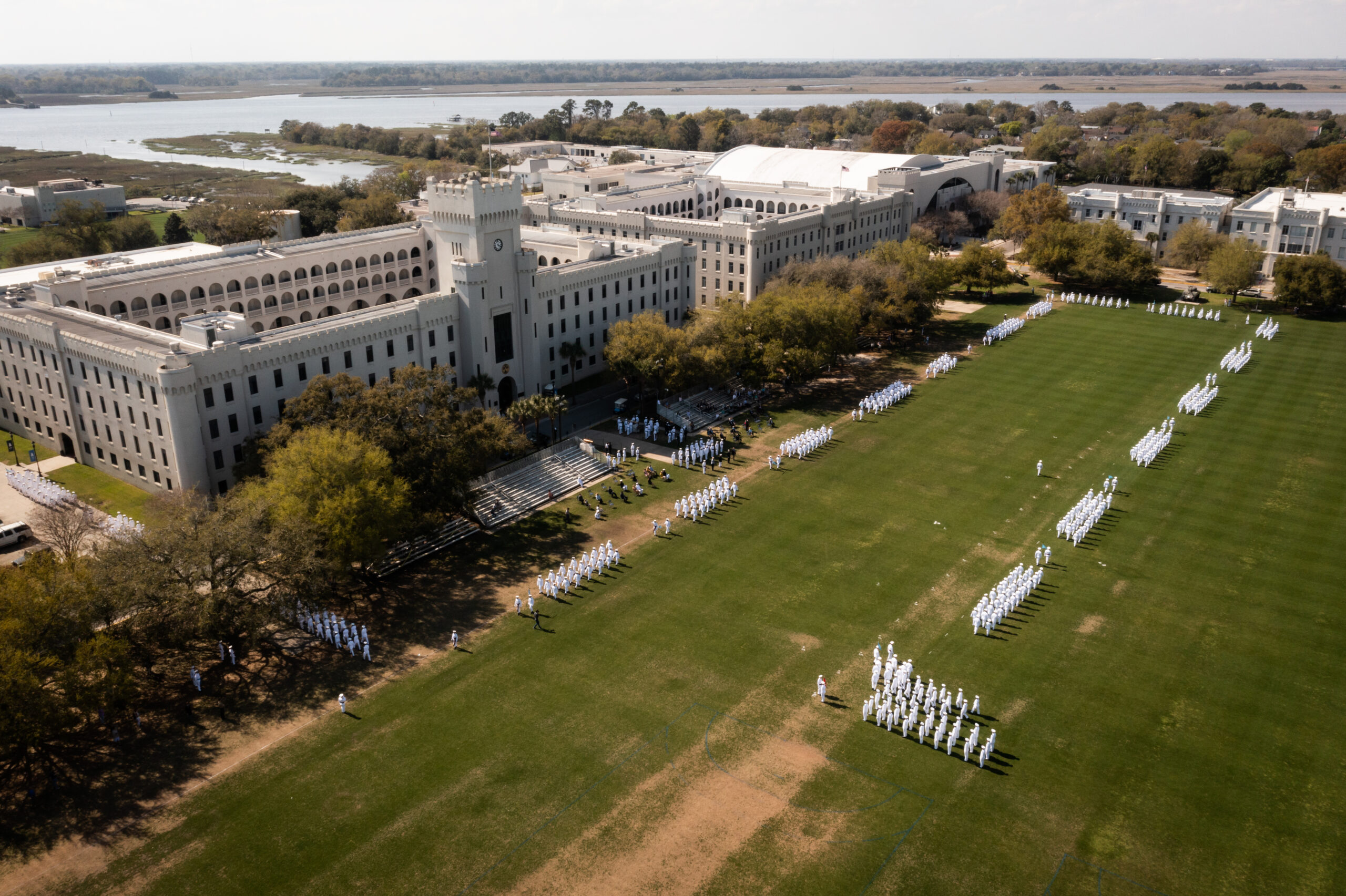
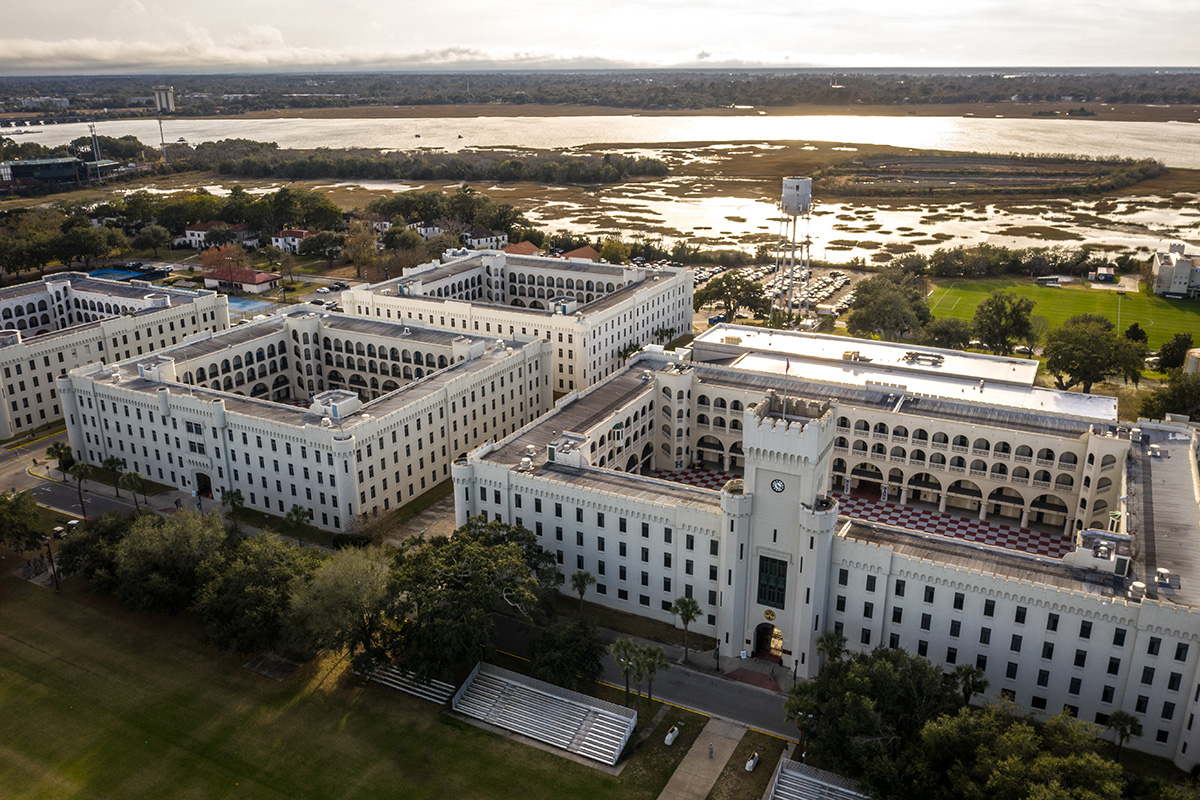
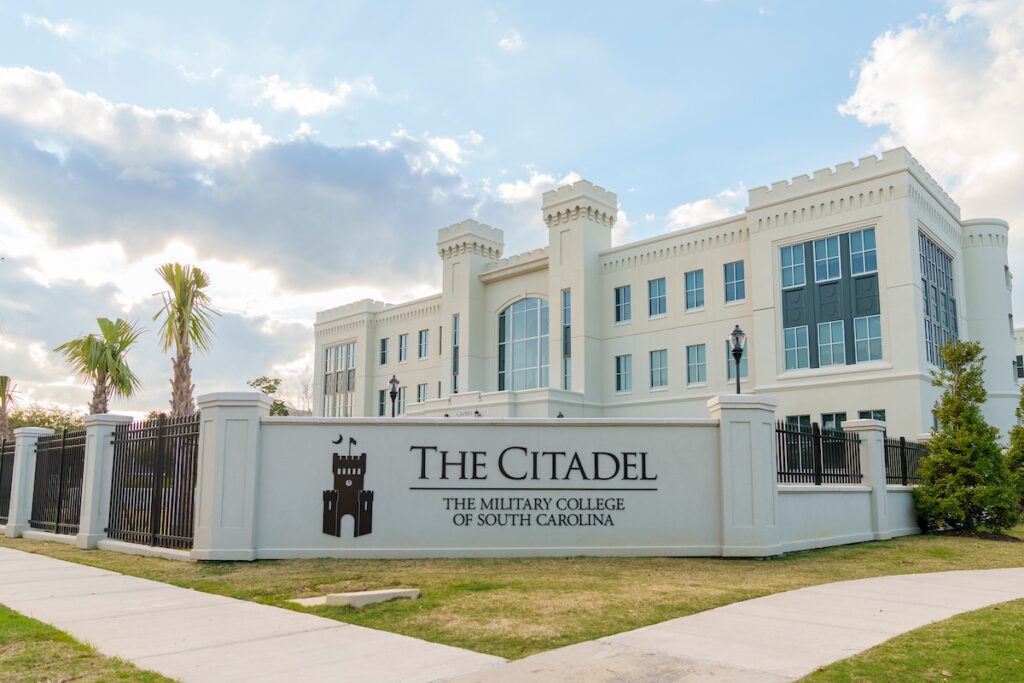
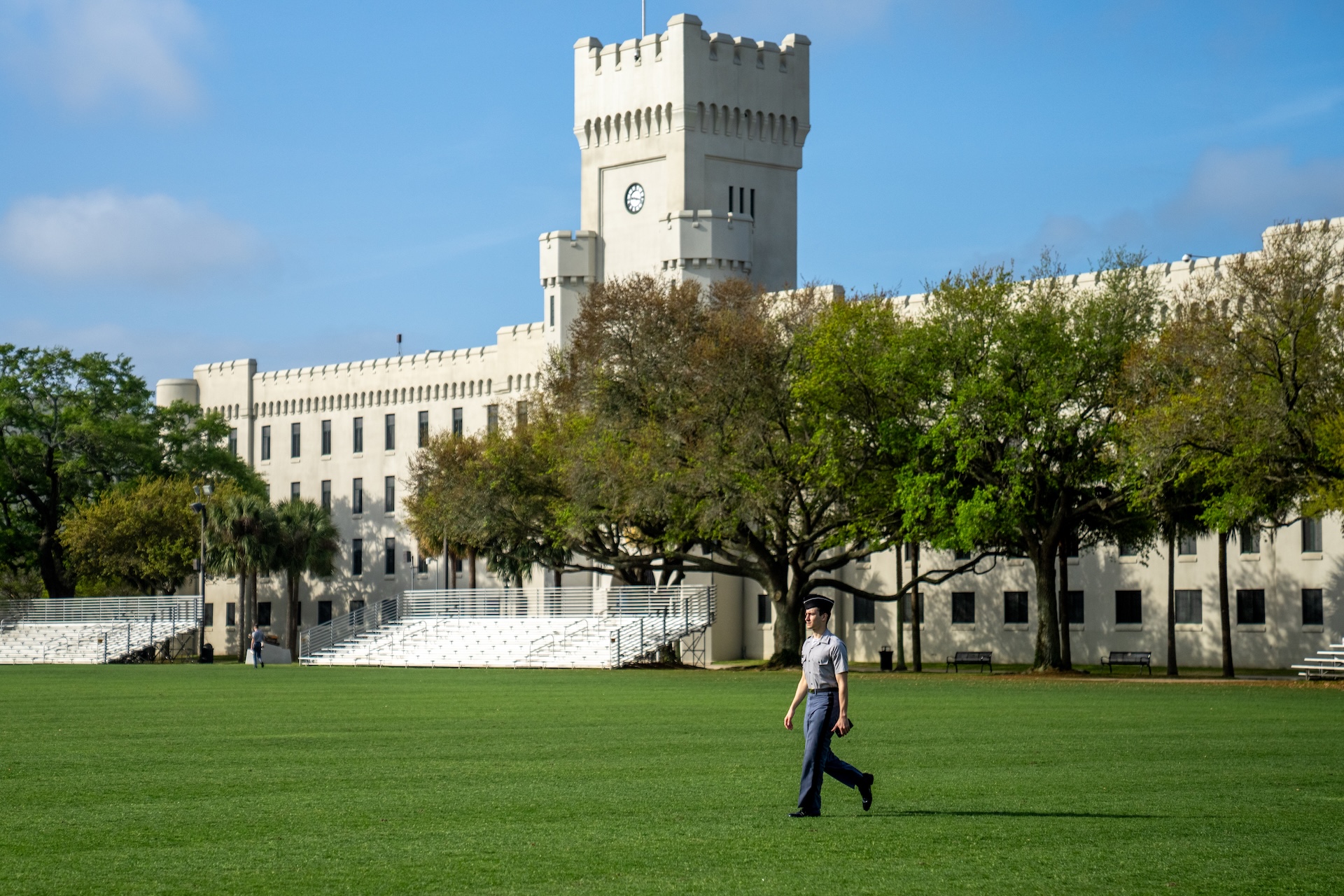
The Citadel is not a typical college; it is a crucible. This public military college in Charleston, South Carolina, forges its Corps of Cadets through a rigidly structured, four-year leadership development program wrapped around a traditional academic curriculum. The result is a singular, intense experience that produces graduates known for their discipline, integrity, and immediate career readiness, particularly in business, engineering, and military service.
Admission requirements
Test-optional — scores considered if submitted
Required
High school transcript
Grade point average
College-prep program
Considered (not required)
Class rank
Letters of recommendation
Test scores (SAT/ACT)
Source: IPEDS Admissions survey (2022) via Urban Institute. Covers formal factors only — it does not reflect essays, extracurriculars, or other holistic criteria.
More details
Undergrad enrollment
2,705
In-state tuition
$12,570
Out-of-state tuition
$38,508
Top Majors
Business (26%), Engineering (22%)
Graduation Rate
75%
Student-Faculty Ratio
11:1
Median Earnings (10yr)
$72,085
First-Year Retention Rate
86%
Outcomes & value
Outcomes & value
Median earnings (10 yr)
$72,085
Value (earnings ÷ net price)
3.5×
Median debt at graduation
$21,096
Graduation rate
75%
First-year retention
86%
Reducing loan balance (3 yr)
71%
Pell (lower-income) share
20%
First-gen share (among federal-aid recipients)
19%
Top-earning majors
Median earnings by field of study (highest credential), ~2 years after completion.
Electrical, Electronics, and Communications Engineering$63,692
Computer and Information Sciences, General$59,124
Civil Engineering$59,071
Business Administration, Management and Operations$48,617
Sports, Kinesiology, and Physical Education/Fitness$41,342
Physics
Campus & location
Campus safety
On-campus violent crimes (2024)
3
Per 1,000 students
0.80
On-campus criminal offenses classed as violent (murder/non-negligent manslaughter, rape, robbery, aggravated assault) for the most recent reported year. Source: U.S. Dept. of Education Campus Safety and Security (Clery Act). Counts reflect what’s reported to the school, and urban campuses often report more partly due to non-student incidents nearby — read alongside campus size and setting, not as a standalone safety verdict.
Climate
Pleasant days / yr
130
Summer high
86°F
Winter low
46°F
Annual rain
58.4"
Natural-hazard risk
Relatively High
Pleasant days counts days per year with a mean temperature of 55–75°F, a high at or below 90°F, a low at or above 45°F, and little precipitation — a transparent comfort measure, not a weighting we invented. Computed from Open-Meteo ERA5 daily history (2019–2023). Natural-hazard risk is the county’s composite rating from the FEMA National Risk Index.
Quick answers
What is the acceptance rate at Citadel Military College of South Carolina?
Citadel Military College of South Carolina's acceptance rate is approximately 23% (Charleston, SC), based on the most recent figures we compiled from public and primary sources.
What SAT score do you need for Citadel Military College of South Carolina?
Admitted students at Citadel Military College of South Carolina typically score 1085–1285 on the SAT (the middle-50% range). Scores outside this band are still admitted, especially with strong applications.
How much does Citadel Military College of South Carolina cost?
At Citadel Military College of South Carolina, the average net price (after aid) is about $20,723 per year. Actual cost varies with financial aid and residency.
How many undergraduates attend Citadel Military College of South Carolina?
Citadel Military College of South Carolina enrolls approximately 2,705 undergraduate students.
Where is Citadel Military College of South Carolina located?
Citadel Military College of South Carolina is located in Charleston, SC.
Admissions
Admission to The Citadel's Corps of Cadets is a dual-purpose evaluation: the college assesses traditional academic readiness while also looking for the character and resilience required to survive its demanding military environment. While public sources have historically cited as high as 93% or 98%, the institution's own and recent analyses indicate a far more selective process, with the most recent acceptance rate reported at 22.72%.
Applicants are evaluated holistically. The Common Data Set for 2024-2025 indicates that "special consideration in the admissions process" is given for participation in both school and nonschool-related activities, suggesting leadership and extracurricular involvement are valued. The academic profile of admitted students is solid, with an average high school GPA of 3.79. For those who submit scores, the middle 50% SAT range is 1085–1285.
A critical factor in understanding Citadel admissions is the significant gap between acceptance and matriculation. Alumni discussions note that "only about 40% of acceptees actually matriculate," pointing to a self-selecting applicant pool where many are admitted but ultimately choose not to endure the rigors of the Corps lifestyle. This results in a rate—the percentage of admitted students who enroll—of 34.0%.
Earnings = median of students working ~10 years after entry; debt = median of graduates. Value divides 10-yr earnings by one year’s net price — read it as earnings per dollar of annual cost, not a full lifetime ROI; it favors lower-cost schools. Source: U.S. Dept. of Education College Scorecard. Figures lag ~2 years and reflect all students, not your intended major.
$41,025
History$40,017
Teacher Education and Professional Development, Specific Subject Areas$39,729
Source: U.S. Dept. of Education College Scorecard (field-of-study earnings). Figures cover graduates who received federal aid and lag ~2 years; not all programs report data.
The Citadel's academic mission is straightforward: provide a rigorous, traditional liberal arts and professional education within the framework of military discipline. The curriculum for each major consists of "carefully selected required courses" offered primarily within the home department. The student-faculty ratio is 11:1, fostering close interaction in the classroom.
The most popular majors are firmly career-oriented. For the 2024 graduating class, 26% of degrees were in Business, Management, Marketing, and Related Support Services, and 22% were in Engineering. Other significant programs include Military Science, Leadership, and Operations. Data analysis shows the most specialized majors—those in which The Citadel awards a higher proportion of degrees than the national average—are Applied Sciences, History, and Engineering.
The college is consistently highly ranked, named the #1 Public University in the South offering up to a master's degree by U.S. News & World Report. This reputation stems from a potent combination of academic rigor, leadership training, and the high outcomes of its graduates.
Life at The Citadel is regimented, full stop. A visitor's account notes that "most of their day is scheduled with military and classes." This is not a campus of casual tailgates and spontaneous outings; it is a tightly controlled environment built on tradition, hierarchy, and shared hardship. The college describes itself as "a close-knit, mission-driven community where trust, pride and purpose define our culture."
Within this structure, students do participate in sports, clubs, and other activities. There are over 500 Jewish students served by the local Hillel in Charleston, for example. However, reviewers note that "the campus life may not cater to those seeking a vibrant social scene" in the conventional collegiate sense. The social fabric is woven from the shared experience of the Corps—the early morning formations, the uniform inspections, the constant pressure to perform—which forges an exceptionally strong alumni network and a profound sense of belonging among those who complete the program.
The Citadel's value proposition is crystallized in its outcomes: it takes students in and turns them into highly employable leaders. The four-year graduation rate is a robust 75%, a figure significantly higher than the national average and a testament to the structured environment that keeps students on track. The first-year retention rate is 86%.
Graduates enter the workforce with commanding salaries. Institutional data shows Engineering graduates earn an average of $64,722 straight out of college, and Business graduates earn $61,000. Broader measures show median earnings of more than $74,000 four years after graduating, and the median earnings ten years after entry are strong. A significant portion of each class also commissions directly into military service, where starting salaries are reported at $57,527. The combination of high graduation rates and strong early-career earnings underscores the return on investment of a Citadel degree.
As a public institution, The Citadel offers a cost structure that is lower than many private colleges, but the after aid is the critical figure for families. The average net price—the minus grants and scholarships—is $20,723. Other sources report similar figures, such as $21,041.
Financial aid is widely available. The average need-based scholarship or grant awarded to first-year students is $20,459, and 56% of first-year students receive . Overall, 43.86% of students receive financial aid, with an average aid package of $21,283. The Office of Financial Aid & Scholarships states its primary purpose is "to provide financial assistance to all students who, without such aid, would be unable to attend college." The college provides a Net Price Calculator to help families estimate their actual cost.
The Citadel stands apart in American higher education as one of the few senior military colleges that is public and maintains a corps-centric model for all undergraduate cadets. Its distinctiveness isn't found in quirky electives or a sprawling campus social life, but in the total integration of a classic academic education with an immersive leadership laboratory. Every aspect of a cadet's life—from the 5:30 AM wake-up to the mandatory class attendance in uniform—is designed to build discipline, accountability, and integrity.
This model produces a specific type of graduate: one who is not just educated but formed. Employers and graduate programs recognize the Citadel ring as a mark of proven resilience and the ability to perform under pressure. While the lifestyle is not for everyone—as evidenced by the high admit-to-matriculation fallout—those who embrace it join a legendary brotherhood and sisterhood. The college's #1 regional ranking is a reflection of its success in delivering on a very clear, very demanding promise: to produce principled leaders.
Citadel Military College of South Carolina seal · sourceVisiting The Citadel - South Carolina Corps of Cadets · sourceVisit The Citadel - Visit The Citadel · sourceVisit The Citadel - Visit The Citadel · source