Admit rate has ranged 37%–41% over the last 5 years. Source: IPEDS via Urban Institute.
Acceptance & SAT from Common Data Set / IPEDS; net price, earnings & graduation from the U.S. Dept. of Education College Scorecard. Figures lag ~1–2 years — verify with the school.
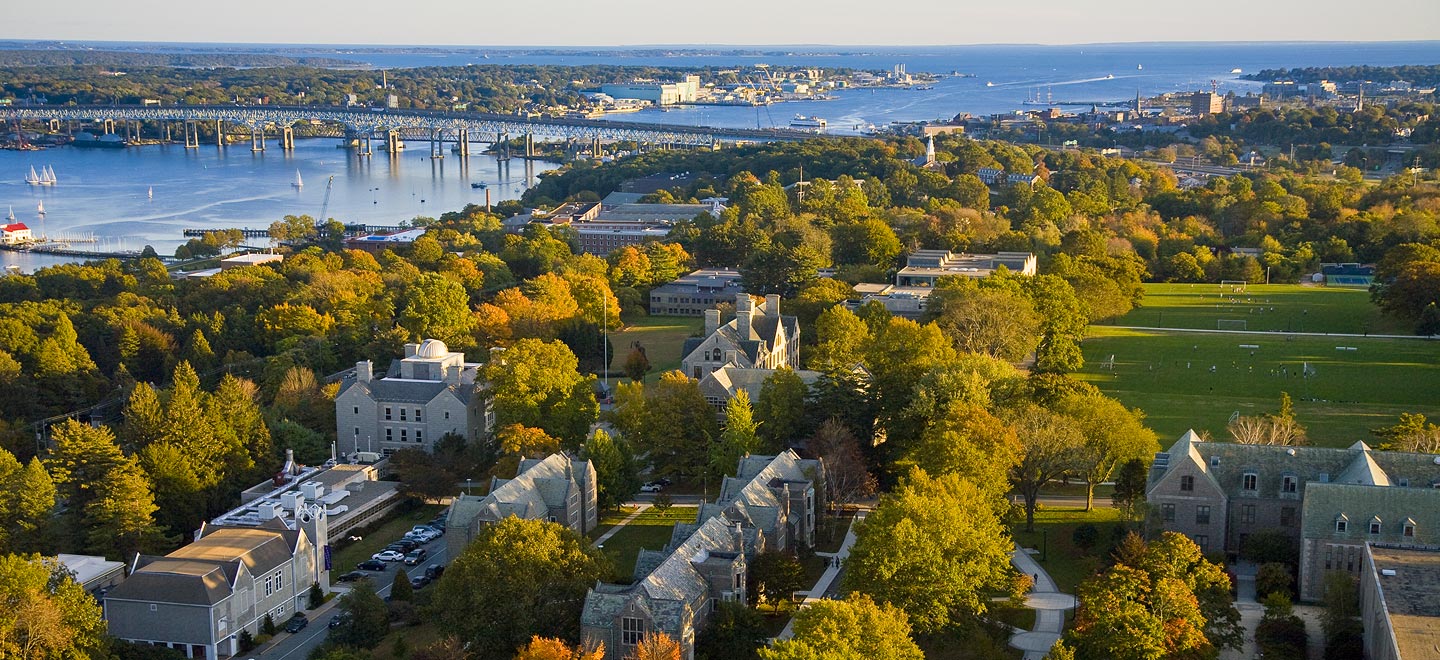
Connecticut College, or 'Conn,' is a private liberal arts college perched on a hill overlooking the Thames River and Long Island Sound. It's a place where the academic intensity of a 'Little Ivy' meets a distinctively collaborative and self-directed ethos, anchored by its signature Connections curriculum that pushes students to integrate their studies with real-world action. The vibe is a genuine mix—preppy, artsy, athletic, and intellectually curious students all find a home on a campus where nearly everyone lives, creating a tight-knit, residential community with a serious commitment to meeting full financial need.
Admission requirements
Test-optional — scores considered if submitted
Required
High school transcript
Letters of recommendation
TOEFL (non-native English)
Considered (not required)
Grade point average
Class rank
Test scores (SAT/ACT)
College-prep program
Demonstrated competencies
Source: IPEDS Admissions survey (2022) via Urban Institute. Covers formal factors only — it does not reflect essays, extracurriculars, or other holistic criteria.
More details
Undergrad enrollment
1,937
In-state tuition
$67,242
Out-of-state tuition
$67,242
No-Loan Policy
Yes, for AGI < $50k & EFC < $5k
Graduation Rate
82%
Meets Full Need
Yes
On-Campus Housing
99%
Demonstrated Interest
Considered
Median Earnings (10yr)
$75,001
Outcomes & value
Outcomes & value
Median earnings (10 yr)
$75,001
Value (earnings ÷ net price)
2.1×
Median debt at graduation
$23,500
Graduation rate
82%
First-year retention
90%
Reducing loan balance (3 yr)
91%
Pell (lower-income) share
14%
First-gen share (among federal-aid recipients)
14%
Earnings = median of students working ~10 years after entry; debt = median of graduates. divides 10-yr earnings by net price — read it as earnings per dollar of annual cost, not a full lifetime ROI; it favors lower-cost schools. Source: U.S. Dept. of Education College Scorecard. Figures lag ~2 years and reflect all students, not your intended major.
Financial health
2.8 / 3.0Meets the federal financial-responsibility standard
U.S. Dept. of Education Financial Responsibility Composite Score (FY2022-23). Scale −1.0 to 3.0; ≥1.5 meets the standard. Reported for private nonprofit & for-profit institutions only — public universities are state-backed and not scored, so this is a stability signal, not a ranking.
Top-earning majors
Median earnings by field of study (highest credential), ~2 years after completion.
Economics$54,522
Political Science and Government$45,696
Sociology$42,682
International Relations and National Security Studies$39,729
History$39,369
Area Studies$36,312
Romance Languages, Literatures, and Linguistics
Applicants here also applied to
The schools that most often appear alongside Connecticut College on applicants’ lists, from our self-reported outcomes corpus.
Co-application frequency from self-reported results — directional peer discovery, not a recommendation.
Campus & location
Campus safety
On-campus violent crimes (2024)
9
On-campus criminal offenses classed as violent (murder/non-negligent manslaughter, rape, robbery, aggravated assault) for the most recent reported year. Source: U.S. Dept. of Education Campus Safety and Security (Clery Act). Counts reflect what’s reported to the school, and urban campuses often report more partly due to non-student incidents nearby — read alongside campus size and setting, not as a standalone safety verdict.
Climate
Pleasant days / yr
104
Summer high
78°F
Winter low
28°F
Annual rain
56.7"
Annual snow
21.4"
Pleasant days counts days per year with a mean temperature of 55–75°F, a high at or below 90°F, a low at or above 45°F, and little precipitation — a transparent comfort measure, not a weighting we invented. Computed from Open-Meteo ERA5 daily history (2019–2023).
Deep dive — research, future-scholar output & economic mobility▾
Research output
Institutional h-index
153
Scholarly works
5,950
Institutional research volume and impact from OpenAlex. The h-index reflects large research universities and will be low for teaching-focused liberal-arts colleges — not a measure of undergraduate quality.
Economic mobility
Mobility rate
1.6%
Bottom → top quintile
51%
From bottom quintile
3%
Mobility rate = the share of students who both start in the bottom household-income quintile and reach the top quintile; bottom → top is that chance conditional on starting at the bottom. Source: Opportunity Insights Mobility Report Cards (Chetty, Friedman, Saez, Turner & Yagan). Reflects 1980–82 birth cohorts, so it’s directional, not current.
Quick answers
What is the acceptance rate at Connecticut College?
Connecticut College's acceptance rate is approximately 37% (New London, CT), based on the most recent figures we compiled from public and primary sources.
What SAT score do you need for Connecticut College?
Admitted students at Connecticut College typically score 1350–1500 on the SAT (the middle-50% range). Scores outside this band are still admitted, especially with strong applications.
How much does Connecticut College cost?
At Connecticut College, the average net price (after aid) is about $36,175 per year. Actual cost varies with financial aid and residency.
How many undergraduates attend Connecticut College?
Connecticut College enrolls approximately 1,937 undergraduate students.
Where is Connecticut College located?
Connecticut College is located in New London, CT.
Admissions
Gaining admission to Connecticut College is a selective but not impossibly narrow gate. For the Class of 2029, the college received 7,338 applications, admitted 2,875, and enrolled 459, resulting in an of 38% [7]. The middle 50% SAT range for admitted students who submitted scores is 1350–1500 [10, 12]. The college is , meaning first-year applicants are not required to submit standardized test scores [1].
Applying Early Decision can significantly improve an applicant's odds. The Early Decision acceptance rate is notably higher than the overall rate, reported at 41% compared to 36% overall in recent cycles [38]. Historical data shows ED acceptance rates have fluctuated between approximately 41% and 51% [37]. According to the , the college considers several factors in its . The academic rigor of a student's secondary school record is rated as "very important," while class rank, GPA, standardized test scores, application essays, recommendations, extracurricular activities, and character/personal qualities are all rated as "important" [1, 2]. Demonstrated interest is listed as "considered" in the admission process [1, 2, 40, 42]. The admissions office can be reached at (860) 439-2200 or [email protected] [2].
Source: U.S. Dept. of Education College Scorecard (field-of-study earnings). Figures cover graduates who received federal aid and lag ~2 years; not all programs report data.
Conn's academic identity is built on a foundation of 31 academic departments, 11 programs, and five centers, offering a classic liberal arts breadth [14]. The intellectual culture is defined by its innovative Connections curriculum, which moves beyond distribution requirements. The program is designed to help students "learn to write, communicate and solve real-world problems while also developing specialized skills" by intentionally linking courses across disciplines and culminating in a capstone project [13]. This integrative approach is a hallmark of the Conn experience.
The faculty are noted for being approachable and dedicated teachers [16]. Popular majors reflect both traditional liberal arts strengths and contemporary interests. For the 2024 graduating class, the most popular majors were Psychology (11%), Economics (9%), Computer Science (7%), and Political Science and Government (6%) [15]. Students have the flexibility to declare academic minors or additional majors, which must be done no later than the end of the junior year [18]. The career office and internship opportunities are frequently cited as excellent resources that support students in translating their academic work into professional pathways [16].
Life at Conn is intensely residential and communal. A defining characteristic is that 99% of students live in college-owned, -operated, or -affiliated housing, with just 1% living off-campus [24]. This creates a campus where, as the college describes it, "you come together as a group of people who have little or no common history, and together do the hard work of putting together a community" [19]. The Office of Campus Life works to build a "vibrant social co-curricular experience" that promotes engagement [21].
The student body is often described as a genuine mix. One observer notes it was "considered by most kids to have a very mixed student body – meaning some artsy, some sporty, some preppy, some alt" [20]. This blend contributes to a dynamic campus atmosphere where no single stereotype dominates. Students praise the friendly faculty, nice library, and good dining hall [22]. The campus itself is a key feature, situated on a hill with views of the Thames River and Long Island Sound, providing a picturesque New England setting for this close-knit community.
Connecticut College graduates leave with strong outcomes, supported by a high graduation rate. The four-year graduation rate for the Fall 2019 cohort (Class of 2023) was 74%, and the six-year rate was 80% [25]. Other sources report an overall graduation rate of 82% to 84%, placing the college in the top tier nationally [28, 29].
Financially, alumni see solid returns. Early career earnings (one year after graduation) average around $44,155, which is noted as better than expected given the mix of majors at comparable schools [29, 30]. The long-term trajectory is strong, with median earnings ten years after entry reported at $75,001 [26]. This figure aligns with the reported earnings five years after graduation of $66,752 per year [29]. These outcomes are bolstered by the college's noted career office and the practical, problem-solving focus of the Connections curriculum, which aims to prepare students for life after college [13, 16].
Connecticut College has a substantial comprehensive fee, but it pairs this with a robust and principled financial aid policy. The college states it "provides financial aid and scholarships/awards to all admitted students that meet 100 percent of their demonstrated need" [46]. Its official policy is to award "up to 100 percent of a student's eligibility, as long as deadlines have been met" [43].
Crucially, for the most financially vulnerable students, this commitment takes the form of a no-loan policy. The college is listed among institutions with no-loans financial aid policies for students with an Adjusted Gross Income (AGI) under $50,000 and an Expected Family Contribution (EFC) under $5,000 [47]. This means qualifying students' full demonstrated need is met with grants and work-study, not loans [44, 45]. The average after aid is $36,175 [27]. Families are encouraged to use the college's Net Price Calculator to get an individualized estimate of need-based grants and scholarships [31, 32, 33, 34]. The financial aid office can be contacted at (860) 439-2058 or [email protected] [31].
Connecticut College distinguishes itself through a powerful combination of academic intentionality, communal living, and ethical financial aid. Its Connections curriculum is not just another set of general education requirements; it's an integrated, purpose-driven framework that challenges students to synthesize knowledge across disciplines and apply it to complex problems, culminating in a tangible capstone project [13]. This creates graduates who are not just specialists but agile thinkers and problem-solvers.
This academic model thrives within an almost universally residential campus [24]. The result is a genuine, self-forming community where the 'mixed' student body—encompassing artists, athletes, pre-professional students, and activists—lives and learns together in close quarters, forging a unique collective identity [19, 20].
Finally, Conn backs its inclusive mission with real financial commitment. Its policy of meeting 100% of demonstrated need for all admitted students, coupled with a no-loan guarantee for lower-income families (AGI < $50,000), ensures that the college's distinctive experience is accessible based on talent, not just means [46, 47]. It's a 'Little Ivy' that pairs rigorous academics with a collaborative spirit and a conscience.
Connecticut College seal · sourceCampus Map · Connecticut College · sourceThe Campus · Connecticut College · sourceAbout Connecticut College · Connecticut College · source