Admit rate has ranged 54%–68% over the last 5 years — notably volatile. Source: IPEDS via Urban Institute.
Acceptance & SAT from Common Data Set / IPEDS; net price, earnings & graduation from the U.S. Dept. of Education College Scorecard. Figures lag ~1–2 years — verify with the school.
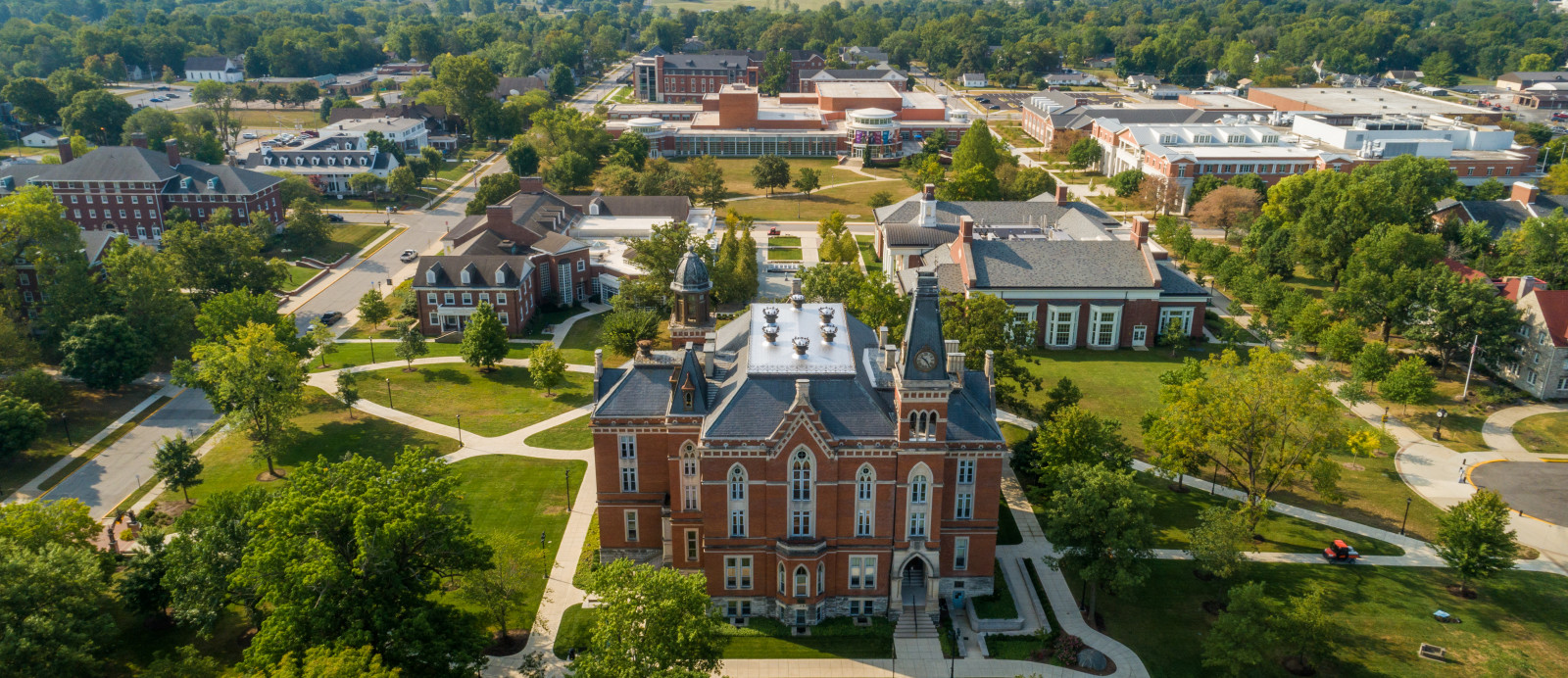
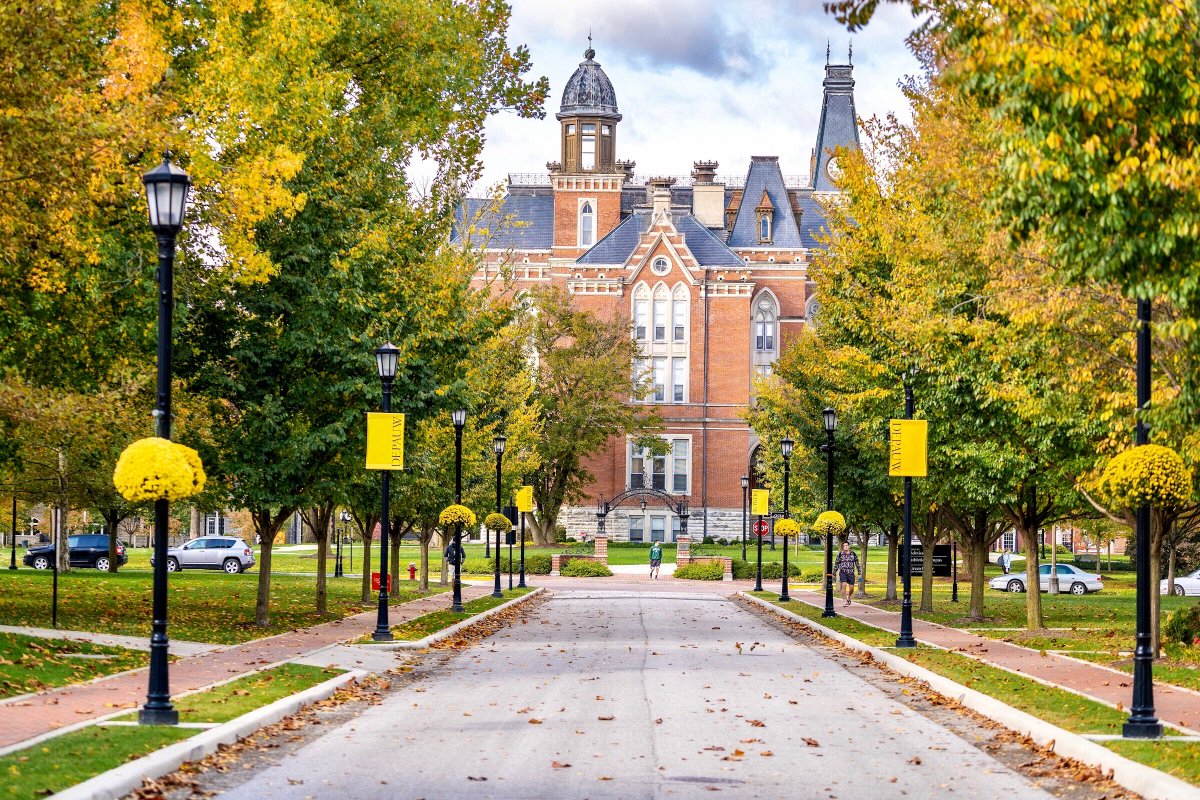
DePauw University is a residential liberal arts college in Greencastle, Indiana, that operates like a self-contained academic village. Its identity is split between a serious, outcomes-focused liberal arts core—bolstered by a top-tier School of Music—and a hyper-social, Greek-dominated campus culture where nearly everyone lives on campus. The recent 'DePauw Promise' to meet full financial need signals a push to broaden access to its distinctive, all-in undergraduate experience.
Admission requirements
Test-optional — scores considered if submitted
Required
High school transcript
Grade point average
Letters of recommendation
TOEFL (non-native English)
Considered (not required)
Class rank
Test scores (SAT/ACT)
College-prep program
Source: IPEDS Admissions survey (2022) via Urban Institute. Covers formal factors only — it does not reflect essays, extracurriculars, or other holistic criteria.
More details
Undergrad enrollment
1,905
In-state tuition
$59,070
Out-of-state tuition
$59,070
No-Loan Policy
Yes, for qualifying students (The DePauw Promise)
Graduation Rate
75%
Meets Full Need
Yes (for class entering Fall 2026+)
On-Campus Living
100%
ED Share of Class
High (estimated ~72%)
First-Year Retention
Not explicitly stated in sources
Demonstrated Interest
Considered
Median Earnings (10yr)
$70,527
Outcomes & value
Outcomes & value
Median earnings (10 yr)
$70,527
Value (earnings ÷ net price)
3.2×
Median debt at graduation
$27,000
Graduation rate
75%
First-year retention
89%
Reducing loan balance (3 yr)
82%
Pell (lower-income) share
16%
First-gen share (among federal-aid recipients)
16%
Earnings = median of students working ~10 years after entry; debt = median of graduates. divides 10-yr earnings by net price — read it as earnings per dollar of annual cost, not a full lifetime ROI; it favors lower-cost schools. Source: U.S. Dept. of Education College Scorecard. Figures lag ~2 years and reflect all students, not your intended major.
Financial health
2.4 / 3.0Meets the federal financial-responsibility standard
U.S. Dept. of Education Financial Responsibility Composite Score (FY2022-23). Scale −1.0 to 3.0; ≥1.5 meets the standard. Reported for private nonprofit & for-profit institutions only — public universities are state-backed and not scored, so this is a stability signal, not a ranking.
Top-earning majors
Median earnings by field of study (highest credential), ~2 years after completion.
Computer Science$66,941
Economics$57,860
Communication and Media Studies$43,054
Political Science and Government$42,682
English Language and Literature, General$38,289
Biology, General$38,289
Applicants here also applied to
The schools that most often appear alongside DePauw University on applicants’ lists, from our self-reported outcomes corpus.
Co-application frequency from self-reported results — directional peer discovery, not a recommendation.
Campus & location
Campus safety
On-campus violent crimes (2024)
4
On-campus criminal offenses classed as violent (murder/non-negligent manslaughter, rape, robbery, aggravated assault) for the most recent reported year. Source: U.S. Dept. of Education Campus Safety and Security (Clery Act). Counts reflect what’s reported to the school, and urban campuses often report more partly due to non-student incidents nearby — read alongside campus size and setting, not as a standalone safety verdict.
Climate
Pleasant days / yr
91
Summer high
83°F
Winter low
26°F
Annual rain
43"
Annual snow
16.4"
Natural-hazard risk
Relatively Low
Pleasant days counts days per year with a mean temperature of 55–75°F, a high at or below 90°F, a low at or above 45°F, and little precipitation — a transparent comfort measure, not a weighting we invented. Computed from Open-Meteo ERA5 daily history (2019–2023). Natural-hazard risk is the county’s composite rating from the FEMA National Risk Index.
Deep dive — research, future-scholar output & economic mobility▾
Research output
Institutional h-index
111
Scholarly works
4,005
Institutional research volume and impact from OpenAlex. The h-index reflects large research universities and will be low for teaching-focused liberal-arts colleges — not a measure of undergraduate quality.
Economic mobility
Mobility rate
0.9%
Bottom → top quintile
37%
From bottom quintile
2%
Mobility rate = the share of students who both start in the bottom household-income quintile and reach the top quintile; bottom → top is that chance conditional on starting at the bottom. Source: Opportunity Insights Mobility Report Cards (Chetty, Friedman, Saez, Turner & Yagan). Reflects 1980–82 birth cohorts, so it’s directional, not current.
Quick answers
What is the acceptance rate at DePauw University?
DePauw University's acceptance rate is approximately 57% (Greencastle, IN), based on the most recent figures we compiled from public and primary sources.
What SAT score do you need for DePauw University?
Admitted students at DePauw University typically score 1200–1410 on the SAT (the middle-50% range). Scores outside this band are still admitted, especially with strong applications.
How much does DePauw University cost?
At DePauw University, the average net price (after aid) is about $22,264 per year. Actual cost varies with financial aid and residency.
How many undergraduates attend DePauw University?
DePauw University enrolls approximately 1,905 undergraduate students.
Where is DePauw University located?
DePauw University is located in Greencastle, IN.
Admissions
DePauw's admissions process is selective but not hyper-competitive, positioning it as a reachable target for strong students. The university accepts the Common Application and its own DePauw Application. While test scores are considered, the middle 50% SAT range for admitted students is 1120–1370, and the average high school GPA of incoming students is a strong 3.92. The admissions office does consider an applicant's level of demonstrated interest as part of its evaluation. Notably, DePauw employs an Early Decision (ED) option, and there is a significant admissions advantage for those who apply ED; one analysis suggests the ED is substantially higher than the Regular Decision rate, and the university fills a large portion of its incoming class through this binding plan. The rate—the percentage of admitted students who enroll—is reported to be relatively low, around 13-18%.
Source: U.S. Dept. of Education College Scorecard (field-of-study earnings). Figures cover graduates who received federal aid and lag ~2 years; not all programs report data.
DePauw's academic offering is classic liberal arts, delivered through a College of Liberal Arts and Sciences and a distinguished School of Music. Students can choose from over 75 majors, minors, and pathways. Popular majors include Speech Communication and Rhetoric, along with Visual and Performing Arts, English, and Foreign Languages. A key academic requirement is the completion of a senior capstone project within one's major, maintaining at least a 2.0 GPA in that major. The faculty-student interaction is a highlighted strength, with a world-class faculty noted for being supportive and engaged. This combination of broad exploration and deep, capstone-driven focus in a chosen field defines the DePauw academic experience.
Life at DePauw is intensely residential and communal. The university describes itself as a 'fully immersive academic and residential experience,' and the numbers bear that out: 100% of students live on campus, with 97% in college-owned housing. This creates a 24/7 campus environment where learning and socializing are deeply intertwined. The extracurricular landscape is vibrant, with over 100 student clubs and organizations. Athletics and performing arts are major outlets. The campus culture has historically been shaped significantly by Greek life, which contributes to a highly social atmosphere. The sense of community is a recurring theme, with an emphasis on building close-knit, lasting friendships within this self-contained Indiana college town.
DePauw promotes strong post-graduation outcomes, with a focus on both immediate employment and further education. According to its First Destination Survey, 93% of graduates report achieving their desired outcome shortly after graduation. This breaks down into 61% employed and 28% continuing their education in graduate or professional school. The median salary for recent graduates is reported at $55,000. Longer-term, the median earnings for alumni ten years after entry are notably higher than the national median. The university's graduation rate is a key strength, significantly above the national midpoint for four-year colleges.
DePauw is a private institution with a high sticker price, but it is making significant institutional commitments to affordability. The university encourages all families to use its Calculator to get a personalized estimate of cost after scholarships and grants. Crucially, DePauw has announced The DePauw Promise, a financial aid initiative that pledges to meet 100% of the calculated financial need for all admitted students beginning with the Fall 2026 entering class. For qualifying students, this policy replaces loans in the financial aid package with grants, scholarships, and work-study—effectively creating a 'no-loan' model for those with demonstrated need. This represents a major shift toward ensuring the university's residential liberal arts education is accessible regardless of family financial circumstances.
DePauw stands out for its potent, almost paradoxical blend of traits. It is a serious liberal arts college with demanding academics and a celebrated School of Music, yet it is wrapped in a profoundly social, all-in residential shell. The 100% on-campus living requirement is rare and creates a unique intensity—this isn't a commuter school or a place where students scatter on weekends. That environment fosters incredible closeness and school spirit but also demands a student be comfortable in a fishbowl. The new 'DePauw Promise' is a game-changer, boldly committing to a no-loan, full-need-met model that places it among a small group of elite institutions making such a guarantee. It’s a college of deep traditions, strong alumni networks (particularly in the Midwest), and an educational model that insists on both broad exploration and a substantive, capstone-level deep dive. For the right student—one who thrives in a tight-knit, active community and values a liberal arts degree with clear postgraduate traction—DePauw offers a distinctive and all-encompassing four-year experience.
DePauw University seal · sourceThe College Tour - DePauw University · sourceCampus Guide: DePauw University - Spokin · sourceDePauw University | Athleticademix · source