Admit rate has ranged 10%–15% over the last 5 years. Source: IPEDS via Urban Institute.
Acceptance & SAT from Common Data Set / IPEDS; net price, earnings & graduation from the U.S. Dept. of Education College Scorecard. Figures lag ~1–2 years — verify with the school.
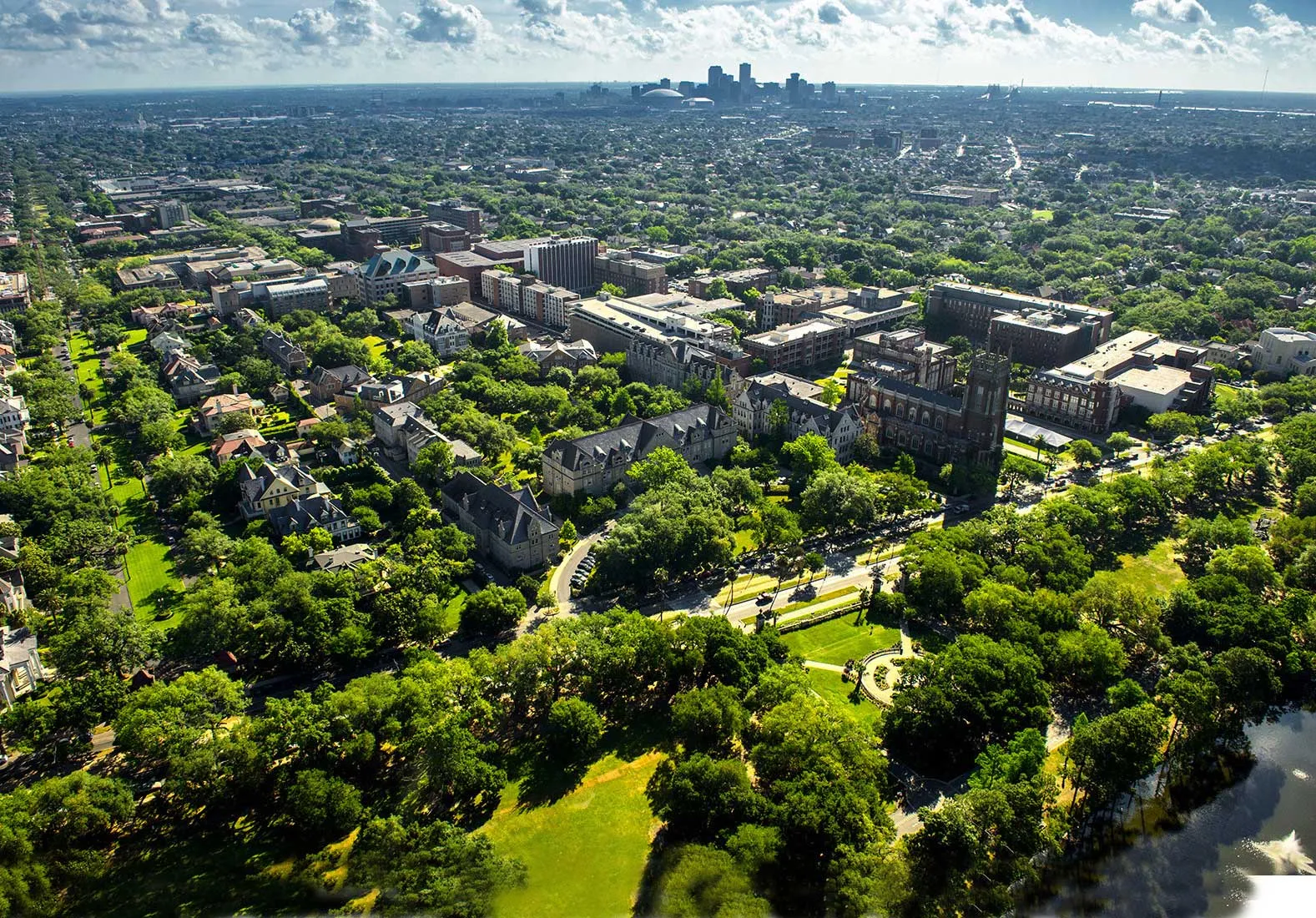
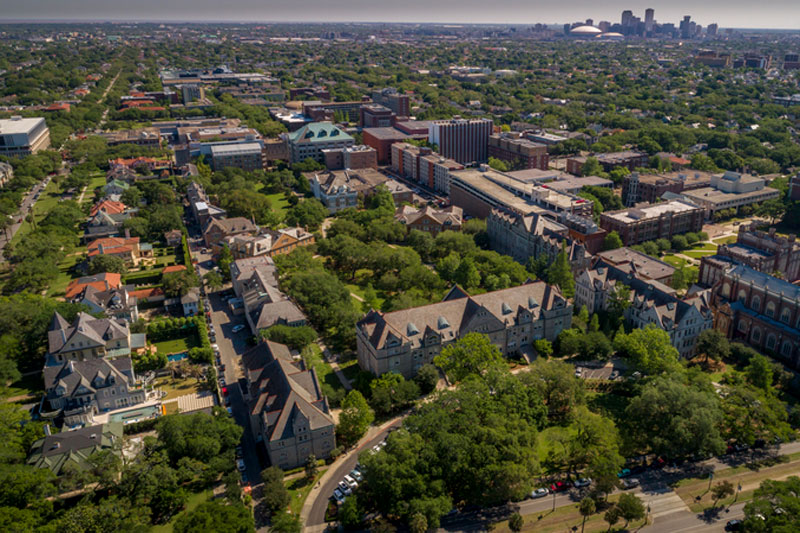
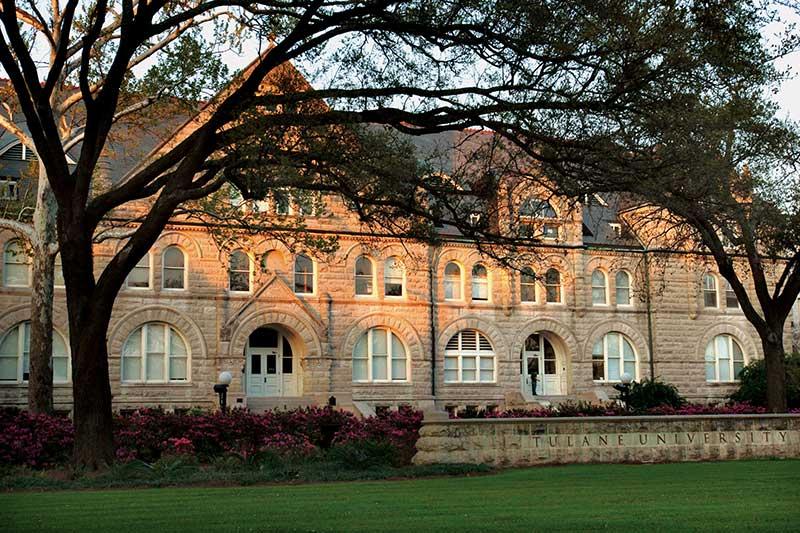
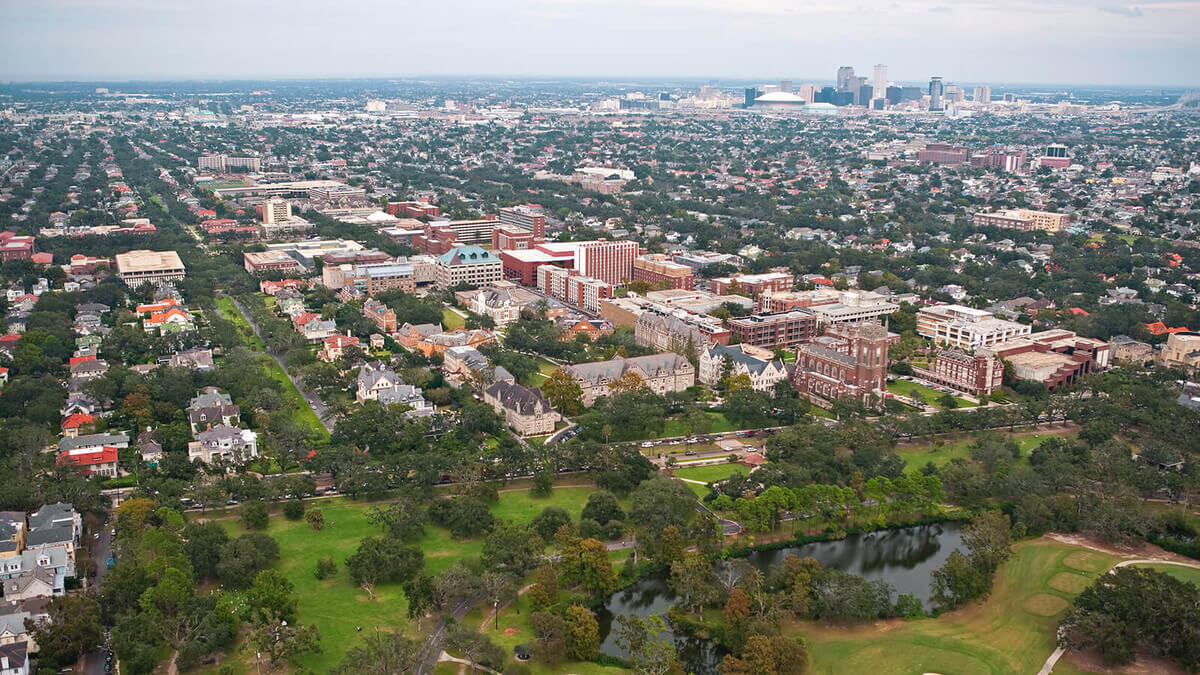
Tulane University isn't just a school in New Orleans—it's a school of New Orleans, a place where academic ambition collides with the city's vibrant, chaotic energy. Its admissions strategy is famously aggressive, filling most of its class through binding Early Decision, creating a student body that is both academically strong and deeply committed to the unique 'Tulane experience.' The university leverages its location as a living laboratory for everything from public health and business to music and social justice, all while maintaining a robust party culture and a powerful alumni network.
Admission requirements
Test-optional — scores considered if submitted
Required
High school transcript
Grade point average
Letters of recommendation
College-prep program
TOEFL (non-native English)
Considered (not required)
Class rank
Test scores (SAT/ACT)
Demonstrated competencies
Source: IPEDS Admissions survey (2022) via Urban Institute. Covers formal factors only — it does not reflect essays, extracurriculars, or other holistic criteria.
More details
Undergrad enrollment
7,767
In-state tuition
$68,678
Out-of-state tuition
$68,678
No-Loan Policy
Yes, incomes < $75k (NOLA Scholarship)
Graduation Rate
86%
Meets Full Need
Yes, for LA residents with AGI < $100k
ED Share of Class
~66-68%
First-Year Retention
93%
Demonstrated Interest
Important
Median Earnings (10yr)
$63,268
Outcomes & value
Outcomes & value
Median earnings (10 yr)
$63,268
Value (earnings ÷ net price)
1.6×
Median debt at graduation
$20,500
Graduation rate
86%
First-year retention
93%
Reducing loan balance (3 yr)
71%
Pell (lower-income) share
10%
First-gen share (among federal-aid recipients)
18%
Top-earning majors
Median earnings by field of study (highest credential), ~2 years after completion.
Chemical Engineering$69,338
Finance and Financial Management Services$64,281
Business Administration, Management and Operations$55,625
Computer and Information Sciences, General$50,606
Marketing$48,667
Homeland Security, Law Enforcement, Firefighting and Related Protective Services, Other
Applicants here also applied to
The schools that most often appear alongside Tulane on applicants’ lists, from our self-reported outcomes corpus.
Co-application frequency from self-reported results — directional peer discovery, not a recommendation.
Campus & location
Campus safety
On-campus violent crimes (2024)
31
Per 1,000 students
2.41
On-campus criminal offenses classed as violent (murder/non-negligent manslaughter, rape, robbery, aggravated assault) for the most recent reported year. Source: U.S. Dept. of Education Campus Safety and Security (Clery Act). Counts reflect what’s reported to the school, and urban campuses often report more partly due to non-student incidents nearby — read alongside campus size and setting, not as a standalone safety verdict.
Climate
Pleasant days / yr
109
Summer high
88°F
Winter low
50°F
Annual rain
68.6"
Natural-hazard risk
Relatively High
Pleasant days counts days per year with a mean temperature of 55–75°F, a high at or below 90°F, a low at or above 45°F, and little precipitation — a transparent comfort measure, not a weighting we invented. Computed from Open-Meteo ERA5 daily history (2019–2023). Natural-hazard risk is the county’s composite rating from the FEMA National Risk Index.
Quick answers
What is the acceptance rate at Tulane University of Louisiana?
Tulane University of Louisiana's acceptance rate is approximately 14% (New Orleans, LA), based on the most recent figures we compiled from public and primary sources.
What SAT score do you need for Tulane University of Louisiana?
Admitted students at Tulane University of Louisiana typically score 1400–1520 on the SAT (the middle-50% range). Scores outside this band are still admitted, especially with strong applications.
How much does Tulane University of Louisiana cost?
At Tulane University of Louisiana, the average net price (after aid) is about $39,949 per year. Actual cost varies with financial aid and residency.
How many undergraduates attend Tulane University of Louisiana?
Tulane University of Louisiana enrolls approximately 7,767 undergraduate students.
Where is Tulane University of Louisiana located?
Tulane University of Louisiana is located in New Orleans, LA.
Admissions
Getting into Tulane is a high-stakes game defined by its overwhelming preference for binding commitment. The university's admissions process is one of the most strategically front-loaded among selective private institutions. For the Class of 2028, Tulane received over 32,600 applications for a freshman class of around 1,800 students, resulting in an of around 13-14%. However, the headline statistic is the share of the class filled via Early Decision (ED). In recent years, Tulane has admitted close to two-thirds of its entering class through ED I and II, with some reports indicating it filled 68% of the class early for the Class of 2026. This creates a drastically different landscape for Regular Decision applicants, where acceptance rates can plummet to the low single digits.
Admitted students are academically accomplished. The middle 50% SAT range is 1400–1520, and the middle 50% ACT range is 32–34, with average GPAs for admitted students around 3.77. According to the , admissions officers prioritize four factors as "very important": rigor of secondary school record, class rank, GPA, and standardized test scores. Demonstrated interest, once merely "considered," was elevated to an "important" factor in the 2022-23 cycle, making campus visits, interviews, and engagement with admissions materials a more significant part of the evaluation. For those not applying ED, the Early Action (EA) pathway exists, but its acceptance rate is notably lower than ED, with estimates suggesting it may be around 16-17%, still significantly higher than the ultra-competitive Regular Decision pool.
Earnings = median of students working ~10 years after entry; debt = median of graduates. Value divides 10-yr earnings by one year’s net price — read it as earnings per dollar of annual cost, not a full lifetime ROI; it favors lower-cost schools. Source: U.S. Dept. of Education College Scorecard. Figures lag ~2 years and reflect all students, not your intended major.
$46,790
Economics$43,519
Psychology, General$35,594
Source: U.S. Dept. of Education College Scorecard (field-of-study earnings). Figures cover graduates who received federal aid and lag ~2 years; not all programs report data.
Tulane's academic structure is built on a foundation of interdisciplinary exploration across five undergraduate schools within Newcomb-Tulane College. The university offers over 75 majors and minors, encouraging students to blend studies across fields. A defining feature is the interdisciplinary core curriculum, which requires all students to engage with the humanities, fine arts, social sciences, and sciences, ensuring a broad liberal arts foundation regardless of major.
Popular and prominent programs reflect both traditional strengths and the unique opportunities presented by New Orleans. The most popular majors are in Business, Management, Marketing, and Related Support Services (accounting for 30% of 2024 graduates), followed by Social Sciences (15%), Psychology (8%), and Biological and Biomedical Sciences. The A.B. Freeman School of Business is a major draw, and the university's location makes it a national leader in fields like public health, environmental science, architecture, and music. The curriculum is designed to connect classroom learning to real-world challenges, particularly those relevant to an urban, coastal environment. Students can also pursue accelerated 4+1 programs to earn both a bachelor's and a master's degree in five years.
Life at Tulane is inextricably linked to the rhythm, culture, and energy of New Orleans. The campus itself offers a traditional collegiate experience with over 200 student organizations, diverse housing and dining options, and a strong emphasis on school spirit and athletics. However, the city acts as an extended campus, offering unparalleled access to music, food, festivals, and a distinct cultural atmosphere that is woven into the student experience.
The social scene is known for being vibrant and welcoming, with a significant party culture that students describe as a fun and integral part of campus life. As one Reddit user summarized, "Most of the students here are friendly and welcoming, there's lots of school spirit and the party culture here makes things fun." This is balanced by countless opportunities for involvement in clubs, leadership positions, and community engagement. The university actively encourages students to "explore Tulane with your senses," promoting immersion in the local culture. From the sounds of second-line parades to the tastes of Creole cuisine, the city provides a constant, dynamic backdrop that shapes a unique undergraduate experience far removed from a typical college town.
Tulane graduates are supported by a strong institutional track record of completion and a valuable alumni network. The university's six-year graduation rate has held steady at 86% or higher since the 2014 cohort, indicating that students who enroll are highly likely to persist and earn their degree. The four-year graduation rate is also robust, reported at 81% by some sources.
In terms of post-graduate earnings, the median income for Tulane alumni ten years after entry is $63,268. Earlier career earnings, one year after graduation, have a median of $36,427. These outcomes are bolstered by Tulane's reputation in key professional fields like business and its deep connections in the Gulf South and beyond. The high retention and graduation rates suggest a student body that is well-integrated and supported, translating academic investment into successful degree completion and career launch.
Tulane is a high-cost private institution, but it employs a significant financial aid strategy to increase accessibility. The average after grants and scholarships is $39,949. Aid comes in two primary forms: merit-based and need-based.
All freshman applicants are automatically considered for partial merit scholarships, which can range from $1,000 up to full tuition. For students with financial need, Tulane has made substantial commitments, particularly for Louisiana residents. The Louisiana Promise program guarantees that the university will meet 100% of the demonstrated financial need for admitted in-state students whose families have an adjusted gross income of $100,000 or less, and it does so with a no-loan package, meaning aid is composed entirely of grants and work-study.
For all other students, Tulane offers a No Loan Assistance (NOLA) Scholarship for first-year students whose families have an adjusted gross income below $75,000. This program replaces loans with grants in the financial aid package. The average institutional aid award is substantial, reported at $47,055, which brings the net cost down significantly from the full sticker price. Families are encouraged to use Tulane's Net Price Calculator for a personalized estimate.
Tulane's distinctiveness is a product of its deliberate and deep synthesis with New Orleans. It's not merely located in a city; its identity, curriculum, and student experience are forged by it. This creates an educational environment that is inherently applied and engaged, where studying public health, urban studies, music, or entrepreneurship happens alongside the very communities and industries that define those fields.
Its admissions model is another defining trait. By filling such a large proportion of its class through Early Decision, Tulane cultivates a student body that has actively chosen it as a first-choice destination, fostering an immediate and intense campus loyalty. This strategy, combined with its rising selectivity, has cemented its status as a "Southern Ivy"—a highly selective, private university with a powerful regional draw and growing national prestige.
Finally, its recent financial aid innovations, especially the no-loan promises for lower-income Louisiana students and the broader NOLA scholarship, signal a serious commitment to socioeconomic diversity and access within its home state. The result is a university that offers a potent mix: the academic rigor and post-graduate network of a top-tier private research institution, fused with the cultural immersion and spirited social life of one of America's most iconic cities.
Tulane University of Louisiana seal · sourceCampuses · sourceTulane named 'most beautiful campus in Louisiana' · sourceTulane University of Louisiana — Admissions, Tuition & Acceptance Rate | Appily · source