Admit rate has ranged 55%–78% over the last 5 years — notably volatile. Source: IPEDS via Urban Institute.
Acceptance & SAT from Common Data Set / IPEDS; net price, earnings & graduation from the U.S. Dept. of Education College Scorecard. Figures lag ~1–2 years — verify with the school.
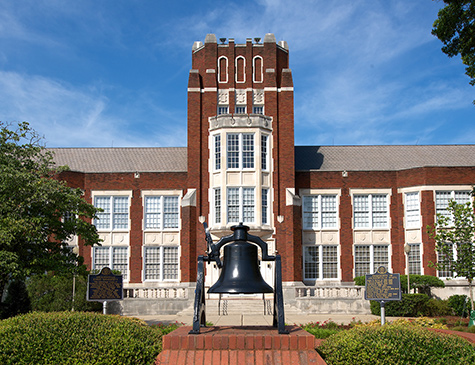
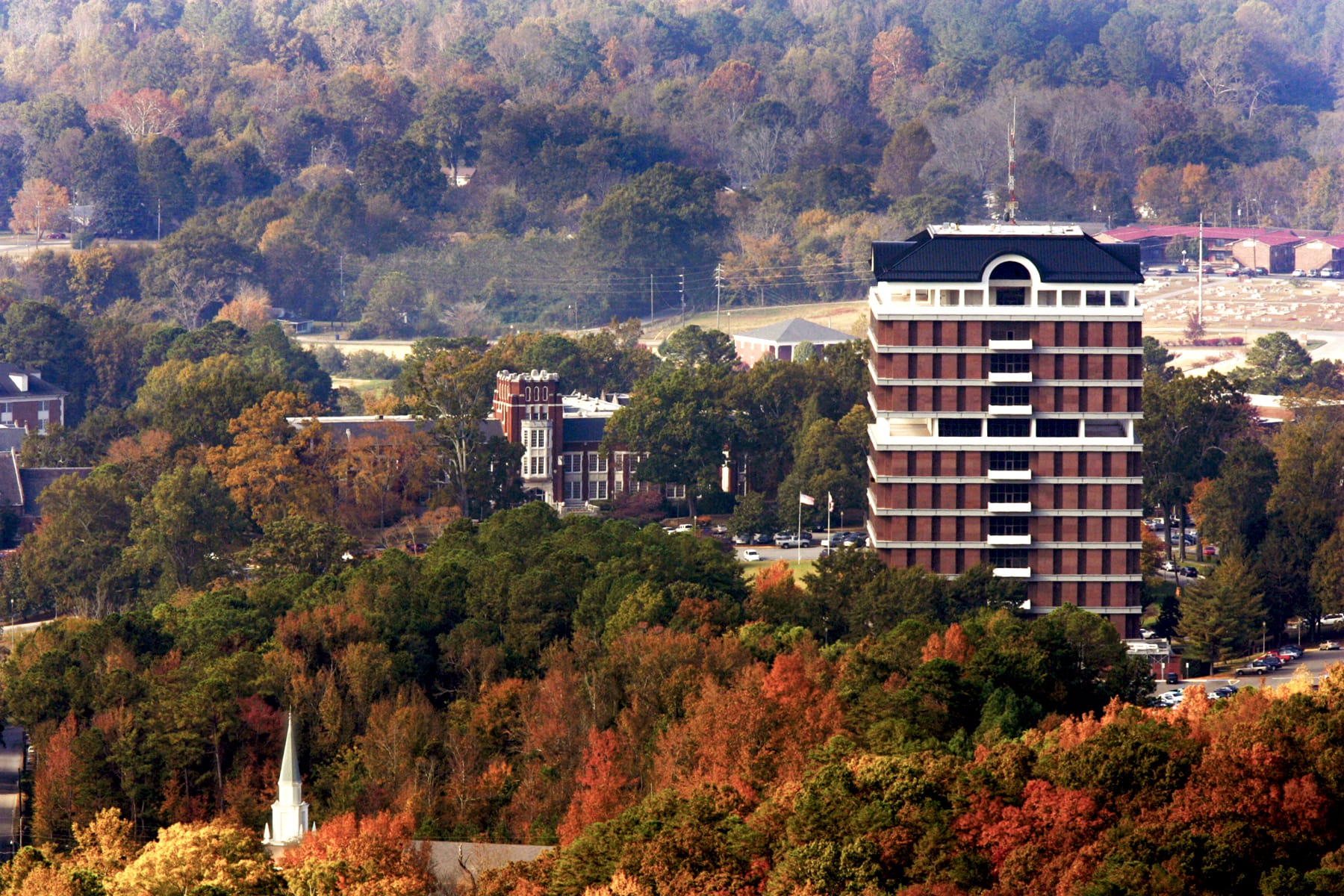
Jacksonville State University, nestled in the quiet, safe city of Jacksonville, Alabama, operates as a regional public institution with a distinctly accessible and practical ethos. It’s a place where a high school diploma or GED and a pulse can get you in the door, but where the real work—and payoff—comes from navigating its sprawling catalog of over 100 career-focused programs, from nursing to education. The vibe is friendly and close-knit, with a majority of students living off-campus but finding community in more than 130 clubs and a campus life often described as the friendliest in the South. For students who engage fully, JSU delivers a straightforward proposition: a manageable net price, a solid chance of graduating, and a median paycheck a decade out that reflects its role as a critical engine of skilled labor for Alabama and beyond.
Admission requirements
Test-optional — scores considered if submitted
Required
High school transcript
Grade point average
TOEFL (non-native English)
Considered (not required)
Test scores (SAT/ACT)
Source: IPEDS Admissions survey (2022) via Urban Institute. Covers formal factors only — it does not reflect essays, extracurriculars, or other holistic criteria.
More details
Undergrad enrollment
7,036
In-state tuition
$12,894
Out-of-state tuition
$23,334
Graduation Rate
55%
On-Campus Housing
35%
Student-Faculty Ratio
19:1
Median Earnings (10yr)
$45,235
Classes Under 20 Students
43.1%
Average Need-Based Grant (First-Year)
$6,418
First-Year Students Receiving Need-Based Aid
100%
Outcomes & value
Outcomes & value
Median earnings (10 yr)
$45,235
Value (earnings ÷ net price)
3.2×
Median debt at graduation
$22,189
Graduation rate
55%
First-year retention
65%
Reducing loan balance (3 yr)
42%
Pell (lower-income) share
43%
First-gen share (among federal-aid recipients)
36%
Top-earning majors
Median earnings by field of study (highest credential), ~2 years after completion.
Quality Control and Safety Technologies/Technicians$59,846
Registered Nursing, Nursing Administration, Nursing Research and Clinical Nursing$57,874
Public Administration and Social Service Professions, Other$49,058
Computer and Information Sciences, General$48,745
Campus & location
Campus safety
On-campus violent crimes (2024)
4
Per 1,000 students
0.48
On-campus criminal offenses classed as violent (murder/non-negligent manslaughter, rape, robbery, aggravated assault) for the most recent reported year. Source: U.S. Dept. of Education Campus Safety and Security (Clery Act). Counts reflect what’s reported to the school, and urban campuses often report more partly due to non-student incidents nearby — read alongside campus size and setting, not as a standalone safety verdict.
Climate
Pleasant days / yr
101
Summer high
87°F
Winter low
40°F
Annual rain
57.1"
Annual snow
0.8"
Natural-hazard risk
Relatively Moderate
Pleasant days counts days per year with a mean temperature of 55–75°F, a high at or below 90°F, a low at or above 45°F, and little precipitation — a transparent comfort measure, not a weighting we invented. Computed from Open-Meteo ERA5 daily history (2019–2023). Natural-hazard risk is the county’s composite rating from the FEMA National Risk Index.
Deep dive — research, future-scholar output & economic mobility▾
Research output
Institutional h-index
86
Scholarly works
1,967
Institutional research volume and impact from OpenAlex. The h-index reflects large research universities and will be low for teaching-focused liberal-arts colleges — not a measure of undergraduate quality.
Economic mobility
Mobility rate
1.3%
Bottom → top quintile
10%
From bottom quintile
13%
Mobility rate = the share of students who both start in the bottom household-income quintile and reach the top quintile; bottom → top is that chance conditional on starting at the bottom. Source: Opportunity Insights Mobility Report Cards (Chetty, Friedman, Saez, Turner & Yagan). Reflects 1980–82 birth cohorts, so it’s directional, not current.
Quick answers
What is the acceptance rate at Jacksonville State University?
Jacksonville State University's acceptance rate is approximately 78% (Jacksonville, AL), based on the most recent figures we compiled from public and primary sources.
What SAT score do you need for Jacksonville State University?
Admitted students at Jacksonville State University typically score 1000–1290 on the SAT (the middle-50% range). Scores outside this band are still admitted, especially with strong applications.
How much does Jacksonville State University cost?
At Jacksonville State University, the average net price (after aid) is about $14,279 per year. Actual cost varies with financial aid and residency.
How many undergraduates attend Jacksonville State University?
Jacksonville State University enrolls approximately 7,036 undergraduate students.
Where is Jacksonville State University located?
Jacksonville State University is located in Jacksonville, AL.
Admissions
Jacksonville State University's admissions process is designed to be accessible, reflecting its mission as a public regional institution. The university admits students either unconditionally or conditionally; those with a cumulative high school GPA below 3.0 are conditionally admitted unless they have an ACT composite score of 18 or higher. A high school diploma is required, and a GED is accepted. The process is not highly selective, with an consistently reported around 78%. For the class entering in recent years, the middle 50% SAT score range has been reported as 970–1260, though the university's own published range is 1000–1290. Test scores are considered for admission. The university does not appear to have an Early Decision program, and while specific data on rates (the percentage of admitted students who enroll) is listed in the Fact Book, the exact figures for recent years are not provided in the snippets. The admissions philosophy is straightforward: meet the baseline academic criteria, and you're likely in.
Earnings = median of students working ~10 years after entry; debt = median of graduates. Value divides 10-yr earnings by one year’s net price — read it as earnings per dollar of annual cost, not a full lifetime ROI; it favors lower-cost schools. Source: U.S. Dept. of Education College Scorecard. Figures lag ~2 years and reflect all students, not your intended major.
Business Administration, Management and Operations
$38,018
Accounting and Related Services$37,363
Special Education and Teaching$36,560
Source: U.S. Dept. of Education College Scorecard (field-of-study earnings). Figures cover graduates who received federal aid and lag ~2 years; not all programs report data.
JSU's academic profile is defined by breadth and practicality. The university offers more than 100 academic programs spanning bachelor's, master's, post-baccalaureate, and doctoral degrees, including a Doctor of Nursing Practice (D.N.P.), Doctor of Science (D.Sc.), and Doctor of Education (Ed.D.). The student-faculty ratio is 19:1, and 43.1% of classes have fewer than 20 students, suggesting a mix of larger introductory courses and more intimate seminars. Nursing is frequently cited as one of its top and most prominent majors. The curriculum is geared toward producing competent, ethical professionals, with a strong emphasis on career-ready skills across disciplines like business, education, and the health professions.
Life at Jax State is characterized by a strong sense of community on a campus frequently described as the friendliest in the South. The university promotes a "close-knit and welcoming" atmosphere. While 65% of students live off-campus, 35% live in college-owned, -operated, or -affiliated housing. The campus life hub offers resources for housing, dining, student health, and other student services. Students can choose from more than 130 clubs and organizations, alongside student leadership programs, academic and social activities, internship/co-op opportunities, job counseling, and study abroad programs. The surrounding city of Jacksonville is noted as a "quiet and safe" environment that allows students to focus on their studies while enjoying a "wholesome student life."
Graduation and post-graduation earnings tell a story of a university serving a broad student population. The six-year graduation rate is reported at 55%, though other sources cite figures of 51% and 56%. The four-year graduation rate is lower, at 36%. For those who persist and graduate, the median earnings outcome is solid for a regional public university: one source reports median earnings of $40,158 six years after graduation, while another notes earnings of $42,602 one year after graduation. The university itself has set retention and graduation targets, including an 8-year graduation rate target of 56% and a first-year retention target of 75%. These figures underscore JSU's role in advancing social mobility for students who complete their degrees.
JSU positions itself as an affordable option, with an average after aid reported at $14,279. is widely available: the average need-based scholarship or grant awarded to first-year students was $6,418, and 100% of first-year students received some form of need-based aid. Another source indicates that 99% of full-time, first-year undergraduates received assistance through scholarships and grants. The university's financial aid office emphasizes federal and state grants, scholarships, and work-study opportunities. However, the university is candid about its limitations, stating explicitly that it "cannot meet the financial needs of all applicants" and urging students to seek outside sources of aid. Aid is primarily need-based, determined by completing a standardized need analysis like the FAFSA.
Jacksonville State University stands out for its unpretentious, mission-driven focus on providing accessible, career-oriented education to the region. It doesn't chase prestige through low ; instead, it opens its doors widely, offering conditional admission paths and evaluating a broad range of students. Its strength lies in its scale and scope—over 100 programs, including doctoral offerings—paired with a surprisingly intimate feel in many classes. The campus culture, famously friendly and supportive, compensates for the fact that most students commute. Financially, it delivers significant value, with nearly every first-year student receiving grant aid to bring the down to a manageable level. For students in Alabama and the surrounding area seeking a practical degree in fields like nursing, education, or business without the cutthroat competition or crippling debt of more selective institutions, JSU represents a reliable, straightforward choice where success is defined by graduation and employability, not exclusivity.
Jacksonville State University seal · sourceCampus Map - Campus Map · sourceDiscover JSU - Discover JSU · sourceJacksonville State University - Encyclopedia of Alabama · source