Admit rate has ranged 79%–96% over the last 5 years — notably volatile. Source: IPEDS via Urban Institute.
Acceptance & SAT from Common Data Set / IPEDS; net price, earnings & graduation from the U.S. Dept. of Education College Scorecard. Figures lag ~1–2 years — verify with the school.
Kansas State University is a sprawling, land-grant powerhouse in the Flint Hills where tradition runs deep and the color purple is a way of life. It’s a place where world-class agriculture and veterinary science programs anchor a surprisingly broad academic portfolio of over 250 majors, all delivered with a Midwestern pragmatism and a famously welcoming, community-oriented spirit. Think of it as a big school that works hard to feel like a small town, where success is measured in strong graduation rates, solid post-graduate earnings, and lifelong loyalty to the Wildcats.
Admission requirements
Test-optional — scores considered if submitted
Required
High school transcript
Grade point average
Considered (not required)
Class rank
Test scores (SAT/ACT)
College-prep program
Source: IPEDS Admissions survey (2022) via Urban Institute. Covers formal factors only — it does not reflect essays, extracurriculars, or other holistic criteria.
More details
Undergrad enrollment
15,142
In-state tuition
$11,221
Out-of-state tuition
$28,568
Campus Housing
27% live on campus
Graduation Rate
71%
Median Earnings (10yr)
$57,262
Six-Year Graduation Rate
68.4% (2021 cohort)
First-Year Retention Rate
Leading in state (per K-State news)
Average Starting Salary (Baccalaureate)
$60,000
Outcomes & value
Outcomes & value
Median earnings (10 yr)
$57,262
Value (earnings ÷ net price)
3.0×
Median debt at graduation
$21,250
Graduation rate
71%
First-year retention
86%
Reducing loan balance (3 yr)
68%
Pell (lower-income) share
21%
First-gen share (among federal-aid recipients)
22%
Top-earning majors
Median earnings by field of study (highest credential), ~2 years after completion.
Electrical, Electronics, and Communications Engineering$71,734
Chemical Engineering$70,456
Industrial Engineering$70,456
Computer and Information Sciences, General$69,338
Architectural Engineering$65,557
Mechanical Engineering$65,131
Campus & location
Campus safety
On-campus violent crimes (2024)
10
Per 1,000 students
0.51
On-campus criminal offenses classed as violent (murder/non-negligent manslaughter, rape, robbery, aggravated assault) for the most recent reported year. Source: U.S. Dept. of Education Campus Safety and Security (Clery Act). Counts reflect what’s reported to the school, and urban campuses often report more partly due to non-student incidents nearby — read alongside campus size and setting, not as a standalone safety verdict.
Climate
Pleasant days / yr
70
Summer high
89°F
Winter low
25°F
Annual rain
32"
Annual snow
15.8"
Natural-hazard risk
Relatively Low
Pleasant days counts days per year with a mean temperature of 55–75°F, a high at or below 90°F, a low at or above 45°F, and little precipitation — a transparent comfort measure, not a weighting we invented. Computed from Open-Meteo ERA5 daily history (2019–2023). Natural-hazard risk is the county’s composite rating from the FEMA National Risk Index.
Deep dive — research, future-scholar output & economic mobility▾
Research output
Institutional h-index
625
Scholarly works
80,443
Institutional research volume and impact from OpenAlex. The h-index reflects large research universities and will be low for teaching-focused liberal-arts colleges — not a measure of undergraduate quality.
Economic mobility
Mobility rate
1.3%
Bottom → top quintile
30%
From bottom quintile
4%
Mobility rate = the share of students who both start in the bottom household-income quintile and reach the top quintile; bottom → top is that chance conditional on starting at the bottom. Source: Opportunity Insights Mobility Report Cards (Chetty, Friedman, Saez, Turner & Yagan). Reflects 1980–82 birth cohorts, so it’s directional, not current.
Quick answers
What is the acceptance rate at Kansas State University?
Kansas State University's acceptance rate is approximately 82% (Manhattan, KS), based on the most recent figures we compiled from public and primary sources.
What SAT score do you need for Kansas State University?
Admitted students at Kansas State University typically score 1060–1260 on the SAT (the middle-50% range). Scores outside this band are still admitted, especially with strong applications.
How much does Kansas State University cost?
At Kansas State University, the average net price (after aid) is about $19,406 per year. Actual cost varies with financial aid and residency.
How many undergraduates attend Kansas State University?
Kansas State University enrolls approximately 15,142 undergraduate students.
Where is Kansas State University located?
Kansas State University is located in Manhattan, KS.
Admissions
K-State operates with an accessible, straightforward admissions process that prioritizes academic preparation over cutthroat competition. The university is , allowing applicants to choose whether to submit SAT or ACT scores. For those who do submit, the middle 50% SAT range is 1060–1260, and the ACT range is 20–27. The most important academic factor is a student's high school GPA; data shows that a significant portion of admitted students have a GPA of 3.75 or higher. The process is designed to be transparent, with the university providing a calculator and clear checklists for prospective students. Notably, the admissions rate—the percentage of admitted students who enroll—has seen a decline over the past decade, falling from 41.60% in 2015 to 27.48% in 2025, indicating that K-State competes for students in a broader regional market.
Earnings = median of students working ~10 years after entry; debt = median of graduates. Value divides 10-yr earnings by one year’s net price — read it as earnings per dollar of annual cost, not a full lifetime ROI; it favors lower-cost schools. Source: U.S. Dept. of Education College Scorecard. Figures lag ~2 years and reflect all students, not your intended major.
Agricultural and Food Products Processing$63,749
Construction Engineering Technology/Technician$62,012
Source: U.S. Dept. of Education College Scorecard (field-of-study earnings). Figures cover graduates who received federal aid and lag ~2 years; not all programs report data.
With more than 250 undergraduate majors and programs, K-State offers a classic comprehensive land-grant education. The academic experience is defined by its depth in practical, high-demand fields. The most popular majors cluster in Business, Management, Marketing, and Related Support Services and Agricultural / Animal / Plant / Veterinary Science. This isn't just a school with a strong ag program; it's a national leader in it. Beyond its flagship disciplines, the College of Arts and Sciences provides a vast array of foundational majors and minors, ensuring a well-rounded core for all students. The academic rigor and structure of programs are frequently praised by students, particularly in STEM and professional fields. The curriculum is built to be applied and relevant, reflecting the university's mission to solve real-world problems—a mindset that permeates everything from engineering to the humanities.
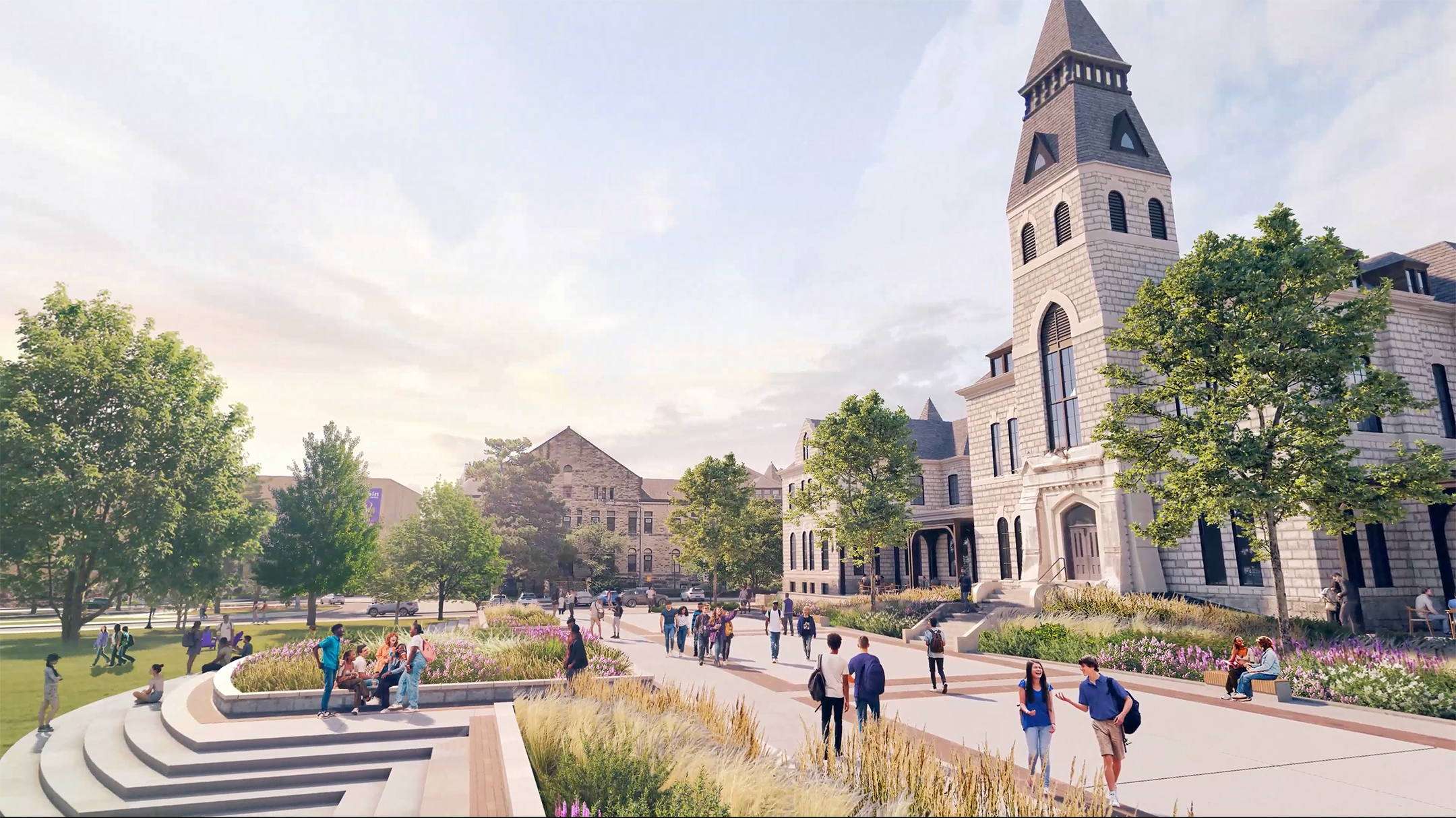
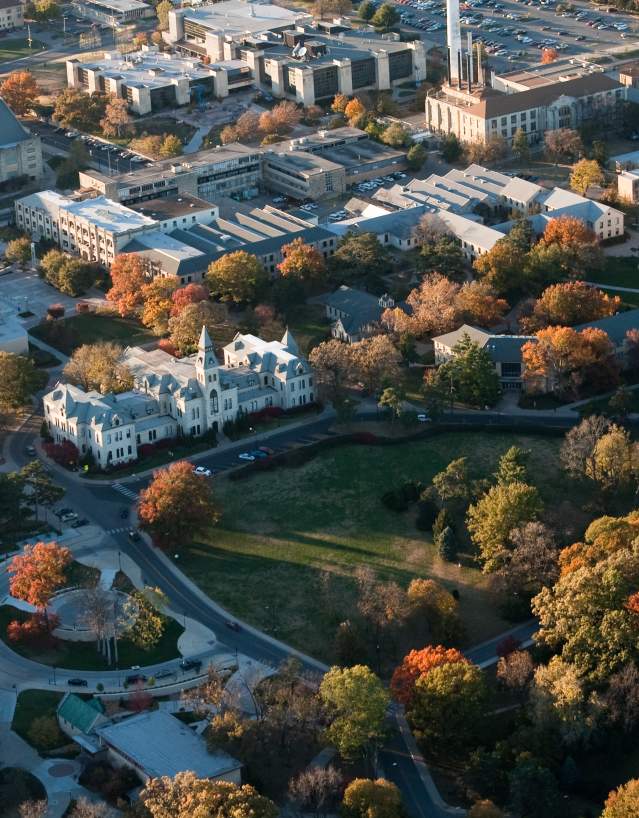
Life at K-State is defined by an overwhelming sense of community and school spirit. The campus in Manhattan is described as vibrant and full of energy, with a constant stream of events, games, and activities. A key feature is the high level of student involvement; there are countless clubs, organizations, and intramural sports, making it easy to find a niche. The campus culture is notably friendly and outdoorsy, with students frequently seen socializing and playing games on the lawns. While the university provides a traditional residential experience for a portion of the student body, a majority—73%—live off-campus, contributing to a lively college town atmosphere. From attending football games as a unified sea of purple to participating in longstanding university traditions, student life is deeply intertwined with K-State identity. Resources for student success, health, and safety are centrally organized and promoted, reinforcing the supportive environment.
K-State delivers strong, tangible results for its graduates, a point of pride for the institution. The university has led other public universities in Kansas in both first-year retention rates and six-year graduation rates. Recent data shows a consistent upward trajectory, with the six-year graduation rate reaching 68.4% for a recent cohort. Post-graduation outcomes are robust. According to a university outcomes report, the average starting salary for baccalaureate graduates has risen to $60,000. This focus on career readiness and successful placement underscores the practical, value-oriented education K-State provides. The combination of improving graduation rates and competitive early-career earnings paints a picture of an institution that effectively prepares students for the workforce and sees them through to completion.
K-State positions itself as a high-value public institution, providing tools for families to understand and plan for costs. The university emphasizes transparency through its calculator, which estimates average costs for tuition, fees, books, and personal expenses after accounting for potential aid. Financial aid is need-based for most federal programs, requiring students to demonstrate financial need through the FAFSA. The university's financial assistance office provides clear checklists and policies to guide students through the process. While the sources do not indicate the existence of a no-loan policy or a guarantee to meet 100% of demonstrated financial need, the focus is on providing a clear picture of net cost and facilitating access to federal grants, state aid, and institutional scholarships to make attendance feasible.
Kansas State stands out as the definitive land-grant university of Kansas—a place where deep tradition meets practical ambition. Its identity is built on a unique trifecta: academic strength in flagship fields (particularly agriculture and veterinary medicine), a proven record of student success with leading retention and graduation rates in the state, and an unmatched communal culture that fosters lifelong loyalty. This isn't a campus where you just go to class; you become part of the 'K-State Family.' The vibe is authentically Midwestern—hardworking, friendly, and deeply proud. It offers the resources and research opportunities of a major R1 university while maintaining the supportive feel of a much smaller college. For students seeking a comprehensive education with clear pathways to a career, all within a spirited and welcoming community, K-State represents a compelling and high-value choice.
Kansas State University seal · sourceK-State sets campus transformation in motion | Kansas State University · sourceKansas State University | Visit Manhattan · sourceVisit K-State | Find your place at Kansas State University · source