Admit rate has ranged 31%–37% over the last 5 years. Source: IPEDS via Urban Institute.
Acceptance & SAT from Common Data Set / IPEDS; net price, earnings & graduation from the U.S. Dept. of Education College Scorecard. Figures lag ~1–2 years — verify with the school.
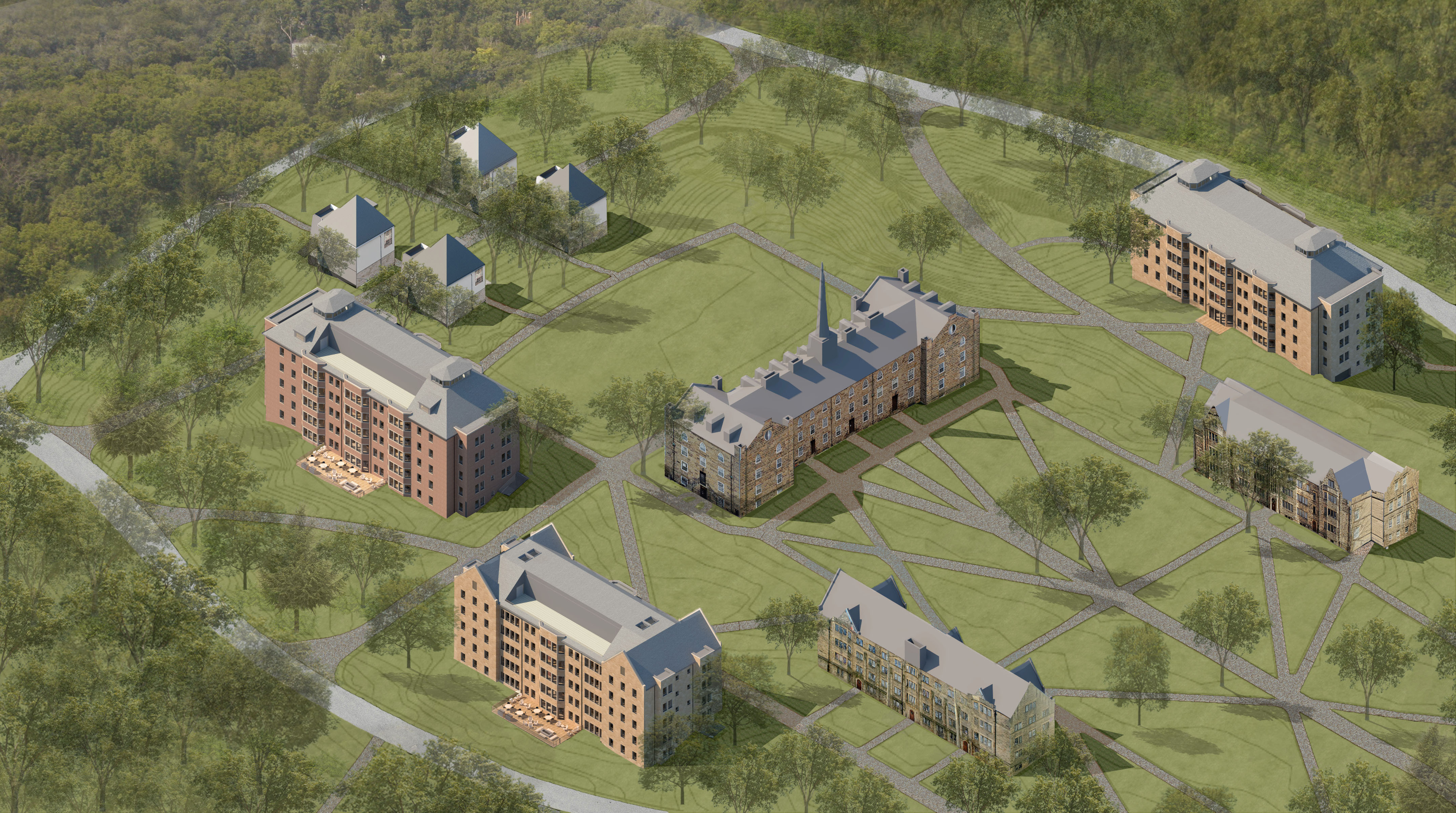
Kenyon College is a fiercely intellectual, writing-obsessed liberal arts enclave perched on a hilltop in rural Ohio. Its identity is forged by a mandatory four-year residential experience that creates an intense, all-in campus culture where bonds form across class years and the literary arts are treated with near-religious reverence. This is a place for students who want to be fully immersed in a tight-knit academic community, not for those seeking the anonymity of a city.
Admission requirements
Test-optional — scores considered if submitted
Required
High school transcript
Grade point average
Letters of recommendation
College-prep program
TOEFL (non-native English)
Considered (not required)
Class rank
Test scores (SAT/ACT)
Source: IPEDS Admissions survey (2022) via Urban Institute. Covers formal factors only — it does not reflect essays, extracurriculars, or other holistic criteria.
More details
Undergrad enrollment
1,732
In-state tuition
$71,520
Out-of-state tuition
$71,520
Housing Policy
All students live on campus
No-Loan Policy
Yes, for qualifying students
Graduation Rate
82%
Meets Full Need
Yes
ED Share of Class
40-45%
Most Popular Major
English Language & Literature
Median Student Debt
$18,527
Demonstrated Interest
Considered
Median Earnings (10yr)
$71,830
Outcomes & value
Outcomes & value
Median earnings (10 yr)
$71,830
Value (earnings ÷ net price)
1.9×
Median debt at graduation
$18,527
Graduation rate
82%
First-year retention
92%
Reducing loan balance (3 yr)
87%
Pell (lower-income) share
10%
Earnings = median of students working ~10 years after entry; debt = median of graduates. Value divides 10-yr earnings by one year’s net price — read it as earnings per dollar of annual cost, not a full lifetime ROI; it favors lower-cost schools. Source: U.S. Dept. of Education College Scorecard. Figures lag ~2 years and reflect all students, not your intended major.
Financial health
3.0 / 3.0Meets the federal financial-responsibility standard
U.S. Dept. of Education Financial Responsibility Composite Score (FY2022-23). Scale −1.0 to 3.0; ≥1.5 meets the standard. Reported for private nonprofit & for-profit institutions only — public universities are state-backed and not scored, so this is a stability signal, not a ranking.
Top-earning majors
Median earnings by field of study (highest credential), ~2 years after completion.
Economics$50,856
Film/Video and Photographic Arts$35,060
International/Globalization Studies$29,685
Biology, General$28,055
Romance Languages, Literatures, and Linguistics$26,739
Fine and Studio Arts$25,967
Applicants here also applied to
The schools that most often appear alongside Kenyon on applicants’ lists, from our self-reported outcomes corpus.
Co-application frequency from self-reported results — directional peer discovery, not a recommendation.
Campus & location
Campus safety
On-campus violent crimes (2024)
3
On-campus criminal offenses classed as violent (murder/non-negligent manslaughter, rape, robbery, aggravated assault) for the most recent reported year. Source: U.S. Dept. of Education Campus Safety and Security (Clery Act). Counts reflect what’s reported to the school, and urban campuses often report more partly due to non-student incidents nearby — read alongside campus size and setting, not as a standalone safety verdict.
Climate
Pleasant days / yr
96
Summer high
82°F
Winter low
26°F
Annual rain
43.9"
Annual snow
23.4"
Natural-hazard risk
Relatively Low
Pleasant days counts days per year with a mean temperature of 55–75°F, a high at or below 90°F, a low at or above 45°F, and little precipitation — a transparent comfort measure, not a weighting we invented. Computed from Open-Meteo ERA5 daily history (2019–2023). Natural-hazard risk is the county’s composite rating from the FEMA National Risk Index.
Deep dive — research, future-scholar output & economic mobility▾
Research output
Institutional h-index
313
Scholarly works
3,977
Institutional research volume and impact from OpenAlex. The h-index reflects large research universities and will be low for teaching-focused liberal-arts colleges — not a measure of undergraduate quality.
Share of this school’s graduates who go on to earn research doctorates (2010–20), by national rank and per-capita yield (NSF institutional-yield ratio). A signal of a research-oriented student culture — not a causal promise, since it partly reflects who enrolls. Only top producers appear. Source: NSF NCSES, Baccalaureate Origins of U.S. Research Doctorate Recipients.
Economic mobility
Mobility rate
0.6%
Bottom → top quintile
Quick answers
What is the acceptance rate at Kenyon College?
Kenyon College's acceptance rate is approximately 31% (Gambier, OH), based on the most recent figures we compiled from public and primary sources.
What SAT score do you need for Kenyon College?
Admitted students at Kenyon College typically score 1358–1503 on the SAT (the middle-50% range). Scores outside this band are still admitted, especially with strong applications.
How much does Kenyon College cost?
At Kenyon College, the average net price (after aid) is about $38,512 per year. Actual cost varies with financial aid and residency.
How many undergraduates attend Kenyon College?
Kenyon College enrolls approximately 1,732 undergraduate students.
Where is Kenyon College located?
Kenyon College is located in Gambier, OH.
Admissions
Kenyon's admissions process is selective, with a 31% acceptance rate for the overall applicant pool. The college receives a substantial number of applications—7,726 for a recent cycle—and admits about 2,397 of those students. For those certain Kenyon is their first choice, applying Early Decision is a strategic move. The percentage of each incoming class enrolled via Early Decision averages approximately 40 to 45 percent, and the ED is significantly higher than the regular decision rate, with sources citing figures ranging from 28% to 66%, though the most consistent reports suggest it hovers around 40%. This indicates a substantial 'ED advantage.'
Test scores are optional for most applicants; only about 11% of enrolled students submitted SAT scores and 10% submitted ACT scores. For those who do submit, the middle 50% SAT range is 1358–1503. The admissions office emphasizes the rigor of a student's secondary school record, class rank, GPA, and application essay as very important factors in their decision. Notably, Kenyon does consider 'level of applicant's interest' as a factor in admissions, making demonstrated engagement with the college a meaningful part of the application strategy.
Source: U.S. Dept. of Education College Scorecard (field-of-study earnings). Figures cover graduates who received federal aid and lag ~2 years; not all programs report data.
Mobility rate = the share of students who both start in the bottom household-income quintile and reach the top quintile; bottom → top is that chance conditional on starting at the bottom. Source: Opportunity Insights Mobility Report Cards (Chetty, Friedman, Saez, Turner & Yagan). Reflects 1980–82 birth cohorts, so it’s directional, not current.
Kenyon's academic reputation is built on a foundation of rigorous liberal arts and a legendary writing culture—it's often called 'The Writers' College.' The curriculum champions 'academic vigor' with a focus on developing strong writing skills across all disciplines. The most popular majors reflect both its literary heritage and strengths in the social sciences:
English Language and Literature (the single most popular major, with around 55 degrees awarded annually)
Psychology
Economics
International/Globalization Studies
Political Science and Government
Mathematics
The college's strategic plan highlights its 'talented, passionate, committed faculty and staff' as a core strength. While deeply rooted in the liberal arts, Kenyon also offers specialized technical training through dual-degree partnerships in fields like engineering, allowing students to combine a broad education with professional preparation. The academic environment is characterized by small, engaging classes where close faculty mentorship is the norm.
Life at Kenyon is defined by an all-encompassing, four-year residential experience. It is one of the few colleges in the U.S. where all students live on campus, a policy the college frames as foundational to its 'we-not-me, relationship-first' culture. Because no one moves off campus, social and intellectual bonds form deeply and across all class years, creating a self-contained community on its 1,000-acre hilltop in Gambier.
The campus life is active and self-directed. Students describe a social scene where 'drinking and partying' exists but is 'easily avoided if you want to,' suggesting a culture that accommodates different preferences. The physical campus itself is designed to encourage interaction, with benches placed to 'invite students to pause, converse and greet an occasional furry friend.' This intense, immersive environment means student life is almost entirely campus-centric, which students note gives them 'the ability to shape our culture for the future.' It's a place for students who thrive in a close-knit, all-in community, not for those who crave the constant external stimuli of a city.
Kenyon graduates are successful by traditional measures, with a strong graduation rate that sources place between 87% and 88%, placing it in the top 10% of institutions nationally. The median earnings for graduates ten years after entry is $71,830. More immediate post-graduate metrics show a median earnings of $36,427 one year after graduation. The college itself cautions that 'post-graduate salary doesn't tell the whole story' of outcomes, emphasizing the value of the liberal arts foundation in preparing graduates for diverse, meaningful paths. The average time to degree is a efficient 4.2 years, and the median debt for students who borrow is $18,527, which is relatively moderate compared to many private institutions.
Kenyon is a high-tuition institution, but it couples that with a robust and generous financial aid program designed to increase accessibility. The college is committed to meeting 100% of demonstrated financial need for all admitted students. This commitment is backed by a no-loan policy for qualifying students, meaning 100% of a student's calculated need is met with grants and scholarships, not loans. This policy is a hallmark of institutions with strong endowments dedicated to gift aid.
On average, financial aid cuts the cost of Kenyon by 50%. The average after grants and scholarships for a recent year was $45,000, though the canonical average net price is $38,512. The average financial aid package is substantial, reported at $59,726. This generosity can lead to 'good shock' among families, as evidenced by a parent in a financial aid forum questioning if their generous offer was a mistake. Families are encouraged to use the college's official Net Price Calculator for a personalized estimate.
Kenyon stands out for the sheer intensity and cohesion of its educational model. It is not just a college with dorms; it is a purposely designed, four-year residential community that forces a depth of engagement rare in American higher education. This creates its distinctive 'we-not-me' culture. Academically, its identity is inextricably linked to the written word, earning its moniker as 'The Writers' College'—a reputation that permeates the curriculum, not just the English department.
Furthermore, it pairs this high-touch, immersive liberal arts experience with a truly consequential financial aid policy. The commitment to meet 100% of need with a no-loan guarantee for qualifying students removes a major barrier for talented students from all economic backgrounds, allowing the student body to be shaped by academic and personal fit, not just financial means. The result is a hilltop world unto itself: deeply intellectual, intensely communal, and unapologetically focused on the transformative power of a residential liberal arts education.
Kenyon College seal · sourceKenyon College - Profile, Rankings and Data | US News Best Colleges · sourceKenyon College - Wikipedia · sourceCollege of the Month: Kenyon College – The Cavalier · source