Admit rate has ranged 17%–29% over the last 5 years — notably volatile. Source: IPEDS via Urban Institute.
Acceptance & SAT from Common Data Set / IPEDS; net price, earnings & graduation from the U.S. Dept. of Education College Scorecard. Figures lag ~1–2 years — verify with the school.
Denison University is a selective, residential liberal arts college perched on a hilltop in Granville, Ohio, known for its intense focus on undergraduate mentorship and a surprisingly robust set of professional outcomes. The campus vibe is active and self-contained, with Greek life playing a significant social role and a culture that prizes close relationships with professors. It’s a place where the liberal arts are taken seriously as career preparation, backed by a firm financial commitment to meeting 100% of demonstrated need.
Admission requirements
Test-optional — scores considered if submitted
Required
High school transcript
Grade point average
Letters of recommendation
College-prep program
TOEFL (non-native English)
Considered (not required)
Class rank
Test scores (SAT/ACT)
Demonstrated competencies
Source: IPEDS Admissions survey (2022) via Urban Institute. Covers formal factors only — it does not reflect essays, extracurriculars, or other holistic criteria.
More details
Undergrad enrollment
2,380
In-state tuition
$67,000
Out-of-state tuition
$67,000
Graduation Rate
79%
Meets Full Need
Yes
Demonstrated Interest
Considered
Median Earnings (10yr)
$67,753
Outcomes & value
Outcomes & value
Median earnings (10 yr)
$67,753
Value (earnings ÷ net price)
1.7×
Median debt at graduation
$26,000
Graduation rate
79%
First-year retention
89%
Reducing loan balance (3 yr)
80%
Pell (lower-income) share
13%
First-gen share (among federal-aid recipients)
17%
Earnings = median of students working ~10 years after entry; debt = median of graduates. divides 10-yr earnings by net price — read it as earnings per dollar of annual cost, not a full lifetime ROI; it favors lower-cost schools. Source: U.S. Dept. of Education College Scorecard. Figures lag ~2 years and reflect all students, not your intended major.
Financial health
2.2 / 3.0Meets the federal financial-responsibility standard
U.S. Dept. of Education Financial Responsibility Composite Score (FY2022-23). Scale −1.0 to 3.0; ≥1.5 meets the standard. Reported for private nonprofit & for-profit institutions only — public universities are state-backed and not scored, so this is a stability signal, not a ranking.
Top-earning majors
Median earnings by field of study (highest credential), ~2 years after completion.
Economics$50,439
History$38,289
Political Science and Government$37,208
Communication and Media Studies$36,134
International Relations and National Security Studies$35,060
Romance Languages, Literatures, and Linguistics$33,993
Applicants here also applied to
The schools that most often appear alongside Denison University on applicants’ lists, from our self-reported outcomes corpus.
Co-application frequency from self-reported results — directional peer discovery, not a recommendation.
Campus & location
Campus safety
On-campus violent crimes (2024)
6
On-campus criminal offenses classed as violent (murder/non-negligent manslaughter, rape, robbery, aggravated assault) for the most recent reported year. Source: U.S. Dept. of Education Campus Safety and Security (Clery Act). Counts reflect what’s reported to the school, and urban campuses often report more partly due to non-student incidents nearby — read alongside campus size and setting, not as a standalone safety verdict.
Climate
Pleasant days / yr
92
Summer high
82°F
Winter low
26°F
Annual rain
46.9"
Annual snow
22.3"
Natural-hazard risk
Relatively Low
Pleasant days counts days per year with a mean temperature of 55–75°F, a high at or below 90°F, a low at or above 45°F, and little precipitation — a transparent comfort measure, not a weighting we invented. Computed from Open-Meteo ERA5 daily history (2019–2023). Natural-hazard risk is the county’s composite rating from the FEMA National Risk Index.
Deep dive — research, future-scholar output & economic mobility▾
Research output
Institutional h-index
130
Scholarly works
5,256
Institutional research volume and impact from OpenAlex. The h-index reflects large research universities and will be low for teaching-focused liberal-arts colleges — not a measure of undergraduate quality.
Economic mobility
Mobility rate
0.9%
Bottom → top quintile
30%
From bottom quintile
3%
Mobility rate = the share of students who both start in the bottom household-income quintile and reach the top quintile; bottom → top is that chance conditional on starting at the bottom. Source: Opportunity Insights Mobility Report Cards (Chetty, Friedman, Saez, Turner & Yagan). Reflects 1980–82 birth cohorts, so it’s directional, not current.
Quick answers
What is the acceptance rate at Denison University?
Denison University's acceptance rate is approximately 17% (Granville, OH), based on the most recent figures we compiled from public and primary sources.
What SAT score do you need for Denison University?
Admitted students at Denison University typically score 1320–1490 on the SAT (the middle-50% range). Scores outside this band are still admitted, especially with strong applications.
How much does Denison University cost?
At Denison University, the average net price (after aid) is about $40,007 per year. Actual cost varies with financial aid and residency.
How many undergraduates attend Denison University?
Denison University enrolls approximately 2,380 undergraduate students.
Where is Denison University located?
Denison University is located in Granville, OH.
Admissions
Denison is a selective institution, with an historically hovering around 17%, though recent reports suggest a slight increase to between 19% and 20% for the incoming class. The university practices a 'no-harm' admissions policy, meaning applicants are not disadvantaged for withholding test scores. For those who do submit, the middle 50% SAT range is 1320–1490, and the ACT range is 29–33. Applying via Early Decision provides a significant advantage; the ED acceptance rate has been approximately 25%, compared to a Regular Decision rate around 15.7%. A substantial portion of the incoming class—potentially just under 72%—is filled through Early Decision, indicating a strong preference for committed applicants. Demonstrated interest is a factor in admissions, as indicated by its inclusion in the framework schools use to communicate priorities.
Source: U.S. Dept. of Education College Scorecard (field-of-study earnings). Figures cover graduates who received federal aid and lag ~2 years; not all programs report data.
Denison’s academic identity is firmly rooted in the traditional liberal arts, with a curriculum designed to promote 'discipline of thought and depth of understanding.' The university offers a standard array of majors, with notable popularity in Data Science (6% of graduates), Computer Science (4%), Sports Studies (4%), Political Science (3%), and Environmental Studies. The approach to majors, such as English, emphasizes writing, analysis, and global perspective—skills marketed as applicable to almost any career. The academic environment is frequently praised for its excellence, with particular strengths noted in performing and fine arts facilities. A defining feature is the institutional priority placed on mentoring and close faculty-student relationships, which shapes the undergraduate experience from introductory courses through senior research projects.
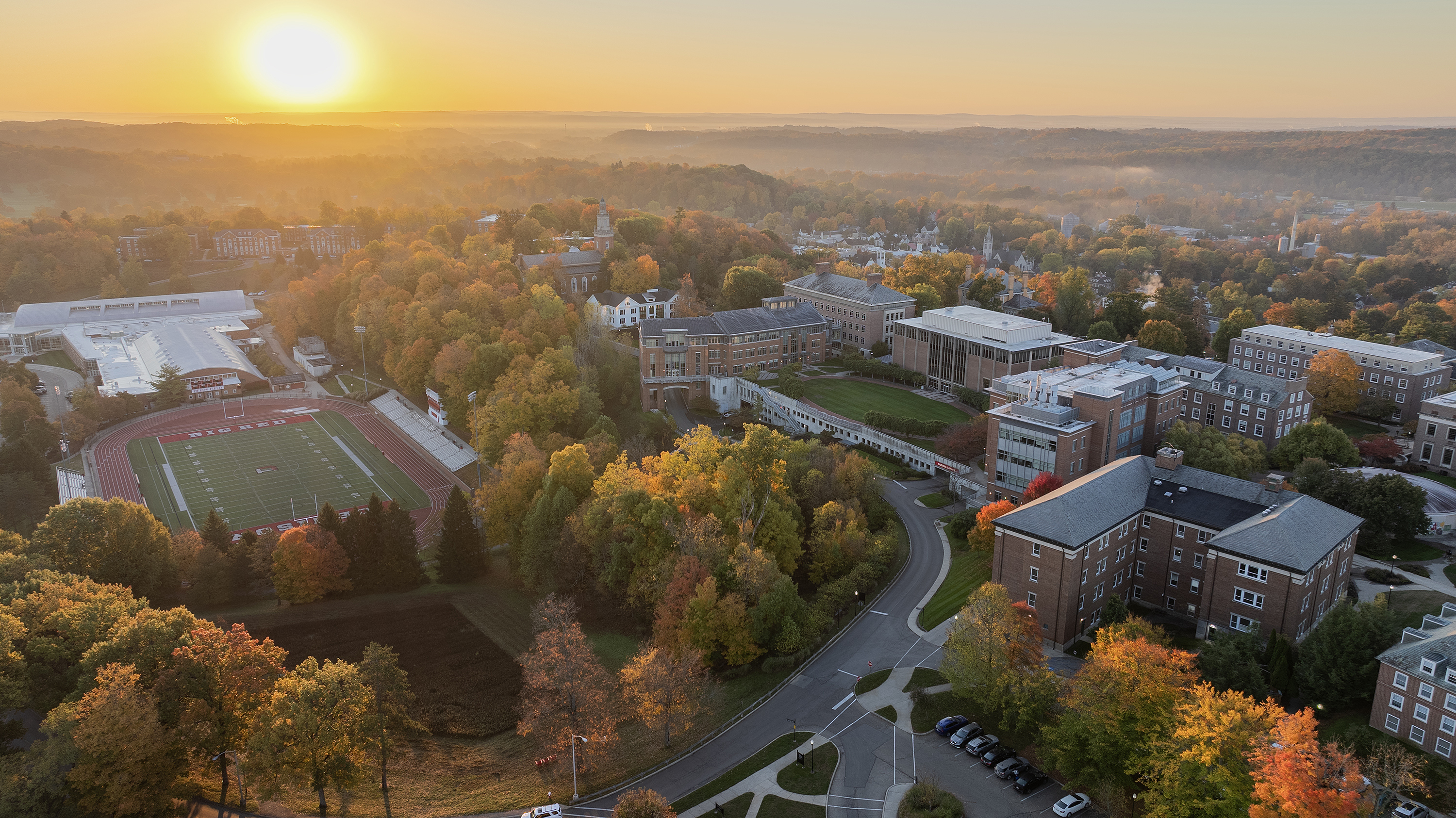
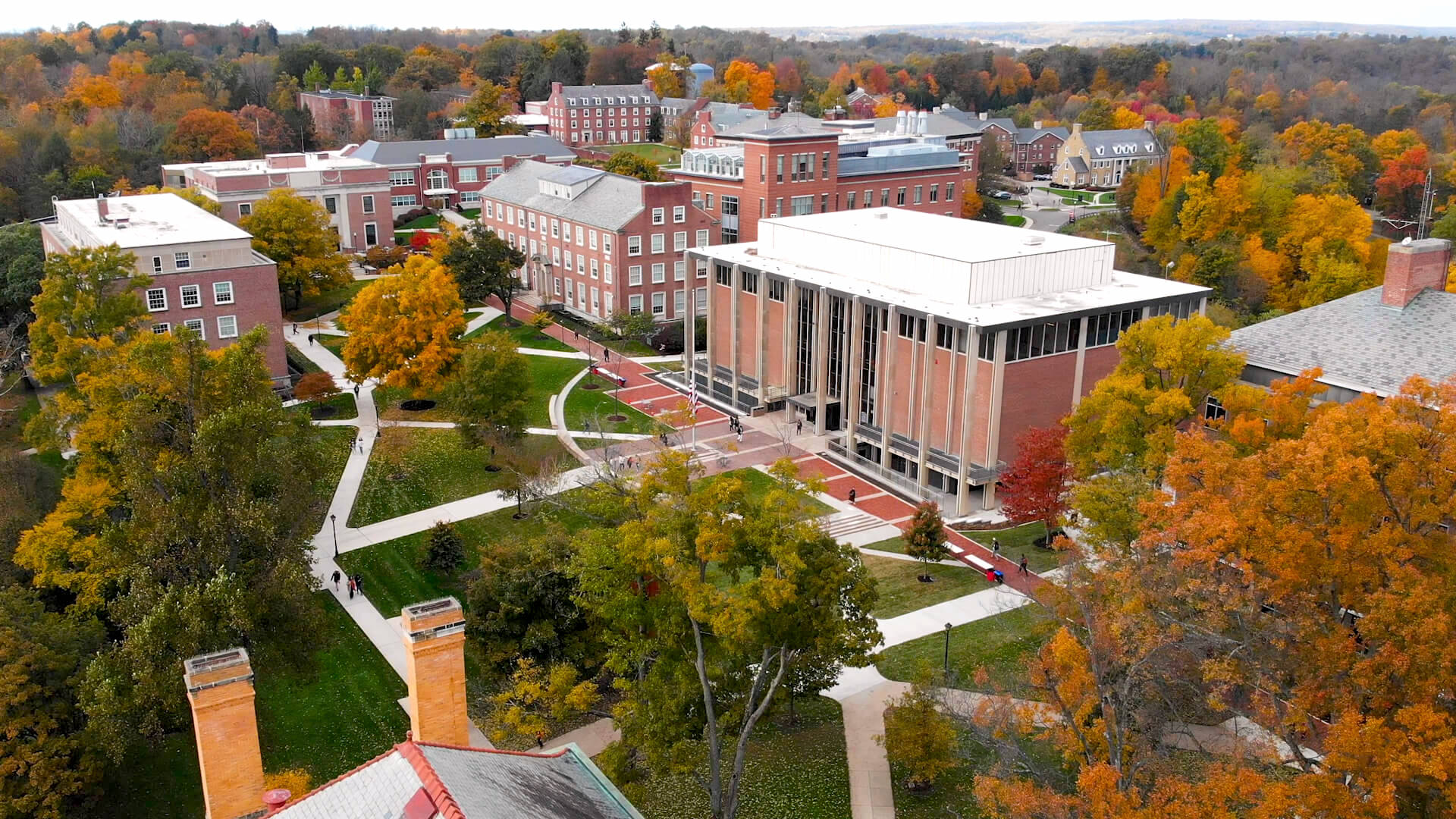
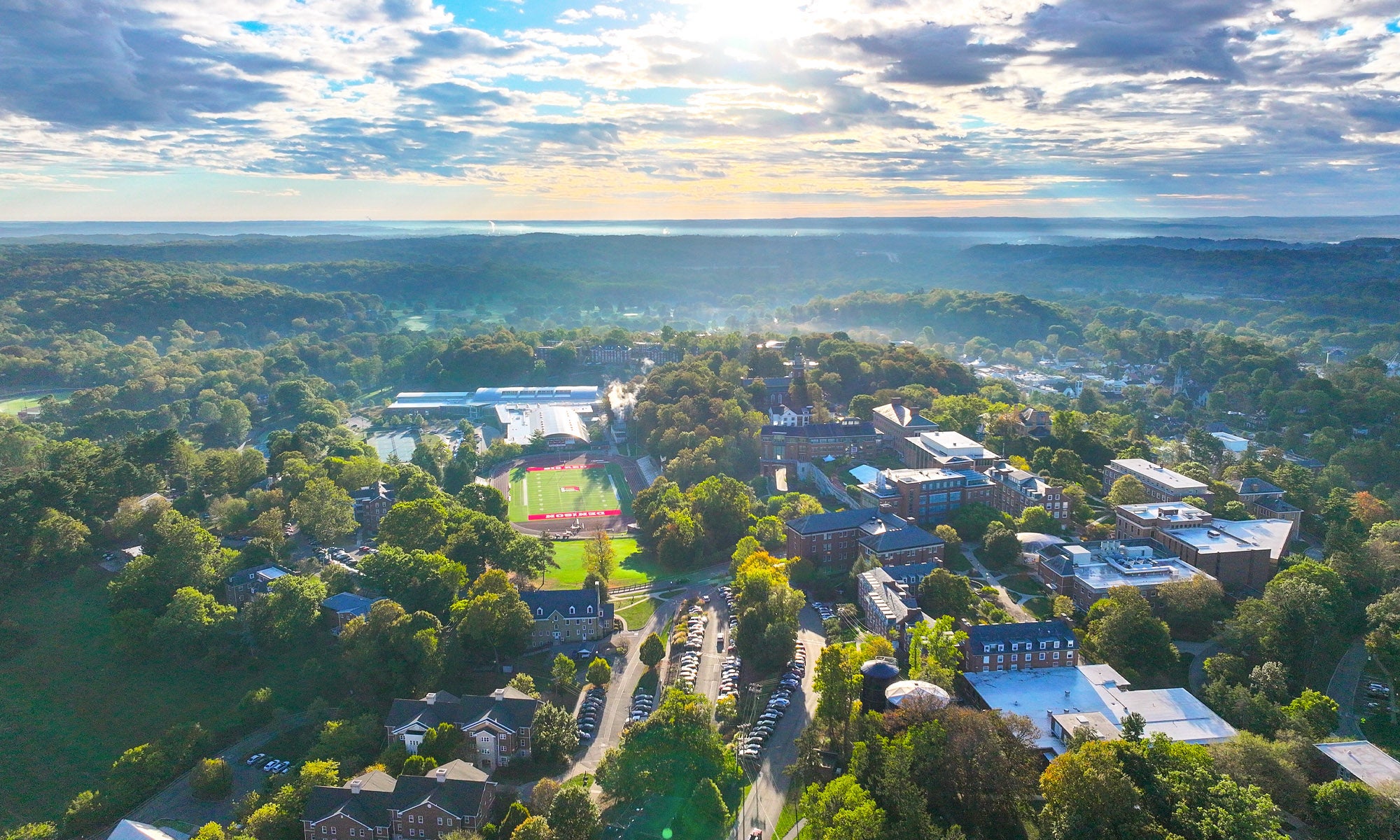
Life at Denison is intensely residential and campus-centric, situated on a hilltop in the small village of Granville. The student body brings diverse talents and backgrounds to a tightly-knit community where students are seen as 'co-creators' of the living-learning environment. Social life is active, with a significant portion revolving around Greek organizations. The Division of Student Life actively promotes student growth and self-awareness through residential programs and a wide array of clubs and activities. Students describe a friendly, engaged campus atmosphere, though its relative isolation means the university and its immediate surroundings form the primary universe for undergraduate social life. The campus is considered safe, and a recent initiative integrated a campus-wide app for engagement and communication, underscoring the focus on community building.
Denison graduates achieve strong financial outcomes, with a median earnings figure 10 years after entry of $67,753. Earlier post-graduate earnings are reported at $38,519 one year out and $61,795 after five years. The four-year graduation rate is 79%, with a six-year rate around 83%. While some observers have noted these graduation rates as slightly lower than those of some peer institutions, the earning outcomes for graduates are robust and exceed national medians for four-year colleges. Specific major pathways like Computer Science and Data Science report average salaries in the high $30,000s shortly after graduation, indicating a successful translation of the liberal arts curriculum into early-career marketability.
Denison is committed to meeting 100% of the demonstrated financial need for all admitted students, including international applicants. This is a cornerstone of its enrollment policy. While the university promotes a 'no-loan' philosophy, its official policy clarifies that student loans are available to replace the expected student work contribution; grants and scholarships are the primary tools for meeting need. The average after aid is $40,007. A vast majority (95%) of full-time, first-year students receive grant or scholarship aid, with the average aid package reported as $59,206. Families are encouraged to use the university's Net Price Calculator, a federally regulated tool, to estimate their individual cost.
Denison carves out a distinctive niche by combining the classic, all-in residential liberal arts experience with a pragmatic, outcomes-oriented approach. Its hilltop campus fosters a strong, self-contained community where relationships with faculty are paramount—this mentorship is not a happy accident but a stated institutional priority. The university leans heavily into Early Decision, building a class of students demonstrably committed to that community. Financially, it backs its inclusive ambitions with a firm promise to meet full demonstrated need. While Greek life shapes the social scene, the academic culture is serious and geared toward developing transferable skills in writing and critical thinking, a focus that pays off in above-average early and mid-career earnings for its graduates. It’s a college for students who want the close-knit, professor-focused model of a liberal arts college but with a clear eye on the professional path that follows.
Denison University seal · sourceAcademic Quad | Campus Map · sourceU.S. News places Denison among America's most beautiful campuses (March 17, 2026) | University News · sourceDenison University — Village of Granville · source