Admit rate has ranged 83%–91% over the last 5 years — notably volatile, though the latest figure above (51%) falls outside that window. Source: IPEDS via Urban Institute.
Acceptance & SAT from Common Data Set / IPEDS; net price, earnings & graduation from the U.S. Dept. of Education College Scorecard. Figures lag ~1–2 years — verify with the school.
Louisiana State University-Shreveport is a public, regional university that operates less as a traditional residential campus and more as a pragmatic, accessible engine for workforce development in Northwest Louisiana. With a focus on business, education, and computer science, LSUS prioritizes affordability and a supportive, small-class environment over rah-rah campus life, serving a student body where nearly every first-year student receives financial aid. Its identity is defined by its role as the fastest-growing higher education institution in the state, offering a direct, no-frills path to a degree and a career.
Admission requirements
Test-optional — scores considered if submitted
Required
High school transcript
Grade point average
College-prep program
TOEFL (non-native English)
Considered (not required)
Test scores (SAT/ACT)
Source: IPEDS Admissions survey (2022) via Urban Institute. Covers formal factors only — it does not reflect essays, extracurriculars, or other holistic criteria.
More details
Undergrad enrollment
2,153
In-state tuition
$7,518
Out-of-state tuition
$7,518
Graduation Rate
38%
Median Earnings (10yr)
$47,477
Faculty with Terminal Degree
88%
First-Year Students Receiving Aid
94%
Fastest Growing Higher Ed Institution in LA
#1
Outcomes & value
Outcomes & value
Median earnings (10 yr)
$47,477
Value (earnings ÷ net price)
6.8×
Median debt at graduation
$22,500
Graduation rate
38%
First-year retention
83%
Reducing loan balance (3 yr)
57%
Pell (lower-income) share
39%
First-gen share (among federal-aid recipients)
40%
Top-earning majors
Median earnings by field of study (highest credential), ~2 years after completion.
Computer Science$54,322
Accounting and Related Services$47,260
Teacher Education and Professional Development, Specific Levels and Methods$40,589
Criminal Justice and Corrections$35,276
Marketing$33,281
Business Administration, Management and Operations
Applicants here also applied to
The schools that most often appear alongside Louisiana State University-Shreveport on applicants’ lists, from our self-reported outcomes corpus.
Co-application frequency from self-reported results — directional peer discovery, not a recommendation.
Campus & location
Campus safety
On-campus violent crimes (2024)
0
Per 1,000 students
0.00
On-campus criminal offenses classed as violent (murder/non-negligent manslaughter, rape, robbery, aggravated assault) for the most recent reported year. Source: U.S. Dept. of Education Campus Safety and Security (Clery Act). Counts reflect what’s reported to the school, and urban campuses often report more partly due to non-student incidents nearby — read alongside campus size and setting, not as a standalone safety verdict.
Climate
Pleasant days / yr
93
Summer high
92°F
Winter low
43°F
Annual rain
52.4"
Annual snow
2.4"
Natural-hazard risk
Relatively Moderate
Pleasant days counts days per year with a mean temperature of 55–75°F, a high at or below 90°F, a low at or above 45°F, and little precipitation — a transparent comfort measure, not a weighting we invented. Computed from Open-Meteo ERA5 daily history (2019–2023). Natural-hazard risk is the county’s composite rating from the FEMA National Risk Index.
Quick answers
What is the acceptance rate at Louisiana State University-Shreveport?
Louisiana State University-Shreveport's acceptance rate is approximately 51% (Shreveport, LA), based on the most recent figures we compiled from public and primary sources.
What SAT score do you need for Louisiana State University-Shreveport?
Admitted students at Louisiana State University-Shreveport typically score 1000–1195 on the SAT (the middle-50% range). Scores outside this band are still admitted, especially with strong applications.
How much does Louisiana State University-Shreveport cost?
At Louisiana State University-Shreveport, the average net price (after aid) is about $7,022 per year. Actual cost varies with financial aid and residency.
How many undergraduates attend Louisiana State University-Shreveport?
Louisiana State University-Shreveport enrolls approximately 2,153 undergraduate students.
Where is Louisiana State University-Shreveport located?
Louisiana State University-Shreveport is located in Shreveport, LA.
Admissions
LSUS maintains a moderately selective admissions process, accepting roughly half of its applicants. The university reports an of 51%, with admitted students presenting a middle 50% SAT score range of 1000–1195 and an ACT range of 18–24. A significant portion of the admitted class—over 28%—reported high school GPAs of 3.75 or higher, indicating a solid academic core within the applicant pool. The process appears to be largely test-flexible and focused on standard academic metrics, with no available source data suggesting the use of Early Decision rounds or the consideration of demonstrated interest as a formal factor.
Academics at LSUS are career-oriented and built on a foundation of business, education, liberal arts, and sciences. The university offers over 20 undergraduate majors, with notable strength in business administration, education, computer science, and a growing digital media focus. Programs like Accounting, Biological Sciences, Chemistry, Criminal Justice, and Digital Arts round out the undergraduate catalog, supported by a dozen graduate programs. The faculty is highly credentialed, with 88% holding a terminal degree. The academic environment is frequently described as supportive, benefiting from small class sizes and accessible professors that allow for individualized attention. While not a flagship research institution, LSUS has been ranked No. 3 among Louisiana's public universities and touts its status as the fastest-growing higher education institution in the state.
Earnings = median of students working ~10 years after entry; debt = median of graduates. Value divides 10-yr earnings by one year’s net price — read it as earnings per dollar of annual cost, not a full lifetime ROI; it favors lower-cost schools. Source: U.S. Dept. of Education College Scorecard. Figures lag ~2 years and reflect all students, not your intended major.
$32,770
Liberal Arts and Sciences, General Studies and Humanities$30,047
Biology, General$28,598
Source: U.S. Dept. of Education College Scorecard (field-of-study earnings). Figures cover graduates who received federal aid and lag ~2 years; not all programs report data.
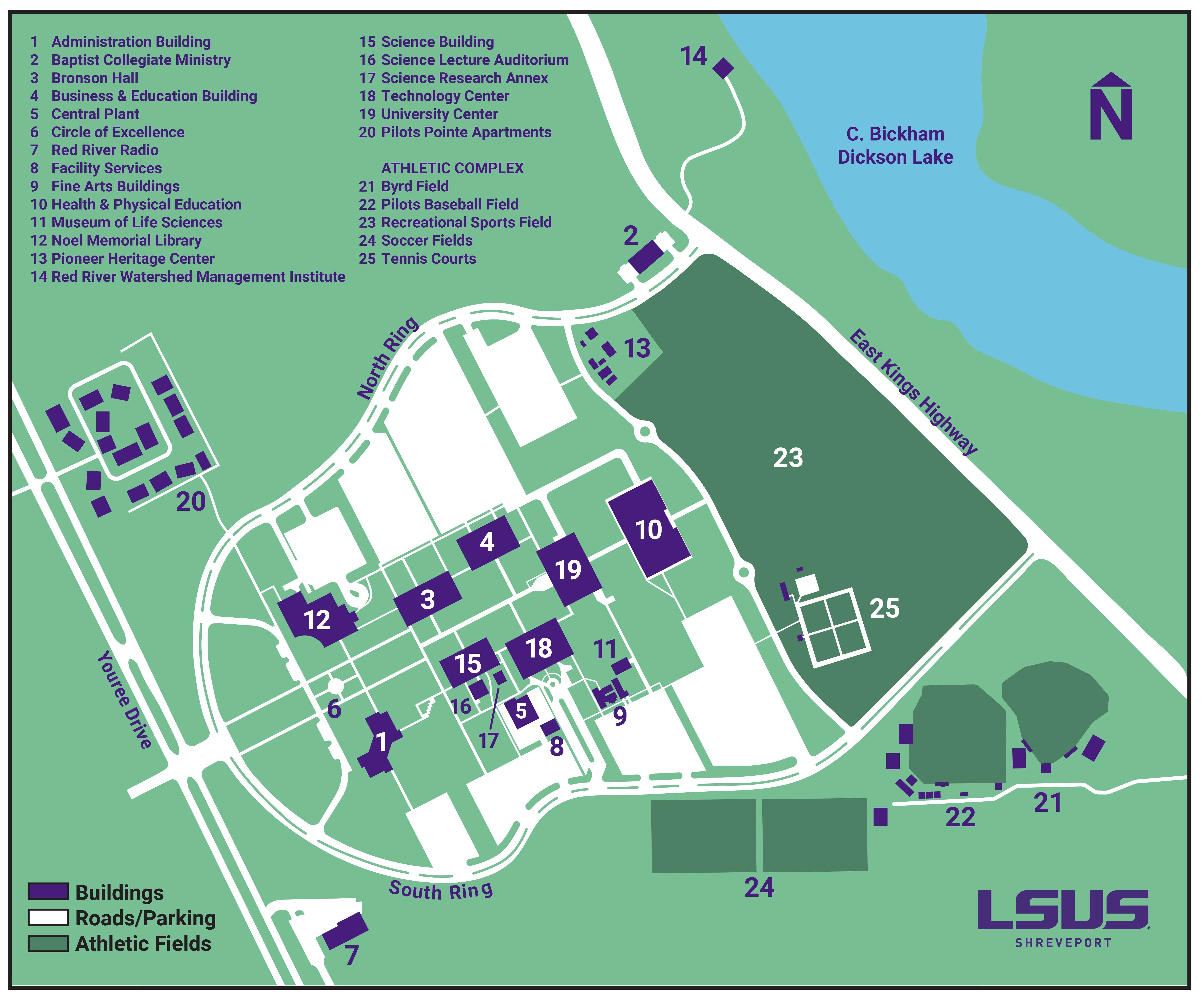
Student life at LSUS is active but leans more toward commuter and non-traditional student engagement than a classic residential college experience. The campus hub is the University Center, which serves as the focal point for student, faculty, and staff activities. Students can choose from more than 70 clubs and organizations, spanning academic honor societies, Greek life, special interest groups, and academic clubs. The Student Activities Board works to foster community through events like craft workshops, trivia contests, and scavenger hunts—a commitment to connection that persisted even through the pandemic with mail-to-home kits and virtual programming. This reflects a campus culture that actively works to build community for a student body that may not live on campus.
Outcomes for LSUS graduates reflect its mission as a regional, access-oriented institution. The four-year graduation rate is 38%, a figure that places it in the lower tier nationally. Post-graduation, median earnings ten years after entry are $47,477. These metrics underscore the profile of a university serving many students who may balance work, family, and studies, often extending their time to degree, and entering fields with solid, if not elite, starting salaries. The focus is on practical, employable skills rather than prestige-track outcomes.
Affordability is a central pillar of the LSUS value proposition. The average after aid is $7,022, a figure significantly below the national average for four-year colleges. This low cost is made possible by widespread financial support; 94% of first-time, full-time undergraduates receive financial aid, with 91% receiving grant or scholarship aid specifically. The university offers a Net Price Calculator to help prospective students estimate their actual cost and emphasizes federal aid programs, including the Federal Supplemental Educational Opportunity Grant (FSEOG) for independent undergraduates with exceptional need. There is no indication in the provided sources of a "no-loan" policy or a guarantee to meet 100% of demonstrated financial need.
LSUS stands out not for ivy-covered halls or football Saturdays, but for its unambiguous role as an efficient, affordable, and responsive educational provider for Northwest Louisiana. It is the fastest-growing higher education institution in the state, a testament to its alignment with regional needs. With a fiercely practical academic slate strong in business, tech, and education, a faculty where nearly nine in ten hold the highest degrees in their field, and a cost structure that places a bachelor's degree within realistic reach for almost all students, LSUS is engineered for return on investment. It forgoes the embellishments of a traditional college experience to deliver a straightforward proposition: a supportive, credentialed education that leads directly to a career, without burying graduates in debt.