Admit rate has ranged 49%–65% over the last 5 years — notably volatile. Source: IPEDS via Urban Institute.
Acceptance & SAT from Common Data Set / IPEDS; net price, earnings & graduation from the U.S. Dept. of Education College Scorecard. Figures lag ~1–2 years — verify with the school.
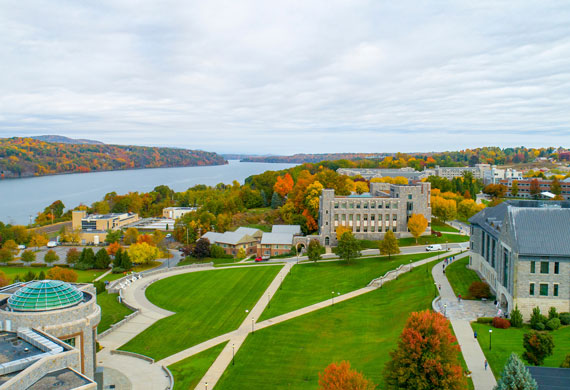
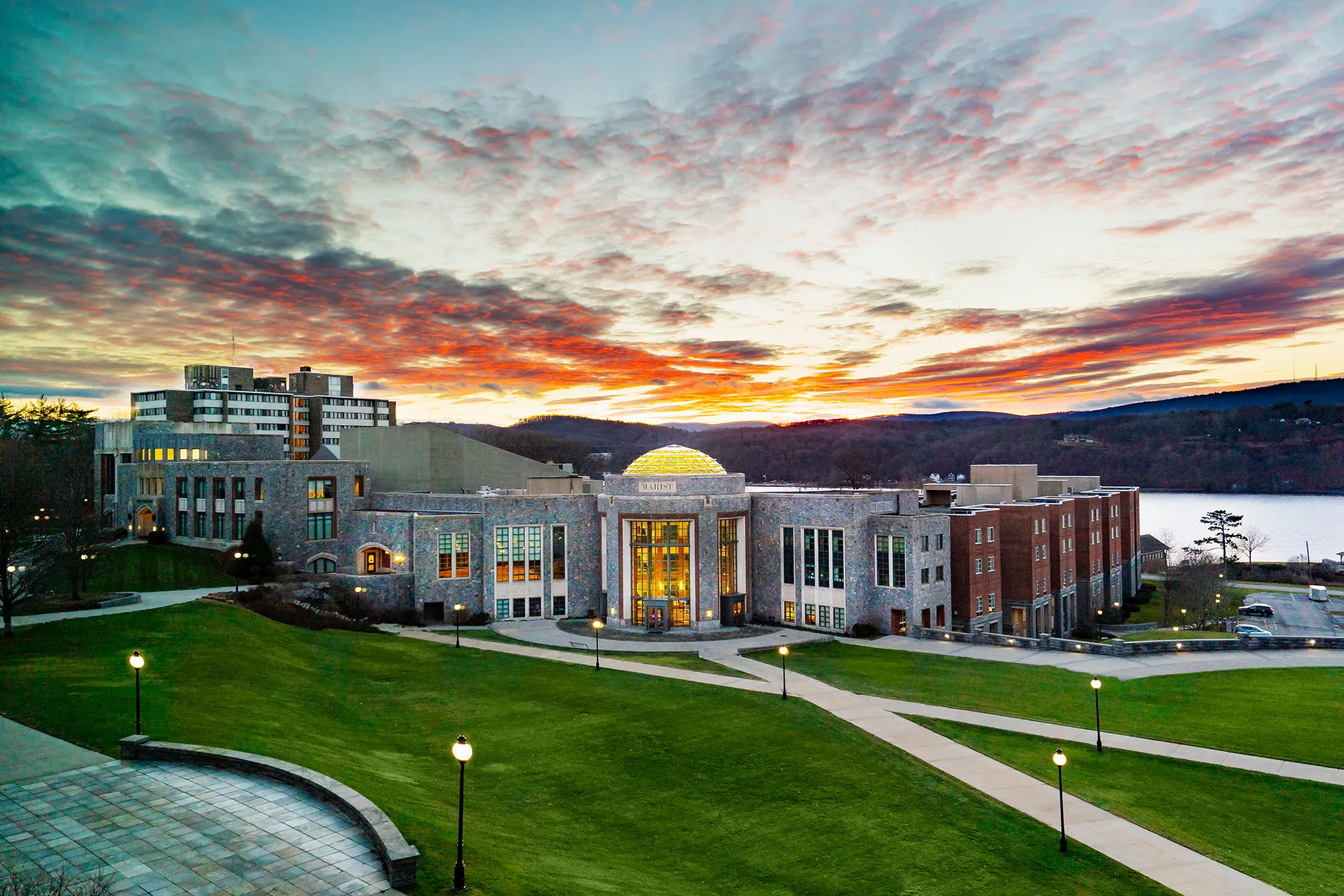
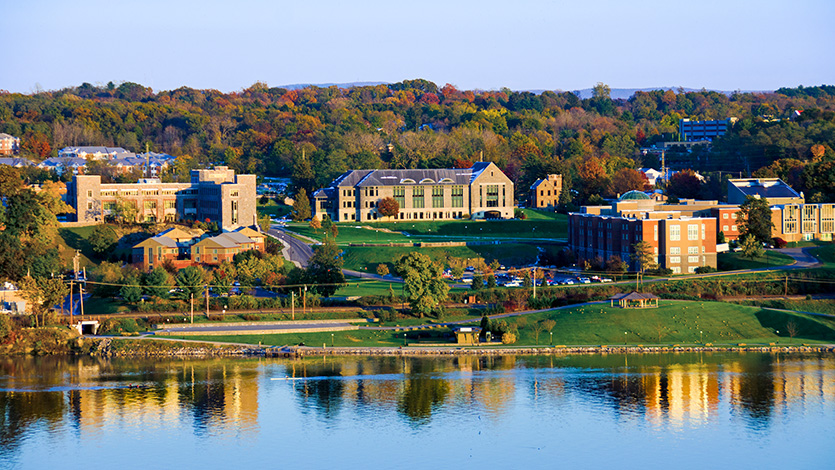
Marist University stakes its identity on a powerful, pragmatic blend of liberal arts grounding and hands-on professional preparation, all set on a strikingly scenic campus overlooking the Hudson River. It's a place where business majors debate philosophy, communication students run a real media network, and nearly everyone graduates with a resume full of applied experience. The vibe is socially active and career-focused, with a selectivity that has tightened noticeably in recent years as its outcomes—and price tag—have climbed.
Admission requirements
Test-optional — scores considered if submitted
Required
High school transcript
Grade point average
Letters of recommendation
College-prep program
TOEFL (non-native English)
Considered (not required)
Class rank
Test scores (SAT/ACT)
Demonstrated competencies
Source: IPEDS Admissions survey (2022) via Urban Institute. Covers formal factors only — it does not reflect essays, extracurriculars, or other holistic criteria.
More details
Undergrad enrollment
5,182
In-state tuition
$47,750
Out-of-state tuition
$47,750
Graduation Rate
80%
Most Popular Majors
Business, Communication, Psychology
Annual Aid Distributed
Over $91 million
Median Earnings (10yr)
$77,819
Students Receiving Aid
92%+
Employed/Grad School in 6 Months
94%
Outcomes & value
Outcomes & value
Median earnings (10 yr)
$77,819
Value (earnings ÷ net price)
1.9×
Median debt at graduation
$25,000
Graduation rate
80%
First-year retention
86%
Reducing loan balance (3 yr)
79%
Pell (lower-income) share
14%
First-gen share (among federal-aid recipients)
19%
Top-earning majors
Median earnings by field of study (highest credential), ~2 years after completion.
Computer Science$79,389
Computer and Information Sciences, General$73,769
Clinical/Medical Laboratory Science/Research and Allied Professions$72,509
Accounting and Related Services$60,623
Economics$57,318
Business Administration, Management and Operations
Campus & location
Campus safety
On-campus violent crimes (2024)
13
Per 1,000 students
2.17
On-campus criminal offenses classed as violent (murder/non-negligent manslaughter, rape, robbery, aggravated assault) for the most recent reported year. Source: U.S. Dept. of Education Campus Safety and Security (Clery Act). Counts reflect what’s reported to the school, and urban campuses often report more partly due to non-student incidents nearby — read alongside campus size and setting, not as a standalone safety verdict.
Climate
Pleasant days / yr
88
Summer high
83°F
Winter low
24°F
Annual rain
52.2"
Annual snow
31.8"
Natural-hazard risk
Relatively Moderate
Pleasant days counts days per year with a mean temperature of 55–75°F, a high at or below 90°F, a low at or above 45°F, and little precipitation — a transparent comfort measure, not a weighting we invented. Computed from Open-Meteo ERA5 daily history (2019–2023). Natural-hazard risk is the county’s composite rating from the FEMA National Risk Index.
Deep dive — research, future-scholar output & economic mobility▾
Research output
Institutional h-index
82
Scholarly works
2,272
Institutional research volume and impact from OpenAlex. The h-index reflects large research universities and will be low for teaching-focused liberal-arts colleges — not a measure of undergraduate quality.
Quick answers
What is the acceptance rate at Marist University?
Marist University's acceptance rate is approximately 57% (Poughkeepsie, NY), based on the most recent figures we compiled from public and primary sources.
What SAT score do you need for Marist University?
Admitted students at Marist University typically score 1190–1340 on the SAT (the middle-50% range). Scores outside this band are still admitted, especially with strong applications.
How much does Marist University cost?
At Marist University, the average net price (after aid) is about $41,544 per year. Actual cost varies with financial aid and residency.
How many undergraduates attend Marist University?
Marist University enrolls approximately 5,182 undergraduate students.
Where is Marist University located?
Marist University is located in Poughkeepsie, NY.
Admissions
Marist's admissions process has become more selective over the past few years, with its trending downward from historical norms. The university is , but for those who submit, the middle 50% SAT range for admitted students is typically between 1210 and 1330, with an ACT range of 27 to 31. The early acceptance rate is significantly higher than the regular decision rate, reported at 67.1%. The university advises that students interested in applying should rank in the top half of their graduating class and hold a recalculated average of 88-93 or a GPA of 3.1 – 3.7. While the is cited as a critical resource for understanding admissions priorities, the specific weight Marist places on factors like demonstrated interest is not detailed in the provided sources.
Selectivity Trend: Discussions note the acceptance rate has dropped from around 65% to approximately 56-57% in recent years.
Application Factors: Academic rigor, GPA, and class rank are highlighted as key considerations.
Early Decision Advantage: Applying early action appears to offer a substantial boost in admission chances.
Earnings = median of students working ~10 years after entry; debt = median of graduates. Value divides 10-yr earnings by one year’s net price — read it as earnings per dollar of annual cost, not a full lifetime ROI; it favors lower-cost schools. Source: U.S. Dept. of Education College Scorecard. Figures lag ~2 years and reflect all students, not your intended major.
$51,464
Specialized Sales, Merchandising and Marketing Operations$49,344
Design and Applied Arts$49,270
Source: U.S. Dept. of Education College Scorecard (field-of-study earnings). Figures cover graduates who received federal aid and lag ~2 years; not all programs report data.
Marist promotes an academic philosophy of 'and' not 'or,' deliberately merging traditional classroom learning with extensive hands-on, experiential opportunities. The most popular majors cluster in business, management, marketing, and related support services, followed by communication, journalism, and related programs. Psychology and criminal justice are also among the top degree choices. Students describe professors as 'highly qualified,' 'diverse in the way they teach,' and 'always willing to help,' both in and out of class, calling academics 'the best thing' about Marist. The university also receives national recognition for its online degree programs. The curriculum is supported by a comprehensive list of majors, minors, and concentrations designed to prepare students for prosperous careers.
Life at Marist is described as 'extremely personal and interconnected,' with a strong emphasis on self-discovery, leadership development, and social responsibility through organized programs. The campus social scene is often characterized as a 'bar school,' with significant activity revolving around off-campus bars. Greek life exists but is reported to be small. Students have access to over 100 clubs and organizations, showcased at an annual fair, which provide avenues to earn college credit and build community. The overall atmosphere is one that students find easy to adapt to if they engage with it, fostering a tight-knit campus environment.
Marist delivers strong post-graduation results, with 94% of graduates employed or attending graduate school within six months of graduation. The university's graduation rate is a point of strength, placing it within the top 15% of colleges nationwide. Alumni earnings show significant growth over time, with reported median earnings of $78,561 four years after graduation and $76,528 five years after graduation. These outcomes contribute to Marist's reputation for ensuring students are well-prepared for their next steps, whether in the workforce or further education.
Marist is a significant financial investment, with a high average after aid. However, the vast majority of students receive some form of financial assistance—92% to 96% of full-time beginning undergraduates. The university distributes over $91 million in aid to students annually. Need-based financial aid is awarded, but it cannot exceed a student's demonstrated financial need, and priority is given to full-time students. There are also Marist Grants specifically for students who demonstrate that without aid, they could not afford to attend. Families often navigate complex aid packages, and some report difficulty in making the cost work even after receiving substantial grants and scholarships.
Marist carves out a distinctive niche by refusing to be pigeonholed. It's not just a liberal arts college, nor is it just a pre-professional training ground—it's a deliberate hybrid. This is embodied in its 'and not or' philosophy, where academic theory is consistently paired with practical application, whether through its renowned campus media facilities, business partnerships, or internship pipelines. This blend creates graduates who are both thoughtful and immediately useful to employers, a combination reflected in the strong employment rates and growing alumni earnings. The campus culture is equally specific: socially vibrant and interconnected, with a known leaning toward off-campus social life, yet supported by a dense network of clubs and organizations that foster leadership and personal growth. It's a university that has successfully increased its selectivity by coupling a beautiful Hudson Valley setting with tangible, career-launching outcomes.
Marist University seal · sourceAbout | Get to the Campus - Marist University · sourceCAMPUS ITINERARY: MARIST UNIVERSITY · sourceCreation of New Campus Master Plan is Underway - Marist University · source