Admit rate has ranged 14%–27% over the last 5 years — notably volatile. Source: IPEDS via Urban Institute.
Acceptance & SAT from Common Data Set / IPEDS; net price, earnings & graduation from the U.S. Dept. of Education College Scorecard. Figures lag ~1–2 years — verify with the school.
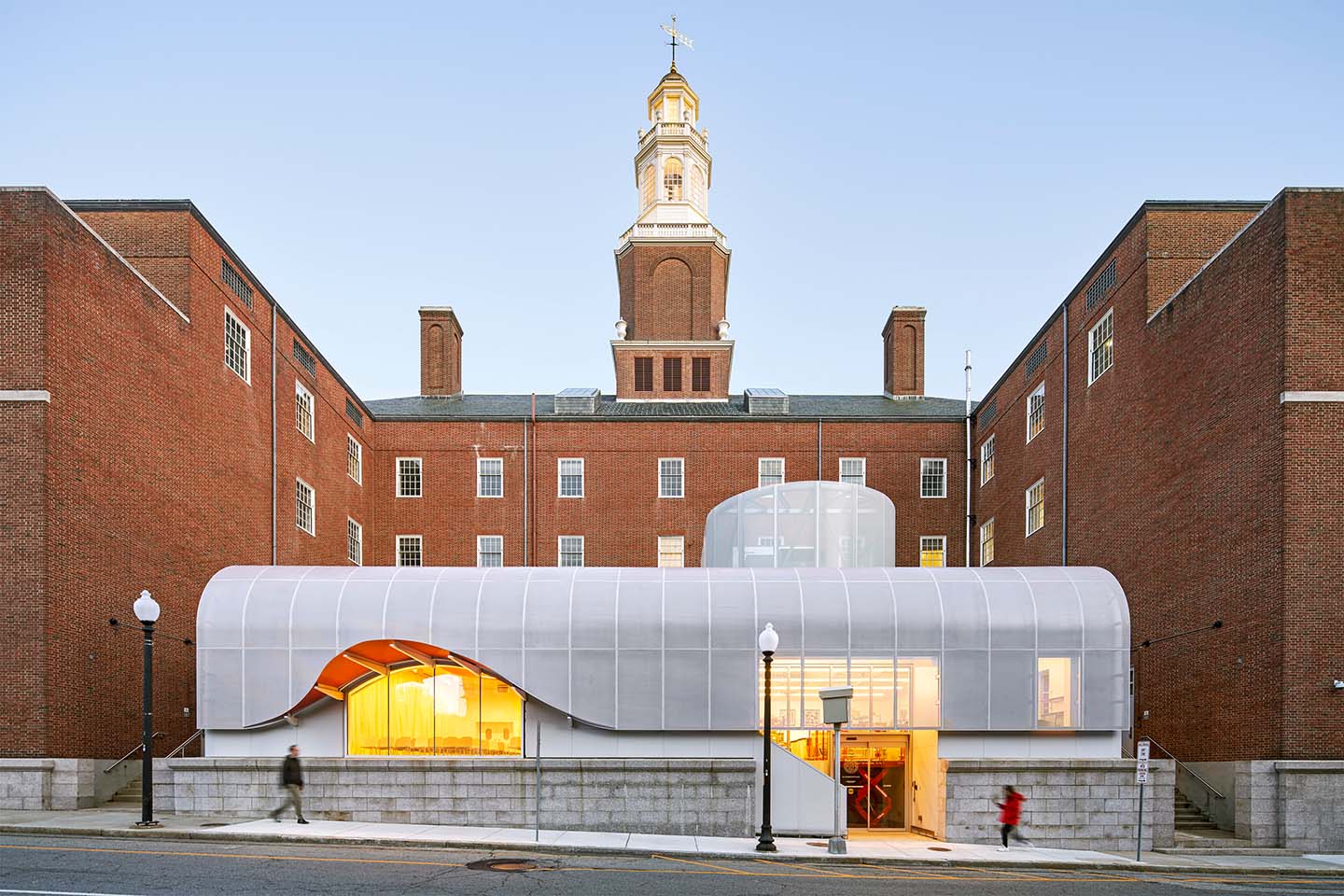
The Rhode Island School of Design is not a typical art school; it's a high-intensity, studio-centric crucible for creative talent, where the relentless pursuit of craft meets a fiercely intellectual approach to making. Nestled in Providence alongside its Ivy League neighbor Brown, RISD cultivates a culture of obsessive, often nocturnal, productivity, producing graduates who don't just join creative industries but frequently redefine them. It's a place where your portfolio is your passport, the critique is a rite of passage, and the expectation is that you will work harder than you ever thought possible.
Admission requirements
Test-optional — scores considered if submitted
Required
High school transcript
Grade point average
Letters of recommendation
Demonstrated competencies
TOEFL (non-native English)
Considered (not required)
Class rank
Test scores (SAT/ACT)
College-prep program
Source: IPEDS Admissions survey (2022) via Urban Institute. Covers formal factors only — it does not reflect essays, extracurriculars, or other holistic criteria.
More details
Undergrad enrollment
2,084
In-state tuition
$62,688
Out-of-state tuition
$62,688
No-Loan Policy
Data not in provided sources
Meets Full Need
Data not in provided sources
Average Aid Package
$41,993
First-Year Retention
Data not in provided sources
Demonstrated Interest
Not considered
Median Earnings (10yr)
$68,140
Graduation Rate (6-year)
89%
Regular Decision Deadline
January 2
Outcomes & value
Outcomes & value
Median earnings (10 yr)
$68,140
Value (earnings ÷ net price)
1.3×
Median debt at graduation
$27,000
Graduation rate
89%
First-year retention
95%
Reducing loan balance (3 yr)
87%
Pell (lower-income) share
15%
First-gen share (among federal-aid recipients)
11%
Financial health
3.0 / 3.0Meets the federal financial-responsibility standard
U.S. Dept. of Education Financial Responsibility Composite Score (FY2022-23). Scale −1.0 to 3.0; ≥1.5 meets the standard. Reported for private nonprofit & for-profit institutions only — public universities are state-backed and not scored, so this is a stability signal, not a ranking.
Top-earning majors
Median earnings by field of study (highest credential), ~2 years after completion.
Architecture$50,439
Apparel and Textiles$41,937
Design and Applied Arts$36,166
Woodworking$30,228
Fine and Studio Arts$22,627
Film/Video and Photographic Arts$22,192
Source: U.S. Dept. of Education College Scorecard (field-of-study earnings). Figures cover graduates who received federal aid and lag ~2 years; not all programs report data.
Applicants here also applied to
The schools that most often appear alongside Rhode Island School of Design on applicants’ lists, from our self-reported outcomes corpus.
On-campus criminal offenses classed as violent (murder/non-negligent manslaughter, rape, robbery, aggravated assault) for the most recent reported year. Source: U.S. Dept. of Education Campus Safety and Security (Clery Act). Counts reflect what’s reported to the school, and urban campuses often report more partly due to non-student incidents nearby — read alongside campus size and setting, not as a standalone safety verdict.
Climate
Pleasant days / yr
91
Summer high
82°F
Winter low
26°F
Annual rain
52.9"
Annual snow
27.9"
Natural-hazard risk
Relatively Moderate
Pleasant days counts days per year with a mean temperature of 55–75°F, a high at or below 90°F, a low at or above 45°F, and little precipitation — a transparent comfort measure, not a weighting we invented. Computed from Open-Meteo ERA5 daily history (2019–2023). Natural-hazard risk is the county’s composite rating from the FEMA National Risk Index.
Deep dive — research, future-scholar output & economic mobility▾
Research output
Institutional h-index
64
Scholarly works
1,217
Institutional research volume and impact from OpenAlex. The h-index reflects large research universities and will be low for teaching-focused liberal-arts colleges — not a measure of undergraduate quality.
Economic mobility
Mobility rate
1.3%
Bottom → top quintile
33%
From bottom quintile
4%
Mobility rate = the share of students who both start in the bottom household-income quintile and reach the top quintile; bottom → top is that chance conditional on starting at the bottom. Source: Opportunity Insights Mobility Report Cards (Chetty, Friedman, Saez, Turner & Yagan). Reflects 1980–82 birth cohorts, so it’s directional, not current.
Quick answers
What is the acceptance rate at Rhode Island School of Design?
Rhode Island School of Design's acceptance rate is approximately 19% (Providence, RI), based on the most recent figures we compiled from public and primary sources.
What SAT score do you need for Rhode Island School of Design?
Admitted students at Rhode Island School of Design typically score 1396–1530 on the SAT (the middle-50% range). Scores outside this band are still admitted, especially with strong applications.
How much does Rhode Island School of Design cost?
At Rhode Island School of Design, the average net price (after aid) is about $50,507 per year. Actual cost varies with financial aid and residency.
How many undergraduates attend Rhode Island School of Design?
Rhode Island School of Design enrolls approximately 2,084 undergraduate students.
Where is Rhode Island School of Design located?
Rhode Island School of Design is located in Providence, RI.
Admissions
Gaining entry to RISD is a highly selective, portfolio-centric battle. The school admits only about 19% of its thousands of applicants, making it one of the most competitive art and design institutions in the world. The academic bar is also high: the middle 50% of admitted students who submitted scores posted an SAT range of 1396–1530 and an ACT range of 31–34, with a strong majority reporting a high school GPA of 3.75 or above. Applicants have the strategic option of applying via Early Decision, which carries a significantly higher —27% compared to the overall 19%—and can signal a committed first choice. The process is holistic but unequivocally centered on artistic merit; while academic rigor and recommendations are important, the portfolio is the paramount factor. Notably, demonstrated interest—campus visits, contact with admissions—is not a formal part of the evaluation calculus, placing the full weight of the decision on the application materials themselves. The regular decision deadline is January 2.
Earnings = median of students working ~10 years after entry; debt = median of graduates. Value divides 10-yr earnings by one year’s net price — read it as earnings per dollar of annual cost, not a full lifetime ROI; it favors lower-cost schools. Source: U.S. Dept. of Education College Scorecard. Figures lag ~2 years and reflect all students, not your intended major.
RISD's academic engine is its world-renowned, discipline-specific studio programs. The school offers 16 undergraduate majors—from the tactile traditions of Ceramics and Glass to the digital frontiers of Film/Animation/Video and Digital + Media—alongside three liberal arts concentrations. Every student, regardless of intended major, begins with the legendary Experimental and Foundation Studies (EFS) year, a rigorous boot camp that breaks down preconceptions about art and design through intense drawing, spatial dynamics, and design principles. This common first-year experience forges a shared language and work ethic. The curriculum is demanding and immersive; the six-year graduation rate is a high 89%, but the four-year rate sits at 49%, reflecting the deep, time-intensive nature of studio work and the prevalence of co-op terms or personal projects that extend time to degree. The environment is one of relentless critique and iteration, where ideas are tested and re-tested through making. With about 2,000 undergraduates and 400 graduate students, the scale is intimate, allowing for close mentorship within departments that are often ranked best in the nation for their fields.
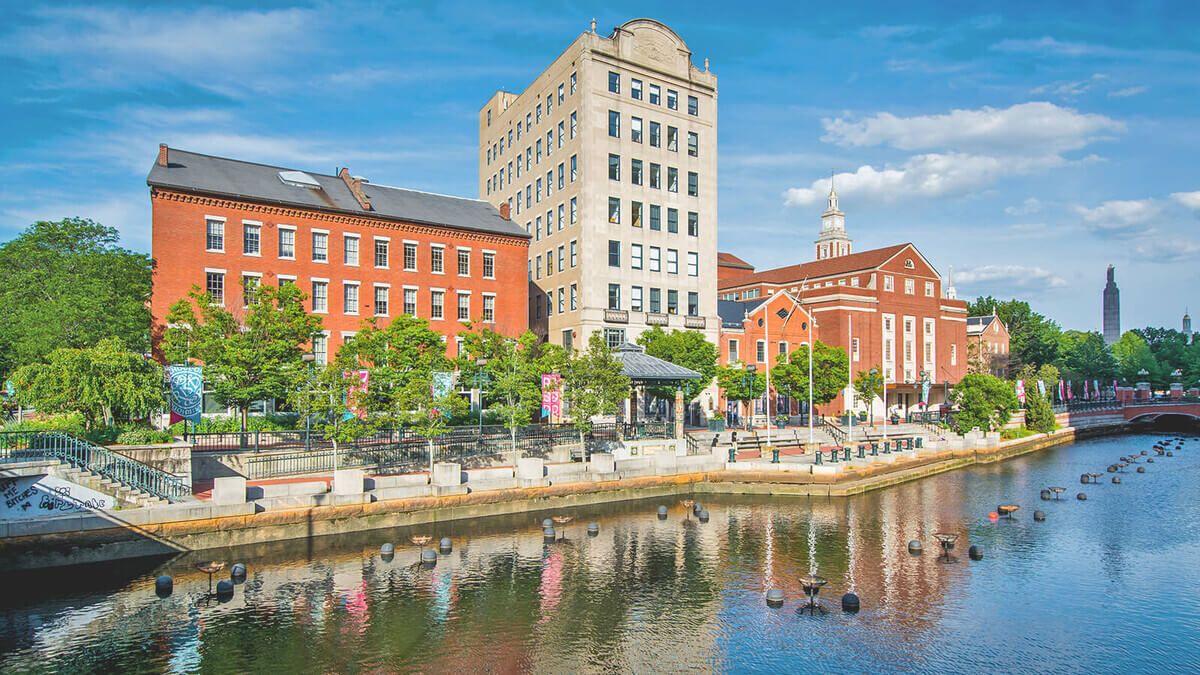
Life at RISD is defined by the studio. The social scene is famously low-key and internally focused, with few large on-campus parties; instead, students often find themselves working late in studio spaces or attending smaller gatherings. The campus itself is integrated into Providence's historic College Hill neighborhood, offering a walkable, community-oriented environment. A significant social outlet is the school's proximity to Brown University; many RISD students attend parties, events, or take courses across the street, creating a unique intellectual and social cross-pollination. On-campus life is supported by a Student Life Division dedicated to co-curricular growth, offering clubs, cultural dialogue programs, and events like the 'Eat the World' festival on Benefit Street. The vibe is one of intense, self-directed creativity—students are deeply committed to their work, forming tight-knit bonds within their majors and developing a shared identity shaped by the all-consuming first-year foundation experience. Housing and dining are standard for a residential college, but the true dormitory is often the 24-hour access studio.
A RISD degree is a launchpad into the creative economy, though early-career earnings can be modest as graduates establish themselves in fields like fine arts, design, and animation. The median earnings ten years after entry are $68,140, a figure that reflects the school's strong long-term ROI as alumni ascend to leadership roles in design firms, studios, and entrepreneurial ventures. The graduation rate is a solid 89% within six years, indicating strong persistence in a demanding program. Early post-graduation data shows more variable outcomes, with one-year earnings reported around $22,778, which is common for graduates entering freelance, apprenticeship, or entry-level positions in the arts. The true value of a RISD outcome is often less about starting salary and more about network, prestige, and the exceptional portfolio built over four-plus years of intense studio work, which opens doors to competitive roles and prestigious graduate programs.
Attending RISD commands a premium price, with an average net price after aid of $50,507. The school meets a portion of demonstrated financial need for admitted students, with average aid packages awarded totaling $41,993 and need-based scholarships or grants averaging $40,676. About 31% of full-time beginning undergraduates receive grant or scholarship aid, and among first-year students receiving institutional aid, the average award is $37,227. RISD requires the FAFSA and its own institutional form for aid consideration. It is important to note that, based on available sources, RISD does not advertise a universal 'no-loan' policy where all need is met with grants; loans are typically part of financial aid packages. The total is high, making the financial aid application process critical for most families. The school provides a calculator for early planning.
RISD stands apart not merely as an art school, but as a culture and a methodology. Its singular identity is forged in the mandatory Foundation Year, a transformative, often grueling experience that strips away individual stylistic pretensions and rebuilds students as critical makers with a shared visual vocabulary. This creates an unparalleled cohort cohesion. Its location adjacent to Brown University is not just convenient; it's programmatic, allowing for cross-registration that feeds RISD's intellectual rigor and Brown's creative spirit, a synergy rare in higher education. The school's reputation is built on extreme depth within discrete disciplines—its programs in Industrial Design, Graphic Design, Illustration, and Architecture are consistently ranked best in the world, known for producing not just skilled practitioners but visionary leaders. The environment is one of unapologetic intensity; it attracts and rewards students who live for their work. You don't come to RISD for a balanced liberal arts experience. You come to be immersed, challenged, and ultimately forged in the studio, emerging with a body of work and a work ethic that commands attention in any creative field.
Rhode Island School of Design seal · sourceRhode Island School of Design · sourceRhode Island School of Design — Admissions, Tuition & Acceptance Rate | Appily · sourceRhode Island School of Design | University & Colleges Details | Pathways To Jobs · source