Admit rate has ranged 10%–16% over the last 5 years. Source: IPEDS via Urban Institute.
Acceptance & SAT from Common Data Set / IPEDS; net price, earnings & graduation from the U.S. Dept. of Education College Scorecard. Figures lag ~1–2 years — verify with the school.
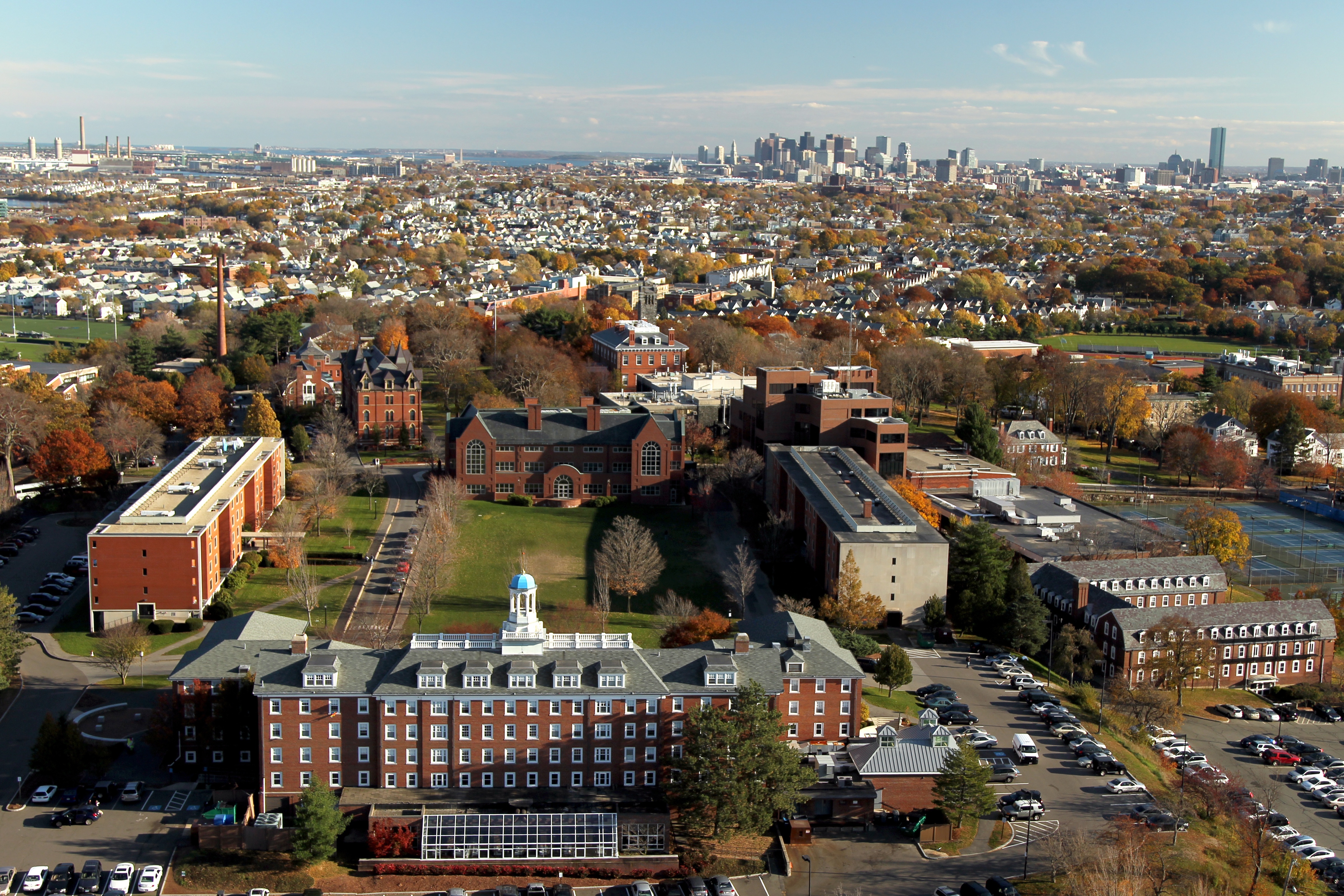
Tufts University is a hybrid creature: a research university with the soul of a liberal arts college, perched on a hilltop in Medford, Massachusetts. It's known for cultivating intellectually curious, often quirky, students who are as comfortable debating international relations in the dining hall as they are collaborating in a biomedical engineering lab. The vibe is friendly, low-ego, and intensely engaged, producing graduates who are as likely to land at a top medical school or tech firm as they are to launch a career in public service or the arts.
Admission requirements
Test-optional — scores considered if submitted
Required
High school transcript
Letters of recommendation
College-prep program
TOEFL (non-native English)
Considered (not required)
Grade point average
Class rank
Test scores (SAT/ACT)
Demonstrated competencies
Source: IPEDS Admissions survey (2022) via Urban Institute. Covers formal factors only — it does not reflect essays, extracurriculars, or other holistic criteria.
More details
Undergrad enrollment
7,061
In-state tuition
$70,704
Out-of-state tuition
$70,704
No-Loan Policy
Yes, incomes < $60k
Graduation Rate
94%
Meets Full Need
Yes
ED Share of Class
~42%
Average Class Size
20
Demonstrated Interest
Not considered
Student-Faculty Ratio
10:1
Median Earnings (10yr)
$83,214
Outcomes & value
Outcomes & value
Median earnings (10 yr)
$83,214
Value (earnings ÷ net price)
2.1×
Median debt at graduation
$16,250
Graduation rate
94%
First-year retention
96%
Reducing loan balance (3 yr)
91%
Pell (lower-income) share
12%
First-gen share (among federal-aid recipients)
15%
Financial health
2.7 / 3.0Meets the federal financial-responsibility standard
U.S. Dept. of Education Financial Responsibility Composite Score (FY2022-23). Scale −1.0 to 3.0; ≥1.5 meets the standard. Reported for private nonprofit & for-profit institutions only — public universities are state-backed and not scored, so this is a stability signal, not a ranking.
Top-earning majors
Median earnings by field of study (highest credential), ~2 years after completion.
Computer Science$97,959
Electrical, Electronics, and Communications Engineering$84,653
Chemical Engineering$73,635
Economics$71,778
Human Computer Interaction$69,732
Mechanical Engineering$66,821
Applicants here also applied to
The schools that most often appear alongside Tufts on applicants’ lists, from our self-reported outcomes corpus.
Co-application frequency from self-reported results — directional peer discovery, not a recommendation.
Campus & location
Campus safety
On-campus violent crimes (2024)
8
Per 1,000 students
0.59
On-campus criminal offenses classed as violent (murder/non-negligent manslaughter, rape, robbery, aggravated assault) for the most recent reported year. Source: U.S. Dept. of Education Campus Safety and Security (Clery Act). Counts reflect what’s reported to the school, and urban campuses often report more partly due to non-student incidents nearby — read alongside campus size and setting, not as a standalone safety verdict.
Climate
Pleasant days / yr
91
Summer high
80°F
Winter low
25°F
Annual rain
49.7"
Annual snow
33"
Natural-hazard risk
Relatively High
Pleasant days counts days per year with a mean temperature of 55–75°F, a high at or below 90°F, a low at or above 45°F, and little precipitation — a transparent comfort measure, not a weighting we invented. Computed from Open-Meteo ERA5 daily history (2019–2023). Natural-hazard risk is the county’s composite rating from the FEMA National Risk Index.
Deep dive — research, future-scholar output & economic mobility▾
Research output
Institutional h-index
980
Scholarly works
117,129
Institutional research volume and impact from OpenAlex. The h-index reflects large research universities and will be low for teaching-focused liberal-arts colleges — not a measure of undergraduate quality.
Economic mobility
Mobility rate
2.1%
Bottom → top quintile
62%
From bottom quintile
3%
Mobility rate = the share of students who both start in the bottom household-income quintile and reach the top quintile; bottom → top is that chance conditional on starting at the bottom. Source: Opportunity Insights Mobility Report Cards (Chetty, Friedman, Saez, Turner & Yagan). Reflects 1980–82 birth cohorts, so it’s directional, not current.
Quick answers
What is the acceptance rate at Tufts University?
Tufts University's acceptance rate is approximately 11% (Medford, MA), based on the most recent figures we compiled from public and primary sources.
What SAT score do you need for Tufts University?
Admitted students at Tufts University typically score 1470–1560 on the SAT (the middle-50% range). Scores outside this band are still admitted, especially with strong applications.
How much does Tufts University cost?
At Tufts University, the average net price (after aid) is about $39,998 per year. Actual cost varies with financial aid and residency.
How many undergraduates attend Tufts University?
Tufts University enrolls approximately 7,061 undergraduate students.
Where is Tufts University located?
Tufts University is located in Medford, MA.
Admissions
Getting into Tufts is a high-stakes proposition, with the university firmly entrenched among the most selective institutions in the country. The admissions process is holistic, with the indicating that the most important factors are the rigor of a student's secondary school record, class rank, GPA, standardized test scores (though Tufts is through a multi-year pilot), and the application essay. Letters of recommendation, extracurricular activities, and character/personal qualities are also rated as "important." Notably, demonstrated interest is not considered in admissions decisions, meaning campus visits or emailing an admissions officer won't give an applicant an edge.
Early Decision is a significant pathway, with about 42% of the incoming class typically filled through ED I and II rounds. While the university states that Early Decision is not necessarily "easier," historical data shows the ED can be substantially higher than the overall rate. The admitted student profile is exceptionally strong, with the middle 50% SAT range sitting between 1470 and 1560 for those who submitted scores; about 65% of admitted students to the Class of 2029 chose to submit test scores. The rate—the percentage of admitted students who enroll—is a robust 49%, indicating Tufts is a top choice for many high-achievers.
Earnings = median of students working ~10 years after entry; debt = median of graduates. Value divides 10-yr earnings by one year’s net price — read it as earnings per dollar of annual cost, not a full lifetime ROI; it favors lower-cost schools. Source: U.S. Dept. of Education College Scorecard. Figures lag ~2 years and reflect all students, not your intended major.
Civil Engineering
$63,005
Sociology$55,693
Source: U.S. Dept. of Education College Scorecard (field-of-study earnings). Figures cover graduates who received federal aid and lag ~2 years; not all programs report data.
Tufts delivers on its promise of a "research university and liberal arts college" fusion through a unique academic structure and intimate scale. The student-faculty ratio is 10:1, and the average class size is 20, enabling close mentorship and collaborative research opportunities even for first-year students. Undergraduates have access to more than 150 majors, minors, and programs across the School of Arts and Sciences and the School of Engineering.
The intellectual culture is known for its particular strengths in several distinct clusters:
International Relations & Political Science: A powerhouse program with deep connections to the Fletcher School of Law and Diplomacy.
Health Sciences & Pre-Med: A rigorous and well-supported pathway, with strong programs in biology and community health.
Engineering & Computer Science: The School of Engineering emphasizes human-centered design and interdisciplinary work.
English & the Humanities: A traditionally strong department that fosters critical thinking and writing.
Recent data on top graduating majors highlights student interests: International Relations, Biology, Computer Science, Economics, and Political Science are among the most popular. This blend of pre-professional and traditional liberal arts fields defines the Tufts academic experience, where a computer science major is just as likely to minor in philosophy as in math.
Life on the hill is described by students as friendly, busy, and balanced—a "low-ego" campus culture where people care about their work but also know how to relax. The social scene is notably laid-back and somewhat quiet compared to larger state schools; while a party scene exists, it's not the dominant social outlet. Students often cite the dining halls as central hubs for long, meandering conversations with friends. With an average of 15 hours per week spent in class, students have ample time to engage with over 300 student-run organizations, from a cappella groups and cultural clubs to quirky traditions like the annual "Winter Meltdown" festival.
The campus culture is self-selecting for students who are intellectually curious, socially conscious, and a bit offbeat. Reddit threads and student testimonials consistently highlight the lack of cutthroat competition and the prevalence of collaborative, supportive peers. Located just outside Boston, the city's vast array of internships, cultural institutions, and other college communities (Harvard, MIT) are easily accessible via the MBTA, but many students find the tight-knit Tufts campus itself a compelling enough world to inhabit most of the time.
A Tufts degree is a substantial investment that pays strong dividends. The university's 94% graduation rate is exceptionally high, far exceeding the national median, and speaks to a supportive environment where students persist and succeed. Post-graduation, Tufts alumni enter the workforce with a significant earnings advantage. While earnings vary considerably by major, the median earnings for graduates four years after entry are notably above the national average for four-year colleges.
Career paths are diverse, reflecting the breadth of Tufts' academic offerings. Graduates are highly competitive for top graduate programs in medicine, law, and public policy, while others launch directly into careers in technology, finance, engineering, education, and the non-profit sector. The strong alumni network, particularly in the Northeast and in international circles, provides a valuable professional springboard. The outcomes data underscores that a Tufts education is not just about the four years on campus, but about launching graduates into trajectories of long-term professional success and leadership.
Tufts is one of a growing number of elite institutions using its endowment to dramatically expand financial accessibility. The cornerstone of this policy is a commitment to meet 100% of the demonstrated financial need for all admitted undergraduates. For families with significant need, this package is designed to be loan-free. Specifically, students from families with incomes below $60,000 will typically receive a financial aid offer with no student loans, replaced entirely by grant aid and work-study. In a major recent expansion, the university also announced that U.S. undergraduate students from families earning less than $150,000 a year will attend tuition-free.
Prospective students are encouraged to use Tufts' online Calculators and the MyinTuition Quick College Estimator to get an early, personalized estimate of their cost. It's important to note that these tools provide estimates, not guarantees, of final aid packages. The university's aggressive no-loan thresholds and tuition-free initiatives represent a serious effort to reduce debt burdens and open its doors to a broader socioeconomic range of students, aligning its practices with its stated values of access and opportunity.
Tufts stands out for its potent and genuine synthesis of seemingly contradictory qualities. It's a research university where undergraduates get hands-on lab time with renowned professors, yet it maintains the small classes and close-knit community of a liberal arts college. It's intensely academic, but the campus culture is famously lacking in pretension—a place where smart, passionate people don't feel the need to prove it every second. It's located in the shadow of Boston's academic giants, but it has carved out a distinct identity defined by interdisciplinary thinking, global citizenship, and a humane, collaborative approach to problem-solving.
This unique blend attracts a specific type of student: the future diplomat who also writes for the comedy magazine, the biomedical engineer who minors in music, the intellectually omnivorous learner who is as serious about changing the world as they are about understanding it. Tufts doesn't try to be everything to everyone; it excels at being a very particular something—a launchpad for engaged, principled, and innovative thinkers—and it does so with a consistency that makes it a perennial top choice for students who fit its distinctive mold.
Tufts University seal · sourceVisit Tufts and Take a Campus Tour | Tufts University · sourceTufts University · sourceVisit Tufts and Take a Campus Tour | Tufts University · source