Admit rate has ranged 73%–89% over the last 5 years — notably volatile, though the latest figure above (72%) falls outside that window. Source: IPEDS via Urban Institute.
Acceptance & SAT from Common Data Set / IPEDS; net price, earnings & graduation from the U.S. Dept. of Education College Scorecard. Figures lag ~1–2 years — verify with the school.
Saginaw Valley State University is a public regional university in Michigan's Great Lakes Bay Region that operates as a practical, accessible engine of upward mobility. With a sprawling, modern campus and a test-optional, moderately selective admissions process, SVSU focuses on delivering career-oriented programs in nursing, business, and the health professions to a largely residential student body. It’s a place where affordability and a supportive, community-focused campus culture are central to its identity, aiming to turn first-generation and regional students into employed graduates without crippling debt.
Admission requirements
Test-optional — scores considered if submitted
Required
High school transcript
Grade point average
TOEFL (non-native English)
Considered (not required)
Test scores (SAT/ACT)
College-prep program
Source: IPEDS Admissions survey (2022) via Urban Institute. Covers formal factors only — it does not reflect essays, extracurriculars, or other holistic criteria.
More details
Undergrad enrollment
5,989
In-state tuition
$12,930
Out-of-state tuition
$30,450
Housing
41% live on campus
Graduation Rate
48%
Demonstrated Interest
Not considered
Pell Grant Recipients
32%
Graduates with No Debt
25%
Median Earnings (10yr)
$51,955
Outcomes & value
Outcomes & value
Median earnings (10 yr)
$51,955
Value (earnings ÷ net price)
4.8×
Median debt at graduation
$25,000
Graduation rate
48%
First-year retention
78%
Reducing loan balance (3 yr)
49%
Pell (lower-income) share
35%
First-gen share (among federal-aid recipients)
33%
Top-earning majors
Median earnings by field of study (highest credential), ~2 years after completion.
Electrical, Electronics, and Communications Engineering$78,343
Mechanical Engineering$73,378
Computer Systems Analysis$64,990
Registered Nursing, Nursing Administration, Nursing Research and Clinical Nursing$61,688
Computer and Information Sciences, General$59,169
Clinical/Medical Laboratory Science/Research and Allied Professions
Campus & location
Campus safety
On-campus violent crimes (2024)
2
Per 1,000 students
0.30
On-campus criminal offenses classed as violent (murder/non-negligent manslaughter, rape, robbery, aggravated assault) for the most recent reported year. Source: U.S. Dept. of Education Campus Safety and Security (Clery Act). Counts reflect what’s reported to the school, and urban campuses often report more partly due to non-student incidents nearby — read alongside campus size and setting, not as a standalone safety verdict.
Climate
Pleasant days / yr
94
Summer high
81°F
Winter low
21°F
Annual rain
34.6"
Annual snow
32.3"
Natural-hazard risk
Relatively Moderate
Pleasant days counts days per year with a mean temperature of 55–75°F, a high at or below 90°F, a low at or above 45°F, and little precipitation — a transparent comfort measure, not a weighting we invented. Computed from Open-Meteo ERA5 daily history (2019–2023). Natural-hazard risk is the county’s composite rating from the FEMA National Risk Index.
Deep dive — research, future-scholar output & economic mobility▾
Research output
Institutional h-index
96
Scholarly works
2,682
Institutional research volume and impact from OpenAlex. The h-index reflects large research universities and will be low for teaching-focused liberal-arts colleges — not a measure of undergraduate quality.
Economic mobility
Mobility rate
1.3%
Bottom → top quintile
20%
From bottom quintile
6%
Mobility rate = the share of students who both start in the bottom household-income quintile and reach the top quintile; bottom → top is that chance conditional on starting at the bottom. Source: Opportunity Insights Mobility Report Cards (Chetty, Friedman, Saez, Turner & Yagan). Reflects 1980–82 birth cohorts, so it’s directional, not current.
Quick answers
What is the acceptance rate at Saginaw Valley State University?
Saginaw Valley State University's acceptance rate is approximately 72% (University Center, MI), based on the most recent figures we compiled from public and primary sources.
What SAT score do you need for Saginaw Valley State University?
Admitted students at Saginaw Valley State University typically score 920–1170 on the SAT (the middle-50% range). Scores outside this band are still admitted, especially with strong applications.
How much does Saginaw Valley State University cost?
At Saginaw Valley State University, the average net price (after aid) is about $10,775 per year. Actual cost varies with financial aid and residency.
How many undergraduates attend Saginaw Valley State University?
Saginaw Valley State University enrolls approximately 5,989 undergraduate students.
Where is Saginaw Valley State University located?
Saginaw Valley State University is located in University Center, MI.
Admissions
SVSU's admissions process is designed to be accessible and straightforward, reflecting its mission as a public regional university. The university is moderately selective, with an of 72%. It employs a policy, meaning prospective freshmen are not required to submit SAT or ACT scores to be considered for admission or for merit scholarships. For those who do submit, the middle 50% SAT score range of admitted students is 920–1170. The admissions office does not consider demonstrated interest as a factor in its decisions. The process emphasizes reviewing a student's high school GPA and coursework as primary criteria for admission.
Academic life at SVSU is defined by a broad, career-focused curriculum spanning over 100 undergraduate and graduate programs. The university structures its offerings into several colleges: Arts & Behavioral Sciences; Business; Education; Health & Human Services; and Science, Engineering & Technology. The most popular majors cluster in health professions and business, with Registered Nursing standing out as a particularly well-known and prominent program. The academic approach is practical and geared toward direct career preparation, supporting a student body where many are college attendees. The six-year graduation rate is 48%.
Earnings = median of students working ~10 years after entry; debt = median of graduates. Value divides 10-yr earnings by one year’s net price — read it as earnings per dollar of annual cost, not a full lifetime ROI; it favors lower-cost schools. Source: U.S. Dept. of Education College Scorecard. Figures lag ~2 years and reflect all students, not your intended major.
$49,631
Finance and Financial Management Services$48,432
Accounting and Related Services$44,468
Source: U.S. Dept. of Education College Scorecard (field-of-study earnings). Figures cover graduates who received federal aid and lag ~2 years; not all programs report data.
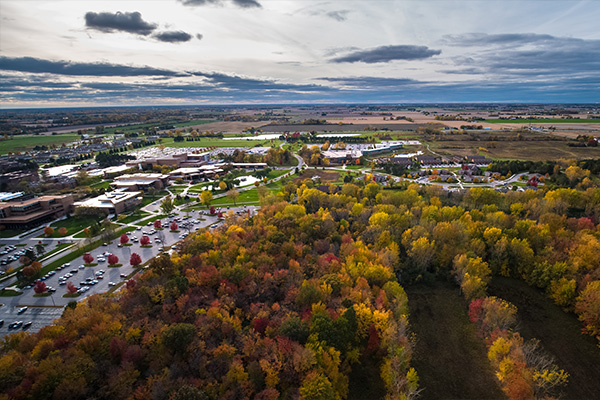
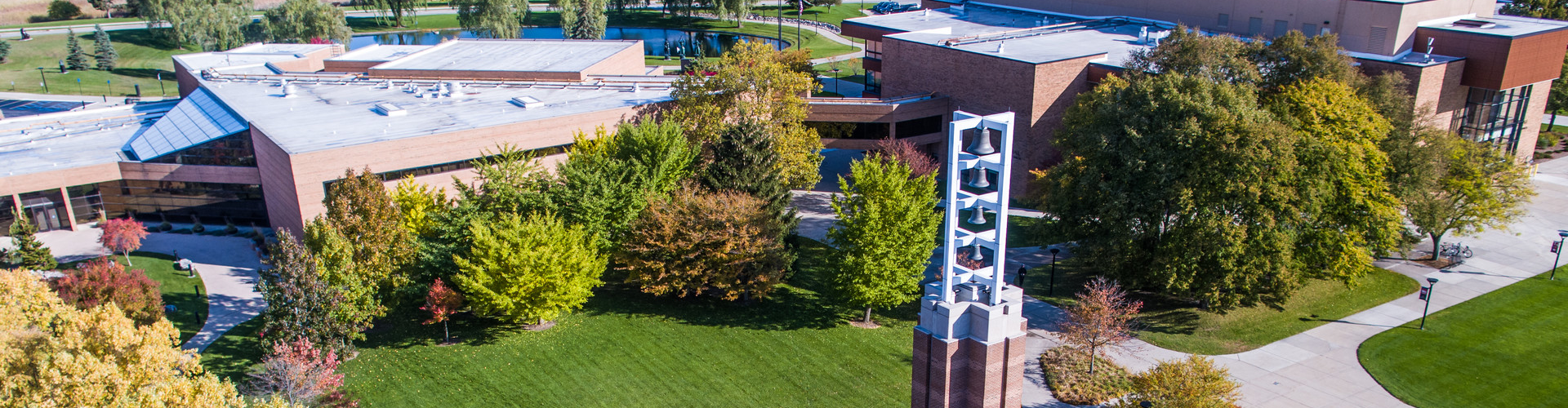
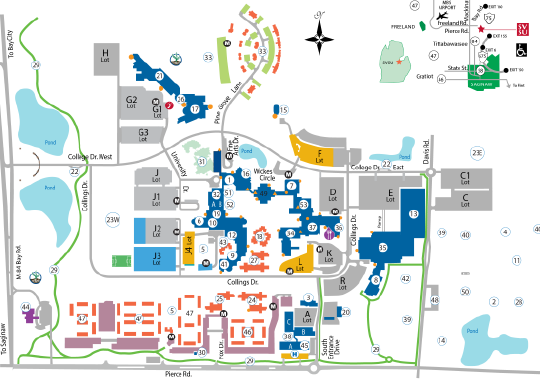
Life on SVSU's 782-acre campus is active and community-oriented, with a significant portion of the student body choosing to live on campus. Approximately 41% of students live in college-owned, -operated, or -affiliated housing, creating a residential nucleus for campus activity. The Office of Student Life serves as the central hub for involvement, organizing a wide array of events—from lectures and concerts to athletic events and student-run activities. The university champions diversity and inclusion, promoting a safe and supportive environment for all students. Student reviews often describe the campus vibe as welcoming and supportive, fostering a strong sense of belonging among the Cardinals.
SVSU's outcomes profile reflects its role as a regional public university focused on employability and value. The six-year graduation rate is 48%. For graduates, median earnings six years after starting at the university are reported at $43,530. Other sources note earnings of $47,001 one year after graduation and $56,681 five years after graduation, indicating solid wage progression for its alumni. The university's transparency reporting includes data on graduation outcome rates, including employment and continuing education, though it notes that response rates for such surveys can be low and potentially biased.
Affordability is a cornerstone of SVSU's value proposition. The average after aid is $10,775. The university reports that 99% of undergraduate students receive some form of financial aid. For first-year students demonstrating need, the average need-based scholarship or grant award is $16,062, and 68% of first-year students receive need-based financial aid. A notable 32% of students are federal Pell Grant recipients. SVSU offers several institutional aid initiatives, including the SVOG Grant, which provides up to $6,000 per year for four years to qualifying first-time students with financial need. The university also highlights that 25% of its students graduate with no debt at all. While it offers a 'Cardinal Commitment' to provide additional funding if tuition costs exceed grants and scholarships for qualifying students, SVSU does not have a comprehensive no-loan policy that meets 100% of need for all qualifying students solely with grants.
SVSU carves out its distinct identity not through national prestige or cutthroat selectivity, but through a steadfast commitment to accessible, practical education with a strong safety net of support. It stands out for its deep integration with the regional community and economy, particularly in feeding the healthcare and business sectors of the Great Lakes Bay Region. The campus itself—large, modern, and with a significant residential population—defies the 'commuter school' stereotype often attached to similar institutions, fostering a more traditional collegiate community. Its financial aid philosophy, highlighted by the fact that a quarter of graduates carry zero debt and bolstered by grants like the SVOG, demonstrates a tangible commitment to minimizing the financial burden on its students. Ultimately, SVSU is a clear-eyed choice for Michigan students who prioritize a supportive on-campus experience, direct career pathways in high-demand fields like nursing, and graduating with a manageable financial footprint above all else.
Saginaw Valley State University seal · sourceCampus Facilities - SVSU · sourceCampus Resources - Campus Mental Health & Wellness Center - SVSU · sourceCampus Maps - Saginaw Valley State University · source
.jpg?width=1600)