Admit rate has ranged 76%–85% over the last 5 years — notably volatile. Source: IPEDS via Urban Institute.
Acceptance & SAT from Common Data Set / IPEDS; net price, earnings & graduation from the U.S. Dept. of Education College Scorecard. Figures lag ~1–2 years — verify with the school.
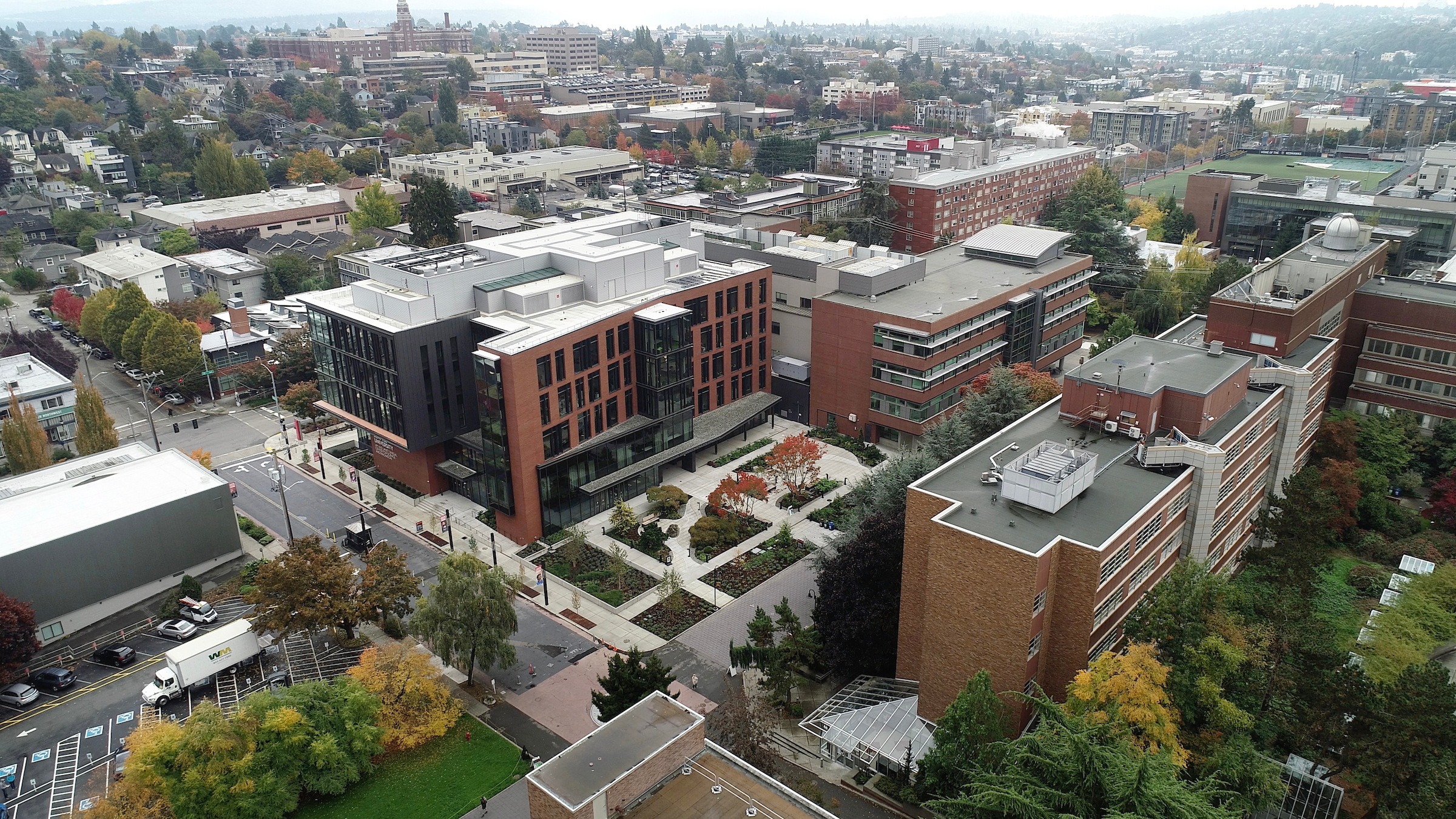
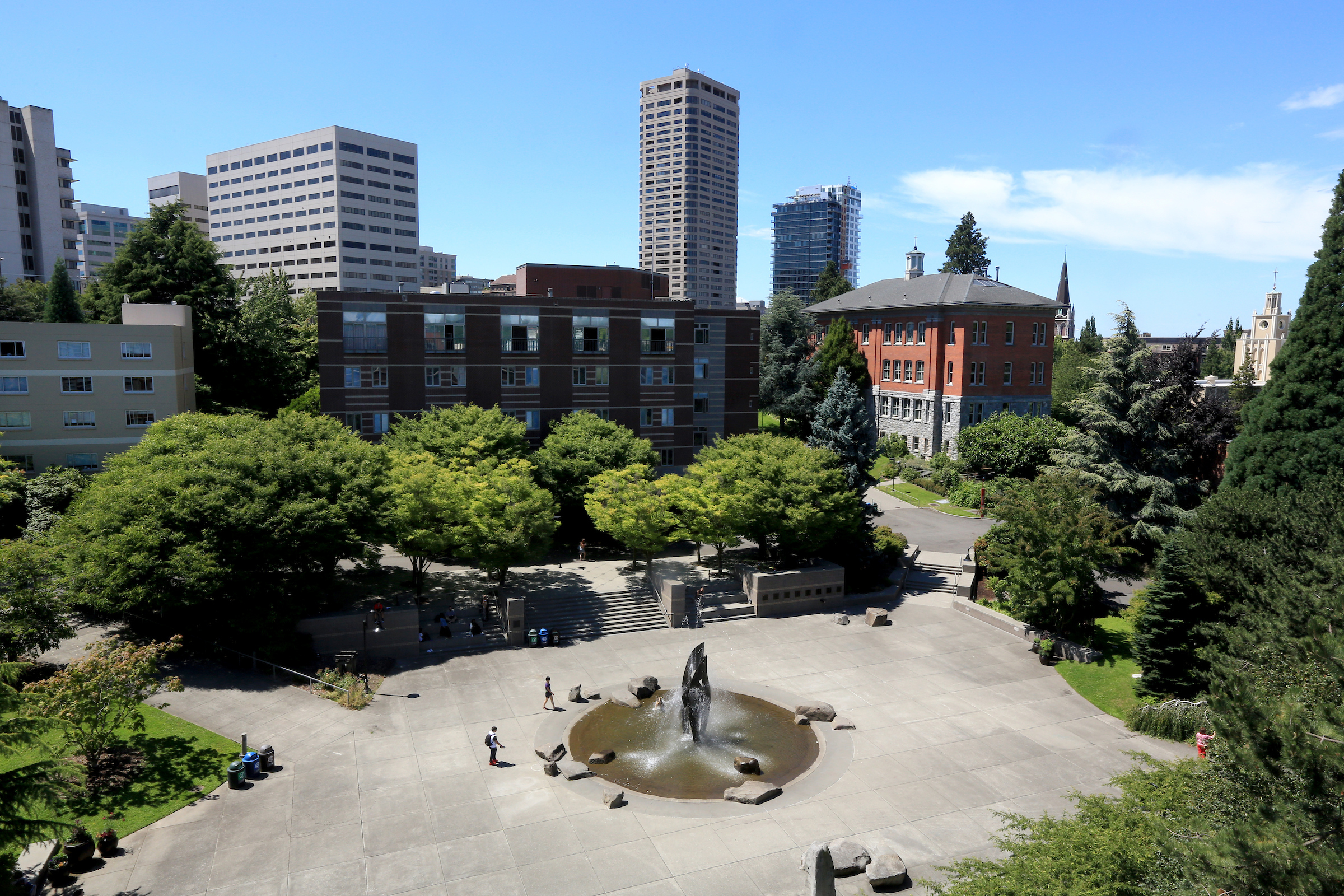
Seattle University is a Jesuit, urban institution that trades the cloistered quad for the dynamic pulse of the Pacific Northwest's largest city. It offers a pragmatic, justice-oriented education where small, discussion-based classes and deep connections to Seattle's tech, business, and nonprofit sectors define the experience. This is a campus for students who want their learning to be immediately applicable, their community to be engaged, and their city to be their classroom.
Admission requirements
Test-optional — scores considered if submitted
Required
High school transcript
Grade point average
Letters of recommendation
College-prep program
TOEFL (non-native English)
Considered (not required)
Class rank
Test scores (SAT/ACT)
Source: IPEDS Admissions survey (2022) via Urban Institute. Covers formal factors only — it does not reflect essays, extracurriculars, or other holistic criteria.
More details
Undergrad enrollment
4,062
In-state tuition
$56,721
Out-of-state tuition
$56,721
Early Action Offered
Yes (Non-binding)
Median Earnings (10yr)
$75,272
Graduation Rate (6-year)
76%
First-Year Retention Rate
78%
Regular Decision Deadline
January 15
Average Financial Aid Package
$54,826
Students Receiving Financial Aid
59.04%
Outcomes & value
Outcomes & value
Median earnings (10 yr)
$75,272
Value (earnings ÷ net price)
2.2×
Median debt at graduation
$19,883
Graduation rate
76%
First-year retention
84%
Reducing loan balance (3 yr)
78%
Pell (lower-income) share
24%
First-gen share (among federal-aid recipients)
19%
Financial health
2.5 / 3.0Meets the federal financial-responsibility standard
U.S. Dept. of Education Financial Responsibility Composite Score (FY2022-23). Scale −1.0 to 3.0; ≥1.5 meets the standard. Reported for private nonprofit & for-profit institutions only — public universities are state-backed and not scored, so this is a stability signal, not a ranking.
Top-earning majors
Median earnings by field of study (highest credential), ~2 years after completion.
Allied Health Diagnostic, Intervention, and Treatment Professions$86,867
Computer Science$83,768
Electrical, Electronics, and Communications Engineering$71,473
Registered Nursing, Nursing Administration, Nursing Research and Clinical Nursing$69,505
Business/Managerial Economics$63,749
Accounting and Related Services
Campus & location
Campus safety
On-campus violent crimes (2024)
2
Per 1,000 students
0.28
On-campus criminal offenses classed as violent (murder/non-negligent manslaughter, rape, robbery, aggravated assault) for the most recent reported year. Source: U.S. Dept. of Education Campus Safety and Security (Clery Act). Counts reflect what’s reported to the school, and urban campuses often report more partly due to non-student incidents nearby — read alongside campus size and setting, not as a standalone safety verdict.
Climate
Pleasant days / yr
119
Summer high
73°F
Winter low
36°F
Annual rain
44.5"
Annual snow
14.4"
Natural-hazard risk
Very High
Pleasant days counts days per year with a mean temperature of 55–75°F, a high at or below 90°F, a low at or above 45°F, and little precipitation — a transparent comfort measure, not a weighting we invented. Computed from Open-Meteo ERA5 daily history (2019–2023). Natural-hazard risk is the county’s composite rating from the FEMA National Risk Index.
Deep dive — research, future-scholar output & economic mobility▾
Research output
Institutional h-index
1,003
Scholarly works
57,074
Institutional research volume and impact from OpenAlex. The h-index reflects large research universities and will be low for teaching-focused liberal-arts colleges — not a measure of undergraduate quality.
Economic mobility
Mobility rate
1.9%
Bottom → top quintile
40%
From bottom quintile
5%
Mobility rate = the share of students who both start in the bottom household-income quintile and reach the top quintile; bottom → top is that chance conditional on starting at the bottom. Source: Opportunity Insights Mobility Report Cards (Chetty, Friedman, Saez, Turner & Yagan). Reflects 1980–82 birth cohorts, so it’s directional, not current.
Quick answers
What is the acceptance rate at Seattle University?
Seattle University's acceptance rate is approximately 77% (Seattle, WA), based on the most recent figures we compiled from public and primary sources.
What SAT score do you need for Seattle University?
Admitted students at Seattle University typically score 1200–1430 on the SAT (the middle-50% range). Scores outside this band are still admitted, especially with strong applications.
How much does Seattle University cost?
At Seattle University, the average net price (after aid) is about $34,662 per year. Actual cost varies with financial aid and residency.
How many undergraduates attend Seattle University?
Seattle University enrolls approximately 4,062 undergraduate students.
Where is Seattle University located?
Seattle University is located in Seattle, WA.
Admissions
Seattle University's admissions process is moderately selective, prioritizing a student's overall academic record within a . The university admits a significant majority of its applicants, with an of 77%. For the admitted class, the middle 50% SAT range is 1200–1430, and the unweighted, cumulative high school GPA typically falls between 3.4 and 3.88. The university offers a non-binding Early Action plan with a November 1 deadline, which historically carries a higher acceptance rate than the regular decision pool; applicants who apply Early Action receive their decision by late December. The regular decision deadline is January 15. While SAT and ACT scores are considered, they are not required for all applicants. The admissions office emphasizes the rigor of secondary school record, GPA, and application essays as key factors in their evaluation.
Earnings = median of students working ~10 years after entry; debt = median of graduates. Value divides 10-yr earnings by one year’s net price — read it as earnings per dollar of annual cost, not a full lifetime ROI; it favors lower-cost schools. Source: U.S. Dept. of Education College Scorecard. Figures lag ~2 years and reflect all students, not your intended major.
$62,012
Mechanical Engineering$59,045
Finance and Financial Management Services$58,221
Source: U.S. Dept. of Education College Scorecard (field-of-study earnings). Figures cover graduates who received federal aid and lag ~2 years; not all programs report data.
Academics at Seattle U are defined by an intimate, discussion-driven format and a curriculum infused with the Jesuit tradition of educating the whole person for a just and humane world. The university is organized into several schools and colleges, including the Albers School of Business and Economics, the College of Arts and Sciences, and the College of Science and Engineering, offering a wide range of nationally ranked and accredited programs. The student-to-faculty ratio fosters small class sizes, which students frequently praise for allowing more personalized attention and engaged dialogue; in one student review, 80% of professors were described as "really great... and seem to care and are really enthusiastic about their subject." Popular majors include Visual and Performing Arts, Homeland Security/Law Enforcement, and Engineering. The academic approach is explicitly "justice-minded" and "globally engaged," with a strong emphasis on experiential learning, real-world projects, and forging connections with Seattle's top employers and community organizations.
Life on campus mirrors the character of its setting: energetic, globally-minded, and rooted in one of the most culturally diverse neighborhoods on the West Coast. The urban campus is integrated into the heart of Seattle, placing students within walking distance of the city's culture, art, and technology hubs. The university fosters a "vibrant and inclusive campus community" through numerous clubs, organizations, and campus events. Social life is often described as more low-key and relationship-driven than at larger state schools; as one student noted, there are a "good amount of clubs, not many public parties (you have to make friends for that). Not as social as UW, but the people are genuine and friendly." The Office of Student and Campus Life actively works to create an environment that "challenges and supports" students to learn, lead, and serve. The overall vibe is one of a supportive, tight-knit community situated within the boundless opportunities of a major metropolitan city.
Seattle University demonstrates strong student success metrics, particularly in graduation rates that outpace national averages. The six-year graduation rate is 76%. The university also reports a first-year retention rate of 78%, indicating that the vast majority of students are satisfied enough with their initial experience to return for a second year. Post-graduation, alumni see solid financial returns. The median earnings for students working ten years after entering the university is $75,272. These outcomes position Seattle U as an institution that effectively supports students through to degree completion and prepares them for financially sustainable careers.
As a private institution, Seattle University carries a high sticker price, but it mitigates this for many families through substantial institutional aid. The average —the actual cost after scholarships and grants are applied—is $34,662. A significant majority of students (59.04%) receive financial aid, with the average aid package totaling $54,826. The university is committed to reducing student debt, noting that on average, SU students borrow over $13,000 less than the national average and that 35% of undergraduates do not take out any loans. It also offers targeted, full-need scholarship programs for specific populations, such as the Seattle U Bound program, which covers 100% of demonstrated financial need for eligible Washington College Bound students for four years. All students are encouraged to use the university's Net Price Calculator for a personalized estimate of costs and aid.
Seattle University carves out a distinctive niche by seamlessly blending three powerful elements: the reflective, values-based pedagogy of Jesuit education; the practical, career-connected energy of a major city; and the supportive scale of a small liberal arts college. It doesn't just sit in Seattle—it is intellectually and professionally woven into its fabric, offering students direct pathways to internships, jobs, and community engagement from day one. This isn't a campus of theoretical isolation; it's a launchpad for applied learning where business majors analyze real local companies, nursing students train in top-tier urban hospitals, and every student is encouraged to consider the ethical dimensions of their work. The result is a graduate profile that is both professionally prepared and broadly educated—students who leave not just with a degree, but with a nuanced understanding of how to use it meaningfully in the world.
Seattle University seal · sourceGraduate Campus Tours | Visit & Tour | Admissions & Aid | Seattle University · sourceCollege of Education | Seattle University · sourceSeattle University Aerial Campus Tour (2020) · source