Admit rate has ranged 77%–86% over the last 5 years — notably volatile. Source: IPEDS via Urban Institute.
Acceptance & SAT from Common Data Set / IPEDS; net price, earnings & graduation from the U.S. Dept. of Education College Scorecard. Figures lag ~1–2 years — verify with the school.
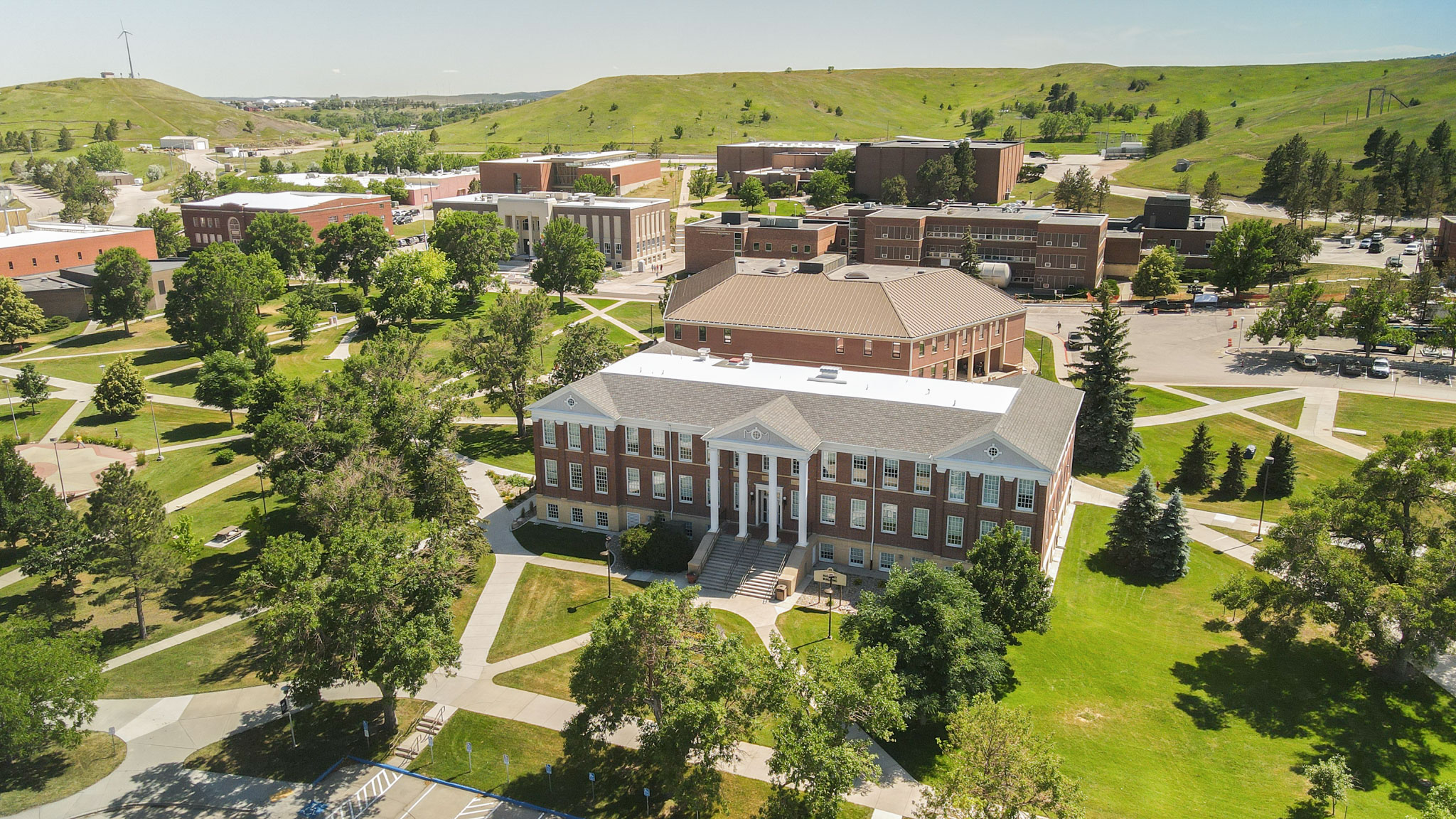
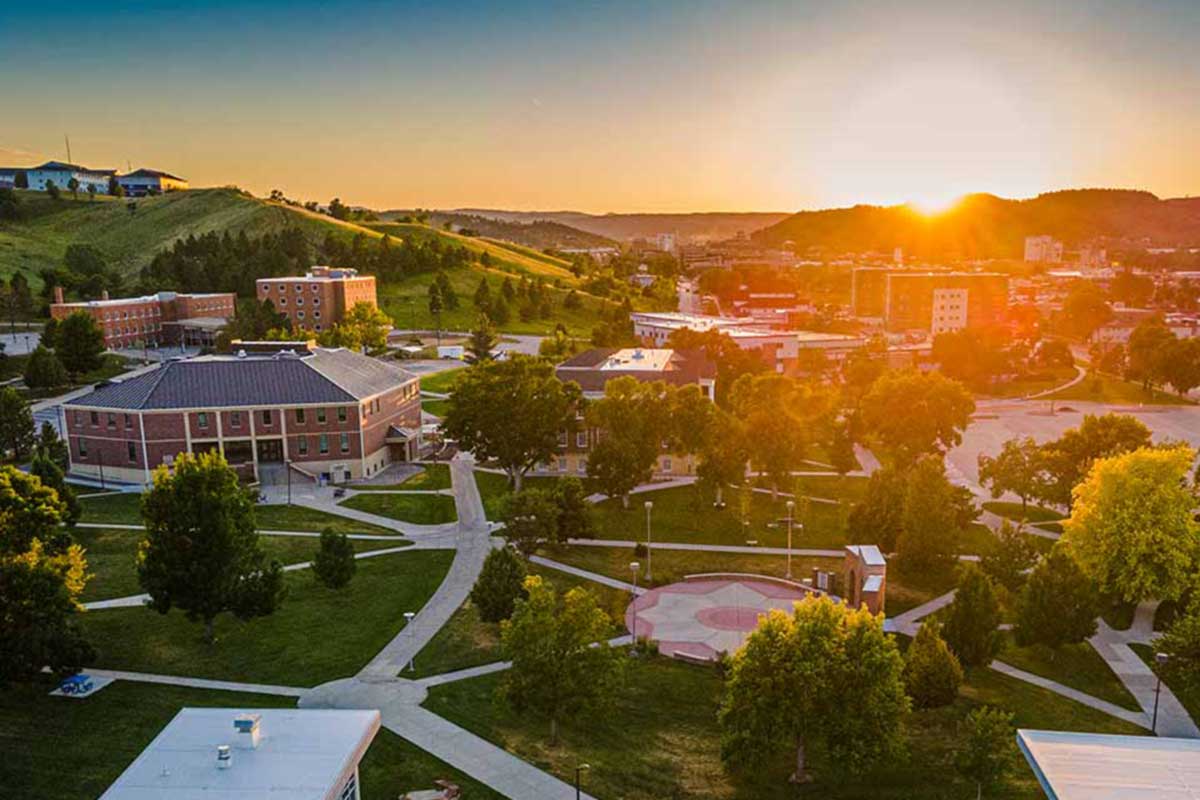
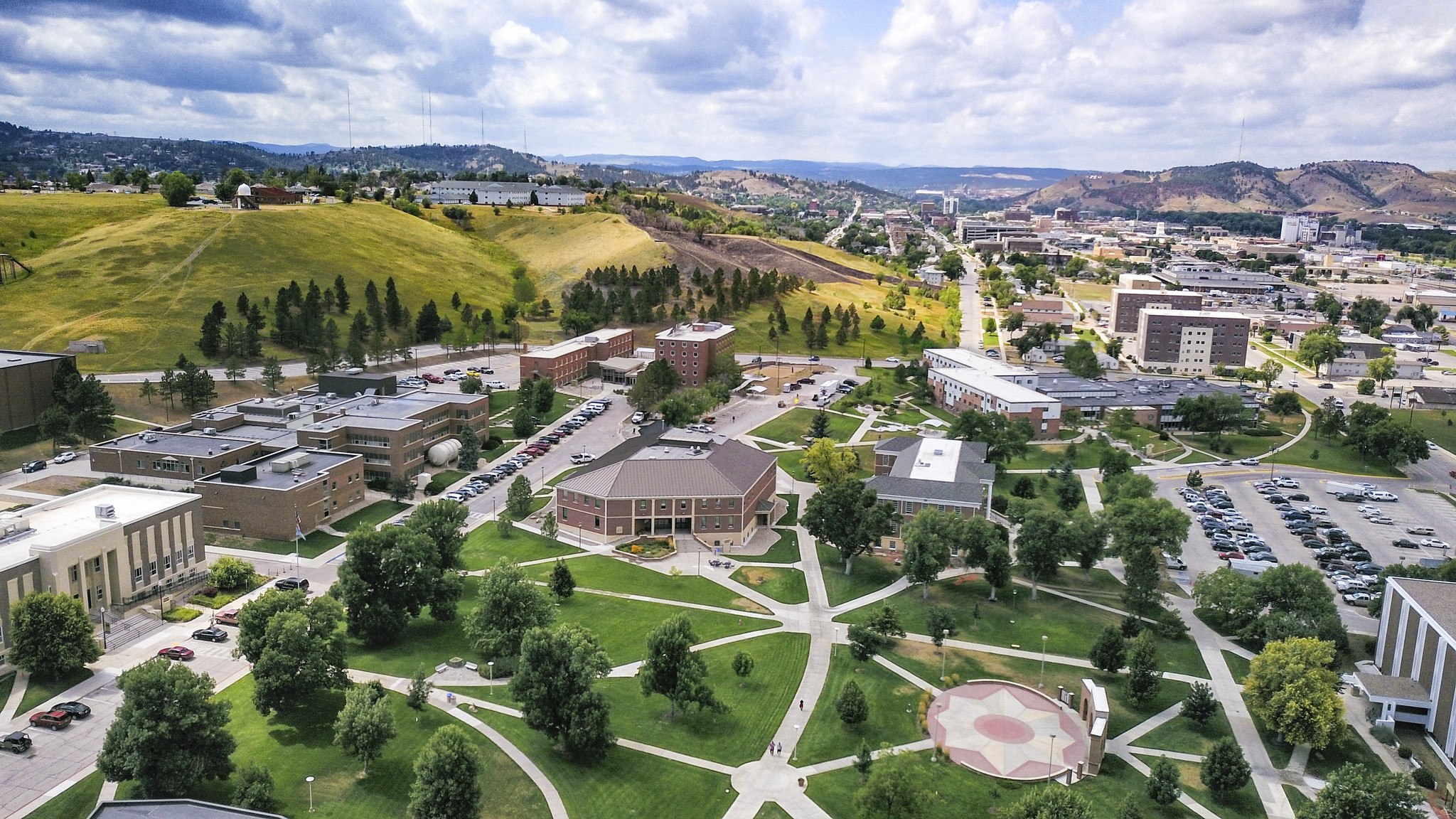
The South Dakota School of Mines and Technology is a no-nonsense, high-return STEM powerhouse where the Black Hills serve as a sprawling laboratory. This is a place for practical, hands-on learners who want to build things, solve real-world problems, and graduate into a near-guaranteed job with a starting salary that rivals elite private institutions. The vibe is industrious and collaborative, balancing rigorous academics with a surprisingly active campus life fueled by over 100 student clubs.
Admission requirements
Test-optional — scores considered if submitted
Required
High school transcript
TOEFL (non-native English)
Considered (not required)
Grade point average
Test scores (SAT/ACT)
College-prep program
Source: IPEDS Admissions survey (2022) via Urban Institute. Covers formal factors only — it does not reflect essays, extracurriculars, or other holistic criteria.
More details
Undergrad enrollment
2,071
In-state tuition
$10,500
Out-of-state tuition
$14,900
Early Action
Offered
No-Loan Policy
No
Graduation Rate
53%
Meets Full Need
No
Job Placement Rate
~97%
Demonstrated Interest
Not Considered (per CDS inference)
Student-Faculty Ratio
12:1
Median Earnings (10yr)
$72,257
Average Starting Salary
~$73,000
Outcomes & value
Outcomes & value
Median earnings (10 yr)
$72,257
Value (earnings ÷ net price)
3.6×
Median debt at graduation
$27,000
Graduation rate
53%
First-year retention
84%
Reducing loan balance (3 yr)
79%
Pell (lower-income) share
17%
First-gen share (among federal-aid recipients)
18%
Top-earning majors
Median earnings by field of study (highest credential), ~2 years after completion.
Mining and Mineral Engineering$74,953
Chemical Engineering$69,338
Mechanical Engineering$67,789
Industrial Engineering$63,005
Computer and Information Sciences, General$61,020
Civil Engineering$60,523
Campus & location
Campus safety
On-campus violent crimes (2024)
0
Per 1,000 students
0.00
On-campus criminal offenses classed as violent (murder/non-negligent manslaughter, rape, robbery, aggravated assault) for the most recent reported year. Source: U.S. Dept. of Education Campus Safety and Security (Clery Act). Counts reflect what’s reported to the school, and urban campuses often report more partly due to non-student incidents nearby — read alongside campus size and setting, not as a standalone safety verdict.
Climate
Pleasant days / yr
89
Summer high
83°F
Winter low
18°F
Annual rain
18"
Annual snow
40.2"
Natural-hazard risk
Relatively Low
Pleasant days counts days per year with a mean temperature of 55–75°F, a high at or below 90°F, a low at or above 45°F, and little precipitation — a transparent comfort measure, not a weighting we invented. Computed from Open-Meteo ERA5 daily history (2019–2023). Natural-hazard risk is the county’s composite rating from the FEMA National Risk Index.
Deep dive — research, future-scholar output & economic mobility▾
Research output
Institutional h-index
227
Scholarly works
6,391
Institutional research volume and impact from OpenAlex. The h-index reflects large research universities and will be low for teaching-focused liberal-arts colleges — not a measure of undergraduate quality.
Quick answers
What is the acceptance rate at South Dakota School of Mines and Technology?
South Dakota School of Mines and Technology's acceptance rate is approximately 80% (Rapid City, SD), based on the most recent figures we compiled from public and primary sources.
What SAT score do you need for South Dakota School of Mines and Technology?
Admitted students at South Dakota School of Mines and Technology typically score 1140–1340 on the SAT (the middle-50% range). Scores outside this band are still admitted, especially with strong applications.
How much does South Dakota School of Mines and Technology cost?
At South Dakota School of Mines and Technology, the average net price (after aid) is about $20,183 per year. Actual cost varies with financial aid and residency.
How many undergraduates attend South Dakota School of Mines and Technology?
South Dakota School of Mines and Technology enrolls approximately 2,071 undergraduate students.
Where is South Dakota School of Mines and Technology located?
South Dakota School of Mines and Technology is located in Rapid City, SD.
Admissions
South Dakota Mines operates with a straightforward, accessible admissions process that prioritizes academic readiness in math and science over cutthroat selectivity. With an of 80%, the school is selective but not exclusive, focusing on identifying students prepared for its rigorous STEM curriculum. The middle 50% SAT range is 1140–1340, with a corresponding ACT range of 24–30. Academic performance is key: 47% of enrolled students have a high school GPA of 3.75 or higher, and the average GPA is around 3.57. The school offers clear minimum requirements: applicants must achieve a high school GPA of at least 2.75 or an ACT math sub-score of at least 20 (SAT math 520). Test scores are required for admission. The rate—the percentage of admitted students who enroll—is 38.08%. The school offers an Early Action option, but the provided sources do not specify an Early Decision program or its associated acceptance rate. Demonstrated interest is not a factor explicitly detailed in the available snippets for this institution.
Earnings = median of students working ~10 years after entry; debt = median of graduates. Value divides 10-yr earnings by one year’s net price — read it as earnings per dollar of annual cost, not a full lifetime ROI; it favors lower-cost schools. Source: U.S. Dept. of Education College Scorecard. Figures lag ~2 years and reflect all students, not your intended major.
Geological/Geophysical Engineering
$50,856
Source: U.S. Dept. of Education College Scorecard (field-of-study earnings). Figures cover graduates who received federal aid and lag ~2 years; not all programs report data.
Academics at South Dakota Mines are intensely focused, rigorous, and described by students as 'challenging.' The school offers 33 majors, almost exclusively in engineering, science, and technology fields, cementing its identity as a special-focus institution. The student-faculty ratio is favorable, reported at 12:1 or 13:1, which supports a more personalized learning environment; 35.7% of classes have fewer than 20 students. This intimate scale facilitates the hands-on, project-based learning the school emphasizes. The curriculum is designed for direct career application, with a strong emphasis on research that matters and practical problem-solving. While the graduation rate is 53%, the academic culture is built around producing work-ready engineers and scientists, a mission reflected in its consistent rankings among the nation's best engineering schools. Discussions among prospective students highlight particular strength in chemical and biomedical engineering programs.
Life at South Dakota Mines defies the stereotype of a quiet tech school. The campus culture actively combines demanding STEM academics with a robust and engaging social scene. Students can choose from over 100 student clubs and organizations, which range from professional and academic societies to groups celebrating diverse ethnicities and cultures, such as the Bangladeshi Student Association. This network helps students find community and common ground. The university promotes a balanced experience, encouraging involvement in campus events, community service, and recreational activities alongside coursework. The overall vibe is one of a close-knit, involved community where students are as likely to be collaborating on a robotics project as attending a campus-wide event. This dynamic is central to the school's identity, offering a 'full experience' where students connect with peers and faculty beyond the classroom.
This is where the South Dakota Mines proposition becomes unequivocally compelling. The school delivers exceptional career outcomes that are the envy of many far more selective institutions. Its placement rate for graduates in their fields of study is a remarkable 95%, with recent data citing a 97% job placement rate. The financial payoff is immediate and substantial: reported starting salaries for graduates average around $73,000. The median earnings ten years after entry are $72,257, a figure that significantly outpaces the typical earnings of a high school graduate. The first-year retention rate is a solid 84%, indicating students are generally satisfied and engaged upon arrival. The school's focus is validated by its recent Carnegie Classification as a special focus university with higher earnings. For students seeking a direct, high-value pathway to a STEM career, the outcomes data here is arguably its most powerful selling point.
South Dakota Mines positions itself as an accessible and financially sensible choice for a high-return STEM education. The average after aid is $20,183, with other sources reporting figures in the $20,267 to $23,523 range. A significant majority of students—62.2%—receive financial aid. The school administers a comprehensive financial aid program that includes both need-based and non-, such as scholarships, grants, and loans. Families are encouraged to use the official Net Price Calculator to estimate their individual cost. It's important to note that the provided sources do not indicate that South Dakota Mines has a 'no-loan' policy or that it meets 100% of demonstrated financial need for all admitted students. Like most universities, loans remain a component of financial aid packages for those who qualify, and the school provides information on federal student loan options for enrolled, degree-seeking students.
South Dakota Mines stands out as a pure-play, high-efficiency engine for STEM careers. It forgoes the sprawling liberal arts curriculum and prestige obsession of larger universities to double down on what it does best: producing exceptionally employable engineers and scientists at a reasonable cost. Its singularity lies in the potent combination of a focused, hands-on academic environment with outcome statistics that punch far above its weight class. Where else can you find an 80% alongside a 97% job placement rate and near-$73k starting salaries? The culture is built around practical problem-solving, supported by a collaborative student body and faculty. It’s a school for doers and builders who measure success not by the exclusivity of the admissions letter, but by the quality of the job offer and the durability of their career. In a landscape of soaring tuition and uncertain returns, South Dakota Mines offers a clear, compelling, and remarkably high-value proposition.
South Dakota School of Mines and Technology seal · sourceVisit Our Campus · sourceSouth Dakota Mines | Leading Science and Engineering School · sourceCampus Master Plan · source