Admit rate has ranged 59%–78% over the last 5 years — notably volatile. Source: IPEDS via Urban Institute.
Acceptance & SAT from Common Data Set / IPEDS; net price, earnings & graduation from the U.S. Dept. of Education College Scorecard. Figures lag ~1–2 years — verify with the school.
The University of Denver is a private research university that leverages its Rocky Mountain location and deep connections to the city's business and cultural scene to offer a distinctive, hands-on education. Its academic identity is split between a robust liberal arts core and powerhouse professional programs in business and engineering, attracting a mix of affluent, outdoorsy students and ambitious scholars. While its sticker price is steep, the university counters with generous merit aid, creating a campus culture that is both socially vibrant and academically serious.
Admission requirements
Test-optional — scores considered if submitted
Required
High school transcript
Grade point average
Letters of recommendation
TOEFL (non-native English)
Considered (not required)
Class rank
Test scores (SAT/ACT)
College-prep program
Source: IPEDS Admissions survey (2022) via Urban Institute. Covers formal factors only — it does not reflect essays, extracurriculars, or other holistic criteria.
More details
Undergrad enrollment
6,025
In-state tuition
$61,398
Out-of-state tuition
$61,398
Graduation Rate
76%
Meets Full Need
No
Demonstrated Interest
Not considered
Median Earnings (10yr)
$71,155
Most Popular Major (2024 Grads)
Business (27%)
Outcomes & value
Outcomes & value
Median earnings (10 yr)
$71,155
Value (earnings ÷ net price)
2.0×
Median debt at graduation
$21,844
Graduation rate
76%
First-year retention
89%
Reducing loan balance (3 yr)
73%
Pell (lower-income) share
14%
First-gen share (among federal-aid recipients)
19%
Financial health
2.8 / 3.0Meets the federal financial-responsibility standard
U.S. Dept. of Education Financial Responsibility Composite Score (FY2022-23). Scale −1.0 to 3.0; ≥1.5 meets the standard. Reported for private nonprofit & for-profit institutions only — public universities are state-backed and not scored, so this is a stability signal, not a ranking.
Top-earning majors
Median earnings by field of study (highest credential), ~2 years after completion.
Computer Science$74,576
Management Sciences and Quantitative Methods$69,338
Mechanical Engineering$65,905
Finance and Financial Management Services$62,012
Marketing$49,918
Business Administration, Management and Operations$47,260
Applicants here also applied to
The schools that most often appear alongside University of Denver on applicants’ lists, from our self-reported outcomes corpus.
Co-application frequency from self-reported results — directional peer discovery, not a recommendation.
Campus & location
Campus safety
On-campus violent crimes (2024)
14
Per 1,000 students
1.15
On-campus criminal offenses classed as violent (murder/non-negligent manslaughter, rape, robbery, aggravated assault) for the most recent reported year. Source: U.S. Dept. of Education Campus Safety and Security (Clery Act). Counts reflect what’s reported to the school, and urban campuses often report more partly due to non-student incidents nearby — read alongside campus size and setting, not as a standalone safety verdict.
Climate
Pleasant days / yr
70
Summer high
87°F
Winter low
17°F
Annual rain
16.9"
Annual snow
43.8"
Natural-hazard risk
Relatively High
Pleasant days counts days per year with a mean temperature of 55–75°F, a high at or below 90°F, a low at or above 45°F, and little precipitation — a transparent comfort measure, not a weighting we invented. Computed from Open-Meteo ERA5 daily history (2019–2023). Natural-hazard risk is the county’s composite rating from the FEMA National Risk Index.
Deep dive — research, future-scholar output & economic mobility▾
Research output
Institutional h-index
410
Scholarly works
31,006
Institutional research volume and impact from OpenAlex. The h-index reflects large research universities and will be low for teaching-focused liberal-arts colleges — not a measure of undergraduate quality.
Economic mobility
Mobility rate
1.4%
Bottom → top quintile
47%
From bottom quintile
3%
Mobility rate = the share of students who both start in the bottom household-income quintile and reach the top quintile; bottom → top is that chance conditional on starting at the bottom. Source: Opportunity Insights Mobility Report Cards (Chetty, Friedman, Saez, Turner & Yagan). Reflects 1980–82 birth cohorts, so it’s directional, not current.
Quick answers
What is the acceptance rate at University of Denver?
University of Denver's acceptance rate is approximately 78% (Denver, CO), based on the most recent figures we compiled from public and primary sources.
What SAT score do you need for University of Denver?
Admitted students at University of Denver typically score 1240–1410 on the SAT (the middle-50% range). Scores outside this band are still admitted, especially with strong applications.
How much does University of Denver cost?
At University of Denver, the average net price (after aid) is about $36,131 per year. Actual cost varies with financial aid and residency.
How many undergraduates attend University of Denver?
University of Denver enrolls approximately 6,025 undergraduate students.
Where is University of Denver located?
University of Denver is located in Denver, CO.
Admissions
Admissions at the University of Denver are moderately selective, with an hovering around 77-78% according to recent institutional data. The university accepts the Common Application and reports that the middle 50% SAT range for admitted students is 1230-1410, with an average combined score of 1320 for the Fall 2025 cohort. The ACT middle 50% range is 28-33, with an average of 30.5. While the overall acceptance rate is relatively high, the early decision process shows a similar rate, reported at approximately 76.7% to 77%, suggesting it does not provide a significant statistical advantage for binding applicants. Demonstrated interest is not considered in the admissions process, as indicated by Section C7 analyses. The admissions office can be reached at 303-871-2036.
Key Application Factors:
Academic Rigor: The strength of a student's secondary school record is the most important factor.
Standardized Tests: Test scores (SAT/ACT) are considered.
Recommendations: Counselor and teacher recommendations are considered.
Essays & Personal Qualities: The application essay and a student's personal qualities are important.
Talent/Ability: Special talents or abilities are considered.
Volunteer Work & Work Experience: These are also taken into account.
Not Considered: Demonstrated interest, religious affiliation, and state residency are not factors in admissions decisions.
Earnings = median of students working ~10 years after entry; debt = median of graduates. Value divides 10-yr earnings by one year’s net price — read it as earnings per dollar of annual cost, not a full lifetime ROI; it favors lower-cost schools. Source: U.S. Dept. of Education College Scorecard. Figures lag ~2 years and reflect all students, not your intended major.
Hospitality Administration/Management$43,426
International Business$42,682
Source: U.S. Dept. of Education College Scorecard (field-of-study earnings). Figures cover graduates who received federal aid and lag ~2 years; not all programs report data.
DU offers a dynamic academic experience anchored by a strong liberal arts foundation but increasingly defined by its professional and graduate programs. The undergraduate curriculum emphasizes small, specialized courses taught by active researchers, fostering close faculty-student interaction. The most popular majors for the Class of 2024 were heavily skewed toward business and the social sciences: Business, Management, Marketing, and Related Support Services (27%), Social Sciences (17%), Psychology (12%), and Biological and Biomedical Sciences (8%). This distribution underscores a student body pragmatically oriented toward pre-professional tracks. The university offers a wide array of majors, minors, and concentrations, many of which must be pursued in conjunction with specific degree programs. The academic culture is described as "strong, academically centered, and well-respected," with a community of "innovators and free-thinkers." Class sizes are notably small, supporting this intimate learning environment. The university confers Bachelor's, Master's, Doctoral, and professional degrees, with 74% of its degrees awarded at the bachelor's level or higher.
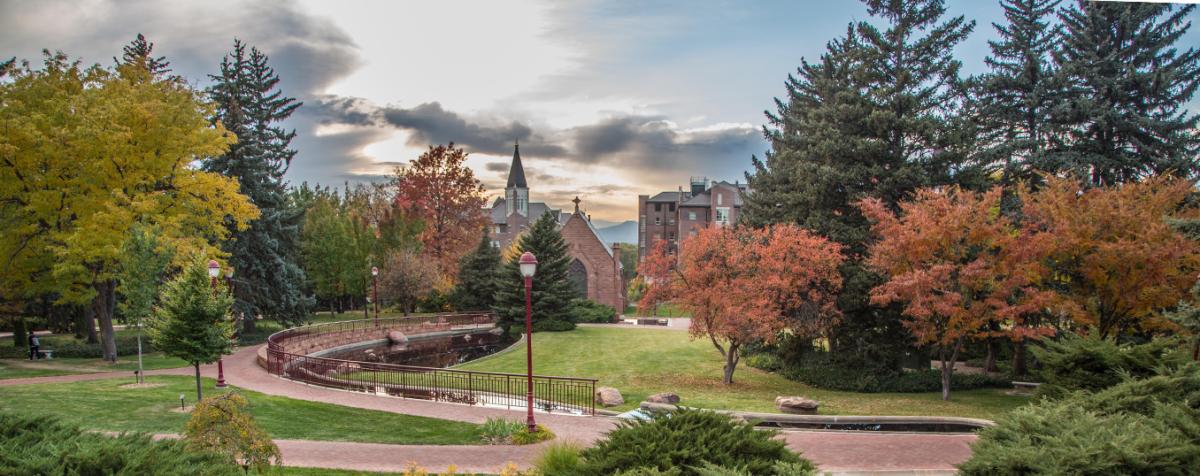
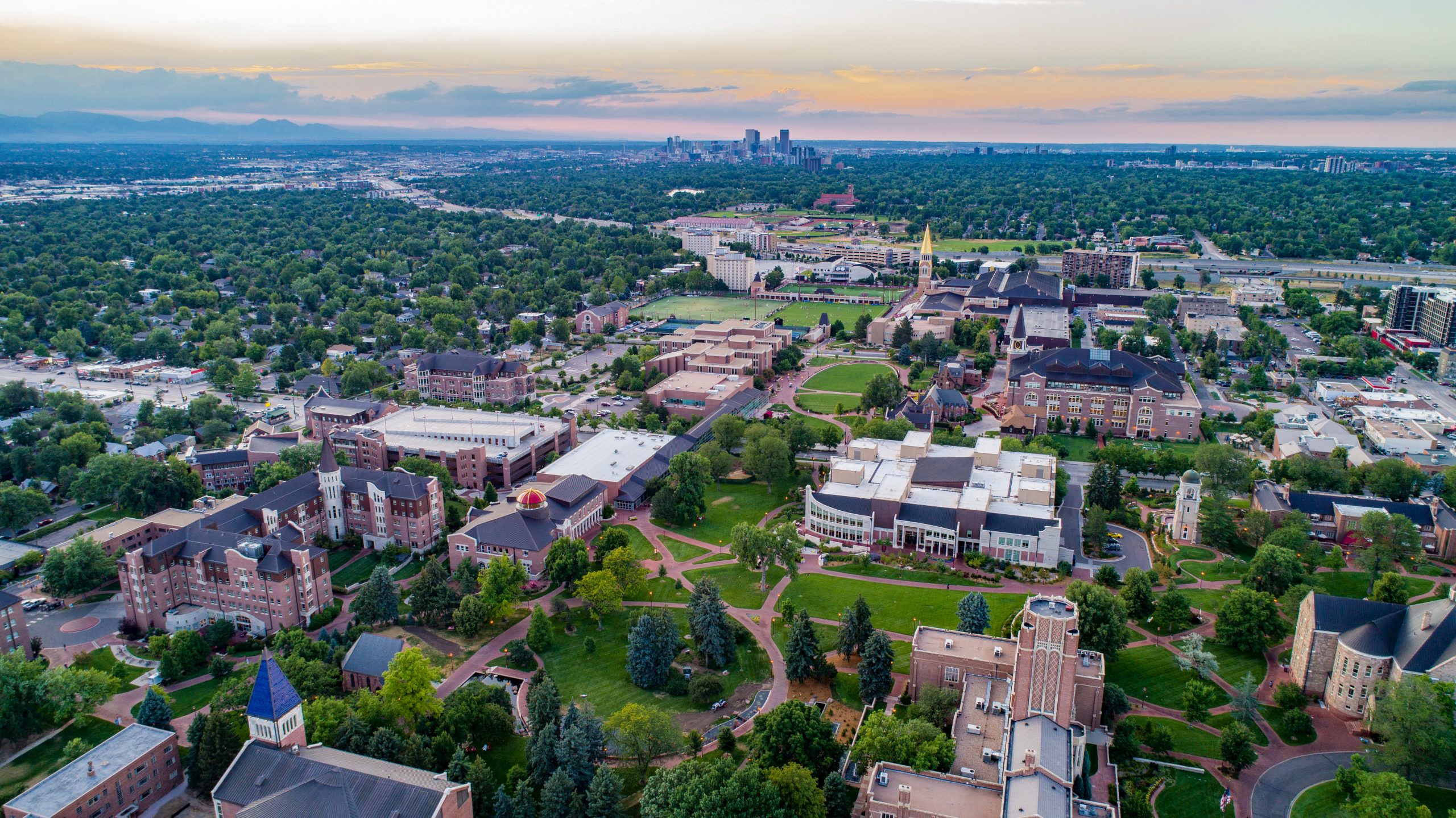
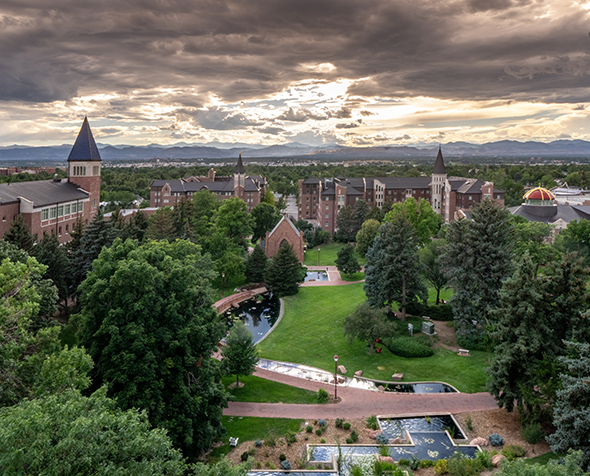
Life at DU is a blend of a self-contained, tradition-rich campus and the boundless opportunities of Denver. The university has built its campus as a cultural hub, featuring venues like the Newman Center for the Performing Arts which hosts concerts, lectures, and other events for both students and the city. A robust calendar of signature events strengthens campus culture and belonging, including Discoveries after Dark, May Days, First Snow, Hockey Night Lights, Winter Carnival, and more. The student community is described as "vibrant and supportive," with numerous clubs, sports, and activities creating an engaging campus life. The experience extends far beyond the classroom, focused on building lifelong connections and uncovering personal potential. Students describe the community as "academically centered" and "well-respected," with a culture of innovation. The campus atmosphere caters to those who enjoy both collegiate traditions and immediate access to the outdoor recreation and urban amenities of Denver.
DU reports strong post-graduation outcomes, with a high rate of graduates successfully employed or in further education shortly after completing their degrees. For the undergraduate Class of 2022, 90.4% had secured a "first destination" (employment, graduate school, etc.) within six months of graduation. For graduate students, the rates were even higher: 93.4% for master's students and 98.1% for doctoral students. Financially, outcomes are solid. DU master's and professional degree graduates report an average starting salary of $79,505, while doctoral graduates average $94,217. For the graduate class of 2022, mean and median salaries increased by $4,000 and $7,000 respectively compared to prior years, with top earners often coming from the Daniels College of Business. Alumni see significant earnings gains, with one report noting a median earnings gain of nearly $40,000 for DU alumni. External data suggests earnings five years after graduation average around $74,242.
DU is a high-tuition private institution, but it uses a significant portion of its aid budget to offset costs for many students. The published for undergraduates is $87,581. However, 79% of all financial aid for undergraduate students is provided in the form of scholarships and grants (not loans). The average need-based financial aid offer is $50,284. A very high percentage (99%) of full-time beginning undergraduates receive some form of grant or scholarship aid. The university uses information from both the FAFSA and the CSS Profile to determine eligibility for its institutional , such as the DU Educational Grant. It's important to note that DU states it "is not able to meet the full demonstrated need of all students who apply for financial aid," but does meet a portion of the need for those who qualify. There is no indication of a universal "no-loan" policy for low-income students.
The University of Denver carves out a unique niche as a private university that is deeply integrated into a major Western city, offering a specific kind of student experience. It stands out for its potent combination of a traditional, residential liberal arts college feel—with small classes, strong faculty mentorship, and campus-wide traditions—and the immediate professional and recreational opportunities of Denver. Its academic strengths are bifurcated: a solid liberal arts core exists alongside highly regarded, destination programs in business, international studies, and engineering, attracting career-focused students. The student body is often described as a mix of the affluent and the exceptionally driven, creating a culture that is both socially active and seriously academic. While the sticker price is intimidating, DU's policy of directing 79% of undergraduate aid as grants and scholarships makes it accessible to a broader range of students than its cost might suggest. Ultimately, DU is for the student who wants the close-knit community and academic attention of a smaller college but refuses to be isolated from the internships, culture, and mountain adventures of a dynamic city.
University of Denver seal · sourceAbout DU | University of Denver · sourceGetting to Know the University of Denver - Educated Quest · sourceUniversity of Denver Highlighted in 2023 Rankings From The Princeton Review | University of Denver · source