Admit rate has ranged 78%–84% over the last 5 years. Source: IPEDS via Urban Institute.
Acceptance & SAT from Common Data Set / IPEDS; net price, earnings & graduation from the U.S. Dept. of Education College Scorecard. Figures lag ~1–2 years — verify with the school.
The University of Colorado Boulder is a public research university where the Rocky Mountains meet rigorous academics. Known for its strong environmental and science programs, CU Boulder attracts outdoorsy, intellectually curious students who thrive in a vibrant campus culture. With an 80% acceptance rate but a middle-50% SAT range of 1180–1390, it's accessible yet academically solid—especially in physics, engineering, and business.
Admission requirements
Test-optional — scores considered if submitted
Required
High school transcript
Grade point average
Letters of recommendation
College-prep program
TOEFL (non-native English)
Considered (not required)
Class rank
Test scores (SAT/ACT)
Source: IPEDS Admissions survey (2022) via Urban Institute. Covers formal factors only — it does not reflect essays, extracurriculars, or other holistic criteria.
More details
Undergrad enrollment
31,939
In-state tuition
$15,666
Out-of-state tuition
$44,918
4-Year Graduation Rate
59.2%
6-Year Graduation Rate
74.3%
Student-to-Faculty Ratio
17:1
Median Early Career Salary
$48,932
Outcomes & value
Outcomes & value
Median earnings (10 yr)
$69,738
Value (earnings ÷ net price)
2.8×
Median debt at graduation
$19,500
Graduation rate
74%
First-year retention
90%
Reducing loan balance (3 yr)
74%
Pell (lower-income) share
14%
First-gen share (among federal-aid recipients)
20%
Top-earning majors
Median earnings by field of study (highest credential), ~2 years after completion.
Computer Science$75,921
Computer Engineering$75,204
Electrical, Electronics, and Communications Engineering$71,957
Aerospace, Aeronautical, and Astronautical/Space Engineering$71,255
Engineering Physics$69,338
Architectural Engineering$67,324
Applicants here also applied to
The schools that most often appear alongside CU Boulder on applicants’ lists, from our self-reported outcomes corpus.
On-campus criminal offenses classed as violent (murder/non-negligent manslaughter, rape, robbery, aggravated assault) for the most recent reported year. Source: U.S. Dept. of Education Campus Safety and Security (Clery Act). Counts reflect what’s reported to the school, and urban campuses often report more partly due to non-student incidents nearby — read alongside campus size and setting, not as a standalone safety verdict.
Climate
Pleasant days / yr
92
Summer high
83°F
Winter low
18°F
Annual rain
18.4"
Annual snow
58"
Natural-hazard risk
Relatively Moderate
Pleasant days counts days per year with a mean temperature of 55–75°F, a high at or below 90°F, a low at or above 45°F, and little precipitation — a transparent comfort measure, not a weighting we invented. Computed from Open-Meteo ERA5 daily history (2019–2023). Natural-hazard risk is the county’s composite rating from the FEMA National Risk Index.
Deep dive — research, future-scholar output & economic mobility▾
Research output
Institutional h-index
1,121
Scholarly works
166,750
Institutional research volume and impact from OpenAlex. The h-index reflects large research universities and will be low for teaching-focused liberal-arts colleges — not a measure of undergraduate quality.
Future-scholar output
Science & engineering PhDstop 33 nationally
Humanities & social-science PhDstop 39 nationally
Share of this school’s graduates who go on to earn research doctorates (2010–20), by national rank and per-capita yield (NSF institutional-yield ratio). A signal of a research-oriented student culture — not a causal promise, since it partly reflects who enrolls. Only top producers appear. Source: NSF NCSES, Baccalaureate Origins of U.S. Research Doctorate Recipients.
Quick answers
What is the acceptance rate at University of Colorado Boulder?
University of Colorado Boulder's acceptance rate is approximately 78% (Boulder, CO), based on the most recent figures we compiled from public and primary sources.
What SAT score do you need for University of Colorado Boulder?
Admitted students at University of Colorado Boulder typically score 1240–1430 on the SAT (the middle-50% range). Scores outside this band are still admitted, especially with strong applications.
How much does University of Colorado Boulder cost?
At University of Colorado Boulder, the average net price (after aid) is about $25,346 per year. Actual cost varies with financial aid and residency.
How many undergraduates attend University of Colorado Boulder?
University of Colorado Boulder enrolls approximately 31,939 undergraduate students.
Where is University of Colorado Boulder located?
University of Colorado Boulder is located in Boulder, CO.
Admissions
CU Boulder's admissions process is moderately selective, with an acceptance rate hovering around 75-80%—but don't let that fool you into thinking it's a cakewalk. The middle 50% SAT range for admitted students is 1180–1390, and the ACT range is 27–33, suggesting that while the door is open to many, the enrolled students are solidly above average. Test scores are considered but not required, and the university emphasizes a that includes GPA (typically 3.3+ for competitive applicants), extracurriculars, and personal essays. Notably, CU Boulder has a high among students who fit its outdoorsy, research-driven vibe—many applicants with stats on the lower end self-select out.
Application deadline: January 15 (regular decision)
Test-optional: Yes, but submitting scores can strengthen an application
Transfer acceptance rate: Similar to first-year, though specific data isn't publicly broken out
Earnings = median of students working ~10 years after entry; debt = median of graduates. Value divides 10-yr earnings by one year’s net price — read it as earnings per dollar of annual cost, not a full lifetime ROI; it favors lower-cost schools. Source: U.S. Dept. of Education College Scorecard. Figures lag ~2 years and reflect all students, not your intended major.
Chemical Engineering$65,937
Biochemical Engineering$64,196
Source: U.S. Dept. of Education College Scorecard (field-of-study earnings). Figures cover graduates who received federal aid and lag ~2 years; not all programs report data.
CU Boulder shines in environmental sciences, physics, engineering, and business, with particularly strong undergraduate research opportunities—especially for in-state students. The Leeds School of Business and the College of Engineering & Applied Science are standouts, while the astrophysics program benefits from ties to nearby labs like NOAA and NIST. The university offers over 150 undergraduate majors and minors, including quirky interdisciplinary options like Space Geography and Renewable Energy Policy.
Student-to-faculty ratio: 17:1, though introductory lectures can be large
Hands-on learning: 45% of undergrads participate in research—a rarity for a public university
Students describe the academic culture as "collaborative but rigorous," with a noticeable tilt toward STEM. The campus's proximity to Boulder’s tech and startup scene provides ample internship opportunities.
Life at CU Boulder is outdoorsy, socially active, and steeped in tradition. With 450+ student organizations—from the popular Hiking Club to a student-run spaceflight lab—there’s no shortage of ways to get involved. The campus buzzes with events like the annual "Buff Bowl" flag football tournament and "Ralphie’s Stampede" welcome week.
Housing: 25% of undergrads live on campus, with themed housing for interests like sustainability or entrepreneurship
Greek life: 15% participation, but it doesn’t dominate the social scene
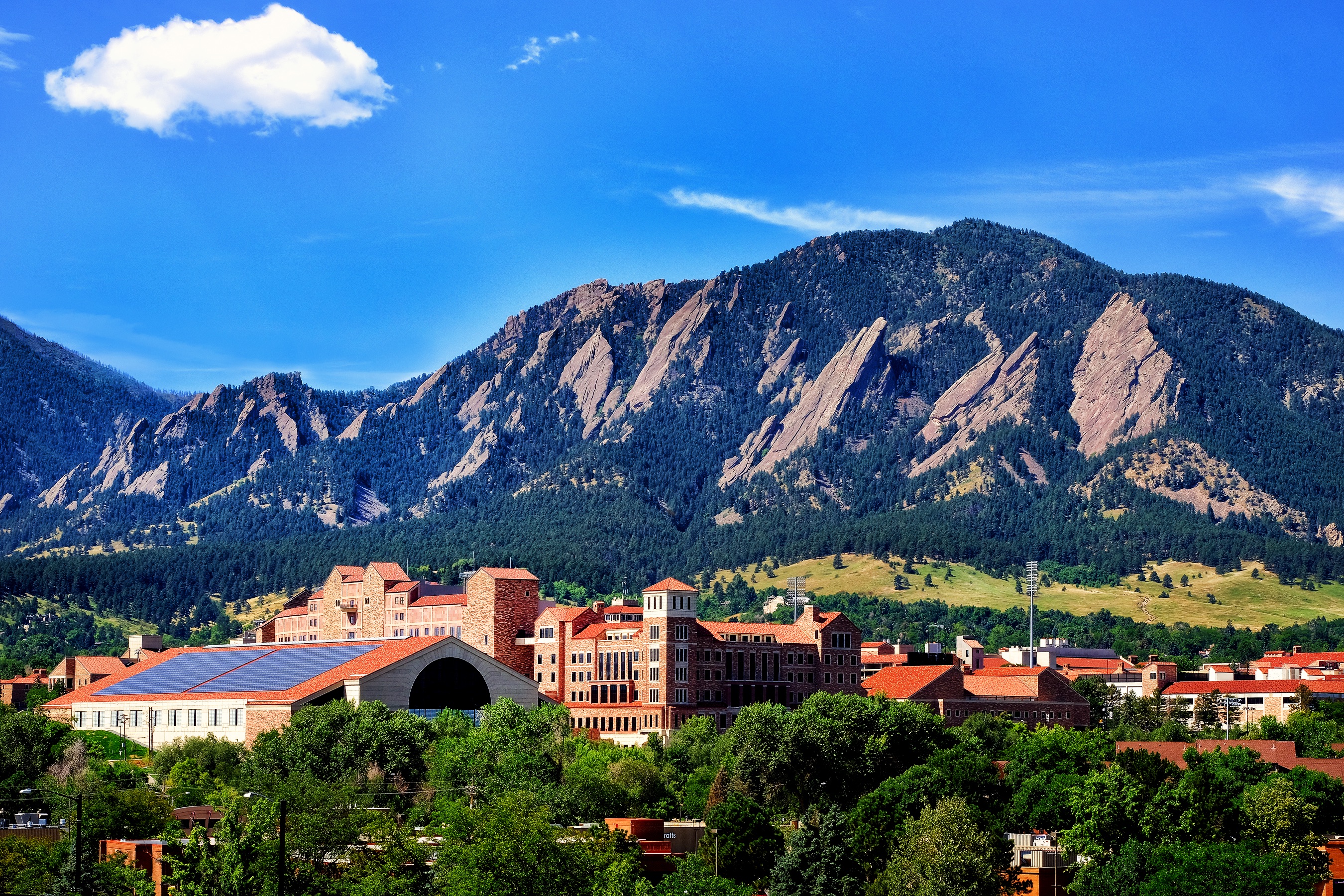
Location perks: 300+ days of sunshine yearly, 45-minute drive to Denver, and trailheads literally on campus
Reddit threads and student blogs highlight a "work hard, play hard" vibe, with easy access to skiing, hiking, and Boulder’s legendary Pearl Street Mall. The cost of living off-campus is a frequent gripe, though.
CU Boulder’s four-year graduation rate is 59.2%, rising to 74.3% at six years—slightly above average for public universities. Alumni outcomes are strong in STEM fields, with median earnings of $48,932 one year post-graduation (compared to the national average of ~$36,000). The university’s ties to Colorado’s booming tech and aerospace sectors pay dividends: 30% of grads land jobs in engineering or tech, while another 20% pursue advanced degrees within five years.
Top employers: Lockheed Martin, Ball Aerospace, Google, and local startups
Notable alumni: Includes NASA astronauts and Nobel laureates in physics
Career services are robust, with 60% of students completing at least one internship. The "Buff Network" alumni portal actively connects graduates with job opportunities.
For Colorado residents, CU Boulder is a relative bargain at $14,606 in tuition and fees, but out-of-state students face a steeper $41,926. After aid, the average drops to $21,836, with 23.2% of students receiving financial aid. The university meets 85% of demonstrated need for in-state students but only 45% for out-of-staters, making scholarships critical for non-residents.
Average aid package: $12,000 (mix of grants, loans, and work-study)
Financial aid tip: The Net Price Calculator on CU’s website provides personalized estimates
Housing and Boulder’s high cost of living can add $15,000+ annually. Many students offset costs through part-time jobs in the town’s bustling service industry.
CU Boulder merges top-tier research clout (it’s a Tier 1 research university) with a laid-back, adventurous culture that’s rare among schools of its caliber. Its physics and aerospace programs rival those of elite private institutions, while the campus’s proximity to the Rockies means students can literally go from a quantum mechanics lecture to a mountain summit in under an hour. The university’s Golden Buffalo Marching Band and beloved mascot Ralphie (a live bison) embody its spirited traditions. For students who want rigorous academics without the cutthroat pressure—and who don’t mind trading ivy for evergreen—it’s hard to beat.
University of Colorado Boulder logo · sourceUniversity of Colorado Boulder | Visiting Campus & Parents' Guide · sourceCU Boulder | University of Colorado at Boulder Visitor Information · sourceVisit Campus | University of Colorado Boulder · source