Admit rate has ranged 70%–81% over the last 5 years — notably volatile, though the latest figure above (68%) falls outside that window. Source: IPEDS via Urban Institute.
Acceptance & SAT from Common Data Set / IPEDS; net price, earnings & graduation from the U.S. Dept. of Education College Scorecard. Figures lag ~1–2 years — verify with the school.
The University of North Georgia is a sprawling, multi-campus public university anchored by its unique identity as one of only six Senior Military Colleges in the United States. Its Dahlonega campus, home to the Corps of Cadets, provides a distinct, regimented path, while its other campuses offer a more conventional, accessible public education with over 140 programs. This creates a bifurcated character: part disciplined military training ground, part commuter-friendly regional university serving North Georgia.
Admission requirements
Test-optional — scores considered if submitted
Required
High school transcript
Grade point average
Considered (not required)
Test scores (SAT/ACT)
College-prep program
TOEFL (non-native English)
Source: IPEDS Admissions survey (2022) via Urban Institute. Covers formal factors only — it does not reflect essays, extracurriculars, or other holistic criteria.
More details
Undergrad enrollment
16,146
In-state tuition
$5,285
Out-of-state tuition
$16,503
On-Campus Housing
15% of students
Student Organizations
200+
Senior Military College
One of 6 in the U.S.
Six-Year Graduation Rate
37%
Four-Year Graduation Rate
32%
Average Need-Based Grant (First-Year)
$8,025
Median Earnings (6 Years After Entry)
$43,085
Students Receiving Grant/Scholarship Aid
87%
Outcomes & value
Outcomes & value
Median earnings (10 yr)
$50,135
Value (earnings ÷ net price)
5.1×
Median debt at graduation
$17,750
Graduation rate
37%
First-year retention
73%
Reducing loan balance (3 yr)
63%
Pell (lower-income) share
28%
First-gen share (among federal-aid recipients)
34%
Top-earning majors
Median earnings by field of study (highest credential), ~2 years after completion.
Registered Nursing, Nursing Administration, Nursing Research and Clinical Nursing$60,032
Computer and Information Sciences, General$52,385
Accounting and Related Services$45,696
Finance and Financial Management Services$44,747
Marketing$39,585
Allied Health Diagnostic, Intervention, and Treatment Professions
Campus & location
Campus safety
On-campus violent crimes (2024)
13
Per 1,000 students
0.76
On-campus criminal offenses classed as violent (murder/non-negligent manslaughter, rape, robbery, aggravated assault) for the most recent reported year. Source: U.S. Dept. of Education Campus Safety and Security (Clery Act). Counts reflect what’s reported to the school, and urban campuses often report more partly due to non-student incidents nearby — read alongside campus size and setting, not as a standalone safety verdict.
Climate
Pleasant days / yr
104
Summer high
85°F
Winter low
37°F
Annual rain
68.1"
Annual snow
3"
Natural-hazard risk
Relatively Low
Pleasant days counts days per year with a mean temperature of 55–75°F, a high at or below 90°F, a low at or above 45°F, and little precipitation — a transparent comfort measure, not a weighting we invented. Computed from Open-Meteo ERA5 daily history (2019–2023). Natural-hazard risk is the county’s composite rating from the FEMA National Risk Index.
Deep dive — research, future-scholar output & economic mobility▾
Research output
Institutional h-index
73
Scholarly works
2,620
Institutional research volume and impact from OpenAlex. The h-index reflects large research universities and will be low for teaching-focused liberal-arts colleges — not a measure of undergraduate quality.
Economic mobility
Mobility rate
1.2%
Bottom → top quintile
27%
From bottom quintile
5%
Mobility rate = the share of students who both start in the bottom household-income quintile and reach the top quintile; bottom → top is that chance conditional on starting at the bottom. Source: Opportunity Insights Mobility Report Cards (Chetty, Friedman, Saez, Turner & Yagan). Reflects 1980–82 birth cohorts, so it’s directional, not current.
Quick answers
What is the acceptance rate at University of North Georgia?
University of North Georgia's acceptance rate is approximately 68% (Dahlonega, GA), based on the most recent figures we compiled from public and primary sources.
What SAT score do you need for University of North Georgia?
Admitted students at University of North Georgia typically score 980–1210 on the SAT (the middle-50% range). Scores outside this band are still admitted, especially with strong applications.
How much does University of North Georgia cost?
At University of North Georgia, the average net price (after aid) is about $9,823 per year. Actual cost varies with financial aid and residency.
How many undergraduates attend University of North Georgia?
University of North Georgia enrolls approximately 16,146 undergraduate students.
Where is University of North Georgia located?
University of North Georgia is located in Dahlonega, GA.
Admissions
UNG operates with a moderately selective, test-flexible admissions process that is notably more accessible than many of its peers. The university does not have an open admission policy. For the 2024-2025 cycle, the was approximately 68%, with about 9,035 students admitted from over 13,298 applications. The middle 50% SAT range for admitted students is 980–1210, and the ACT range is 19–25. High school GPA is a critical factor; the university states that first-year students can be considered for admission without ACT or SAT scores if they have a sufficiently high GPA. The admitted student profile shows a strong emphasis on academic performance, with 30% of admitted freshmen having a GPA of 3.75 or higher, and another 20% in the 3.50–3.74 range. The process is straightforward, prioritizing academic readiness over other, more subjective factors.
Earnings = median of students working ~10 years after entry; debt = median of graduates. Value divides 10-yr earnings by one year’s net price — read it as earnings per dollar of annual cost, not a full lifetime ROI; it favors lower-cost schools. Source: U.S. Dept. of Education College Scorecard. Figures lag ~2 years and reflect all students, not your intended major.
$39,369
Natural Resources Conservation and Research$38,289
Criminal Justice and Corrections$37,826
Source: U.S. Dept. of Education College Scorecard (field-of-study earnings). Figures cover graduates who received federal aid and lag ~2 years; not all programs report data.
UNG offers a broad academic portfolio across its five campuses and online, with more than 140 programs of study. The university is consistently ranked as one of the nation's best values in public education for affordability and educational excellence. The most popular majors cluster in Business, Management, Marketing, and Related Support Services, as well as Computer and Information Sciences. The curriculum spans from associate to doctoral degrees, including certificates and post-bachelor's options. A distinctive feature is the array of programs supporting the military college mission, such as specific leadership tracks. The academic structure supports both traditional students and those in the Corps of Cadets, with dual-degree programs like Chemical Engineering available. The six-year graduation rate is 48%.
Student life at UNG is defined by its scale and variety, split across multiple campuses. The Dahlonega campus, in particular, has a vibrant campus life enriched by over 200 student organizations across all campuses, encompassing academic societies, special interest groups, faith-based organizations, and fraternity & sorority life. There are specific cultural or identity-based groups like the Black Student Union and Latino-American Student Association. Only 15% of students live in college-owned, -operated, or -affiliated housing, indicating a heavily commuter-based population. The university promotes the 'best of both worlds'—close connections on smaller campuses paired with the resources of a larger institution. For cadets on the Dahlonega campus, life is heavily structured by the military college regimen, creating a starkly different daily experience from students on other campuses.
Graduation and earnings outcomes at UNG reflect its role as a regional public university with a significant commuter population. The four-year graduation rate is 32%, and the six-year rate is 37%. Earnings data shows a median salary of $43,085 six years after graduation. One year after graduation, reported earnings are approximately $43,016. These figures place alumni earnings slightly above the national median for public university graduates in similar regions. The Career Services office publishes annual Graduation Outcomes reports, tracking destination data for graduates. The outcomes underscore the university's focus on providing career-ready graduates, particularly in its popular business and computer science fields, though the economic return is modest compared to more selective national institutions.
As a public institution, UNG maintains a relatively low , aligning with its 'best value' reputation. The average after grants and scholarships is reported between $9,823 and $11,721. A significant majority (87%) of full-time beginning undergraduates receive grant or scholarship aid. The average need-based scholarship or grant awarded to first-year students is $8,025, with 50% of first-year students receiving . The university offers a Net Price Calculator and a Tuition and Mandatory Fee Estimator to help families project costs. Financial aid packages primarily consist of Federal Pell Grants, state-funded programs, and loans—the university does not advertise a 'no-loan' policy that meets full need without loans. Direct Unsubsidized Loans are available to all students regardless of demonstrated financial need.
UNG's defining and singular characteristic is its status as a Senior Military College (SMC)—one of only six in the nation. This isn't just an ROTC program; it's a fully integrated Corps of Cadets lifestyle on the Dahlonega campus, where students wear uniforms, live in barracks, and adhere to a military structure while pursuing their degrees. This creates a university with a dual personality: a disciplined, leadership-focused military academy coexisting with a network of accessible, commuter-friendly campuses serving a broad North Georgia population. The combination is unique within the state and the region, offering a clear, subsidized path to an officer commission alongside traditional academic degrees. This mission shapes everything from the campus culture in Dahlonega to specific academic programs in leadership and cybersecurity, setting it apart from every other public university in Georgia.
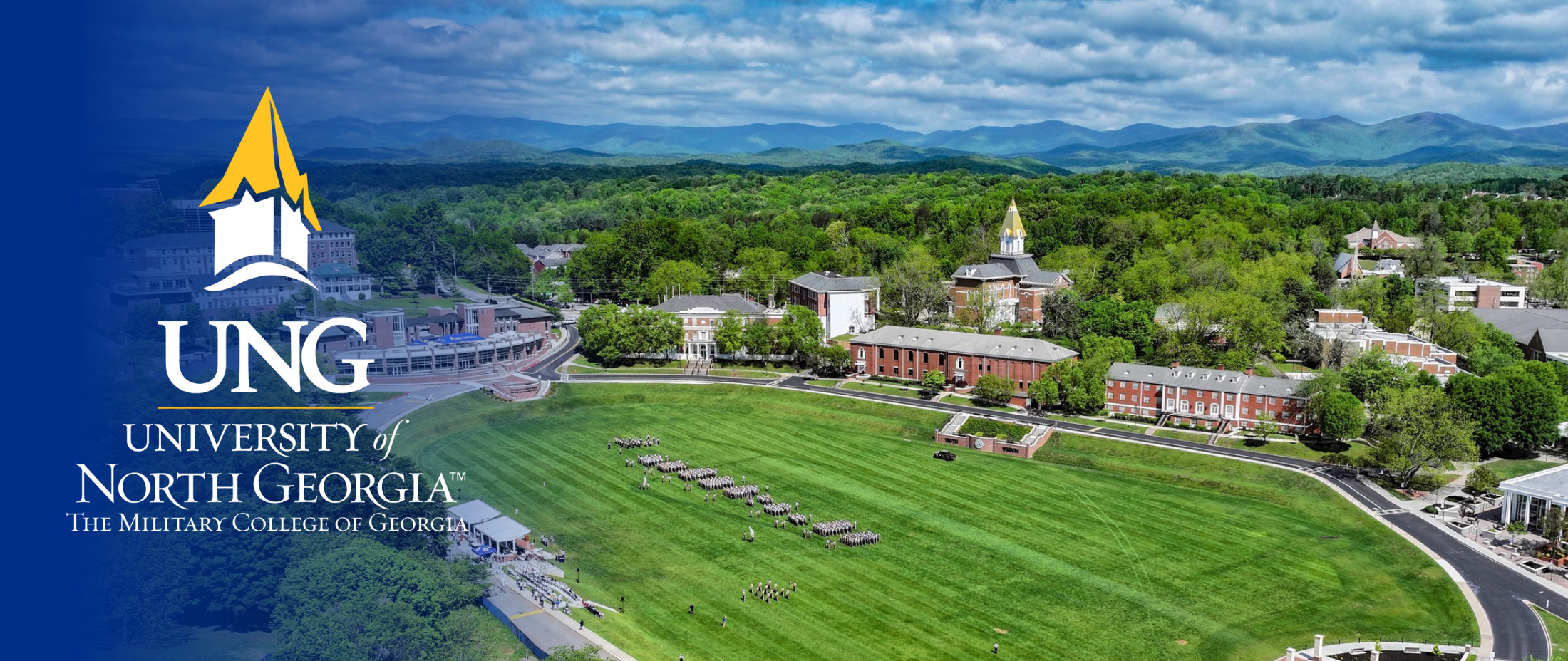
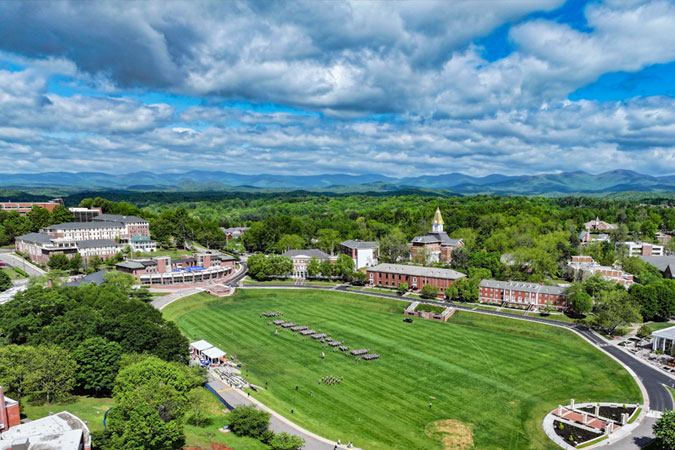
University of North Georgia seal · sourceUNG, Dahlonega campus | Explore Georgia · sourceDahlonega Campus Visits New · sourceDahlonega Traditions · source