Admit rate has ranged 31%–58% over the last 5 years — notably volatile, though the latest figure above (58%) falls outside that window. Source: IPEDS via Urban Institute.
Acceptance & SAT from Common Data Set / IPEDS; net price, earnings & graduation from the U.S. Dept. of Education College Scorecard. Figures lag ~1–2 years — verify with the school.
The University of West Florida is a public university in Pensacola that operates like a high-performing, mid-sized state school with a practical, career-focused edge. It’s known for punching above its weight in the Florida State University System, particularly in metrics like graduation rates and post-graduate earnings, while offering a surprisingly affordable net price. The vibe is coastal, collaborative, and grounded, with a strong emphasis on programs that connect directly to the regional economy, from nursing and criminal justice to marine biology and engineering.
Admission requirements
Test scores required
Required
High school transcript
Grade point average
Test scores (SAT/ACT)
TOEFL (non-native English)
Source: IPEDS Admissions survey (2022) via Urban Institute. Covers formal factors only — it does not reflect essays, extracurriculars, or other holistic criteria.
More details
Undergrad enrollment
9,330
In-state tuition
$6,360
Out-of-state tuition
$19,241
Graduation Rate
59%
Student Organizations
130+
Student-Faculty Ratio
22:1
Median Earnings (10yr)
$49,137
Classes Under 20 Students
40.4%
Outcomes & value
Outcomes & value
Median earnings (10 yr)
$49,137
Value (earnings ÷ net price)
5.2×
Median debt at graduation
$16,624
Graduation rate
59%
First-year retention
89%
Reducing loan balance (3 yr)
53%
Pell (lower-income) share
33%
First-gen share (among federal-aid recipients)
36%
Top-earning majors
Median earnings by field of study (highest credential), ~2 years after completion.
Computer Engineering$63,005
Electrical, Electronics, and Communications Engineering$61,172
Registered Nursing, Nursing Administration, Nursing Research and Clinical Nursing$58,454
Clinical/Medical Laboratory Science/Research and Allied Professions$52,941
Computer and Information Sciences, General$50,773
Mathematics
Campus & location
Campus safety
On-campus violent crimes (2024)
3
Per 1,000 students
0.21
On-campus criminal offenses classed as violent (murder/non-negligent manslaughter, rape, robbery, aggravated assault) for the most recent reported year. Source: U.S. Dept. of Education Campus Safety and Security (Clery Act). Counts reflect what’s reported to the school, and urban campuses often report more partly due to non-student incidents nearby — read alongside campus size and setting, not as a standalone safety verdict.
Climate
Pleasant days / yr
117
Summer high
88°F
Winter low
48°F
Annual rain
61.5"
Natural-hazard risk
Relatively High
Pleasant days counts days per year with a mean temperature of 55–75°F, a high at or below 90°F, a low at or above 45°F, and little precipitation — a transparent comfort measure, not a weighting we invented. Computed from Open-Meteo ERA5 daily history (2019–2023). Natural-hazard risk is the county’s composite rating from the FEMA National Risk Index.
Deep dive — research, future-scholar output & economic mobility▾
Research output
Institutional h-index
185
Scholarly works
8,382
Institutional research volume and impact from OpenAlex. The h-index reflects large research universities and will be low for teaching-focused liberal-arts colleges — not a measure of undergraduate quality.
Economic mobility
Mobility rate
2.0%
Bottom → top quintile
22%
From bottom quintile
9%
Mobility rate = the share of students who both start in the bottom household-income quintile and reach the top quintile; bottom → top is that chance conditional on starting at the bottom. Source: Opportunity Insights Mobility Report Cards (Chetty, Friedman, Saez, Turner & Yagan). Reflects 1980–82 birth cohorts, so it’s directional, not current.
Quick answers
What is the acceptance rate at University of West Florida?
University of West Florida's acceptance rate is approximately 58% (Pensacola, FL), based on the most recent figures we compiled from public and primary sources.
What SAT score do you need for University of West Florida?
Admitted students at University of West Florida typically score 1020–1230 on the SAT (the middle-50% range). Scores outside this band are still admitted, especially with strong applications.
How much does University of West Florida cost?
At University of West Florida, the average net price (after aid) is about $9,364 per year. Actual cost varies with financial aid and residency.
How many undergraduates attend University of West Florida?
University of West Florida enrolls approximately 9,330 undergraduate students.
Where is University of West Florida located?
University of West Florida is located in Pensacola, FL.
Admissions
UWF's admissions process is moderately selective and transparent, prioritizing a strong academic foundation from high school. The university admits just over half of its applicants, with the middle 50% of admitted freshmen boasting a weighted GPA between 3.57 and 4.21. For standardized tests, the middle 50% SAT range is 1020–1220, and the ACT range is 20–27. The university has a minimum admissions requirement of a 2.70+ weighted GPA along with meeting the state's minimum ACT, SAT, or CLT subsection scores. While the outlines various factors in admissions decisions, specific details on the consideration of demonstrated interest or early decision policies are not explicitly detailed in the provided sources. The admissions —the percentage of admitted students who enroll—is reported to be around 25-27%.
Academics at UWF are defined by accessibility and a strong orientation toward in-demand, practical fields. The student-faculty ratio is 22:1, with 40.4% of classes having fewer than 20 students. The university offers a wide range of programs, with advanced degrees available in more than 60 academic disciplines. Its most popular undergraduate majors reflect a career-ready focus: Liberal Arts and Humanities, Nursing, Psychology, Business, and Health Service Preparatory Studies are among the largest. Other significant programs include Kinesiology and Exercise Science and Criminal Justice/Safety Studies. The Princeton Review notes perks like a "state of the art" engineering building and a distinctive undergraduate marine biology program, capitalizing on its Gulf Coast location. The university also earns recognition for its online graduate programs, ranking No. 41 for Best Online Criminal Justice Master's Programs and No. 29 for Best Online Master's in Information Technology.
Earnings = median of students working ~10 years after entry; debt = median of graduates. Value divides 10-yr earnings by one year’s net price — read it as earnings per dollar of annual cost, not a full lifetime ROI; it favors lower-cost schools. Source: U.S. Dept. of Education College Scorecard. Figures lag ~2 years and reflect all students, not your intended major.
$42,682
Marketing$42,123
Teacher Education and Professional Development, Specific Subject Areas$40,896
Source: U.S. Dept. of Education College Scorecard (field-of-study earnings). Figures cover graduates who received federal aid and lag ~2 years; not all programs report data.
Life on UWF's 1,600-acre Pensacola campus is active and community-oriented, with a strong emphasis on getting involved. Students can choose from over 130 student organizations, which include Greek life, intramural sports, and clubs centered on various academic, cultural, and recreational interests. The university promotes on-campus living as a key part of the experience, offering students a choice between seven residence halls where they can select roommates and room types. The location provides unique extracurricular and academic opportunities, such as study abroad programs that immerse students in environments like the Galapagos Islands for hands-on fieldwork with wildlife. Social life is described as students socializing responsibly between classes at various campus locations, contributing to a collegial, engaged atmosphere.
UWF distinguishes itself with strong performance outcomes within the Florida State University System. The university has ranked as high as No. 2 among all system institutions in the Board of Governors' performance metrics, earning 92 out of 100 points and meeting all accountability goals. A key metric is its improvement in graduation rates; the university earned points for significant improvement, increasing more than 5% in one year to reach a 53.7% graduation rate. Post-graduation, UWF reports that its graduates earn an average salary of $54,600. Other sources cite a median alumni salary of approximately $53,046. These figures underscore the university's effectiveness in preparing students for the workforce and its commitment to institutional accountability and student success.
A major selling point for UWF is its affordability. The average after aid is a relatively low $9,364. Approximately 54.31% of students receive financial aid, with the average aid package totaling $10,480. The university offers a mix of grants, scholarships, loans, and work-study as part of its financial aid packages. UWF promotes "generous merit-based scholarships," including opportunities for full-ride scholarships for first-time-in-college students. Families are encouraged to use the university's official cost calculator to estimate financial aid options. The provided sources describe grants as aid that typically requires no repayment and is awarded based on academic achievement or demonstrated financial need. There is no indication in the provided sources that UWF has a policy of meeting 100% of demonstrated financial need without using loans.
The University of West Florida stands out as a public institution that consistently outperforms expectations within its state system. It’s not the largest or most famous Florida school, but it has carved a niche as an efficient, high-value operator. Its recognition for meeting all state accountability goals and ranking near the top in performance metrics speaks to a focused administration and effective student support. Academically, it leans into its geographic and economic context, offering robust, respected programs in coastal sciences, criminal justice, nursing, and online IT—fields with clear pathways to regional employment. Coupled with one of the most attractive tags in the state university system, UWF presents a compelling proposition: a hands-on, career-aligned education at a public-school price, delivered with a level of accountability and results that rivals its more prominent peers.
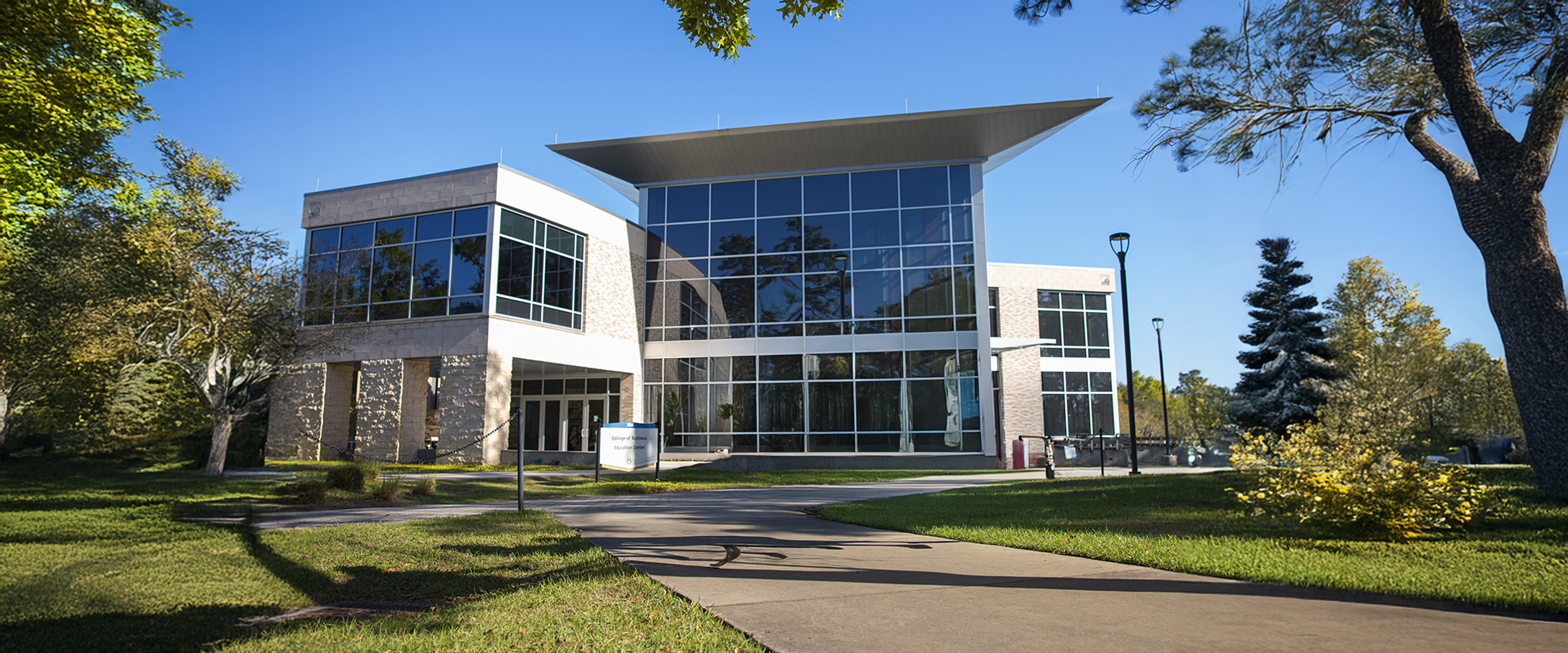
University of West Florida seal · sourceUniversity of West Florida - State University System of Florida · sourceTours of University of West Florida · sourceVisit UWF | University of West Florida · source