Admit rate has ranged 75%–89% over the last 5 years — notably volatile. Source: IPEDS via Urban Institute.
Acceptance & SAT from Common Data Set / IPEDS; net price, earnings & graduation from the U.S. Dept. of Education College Scorecard. Figures lag ~1–2 years — verify with the school.
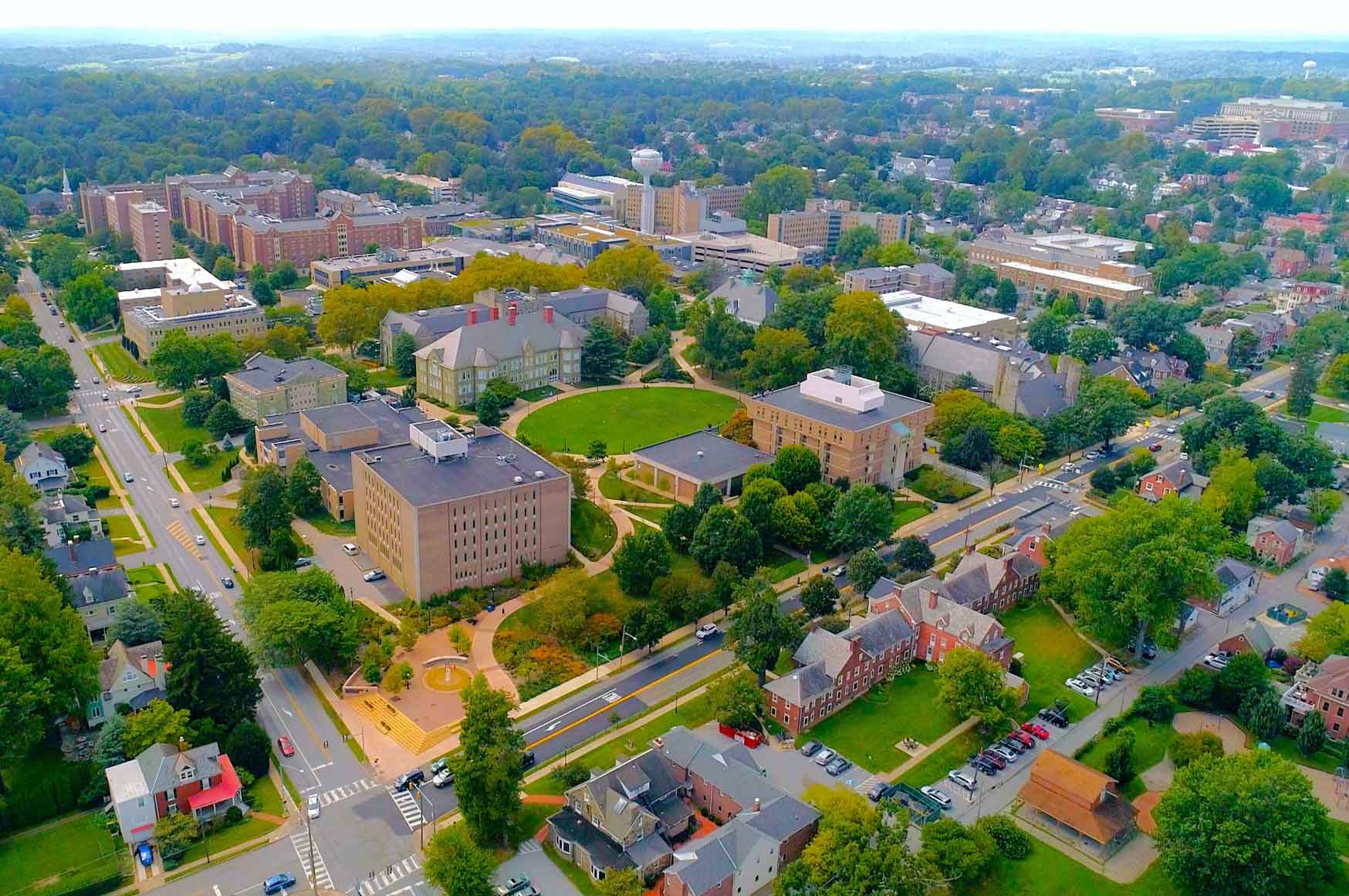
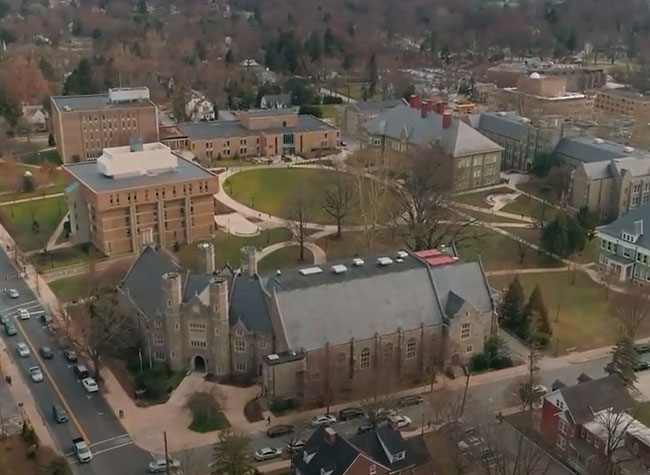
West Chester University of Pennsylvania is a public, regional comprehensive university that operates as a high-access, high-value engine for upward mobility in southeastern Pennsylvania. With a straightforward, moderately selective admissions process, it delivers a practical, career-oriented education anchored in small classes and a sprawling menu of over 180 academic programs. The campus vibe is traditional and active, offering a classic college-town experience just outside Philadelphia, where students graduate with solid earning potential and manageable debt.
Admission requirements
Test-optional — scores considered if submitted
Required
High school transcript
College-prep program
Considered (not required)
Grade point average
Class rank
Test scores (SAT/ACT)
Demonstrated competencies
TOEFL (non-native English)
Source: IPEDS Admissions survey (2022) via Urban Institute. Covers formal factors only — it does not reflect essays, extracurriculars, or other holistic criteria.
More details
Undergrad enrollment
14,164
In-state tuition
$10,775
Out-of-state tuition
$22,599
Graduation Rate
71%
Demonstrated Interest
Considered
Median Earnings (10yr)
$61,258
Students Receiving Grant Aid
73%
Outcomes & value
Outcomes & value
Median earnings (10 yr)
$61,258
Value (earnings ÷ net price)
2.6×
Median debt at graduation
$23,500
Graduation rate
71%
First-year retention
83%
Reducing loan balance (3 yr)
75%
Pell (lower-income) share
25%
First-gen share (among federal-aid recipients)
28%
Top-earning majors
Median earnings by field of study (highest credential), ~2 years after completion.
Computer and Information Sciences, General$70,863
Registered Nursing, Nursing Administration, Nursing Research and Clinical Nursing$66,653
Accounting and Related Services$59,253
Health Services/Allied Health/Health Sciences, General$57,589
Pharmacy, Pharmaceutical Sciences, and Administration$53,608
Finance and Financial Management Services
Campus & location
Campus safety
On-campus violent crimes (2024)
8
Per 1,000 students
0.47
On-campus criminal offenses classed as violent (murder/non-negligent manslaughter, rape, robbery, aggravated assault) for the most recent reported year. Source: U.S. Dept. of Education Campus Safety and Security (Clery Act). Counts reflect what’s reported to the school, and urban campuses often report more partly due to non-student incidents nearby — read alongside campus size and setting, not as a standalone safety verdict.
Climate
Pleasant days / yr
93
Summer high
84°F
Winter low
29°F
Annual rain
51.4"
Annual snow
15.6"
Natural-hazard risk
Relatively Moderate
Pleasant days counts days per year with a mean temperature of 55–75°F, a high at or below 90°F, a low at or above 45°F, and little precipitation — a transparent comfort measure, not a weighting we invented. Computed from Open-Meteo ERA5 daily history (2019–2023). Natural-hazard risk is the county’s composite rating from the FEMA National Risk Index.
Deep dive — research, future-scholar output & economic mobility▾
Economic mobility
Mobility rate
1.3%
Bottom → top quintile
30%
From bottom quintile
4%
Mobility rate = the share of students who both start in the bottom household-income quintile and reach the top quintile; bottom → top is that chance conditional on starting at the bottom. Source: Opportunity Insights Mobility Report Cards (Chetty, Friedman, Saez, Turner & Yagan). Reflects 1980–82 birth cohorts, so it’s directional, not current.
Quick answers
What is the acceptance rate at West Chester University of Pennsylvania?
West Chester University of Pennsylvania's acceptance rate is approximately 78% (West Chester, PA), based on the most recent figures we compiled from public and primary sources.
What SAT score do you need for West Chester University of Pennsylvania?
Admitted students at West Chester University of Pennsylvania typically score 1100–1270 on the SAT (the middle-50% range). Scores outside this band are still admitted, especially with strong applications.
How much does West Chester University of Pennsylvania cost?
At West Chester University of Pennsylvania, the average net price (after aid) is about $23,331 per year. Actual cost varies with financial aid and residency.
How many undergraduates attend West Chester University of Pennsylvania?
West Chester University of Pennsylvania enrolls approximately 14,164 undergraduate students.
Where is West Chester University of Pennsylvania located?
West Chester University of Pennsylvania is located in West Chester, PA.
Admissions
West Chester’s admissions process is transparent and moderately selective, designed to be accessible to a broad range of Pennsylvania students. The university admits about 78% of its applicants, a rate that has edged slightly downward in recent years reflecting growing interest. The enrolled first-year class for Fall 2025 had an average high school GPA of 3.41, and for those who submitted scores, the average SAT was 1197 and the average ACT was 24. The middle 50% SAT range for admitted students is 1100–1270, with a corresponding ACT range of 24–28. Admissions decisions are not uniform across genders; data shows the female is 80%, while the rate for men is 75%. The university experiences a rate of 22%, meaning a relatively small percentage of admitted students ultimately choose to enroll, a trend that suggests competition from peer institutions. Demonstrated interest is a factor considered in the admissions process, as indicated by its inclusion in the review. The admissions office is located in Wayne Hall, 6th Floor.
Earnings = median of students working ~10 years after entry; debt = median of graduates. Value divides 10-yr earnings by one year’s net price — read it as earnings per dollar of annual cost, not a full lifetime ROI; it favors lower-cost schools. Source: U.S. Dept. of Education College Scorecard. Figures lag ~2 years and reflect all students, not your intended major.
$53,508
Business/Managerial Economics$50,856
Mathematics$49,832
Source: U.S. Dept. of Education College Scorecard (field-of-study earnings). Figures cover graduates who received federal aid and lag ~2 years; not all programs report data.
The academic experience at West Chester is defined by its breadth and practical orientation, featuring over 180 diverse academic opportunities across its colleges. The university emphasizes small classes and teaching excellence, with faculty who are committed educators and active researchers. While a comprehensive list of majors is available through the university catalog, popular and prominent programs span a wide range, from business and education to the sciences and health professions. The program index and major listings confirm a curriculum designed to align directly with regional workforce needs and graduate career outcomes. This is not a liberal arts college in the traditional sense; it’s a place where professional preparation is paramount, though grounded in a general education core.
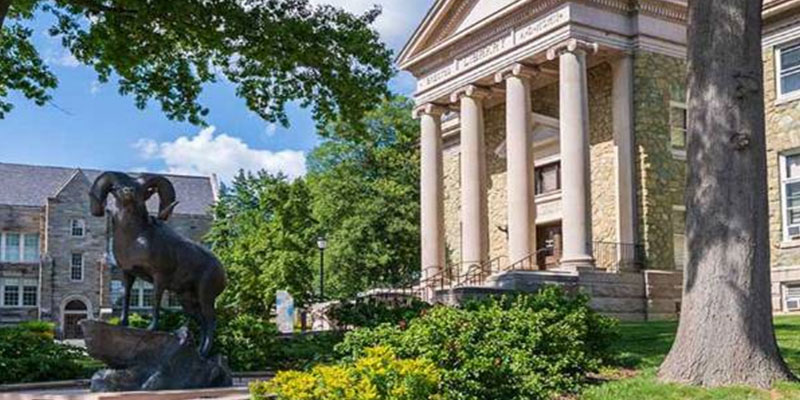
Student life at West Chester offers a classic, active campus experience in a quintessential college town setting. The university promotes a vibrant atmosphere with opportunities to engage in campus gardens, join a sorority or fraternity, and compete in club sports. The campus actively hosts several academic and honor-based societies for undergraduates. Promotional materials highlight a dynamic environment where students can tour campus, learn about academics, and participate in a variety of educational and cultural resources. The location in southeastern Pennsylvania provides easy access to the cultural and professional opportunities of nearby Philadelphia, blending a self-contained campus community with metropolitan proximity.
West Chester delivers strong, career-focused outcomes for its graduates, with a emphasis on employment and further education. According to a First Destination Survey with a 54% knowledge rate, 72% of graduates were employed, 22% were continuing their education, and 4% were seeking employment at the time of the survey. More granular college-specific data shows impressive figures, such as 97% of graduates from one college being employed with a median salary range of $55,000 to $59,999. The university's six-year graduation rate is reported as 71%. Ten years after entry, median earnings for alumni are $61,258. These numbers paint a picture of a university that successfully launches graduates into the workforce with competitive salaries, particularly in fields like business where reported median salary ranges can reach $90,000 to $94,999 for certain programs.
As a public institution, West Chester offers a comparatively affordable , though families should plan for significant out-of-pocket costs. The average net price after aid and scholarships is $23,331. A majority of full-time beginning undergraduates—73%—receive some form of grant or scholarship aid. The university provides a Net Price Calculator for families to estimate their individual costs and anticipated financial aid. It’s important to note that eligibility for most financial aid at West Chester is based on demonstrated financial need, with loans being a standard component of aid packages. The university does not advertise a no-loan policy for meeting full need; financial aid packages typically include a mix of grants, scholarships, and loans.
West Chester University stands out as a workhorse of the Pennsylvania State System of Higher Education, perfectly embodying its mission of broad access and high return on investment. It’s not chasing Ivy League prestige; it’s focused on delivering a dependable, career-ready education to a large and diverse student body. Its strength lies in its unpretentious practicality: a huge array of programs directly tied to employment, a campus life that provides a full collegiate experience, and outcomes that reliably translate degrees into jobs with solid salaries. For students—particularly Pennsylvania residents—who want a traditional college experience without the cutthroat competition or stratospheric debt of more selective schools, West Chester represents a sensible, high-value choice. It’s the definition of a sturdy public university, doing its job well and without fanfare.
West Chester University of Pennsylvania seal · sourceVisit West Chester University - WCU of PA · sourceOur Location - WCU of PA · sourceVisit West Chester University - WCU of PA · source