Loading…
← All schools
West Virginia University
Morgantown, WVpublicwww.wvu.edu/
Acceptance
89%
SAT 25–75
1010–1220
Avg net price
$15,634
Earnings (10 yr)
$55,939
Graduation rate
65%
Admit rate has ranged 84%–90% over the last 5 years. Source: IPEDS via Urban Institute.
Acceptance & SAT from Common Data Set / IPEDS; net price, earnings & graduation from the U.S. Dept. of Education College Scorecard. Figures lag ~1–2 years — verify with the school.
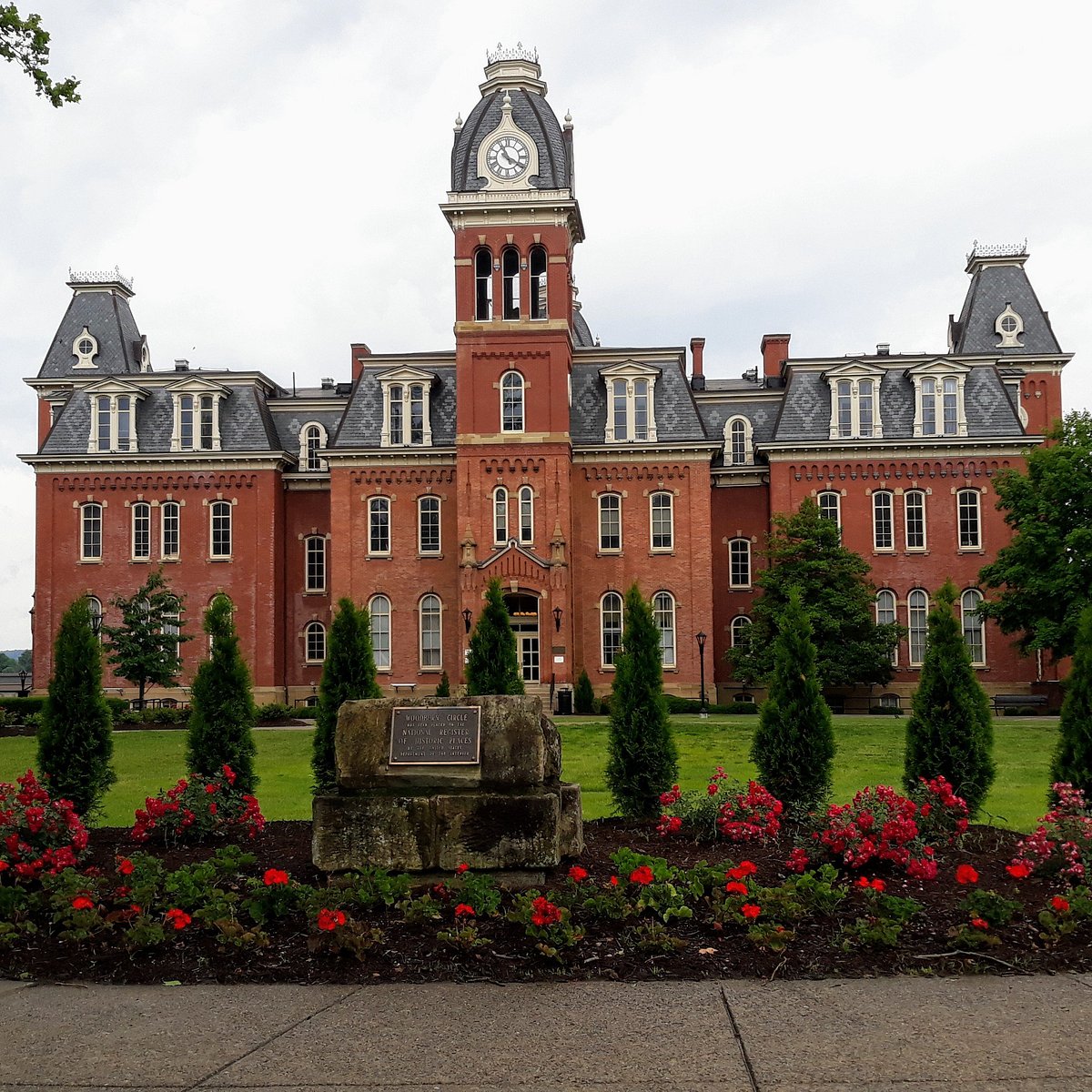
West Virginia University is a sprawling, spirited public flagship where the energy of a major research institution collides with the tight-knit, almost tribal pride of a mountain state. It's a place where you can study aerospace engineering or petroleum geology by day and, come Saturday, join 60,000 fans in a sea of gold and blue to sing 'Country Roads'—a tradition so potent it's practically a graduation requirement. The vibe is unpretentious, outdoorsy, and fiercely loyal, offering a classic Big 12 college experience where the line between campus and the vibrant, hilly town of Morgantown blurs.
Admission requirements
Test-optional — scores considered if submitted
Required
- High school transcript
- Grade point average
- Class rank
- College-prep program
Considered (not required)
- Test scores (SAT/ACT)
- TOEFL (non-native English)
Source: IPEDS Admissions survey (2022) via Urban Institute. Covers formal factors only — it does not reflect essays, extracurriculars, or other holistic criteria.
More details
- Undergrad enrollment
- 17,385
- In-state tuition
- $10,104
- Out-of-state tuition
- $28,608
- No-Loan Policy
- No
- Graduation Rate
- 65%
- Meets Full Need
- No
- Early Decision Plan
- Not offered
- First-Year Retention
- 82.0%
- Demonstrated Interest
- Not considered (per Common Data Set C7)
- Median Earnings (10yr)
- $55,939
- Students Receiving Aid
- 94%
Outcomes & value
Outcomes & value
- Median earnings (10 yr)
- $55,939
- Value (earnings ÷ net price)
- 3.6×
- Median debt at graduation
- $22,500
- Graduation rate
- 65%
- First-year retention
- 83%
- Reducing loan balance (3 yr)
- 58%
- Pell (lower-income) share
- 22%
- First-gen share (among federal-aid recipients)
- 30%
Top-earning majors
Median earnings by field of study (highest credential), ~2 years after completion.
- Industrial Engineering$68,047
- Electrical, Electronics, and Communications Engineering$67,995
- Mining and Mineral Engineering$67,288
- Computer Science$66,069
- Mechanical Engineering$65,457
- Aerospace, Aeronautical, and Astronautical/Space Engineering
Applicants here also applied to
The schools that most often appear alongside West Virginia University on applicants’ lists, from our self-reported outcomes corpus.
Co-application frequency from self-reported results — directional peer discovery, not a recommendation.
Campus & location
Campus safety
- On-campus violent crimes (2024)
- 34
- Per 1,000 students
- 1.49
On-campus criminal offenses classed as violent (murder/non-negligent manslaughter, rape, robbery, aggravated assault) for the most recent reported year. Source: U.S. Dept. of Education Campus Safety and Security (Clery Act). Counts reflect what’s reported to the school, and urban campuses often report more partly due to non-student incidents nearby — read alongside campus size and setting, not as a standalone safety verdict.
Climate
- Pleasant days / yr
- 96
- Summer high
- 81°F
- Winter low
- 28°F
- Annual rain
- 51.4"
- Annual snow
- 23.2"
- Natural-hazard risk
- Relatively Low
Pleasant days counts days per year with a mean temperature of 55–75°F, a high at or below 90°F, a low at or above 45°F, and little precipitation — a transparent comfort measure, not a weighting we invented. Computed from Open-Meteo ERA5 daily history (2019–2023). Natural-hazard risk is the county’s composite rating from the FEMA National Risk Index.
Deep dive — research, future-scholar output & economic mobility
Research output
- Institutional h-index
- 647
- Scholarly works
- 88,269
Institutional research volume and impact from OpenAlex. The h-index reflects large research universities and will be low for teaching-focused liberal-arts colleges — not a measure of undergraduate quality.
Quick answers
- What is the acceptance rate at West Virginia University?
- West Virginia University's acceptance rate is approximately 89% (Morgantown, WV), based on the most recent figures we compiled from public and primary sources.
- What SAT score do you need for West Virginia University?
- Admitted students at West Virginia University typically score 1010–1220 on the SAT (the middle-50% range). Scores outside this band are still admitted, especially with strong applications.
- How much does West Virginia University cost?
- At West Virginia University, the average net price (after aid) is about $15,634 per year. Actual cost varies with financial aid and residency.
- How many undergraduates attend West Virginia University?
- West Virginia University enrolls approximately 17,385 undergraduate students.
- Where is West Virginia University located?
- West Virginia University is located in Morgantown, WV.
Admissions
WVU operates on a rolling admissions basis, encouraging students to apply early due to capacity restrictions for some programs. The process is notably accessible, with the university not requiring ACT or SAT scores for admission. The admitted freshman class for Fall 2025 had an average cumulative high school GPA of 3.72. While the university is broadly accessible, selectivity can vary by specific program. The admissions office reviews applications year-round.
Academics
WVU offers a wide range of more than 30 academic programs, with a particular emphasis on leading-edge engineering majors. The curriculum is designed to be challenging, with foundational science courses in biology, chemistry, mathematics, and physics serving as a rigorous launchpad for students aiming for medical, dental, pharmacy, or graduate school. Popular undergraduate majors include Journalism, Criminology, Biology/Biological Sciences, Marketing, and interdisciplinary studies. The academic environment is student-centered, and the institution comprises multiple campuses, including WVU Tech, which focuses on programs in business, science, engineering, and the humanities.
Compare West Virginia University
See colleges similar to West Virginia University →Sources
- Common Data Set | Office of Data and Analytics | West Virginia ...
- [PDF] Common Data Set 2024-2025 - West Virginia University
- Is WVU's most recent Common Data Set available? - Facebook
- Reports & Analytics | Office of Data and ... - West Virginia University
- Common Data Set - University Effectiveness - West Liberty University
- Common Data Set Initiative - Institutional Research & Analytics
- West Virginia University Admissions - BigFuture College Search
- Admission Requirements for First-Time Freshmen
- WVU SAT Scores and GPA - PrepScholar
- West Virginia University Admissions & Acceptance - Niche