Admit rate has ranged 12%–17% over the last 5 years. Source: IPEDS via Urban Institute.
Acceptance & SAT from Common Data Set / IPEDS; net price, earnings & graduation from the U.S. Dept. of Education College Scorecard. Figures lag ~1–2 years — verify with the school.
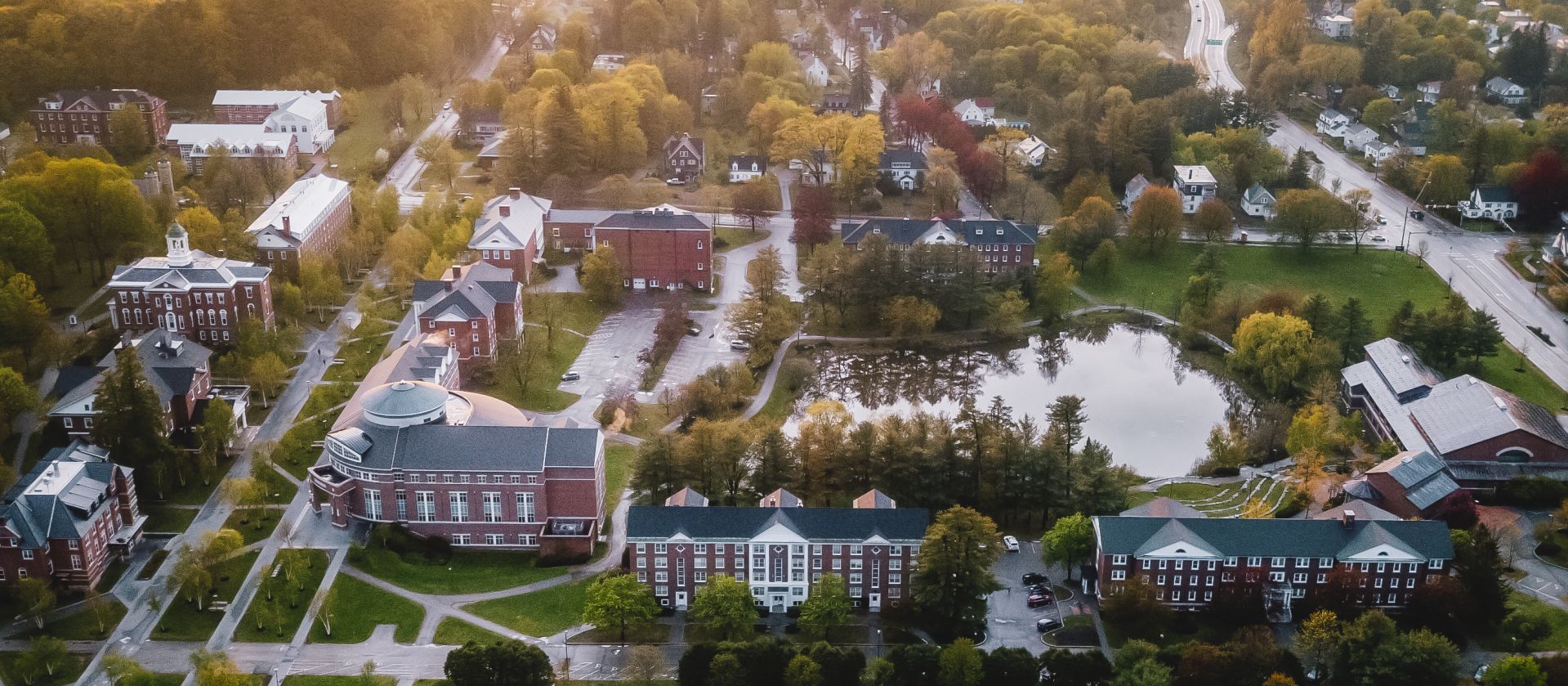
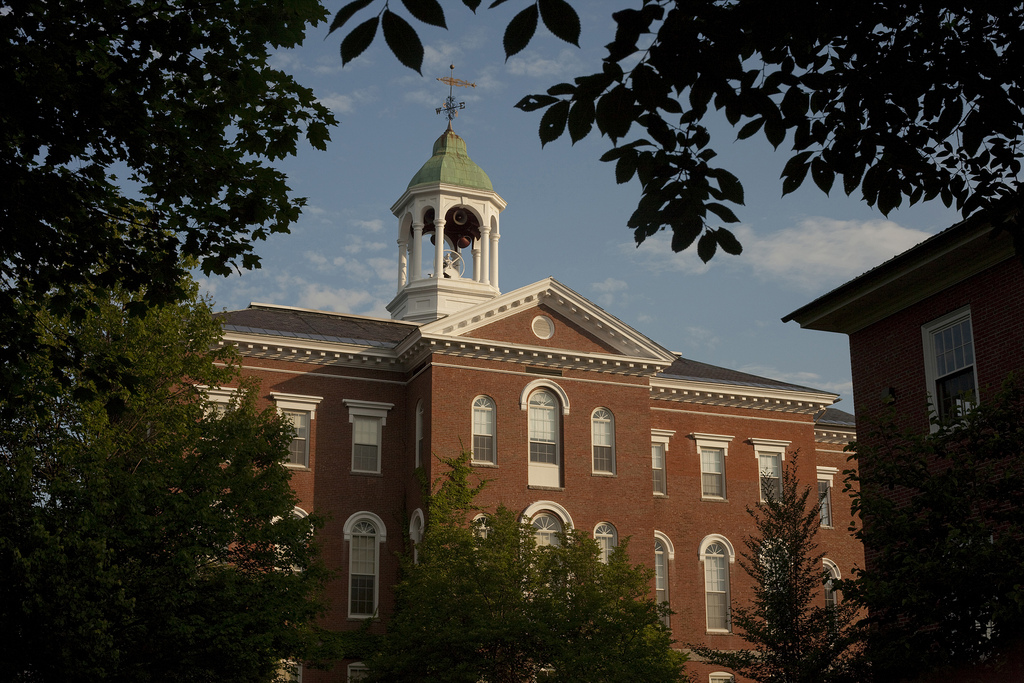
Bates College is a fiercely selective, small liberal arts college in Lewiston, Maine, distinguished by its intellectual intensity, a deeply ingrained culture of kindness, and a pragmatic, no-frills New England ethos. It’s a place where students hold doors for each other, debate fiercely in seminar, and then head out on a weekend trip with the massive, legendary Outing Club. The college stakes its reputation on a forward-thinking curriculum—including a unique month-long Short Term—and a powerful, no-loan financial aid policy that opens its doors to a socioeconomically diverse student body.
Admission requirements
Test-optional — scores considered if submitted
Required
High school transcript
Letters of recommendation
TOEFL (non-native English)
Considered (not required)
Grade point average
Class rank
Test scores (SAT/ACT)
College-prep program
Demonstrated competencies
Source: IPEDS Admissions survey (2022) via Urban Institute. Covers formal factors only — it does not reflect essays, extracurriculars, or other holistic criteria.
More details
Undergrad enrollment
1,760
In-state tuition
$66,590
Out-of-state tuition
$66,590
No-Loan Policy
Yes, for all students
Graduation Rate
90%
Meets Full Need
Yes
ED Share of Class
Substantial (est. ~80%)
First-Year Retention
91%
Demonstrated Interest
Considered
Median Earnings (10yr)
$69,498
Outcomes & value
Outcomes & value
Median earnings (10 yr)
$69,498
Value (earnings ÷ net price)
2.4×
Median debt at graduation
$14,275
Graduation rate
90%
First-year retention
91%
Reducing loan balance (3 yr)
88%
Pell (lower-income) share
12%
First-gen share (among federal-aid recipients)
15%
Earnings = median of students working ~10 years after entry; debt = median of graduates. divides 10-yr earnings by net price — read it as earnings per dollar of annual cost, not a full lifetime ROI; it favors lower-cost schools. Source: U.S. Dept. of Education College Scorecard. Figures lag ~2 years and reflect all students, not your intended major.
Financial health
3.0 / 3.0Meets the federal financial-responsibility standard
U.S. Dept. of Education Financial Responsibility Composite Score (FY2022-23). Scale −1.0 to 3.0; ≥1.5 meets the standard. Reported for private nonprofit & for-profit institutions only — public universities are state-backed and not scored, so this is a stability signal, not a ranking.
Top-earning majors
Median earnings by field of study (highest credential), ~2 years after completion.
Economics$69,338
History$51,273
Political Science and Government$38,289
Sociology$35,600
English Language and Literature, General$30,771
Natural Resources Conservation and Research$26,353
Psychology, General
Applicants here also applied to
The schools that most often appear alongside Bates on applicants’ lists, from our self-reported outcomes corpus.
Co-application frequency from self-reported results — directional peer discovery, not a recommendation.
Campus & location
Campus safety
On-campus violent crimes (2024)
3
On-campus criminal offenses classed as violent (murder/non-negligent manslaughter, rape, robbery, aggravated assault) for the most recent reported year. Source: U.S. Dept. of Education Campus Safety and Security (Clery Act). Counts reflect what’s reported to the school, and urban campuses often report more partly due to non-student incidents nearby — read alongside campus size and setting, not as a standalone safety verdict.
Climate
Pleasant days / yr
89
Summer high
78°F
Winter low
18°F
Annual rain
50.2"
Annual snow
56.2"
Natural-hazard risk
Relatively Low
Pleasant days counts days per year with a mean temperature of 55–75°F, a high at or below 90°F, a low at or above 45°F, and little precipitation — a transparent comfort measure, not a weighting we invented. Computed from Open-Meteo ERA5 daily history (2019–2023). Natural-hazard risk is the county’s composite rating from the FEMA National Risk Index.
Deep dive — research, future-scholar output & economic mobility▾
Research output
Institutional h-index
156
Scholarly works
4,058
Institutional research volume and impact from OpenAlex. The h-index reflects large research universities and will be low for teaching-focused liberal-arts colleges — not a measure of undergraduate quality.
Economic mobility
Mobility rate
0.8%
Bottom → top quintile
41%
From bottom quintile
2%
Mobility rate = the share of students who both start in the bottom household-income quintile and reach the top quintile; bottom → top is that chance conditional on starting at the bottom. Source: Opportunity Insights Mobility Report Cards (Chetty, Friedman, Saez, Turner & Yagan). Reflects 1980–82 birth cohorts, so it’s directional, not current.
Quick answers
What is the acceptance rate at Bates College?
Bates College's acceptance rate is approximately 13% (Lewiston, ME), based on the most recent figures we compiled from public and primary sources.
What SAT score do you need for Bates College?
Admitted students at Bates College typically score 1420–1530 on the SAT (the middle-50% range). Scores outside this band are still admitted, especially with strong applications.
How much does Bates College cost?
At Bates College, the average net price (after aid) is about $29,351 per year. Actual cost varies with financial aid and residency.
How many undergraduates attend Bates College?
Bates College enrolls approximately 1,760 undergraduate students.
Where is Bates College located?
Bates College is located in Lewiston, ME.
Admissions
Gaining admission to Bates is a steep climb, with the college's hovering in the low teens. For the Class of 2029, the acceptance rate was 14.39% from a pool of 9,960 applicants. The college is , but for those who do submit, the middle 50% SAT range for admitted students who submitted scores was 1420–1530 (Evidence-Based Reading and Writing 710-760, Math 720-750). The rate—the percentage of admitted students who enroll—is a solid 34%. The admissions landscape is dramatically shaped by Early Decision, where acceptance rates are significantly higher. Historically, Early Decision acceptance rates have ranged from the mid-40s to over 60%, with one source noting a 47% ED rate compared to a 14% overall rate in a recent year. A substantial portion of the incoming class is filled through ED; one analysis suggested roughly 80% of an incoming class was admitted via Early Decision. Demonstrated interest is a factor Bates considers in its admissions process, as indicated by its reporting.
Romance Languages, Literatures, and Linguistics$22,192
Source: U.S. Dept. of Education College Scorecard (field-of-study earnings). Figures cover graduates who received federal aid and lag ~2 years; not all programs report data.
The Bates academic experience is built on a classic, rigorous liberal arts foundation with a dynamic, modern twist. Students must complete 32 course credits, which includes the completion of a major and a distinctive requirement: two Short Term courses. This unique fourth term in May allows for deep immersion in a single subject, often through travel, intensive research, or creative projects. The college offers more than three dozen majors and two dozen minors, spanning from liberal arts classics like history and philosophy to robust STEM programs. The most popular fields of study are the Social Sciences (28%), Biological and Biomedical Sciences (20%), Psychology (10%), Natural Resources and Conservation (8%), and Mathematics and Statistics (6%). The curriculum is designed to promote the development of critical thinking and writing skills, embracing new knowledge and analytical approaches. The Princeton Review has recognized Bates for its excellent science lab facilities and its commitment to conservation.
Life at Bates is defined by a specific, grounded vibe: friendly, accepting, and passionately engaged. Students describe the community as one where people "hold doors for each other" and are "grounded, open and kind." With nearly 100 student-run clubs, activity thrives, but it often clusters around specific, passionate communities. The Outing Club and ultimate frisbee are repeatedly cited as hubs of vibrant campus life, drawing significant turnout. Campus Life supports this ecosystem through clubs, organizations, the First-Year Experience, social programming, and leadership development. While some note that the social scene can feel compartmentalized, the overall impression is of a campus that buzzes with activity driven by students who are deeply interested in their studies, sports, and hobbies. It's a place where a cultural performance showcase shares space with moments of quiet reflection on the classic New England campus.
Bates graduates launch into their post-college lives with strong momentum. For the Class of 2024, 89% were settled into their next opportunity within six months of graduation: 64% were employed, 18% were enrolled in graduate or professional school, 3% were in internships, and 2% were in fellowships. The college boasts impressive graduation rates, consistently in the low 90s, which places it in the top tier nationally. Its first-year retention rate is 91%. Alumni earnings ten years after entry are solid, with Bates showing median earnings in the mid-range compared to its "Little Ivy" peers, which often report earnings in the low-$70,000s to low-$80,000s.
Bates operates on a powerful and principled financial aid model that is central to its identity. The college is committed to meeting 100% of the full demonstrated financial need for every admitted student, regardless of citizenship or immigration status. Furthermore, Bates has a no-loan policy for all students; aid awards are composed entirely of grants and work-study, with no loans packaged for domestic or international students. This policy means qualifying students have their full need met by the college without debt burden. The average after aid—the actual cost to families—is $29,351. The college provides tools like the MyinTuition estimator and a net price calculator to help families anticipate costs, and notes that 44% of students receive financial aid, with an average aid package of $64,249.
Bates distinguishes itself through a potent combination of high academic rigor, a uniquely supportive and down-to-earth community, and an unwavering commitment to accessibility. Its policy and high Early Decision create distinct strategic pathways for applicants. The academic calendar, anchored by the immersive Short Term, offers a flexibility and depth rare in liberal arts education. But the true differentiator is the culture: this is a top-tier college where intellectual intensity exists alongside a notable lack of pretension, described by its own students as a place of grounded, kind, and open people. Finally, its no-loan, full-need financial aid policy isn't just a brochure line; it's a foundational principle that actively shapes a more socioeconomically diverse student body and allows graduates to begin their careers or further studies unburdened by debt, making its exceptional education a tangible reality for those it admits.
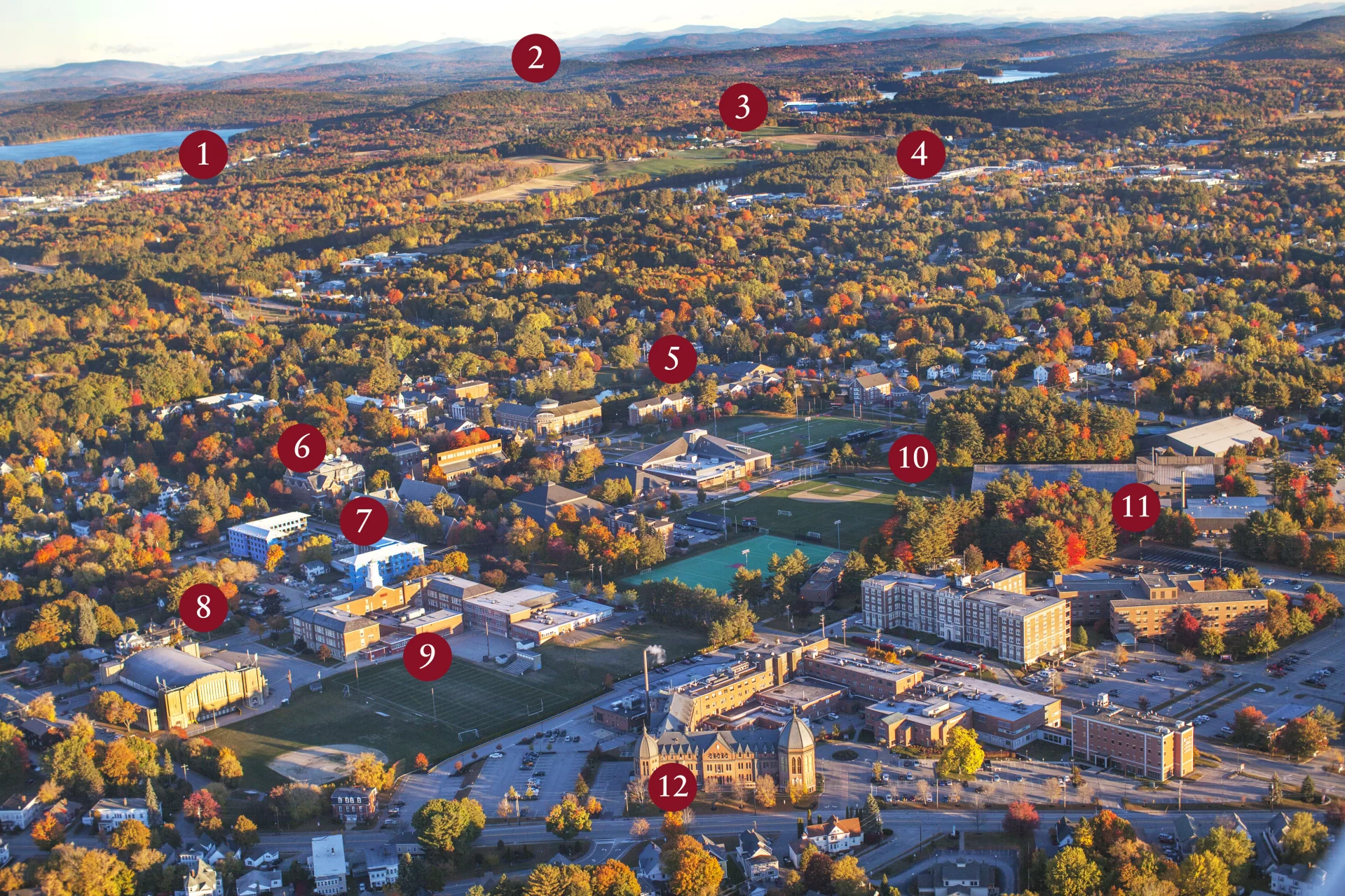
Bates College seal · sourceVirtual Tours of Bates | Admission | Bates College · sourceBates College | Lewiston, Maine · sourceFrom a Distance: 12 things we spied from the sky looking north from campus | News | Bates College · source