Admit rate has ranged 6%–9% over the last 5 years, though the latest figure above (5%) falls outside that window. Source: IPEDS via Urban Institute.
Acceptance & SAT from Common Data Set / IPEDS; net price, earnings & graduation from the U.S. Dept. of Education College Scorecard. Figures lag ~1–2 years — verify with the school.
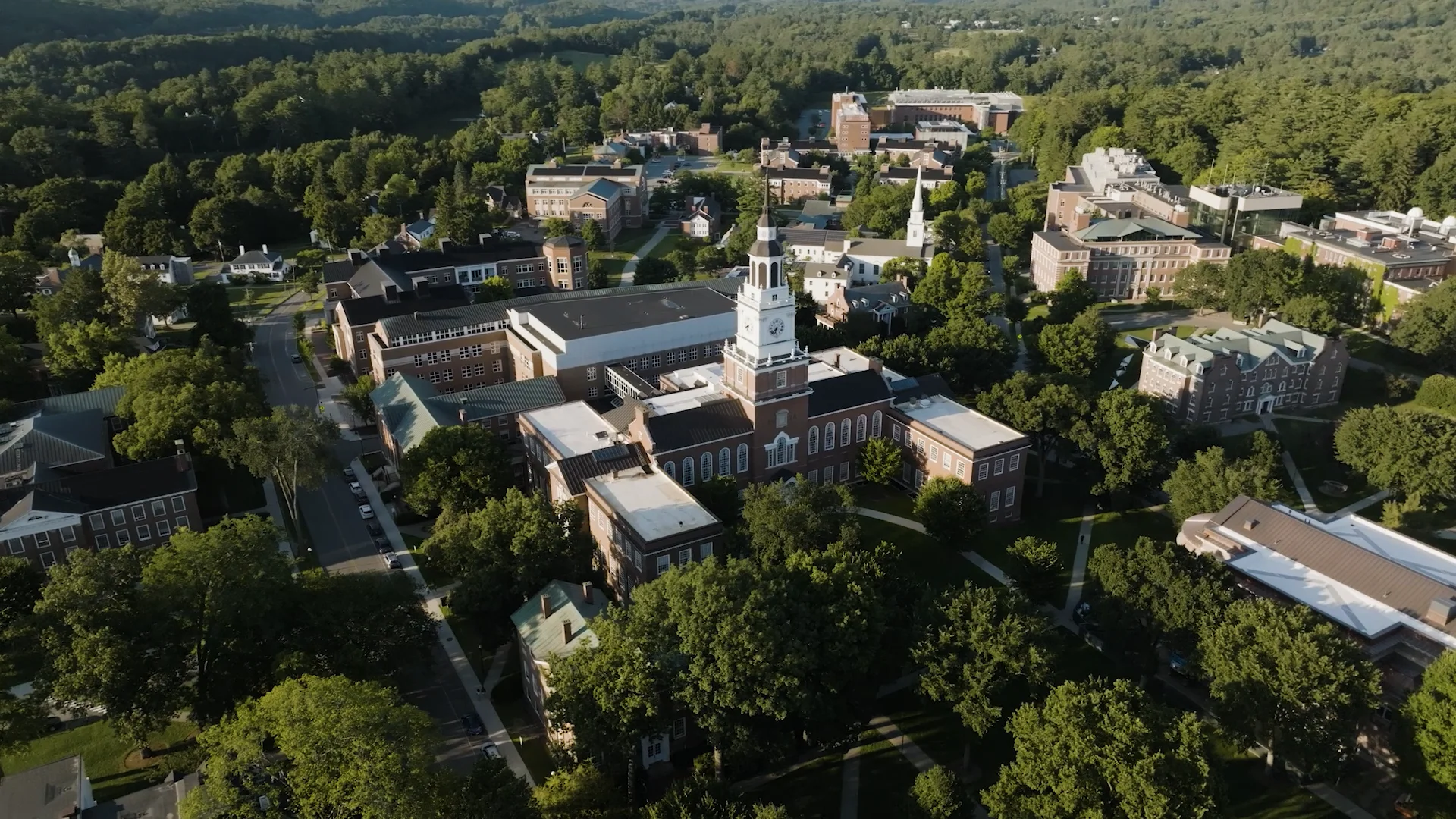
Dartmouth is the Ivy League's most intimate and outdoorsy outpost, a fiercely tight-knit liberal arts college disguised as a research university. Its defining D-Plan—a flexible, quarter-based academic calendar—and a campus culture steeped in tradition and fraternity life create an experience that is both intensely rigorous and surprisingly rustic. This is a place where you're as likely to debate a professor over coffee as you are to ski between classes, forging a loyal alumni network that yields exceptional outcomes.
Admission requirements
Test-optional — scores considered if submitted
Required
High school transcript
Grade point average
Letters of recommendation
College-prep program
TOEFL (non-native English)
Considered (not required)
Class rank
Test scores (SAT/ACT)
Demonstrated competencies
Source: IPEDS Admissions survey (2022) via Urban Institute. Covers formal factors only — it does not reflect essays, extracurriculars, or other holistic criteria.
Key deadlines (2026-2027)
Early Decision — Early Decision
November 1, 2026
Regular Decision — Regular Decision
January 3, 2027
Financial Aid — Financial Aid Application Deadline for Regular Decision
February 1, 2027
More details
Undergrad enrollment
4,541
In-state tuition
$68,268
Out-of-state tuition
$68,268
No-Loan Policy
Yes, for all undergraduates
Graduation Rate
96%
Meets Full Need
Yes
First-Year Retention
98%
Demonstrated Interest
Considered
Median Earnings (10yr)
$97,434
Outcomes & value
Outcomes & value
Median earnings (10 yr)
$97,434
Value (earnings ÷ net price)
3.3×
Median debt at graduation
$17,500
Graduation rate
96%
First-year retention
98%
Reducing loan balance (3 yr)
87%
Pell (lower-income) share
14%
First-gen share (among federal-aid recipients)
17%
Financial health
3.0 / 3.0Meets the federal financial-responsibility standard
U.S. Dept. of Education Financial Responsibility Composite Score (FY2022-23). Scale −1.0 to 3.0; ≥1.5 meets the standard. Reported for private nonprofit & for-profit institutions only — public universities are state-backed and not scored, so this is a stability signal, not a ranking.
Top-earning majors
Median earnings by field of study (highest credential), ~2 years after completion.
Computer Science$113,015
Mathematics$103,078
Economics$87,604
Engineering Science$78,343
Political Science and Government$62,192
History$50,856
Area Studies
Applicants here also applied to
The schools that most often appear alongside Dartmouth on applicants’ lists, from our self-reported outcomes corpus.
Co-application frequency from self-reported results — directional peer discovery, not a recommendation.
Campus & location
Campus safety
On-campus violent crimes (2024)
44
Per 1,000 students
6.43
On-campus criminal offenses classed as violent (murder/non-negligent manslaughter, rape, robbery, aggravated assault) for the most recent reported year. Source: U.S. Dept. of Education Campus Safety and Security (Clery Act). Counts reflect what’s reported to the school, and urban campuses often report more partly due to non-student incidents nearby — read alongside campus size and setting, not as a standalone safety verdict.
Climate
Pleasant days / yr
82
Summer high
78°F
Winter low
15°F
Annual rain
44"
Annual snow
57"
Natural-hazard risk
Relatively Moderate
Pleasant days counts days per year with a mean temperature of 55–75°F, a high at or below 90°F, a low at or above 45°F, and little precipitation — a transparent comfort measure, not a weighting we invented. Computed from Open-Meteo ERA5 daily history (2019–2023). Natural-hazard risk is the county’s composite rating from the FEMA National Risk Index.
Deep dive — research, future-scholar output & economic mobility▾
Research output
Institutional h-index
748
Scholarly works
88,333
Institutional research volume and impact from OpenAlex. The h-index reflects large research universities and will be low for teaching-focused liberal-arts colleges — not a measure of undergraduate quality.
Share of this school’s graduates who go on to earn research doctorates (2010–20), by national rank and per-capita yield (NSF institutional-yield ratio). A signal of a research-oriented student culture — not a causal promise, since it partly reflects who enrolls. Only top producers appear. Source: NSF NCSES, Baccalaureate Origins of U.S. Research Doctorate Recipients.
Economic mobility
Quick answers
What is the acceptance rate at Dartmouth College?
Dartmouth College's acceptance rate is approximately 5% (Hanover, NH), based on the most recent figures we compiled from public and primary sources.
What SAT score do you need for Dartmouth College?
Admitted students at Dartmouth College typically score 1500–1570 on the SAT (the middle-50% range). Scores outside this band are still admitted, especially with strong applications.
How much does Dartmouth College cost?
At Dartmouth College, the average net price (after aid) is about $29,519 per year. Actual cost varies with financial aid and residency.
How many undergraduates attend Dartmouth College?
Dartmouth College enrolls approximately 4,541 undergraduate students.
Where is Dartmouth College located?
Dartmouth College is located in Hanover, NH.
Admissions
Gaining entry to Dartmouth is a feat of extreme selectivity, with an that has settled around 5-6% in recent cycles. The admissions process is holistic, but the academic bar is exceptionally high: the middle 50% SAT range for admitted students is typically 1500–1570, with an ACT range of 33-35, and the average unweighted GPA hovers near 3.9. The indicates that the most critical factors in evaluation are the rigor of a student's secondary school record, class rank, GPA, standardized test scores, and the application essay. Notably, demonstrated interest is rated as "considered," meaning it can play a role in the final decision.
Early Decision is a significant pathway, with the college seeing a 71% increase in ED applicants since it reinstated its testing requirement. For the Class of 2029, Dartmouth received 3,550 Early Decision applications and admitted 606 students, resulting in an early admission rate of 17.07%. This rate has been as low as 17% for the Class of 2028 and 19% for the Class of 2027, making the ED pool competitive but offering a notably higher chance of admission compared to the Regular Decision round. The rate—the percentage of admitted students who enroll—is high, reflecting Dartmouth's powerful appeal to those it admits.
Earnings = median of students working ~10 years after entry; debt = median of graduates. Value divides 10-yr earnings by one year’s net price — read it as earnings per dollar of annual cost, not a full lifetime ROI; it favors lower-cost schools. Source: U.S. Dept. of Education College Scorecard. Figures lag ~2 years and reflect all students, not your intended major.
$48,432
Geography and Cartography$46,478
Source: U.S. Dept. of Education College Scorecard (field-of-study earnings). Figures cover graduates who received federal aid and lag ~2 years; not all programs report data.
Mobility rate = the share of students who both start in the bottom household-income quintile and reach the top quintile; bottom → top is that chance conditional on starting at the bottom. Source: Opportunity Insights Mobility Report Cards (Chetty, Friedman, Saez, Turner & Yagan). Reflects 1980–82 birth cohorts, so it’s directional, not current.
Dartmouth's academic identity is built on three pillars: a rigorous liberal arts core, the unique Dartmouth Plan (D-Plan), and an intimate, discussion-based learning environment. The D-Plan, a quarter-based calendar, allows remarkable flexibility—students typically take three intensive courses per 10-week term and can arrange their year to include internships, research, or study abroad at unconventional times. This system fosters deep immersion in subjects but demands disciplined time management.
Popular and highly-regarded majors cluster in the social sciences, computer science, and interdisciplinary studies. Specific strengths include Econometrics and Quantitative Economics, Political Science and Government, Computer Science, and Engineering. The undergraduate focus is paramount; the college prides itself on a "rigorous, personal, and deeply connected education" where professors are dedicated teachers and accessible mentors. The ability to focus on just three courses per term is frequently cited as a key strength, allowing for profound engagement with material and close collaboration with faculty.
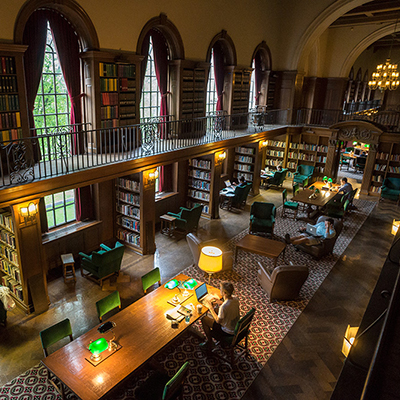
Life at Dartmouth is defined by its remote, picturesque setting in Hanover, New Hampshire, and a potent, self-contained social culture. The campus is a close-knit community where students walk, bike, or shuttle around a compact, green campus that includes the Hood Museum of Art and its own organic farm. The surrounding wilderness is not just a backdrop but a central part of the experience—skiing at the Dartmouth Skiway, hiking, and outdoor trips are woven into the social fabric.
The social scene is a distinctive mix of college-sponsored events and a dominant Greek Life culture; a significant portion of undergraduate social life revolves around fraternity and sorority parties. This creates a vibrant, sometimes insular, weekend atmosphere. Students describe an experience that is both academically intense and richly communal, where traditions run deep and the bond of surviving (and thriving in) the New Hampshire woods together forges lifelong connections. The Division of Community & Campus Life exists to cultivate and strengthen this unique residential community.
Dartmouth's investment in its students pays off in exceptional outcomes. The institution boasts a first-year retention rate of 98% and a six-year graduation rate of 96%, placing it in the top tier of national universities. This high graduation rate is a strong indicator of student support and success.
The financial payoff is equally impressive. According to federal data, the median earnings for Dartmouth graduates ten years after entry are robust, significantly above the national average for four-year colleges. For engineering graduates specifically, career outcomes are particularly strong: the average starting salary for Bachelor of Engineering graduates is $102,000, with Master of Engineering Management (MEM) graduates commanding an average of $129,000. These figures underscore the value of the Dartmouth degree and the powerful career launchpad provided by its alumni network and dedicated career services.
Dartmouth has made a substantial commitment to affordability through a robust, no-loan financial aid policy. The college is need-blind for all applicants and meets 100% of the demonstrated financial need for every admitted undergraduate, regardless of citizenship. Crucially, this need is met without requiring student loans as part of the aid package.
The policy is expansive: families with annual incomes up to $175,000 qualify for free tuition, and for all families who qualify for , Dartmouth replaces loans with scholarship grants and a work-study expectation. Student contributions from summer earnings or term-time work typically range from $1,000 to $2,000 per year. This comprehensive approach means the —the average cost after grants and scholarships—is significantly reduced, making a Dartmouth education accessible to a broad socioeconomic range. Prospective students are encouraged to use the college's Net Price Calculator and MyinTuition Quick Cost Estimator to gauge their individual cost.
Dartmouth carves out a singular niche within the Ivy League. It combines the intellectual firepower and resources of a major research university with the intimate, teaching-focused ethos of a small liberal arts college—all set against a backdrop of Appalachian wilderness. This fusion creates a specific type of student: one who is as comfortable debating in a seminar as they are leading a hiking trip, who values deep tradition (including a vibrant Greek life scene) as much as academic innovation.
The Dartmouth Plan (D-Plan) is its most distinctive academic feature, offering unparalleled scheduling flexibility that facilitates profound academic immersion, global study, and professional experiences. Coupled with a universally applied no-loan financial aid policy that truly opens doors, Dartmouth offers a package that is both uniquely structured and powerfully effective. The result is an exceptionally loyal and successful alumni body, a campus culture with its own unmistakable character, and an educational experience that is deliberately different from its Ivy peers.
Dartmouth College seal · sourceCampus of Dartmouth College - Wikipedia · sourceCampus | Dartmouth Admissions · sourceCampus | Dartmouth Admissions · source