Admit rate has ranged 55%–66% over the last 5 years — notably volatile. Source: IPEDS via Urban Institute.
Acceptance & SAT from Common Data Set / IPEDS; net price, earnings & graduation from the U.S. Dept. of Education College Scorecard. Figures lag ~1–2 years — verify with the school.
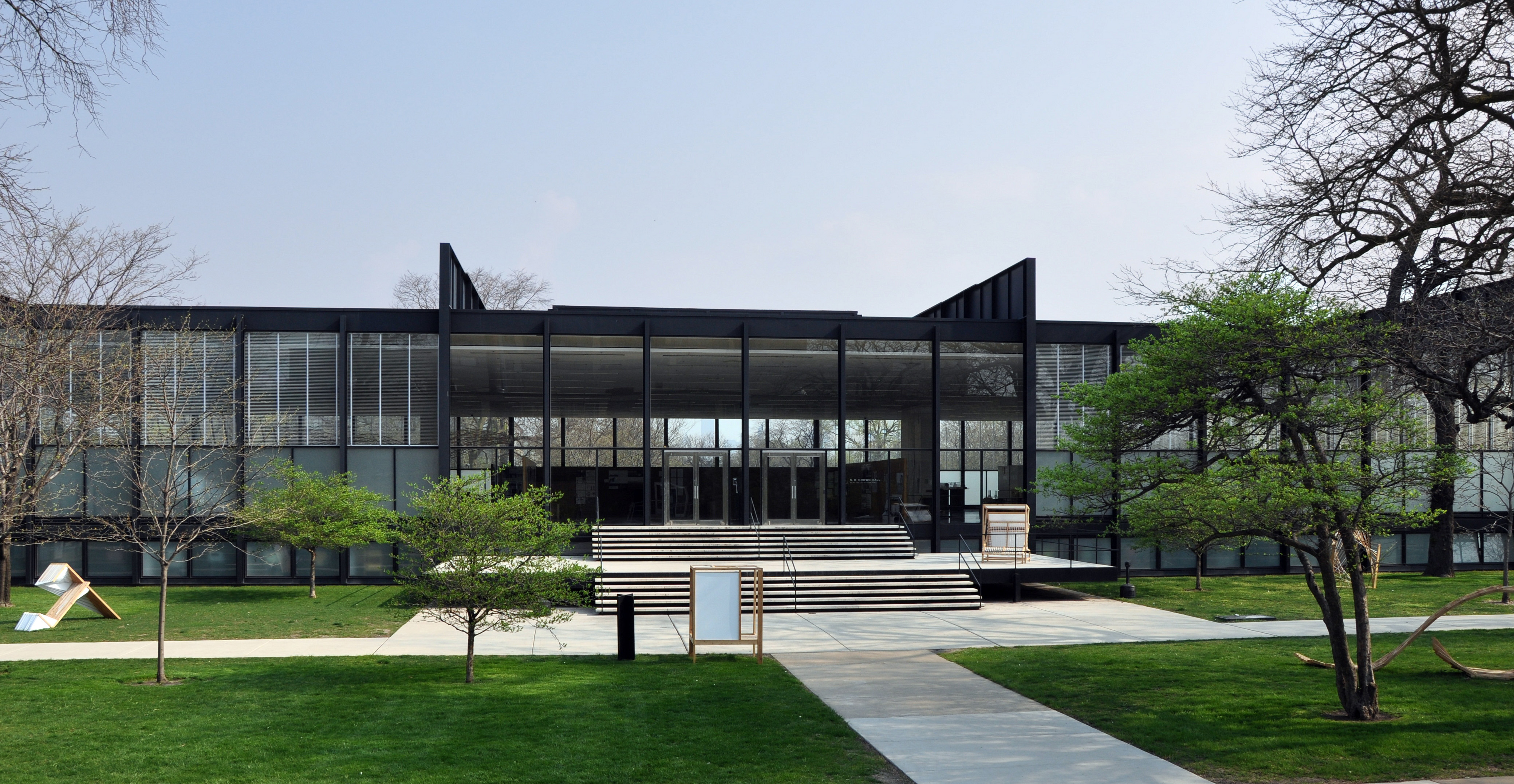
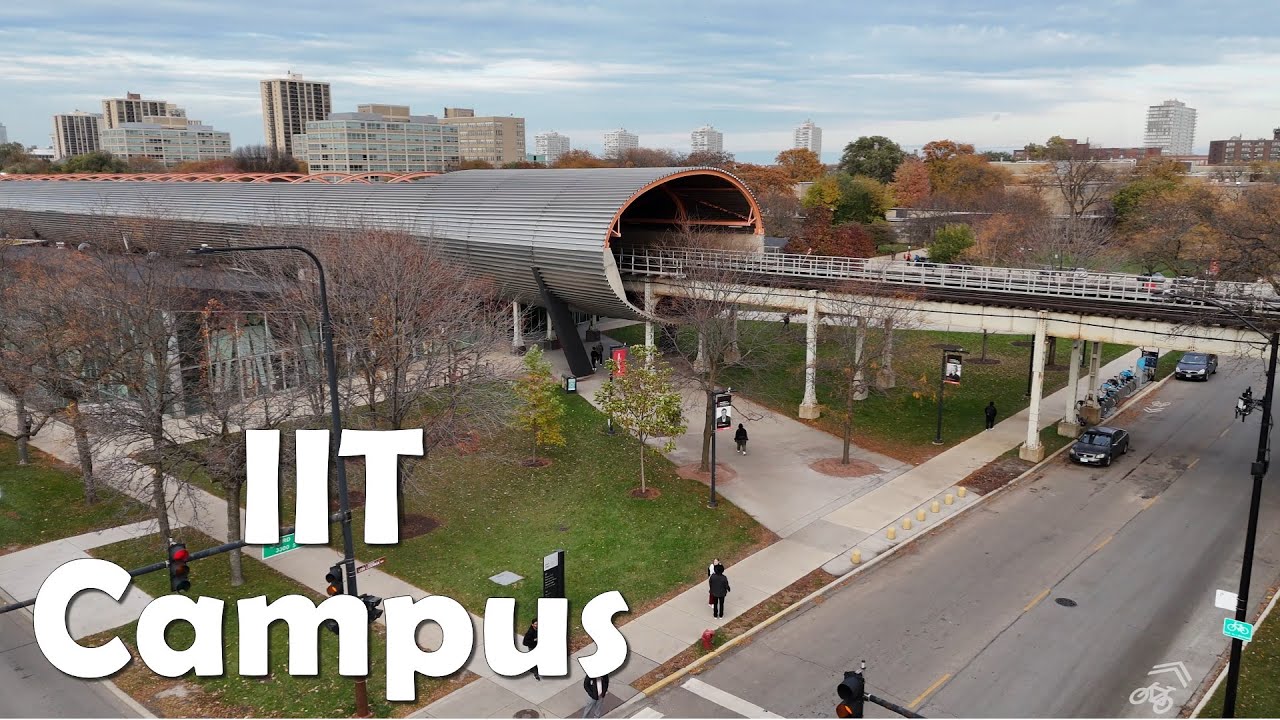
Illinois Institute of Technology is a Chicago powerhouse for the hands-on, career-focused student who wants to build things—literally and figuratively. It’s a university where the academic identity is unapologetically technical, with engineering, computer science, and architecture dominating the landscape, all set on a ‘masterpiece campus’ of Mies van der Rohe buildings. The vibe is less about rah-rah school spirit and more about a diverse, pragmatic community of future engineers and innovators who leverage their prime Chicago location for internships and jobs, graduating with some of the strongest median earnings in the nation.
Admission requirements
Test-optional — scores considered if submitted
Required
High school transcript
Letters of recommendation
College-prep program
TOEFL (non-native English)
Considered (not required)
Grade point average
Class rank
Test scores (SAT/ACT)
Demonstrated competencies
Source: IPEDS Admissions survey (2022) via Urban Institute. Covers formal factors only — it does not reflect essays, extracurriculars, or other holistic criteria.
More details
Undergrad enrollment
2,833
In-state tuition
$52,386
Out-of-state tuition
$52,386
Top Majors
Engineering, Computer Science, Architecture
Campus Vibe
Compact, tech-focused, Chicago-adjacent
Financial Aid
Merit scholarships $10k to full tuition
Graduation Rate
75%
Median Earnings (10yr)
$82,592
Outcomes & value
Outcomes & value
Median earnings (10 yr)
$82,592
Value (earnings ÷ net price)
4.5×
Median debt at graduation
$25,000
Graduation rate
75%
First-year retention
86%
Reducing loan balance (3 yr)
80%
Pell (lower-income) share
30%
First-gen share (among federal-aid recipients)
32%
Financial health
0.6 / 3.0Below the federal standard — financial stress
U.S. Dept. of Education Financial Responsibility Composite Score (FY2022-23). Scale −1.0 to 3.0; ≥1.5 meets the standard. Reported for private nonprofit & for-profit institutions only — public universities are state-backed and not scored, so this is a stability signal, not a ranking.
Top-earning majors
Median earnings by field of study (highest credential), ~2 years after completion.
Computer Science$78,971
Electrical, Electronics, and Communications Engineering$68,499
Computer Engineering$63,749
Architectural Engineering$63,005
Engineering-Related Fields$63,005
Civil Engineering$62,111
Applicants here also applied to
The schools that most often appear alongside Illinois Tech on applicants’ lists, from our self-reported outcomes corpus.
Co-application frequency from self-reported results — directional peer discovery, not a recommendation.
Campus & location
Campus safety
On-campus violent crimes (2024)
5
Per 1,000 students
0.59
On-campus criminal offenses classed as violent (murder/non-negligent manslaughter, rape, robbery, aggravated assault) for the most recent reported year. Source: U.S. Dept. of Education Campus Safety and Security (Clery Act). Counts reflect what’s reported to the school, and urban campuses often report more partly due to non-student incidents nearby — read alongside campus size and setting, not as a standalone safety verdict.
Climate
Pleasant days / yr
88
Summer high
79°F
Winter low
23°F
Annual rain
47.2"
Annual snow
30.1"
Natural-hazard risk
Very High
Pleasant days counts days per year with a mean temperature of 55–75°F, a high at or below 90°F, a low at or above 45°F, and little precipitation — a transparent comfort measure, not a weighting we invented. Computed from Open-Meteo ERA5 daily history (2019–2023). Natural-hazard risk is the county’s composite rating from the FEMA National Risk Index.
Deep dive — research, future-scholar output & economic mobility▾
Research output
Institutional h-index
405
Scholarly works
35,088
Institutional research volume and impact from OpenAlex. The h-index reflects large research universities and will be low for teaching-focused liberal-arts colleges — not a measure of undergraduate quality.
Economic mobility
Mobility rate
3.6%
Bottom → top quintile
61%
From bottom quintile
6%
Mobility rate = the share of students who both start in the bottom household-income quintile and reach the top quintile; bottom → top is that chance conditional on starting at the bottom. Source: Opportunity Insights Mobility Report Cards (Chetty, Friedman, Saez, Turner & Yagan). Reflects 1980–82 birth cohorts, so it’s directional, not current.
Quick answers
What is the acceptance rate at Illinois Institute of Technology?
Illinois Institute of Technology's acceptance rate is approximately 55% (Chicago, IL), based on the most recent figures we compiled from public and primary sources.
What SAT score do you need for Illinois Institute of Technology?
Admitted students at Illinois Institute of Technology typically score 1180–1440 on the SAT (the middle-50% range). Scores outside this band are still admitted, especially with strong applications.
How much does Illinois Institute of Technology cost?
At Illinois Institute of Technology, the average net price (after aid) is about $18,425 per year. Actual cost varies with financial aid and residency.
How many undergraduates attend Illinois Institute of Technology?
Illinois Institute of Technology enrolls approximately 2,833 undergraduate students.
Where is Illinois Institute of Technology located?
Illinois Institute of Technology is located in Chicago, IL.
Admissions
Illinois Tech operates with a moderately selective, admissions process that offers a strategic advantage to early decision applicants. The university reports an of 55%, positioning it as accessible yet selective for a STEM-focused institution. For the Fall 2026 incoming class, the middle 50% SAT range for admitted students who submitted scores was 1180–1440, with a corresponding ACT range of 26–32. The university actively super-scores official test results for applicants who choose to submit them. While the overall acceptance rate is around 55%, applying through Early Decision can significantly improve an applicant's odds; sources indicate the Early Decision acceptance rate is approximately 36-40%, a notable increase compared to the regular decision pool. The admissions policy is test-optional, meaning scores are considered only if submitted by the applicant. The university offers a range of merit-based scholarships from $10,000 up to full tuition, which are a central part of its financial aid strategy.
Earnings = median of students working ~10 years after entry; debt = median of graduates. Value divides 10-yr earnings by one year’s net price — read it as earnings per dollar of annual cost, not a full lifetime ROI; it favors lower-cost schools. Source: U.S. Dept. of Education College Scorecard. Figures lag ~2 years and reflect all students, not your intended major.
Chemical Engineering
$62,012
Computer and Information Sciences, General$61,516
Source: U.S. Dept. of Education College Scorecard (field-of-study earnings). Figures cover graduates who received federal aid and lag ~2 years; not all programs report data.
The academic experience at Illinois Tech is intensely focused on technology, innovation, and professional preparation. The university offers over 50 undergraduate majors and special degree programs, with graduate offerings exceeding 60 degrees, all woven with interdisciplinary learning. The curriculum is dominated by STEM fields: for the 2024 graduating class, the most popular majors were Engineering (41%), Computer and Information Sciences and Support Services (28%), and Architecture and Related Services (15%). This technical concentration defines the student body and campus culture. The campus itself, a collection of iconic modernist buildings designed by Mies van der Rohe and other notable architects, is frequently described as a 'masterpiece campus,' particularly appreciated by architecture majors. The academic programs extend beyond pure engineering and tech to include business, communications, design, law, and psychology, but the core identity remains firmly rooted in applied, tech-focused disciplines designed to propel students directly into high-demand careers.
Student life at Illinois Tech is what you make of it—a self-directed social scene within a compact, walkable campus in the heart of Chicago. The Office of Student Life promotes over 120 student organizations, catering to interests from railroads and esports to CrossFit and dance. Students describe the campus community as friendly, though note that social opportunities like orgs, events, and parties sometimes require active searching. The overall vibe is less defined by sprawling Greek life or massive football games and more by niche clubs and leveraging the incredible city at its doorstep. The campus is praised as 'compact but not cramped' and 'pretty convenient.' The university markets the experience as 'the best of both worlds': a diverse, welcoming campus community located in one of the world's great metropolises. For many students, the social scene is balanced between campus activities and the endless professional and cultural opportunities Chicago provides, from internships to museums and food scenes.
This is where Illinois Tech's value proposition shines brightest: it is an engine for upward economic mobility and strong career launch. The university boasts some of the highest post-graduation earnings in the country. According to federal data, the median earnings for graduates ten years after entry is $82,592. Other sources cite an eight-year median earnings figure of $77,282 and a six-year median of $70,803, all significantly above national averages. The university's own career outcomes page emphasizes that graduates earn 'competitive starting salaries.' The four-year graduation rate is 46%, while the six-year rate is a robust 75%. Post-graduate outcomes are tracked aggressively; one model shows 91% of graduates securing a 'First Destination' (employed or continuing education) shortly after graduation. In short, an Illinois Tech degree is a high-return investment, translating technical training into substantial and rapid earning power.
Illinois Tech is a private institution with a high sticker price, but it mitigates cost through substantial merit and . The average after aid—what students actually pay—is $18,425. A very high percentage of undergraduates receive financial aid, with one source stating 100% of aid recipients get institutional grants, and 29% benefit from federal Pell Grants. The university offers a wide spectrum of merit scholarships, ranging from $10,000 to full-tuition awards. While the university meets a portion of demonstrated need for many students, its financial aid policy is not a blanket 'no-loan' policy for all low-income students; loans, including unsubsidized Stafford Loans, remain part of the aid package for both undergraduate and graduate students. The key for families is to use the university's net price calculator and engage with admissions counselors to discuss scholarship opportunities, which are a cornerstone of making Illinois Tech affordable.
Illinois Tech stands out for its potent, no-nonsense fusion of a focused technical education with the unmatched professional landscape of Chicago. It’s not a liberal arts college with an engineering school tacked on; it’s an institution where tech is the lingua franca, reflected in the fact that nearly 70% of graduates major in engineering or computer science. This creates a uniquely pragmatic and collaborative culture among students who are all, in some way, builders and problem-solvers. The campus itself is a living museum of modernist architecture, providing an inspiring and coherent physical environment for study. But the real differentiator is the outcome: Illinois Tech delivers an exceptional return on investment. Its graduates achieve median earnings that rank among the highest nationally, a direct result of its career-oriented curriculum and deep ties to Chicago’s tech, engineering, and architectural firms. For a student certain about a STEM path and eager to launch a high-earning career, Illinois Tech offers a direct, efficient, and powerful route.
Illinois Institute of Technology seal · sourceOur Location | Illinois Institute of Technology · sourceIllinois Institute of Technology Academic Campus - Wikipedia · sourceIllinois Institute of Technology | IIT | 4K Campus Drone Tour · source