Admit rate has ranged 44%–63% over the last 5 years — notably volatile, though the latest figure above (42%) falls outside that window. Source: IPEDS via Urban Institute.
Acceptance & SAT from Common Data Set / IPEDS; net price, earnings & graduation from the U.S. Dept. of Education College Scorecard. Figures lag ~1–2 years — verify with the school.
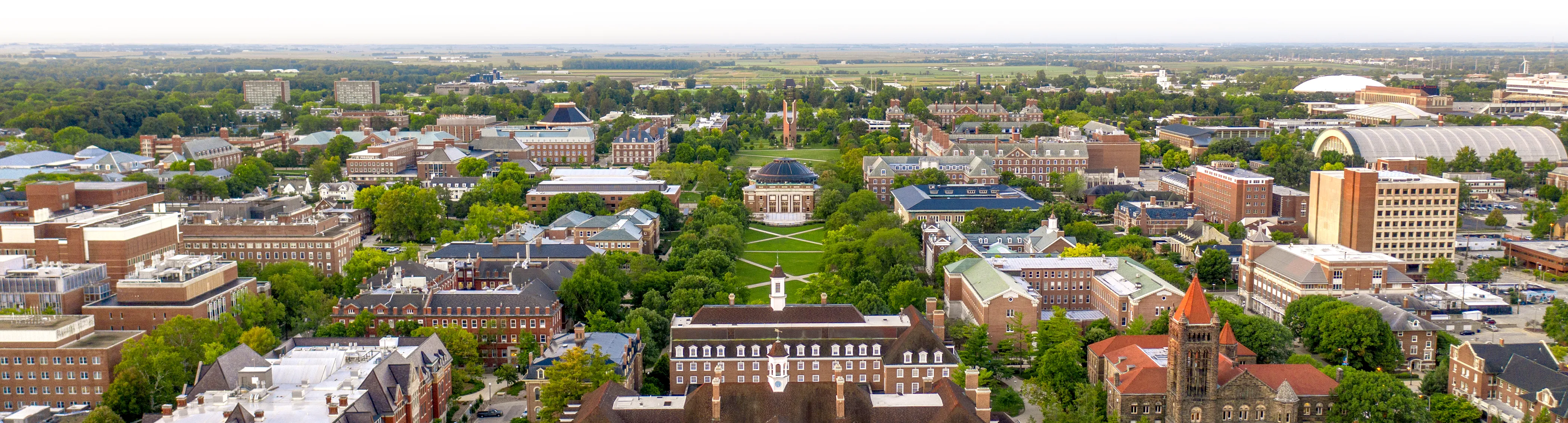
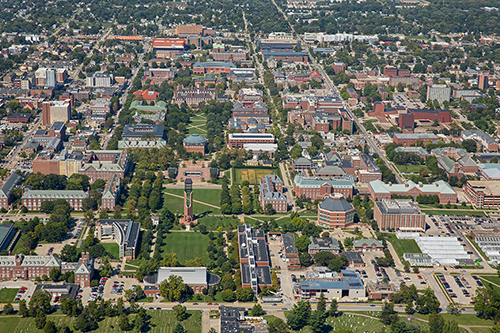
The University of Illinois Urbana-Champaign is a massive, land-grant powerhouse where the sheer scale of its ambition is matched only by the cornfields that surround it. This isn't a genteel liberal arts college; it's a high-stakes academic engine, particularly in engineering and computer science, where the workload is legendary and the career outcomes are formidable. Life here is a classic Big Ten experience—a self-contained city of over 37,000 undergraduates fueled by Illini pride, a sprawling Greek scene, and a relentless drive to innovate.
Admission requirements
Test-optional — scores considered if submitted
Required
High school transcript
College-prep program
TOEFL (non-native English)
Considered (not required)
Test scores (SAT/ACT)
Source: IPEDS Admissions survey (2022) via Urban Institute. Covers formal factors only — it does not reflect essays, extracurriculars, or other holistic criteria.
More details
Undergrad enrollment
36,258
In-state tuition
$16,004
Out-of-state tuition
$35,124
No-Loan Policy
Yes, but only for IL residents with AGI < poverty line & zero EFC
Graduation Rate
85%
Demonstrated Interest
Not considered
Median Earnings (10yr)
$81,054
Outcomes & value
Outcomes & value
Median earnings (10 yr)
$81,054
Value (earnings ÷ net price)
5.6×
Median debt at graduation
$19,500
Graduation rate
85%
First-year retention
95%
Reducing loan balance (3 yr)
79%
Pell (lower-income) share
23%
First-gen share (among federal-aid recipients)
25%
Top-earning majors
Median earnings by field of study (highest credential), ~2 years after completion.
Mathematics and Computer Science$103,078
Computer Science$101,592
Computer Engineering$84,100
Industrial Engineering$75,775
Engineering Physics$74,845
Biomedical/Medical Engineering$74,576
Engineering Mechanics
Applicants here also applied to
The schools that most often appear alongside Illinois on applicants’ lists, from our self-reported outcomes corpus.
On-campus criminal offenses classed as violent (murder/non-negligent manslaughter, rape, robbery, aggravated assault) for the most recent reported year. Source: U.S. Dept. of Education Campus Safety and Security (Clery Act). Counts reflect what’s reported to the school, and urban campuses often report more partly due to non-student incidents nearby — read alongside campus size and setting, not as a standalone safety verdict.
Climate
Pleasant days / yr
91
Summer high
83°F
Winter low
24°F
Annual rain
40"
Annual snow
18.6"
Natural-hazard risk
Relatively Moderate
Pleasant days counts days per year with a mean temperature of 55–75°F, a high at or below 90°F, a low at or above 45°F, and little precipitation — a transparent comfort measure, not a weighting we invented. Computed from Open-Meteo ERA5 daily history (2019–2023). Natural-hazard risk is the county’s composite rating from the FEMA National Risk Index.
Deep dive — research, future-scholar output & economic mobility▾
Research output
Institutional h-index
1,387
Scholarly works
331,293
Institutional research volume and impact from OpenAlex. The h-index reflects large research universities and will be low for teaching-focused liberal-arts colleges — not a measure of undergraduate quality.
Future-scholar output
Science & engineering PhDstop 5 nationally
Humanities & social-science PhDstop 10 nationally
Share of this school’s graduates who go on to earn research doctorates (2010–20), by national rank and per-capita yield (NSF institutional-yield ratio). A signal of a research-oriented student culture — not a causal promise, since it partly reflects who enrolls. Only top producers appear. Source: NSF NCSES, Baccalaureate Origins of U.S. Research Doctorate Recipients.
Quick answers
What is the acceptance rate at University of Illinois Urbana-Champaign?
University of Illinois Urbana-Champaign's acceptance rate is approximately 42% (Champaign, IL), based on the most recent figures we compiled from public and primary sources.
What SAT score do you need for University of Illinois Urbana-Champaign?
Admitted students at University of Illinois Urbana-Champaign typically score 1310–1520 on the SAT (the middle-50% range). Scores outside this band are still admitted, especially with strong applications.
How much does University of Illinois Urbana-Champaign cost?
At University of Illinois Urbana-Champaign, the average net price (after aid) is about $14,355 per year. Actual cost varies with financial aid and residency.
How many undergraduates attend University of Illinois Urbana-Champaign?
University of Illinois Urbana-Champaign enrolls approximately 36,258 undergraduate students.
Where is University of Illinois Urbana-Champaign located?
University of Illinois Urbana-Champaign is located in Champaign, IL.
Admissions
Getting into UIUC is no longer the safe bet it once was. The overall has plummeted from about 66% in 2015 to just under 37% in 2025, a precipitous drop fueled by the widespread adoption of the Common App. For the Class of 2029, the university received 83,045 applications and admitted 30,384 students. However, the real story is in the major-specific admit rates, which are dramatically lower for coveted programs. The university publishes a "first-choice major admit rate," which was 30.2% overall, indicating that applying to a popular college like Engineering or Computer Science is significantly more competitive than the headline number suggests. Illinois residents retain a substantial edge, with an acceptance rate of 49.3% in the 2024-2025 cycle compared to the overall 36.6%. The middle 50% of admitted students boast strong academic credentials: a weighted GPA between 3.70 and 4.00, SAT scores between 1420 and 1540 (or 1290-1490 on another scale), and ACT scores between 31 and III. Notably, demonstrated interest is not considered in the admissions process, so visiting campus or engaging with admissions officers won't move the needle. The university does not have a binding Early Decision program, but it does offer an Early Action option.
Earnings = median of students working ~10 years after entry; debt = median of graduates. Value divides 10-yr earnings by one year’s net price — read it as earnings per dollar of annual cost, not a full lifetime ROI; it favors lower-cost schools. Source: U.S. Dept. of Education College Scorecard. Figures lag ~2 years and reflect all students, not your intended major.
$74,307
Chemical Engineering$74,279
Source: U.S. Dept. of Education College Scorecard (field-of-study earnings). Figures cover graduates who received federal aid and lag ~2 years; not all programs report data.
UIUC’s academic identity is defined by its colossal size and its towering reputation in STEM and business. With over 150 undergraduate majors and concentrations—from Agricultural & Biological Engineering to Acting—the catalog is exhaustive. The most popular majors cluster in Engineering and Business, Management, Marketing, and Related Support Services. The Grainger College of Engineering and the Gies College of Business are national draws, with computer science and computer hardware engineering frequently cited as standout programs. This is a place where research is woven into the undergraduate fabric, and the academic culture is often described as rigorous and competitive, especially in those top-tier programs. The scale means vast resources, including renowned faculty and cutting-edge facilities, but it can also translate to large lecture halls, particularly in introductory courses. The intellectual vibe is less about curated seminars and more about harnessing the institution's raw power to solve big, practical problems.
Life at UIUC is a quintessential large public university experience, a vibrant and sometimes overwhelming ecosystem of its own. The campus and the twin cities of Champaign-Urbana offer a rich mix of cultural, artistic, and social opportunities. Student life is heavily organized around Registered Student Organizations (RSOs); there are "countless" clubs, including Greek organizations, cultural clubs, and academic communities, covering interests from anime to aerospace. Major campus events like Quad Day (the massive organization fair) and Homecoming serve as communal anchors, connecting thousands of students. Greek life and the party scene are prominent features of the social landscape. The university's Student Affairs division supports a community of over 60,000 students total, emphasizing wellbeing and belonging. The sheer size ensures you can find your niche, but it also requires proactive effort to navigate the crowds and build a smaller community within the mass.
A UIUC degree is a serious financial launchpad, particularly for graduates of its flagship programs. The university reports a strong graduation rate. According to the 2023-2024 Illini Success report, which had post-graduate data for 67% of graduates, the average starting salary was $75,373, with a median signing bonus of $5,000. Other sources note that six years after graduation, the median salary climbs higher. Earnings vary dramatically by major, with engineering and computer science graduates commanding premium salaries, while graduates in fields like journalism or the arts report lower, though still solid, early-career earnings. The high graduation rate and strong median earnings a decade out underscore the return on investment for this public university.
As a public institution, UIUC offers a significantly lower than many private peers, though costs vary greatly for in-state versus out-of-state students. The average net price after aid and scholarships is reported by multiple sources. The university provides cost calculators and net price calculators for personalized estimates. Financial aid policy has an important caveat: no need-based financial aid is available to international undergraduates. For domestic students, UIUC does have a limited no-loan policy, but it is highly restrictive. The policy applies only to Illinois residents with an Adjusted Gross Income below the poverty line and a calculated Expected Family Contribution of zero. For all other students, loans can be part of the financial aid package, and the university offers short-term loan programs for currently enrolled students in good standing.
UIUC stands out for its sheer, uncompromising scale and the potent synergy between its vast academic resources and its classic Big Ten student culture. It’s a place where you can study computer science alongside some of the brightest peers in the country, then walk across campus to join a 1,000-person student organization or cheer on the Fighting Illini at a packed football stadium. Its identity is dual: a globally respected research titan—especially in engineering, computer science, and agriculture—that is also deeply rooted in the Midwestern landscape and the communal traditions of a large state university. The dramatic increase in selectivity over the past decade signals its rising prestige, yet it retains a core mission of accessibility, especially for Illinois residents. The result is an environment that is both intensely demanding and vibrantly social, producing graduates who are not only highly skilled but also deeply connected to a massive, loyal alumni network.
University of Illinois Urbana-Champaign seal · sourceUniversity of Illinois Urbana-Champaign · sourceThe power of a name | College of Liberal Arts & Sciences | Illinois · sourceUIUC Campus Instructional Facility · source