Admit rate has ranged 16%–21% over the last 5 years, though the latest figure above (14%) falls outside that window. Source: IPEDS via Urban Institute.
Acceptance & SAT from Common Data Set / IPEDS; net price, earnings & graduation from the U.S. Dept. of Education College Scorecard. Figures lag ~1–2 years — verify with the school.
Georgia Tech is the heavyweight champion of public STEM education, a sprawling, high-octane engine of innovation planted in the heart of Atlanta. It’s where brilliant, pragmatic students go to build things—whether that’s a robot, a startup, or a career with a six-figure starting salary—and they do so with an intensity that defines the campus culture. You don’t come here for a leisurely liberal arts exploration; you come to work hard, solve hard problems, and emerge as a top-tier engineer, computer scientist, or business leader.
Admission requirements
Test scores required
Required
High school transcript
Grade point average
Test scores (SAT/ACT)
College-prep program
TOEFL (non-native English)
Considered (not required)
Letters of recommendation
Source: IPEDS Admissions survey (2022) via Urban Institute. Covers formal factors only — it does not reflect essays, extracurriculars, or other holistic criteria.
More details
Undergrad enrollment
18,785
In-state tuition
$12,058
Out-of-state tuition
$34,484
No-Loan Policy
Yes
Graduation Rate
94%
Early Action Plan
EA1 (GA residents), EA2 (all others)
First-Year Retention
97%
Demonstrated Interest
Not considered
Median Earnings (10yr)
$102,772
Outcomes & value
Outcomes & value
Median earnings (10 yr)
$102,772
Value (earnings ÷ net price)
8.5×
Median debt at graduation
$21,672
Graduation rate
94%
First-year retention
98%
Reducing loan balance (3 yr)
85%
Pell (lower-income) share
14%
First-gen share (among federal-aid recipients)
15%
Top-earning majors
Median earnings by field of study (highest credential), ~2 years after completion.
Computer and Information Sciences, General$91,152
Computer Engineering$83,270
Industrial Engineering$76,283
Chemical Engineering$74,307
Electrical, Electronics, and Communications Engineering$73,992
Mechanical Engineering$70,672
Applicants here also applied to
The schools that most often appear alongside Georgia Tech on applicants’ lists, from our self-reported outcomes corpus.
On-campus criminal offenses classed as violent (murder/non-negligent manslaughter, rape, robbery, aggravated assault) for the most recent reported year. Source: U.S. Dept. of Education Campus Safety and Security (Clery Act). Counts reflect what’s reported to the school, and urban campuses often report more partly due to non-student incidents nearby — read alongside campus size and setting, not as a standalone safety verdict.
Climate
Pleasant days / yr
101
Summer high
86°F
Winter low
39°F
Annual rain
65.3"
Annual snow
0.7"
Natural-hazard risk
Relatively High
Pleasant days counts days per year with a mean temperature of 55–75°F, a high at or below 90°F, a low at or above 45°F, and little precipitation — a transparent comfort measure, not a weighting we invented. Computed from Open-Meteo ERA5 daily history (2019–2023). Natural-hazard risk is the county’s composite rating from the FEMA National Risk Index.
Quick answers
What is the acceptance rate at Georgia Institute of Technology-Main Campus?
Georgia Institute of Technology-Main Campus's acceptance rate is approximately 14% (Atlanta, GA), based on the most recent figures we compiled from public and primary sources.
What SAT score do you need for Georgia Institute of Technology-Main Campus?
Admitted students at Georgia Institute of Technology-Main Campus typically score 1370–1540 on the SAT (the middle-50% range). Scores outside this band are still admitted, especially with strong applications.
How much does Georgia Institute of Technology-Main Campus cost?
At Georgia Institute of Technology-Main Campus, the average net price (after aid) is about $12,116 per year. Actual cost varies with financial aid and residency.
How many undergraduates attend Georgia Institute of Technology-Main Campus?
Georgia Institute of Technology-Main Campus enrolls approximately 18,785 undergraduate students.
Where is Georgia Institute of Technology-Main Campus located?
Georgia Institute of Technology-Main Campus is located in Atlanta, GA.
Admissions
Getting into Georgia Tech is a feat of academic strength, with the institution being "very selective" overall. The university employs a dual-track Early Action plan, not Early Decision: EA1 is exclusively for Georgia residents, while EA2 is for all other applicants, including international students. For the 2025 cycle, Early Action 2 represented a massive 54% of the total applicant pool of nearly 66,892 students. vary dramatically by residency, creating two distinct admissions landscapes. For in-state applicants, the acceptance rate is significantly higher, reported to be roughly 30%, while for out-of-state and international applicants, it plummets to around 8-10%. This creates an overall acceptance rate that aligns with the canonical figure of 14%. The middle 50% SAT range for admitted students is 1370–1540, and the ACT range is 30–34. Academic factors reign supreme; the university explicitly states that demonstrated interest is NOT part of our admission process, a policy confirmed both on its admissions website and through analysis. The rate—the percentage of admitted students who enroll—is typically around 43%.
Earnings = median of students working ~10 years after entry; debt = median of graduates. Value divides 10-yr earnings by one year’s net price — read it as earnings per dollar of annual cost, not a full lifetime ROI; it favors lower-cost schools. Source: U.S. Dept. of Education College Scorecard. Figures lag ~2 years and reflect all students, not your intended major.
Aerospace, Aeronautical, and Astronautical/Space Engineering$69,983
Nuclear Engineering$69,338
Source: U.S. Dept. of Education College Scorecard (field-of-study earnings). Figures cover graduates who received federal aid and lag ~2 years; not all programs report data.
Georgia Tech’s academic identity is synonymous with top-tier engineering, computing, and STEM, but its portfolio is broader than the stereotype suggests. Students can choose from a robust selection of Bachelor of Science degrees spanning engineering, science, computing, business, and liberal arts. The most popular majors overwhelmingly reflect its core strengths: Engineering, and Computer and Information Sciences and Support Services, followed by Business, Management, and related services. The institute offers approximately 35 undergraduate majors, 57 master's programs, and 30 doctoral programs, providing significant depth. The curriculum is known for its rigor, and the culture is intensely focused on practical, hands-on problem-solving. This creates an environment where students are often compared to those at peer institutions like MIT, with discussions frequently centering on Georgia Tech’s distinct advantages as a large public university located in a major tech hub, offering a different scale and type of opportunity.
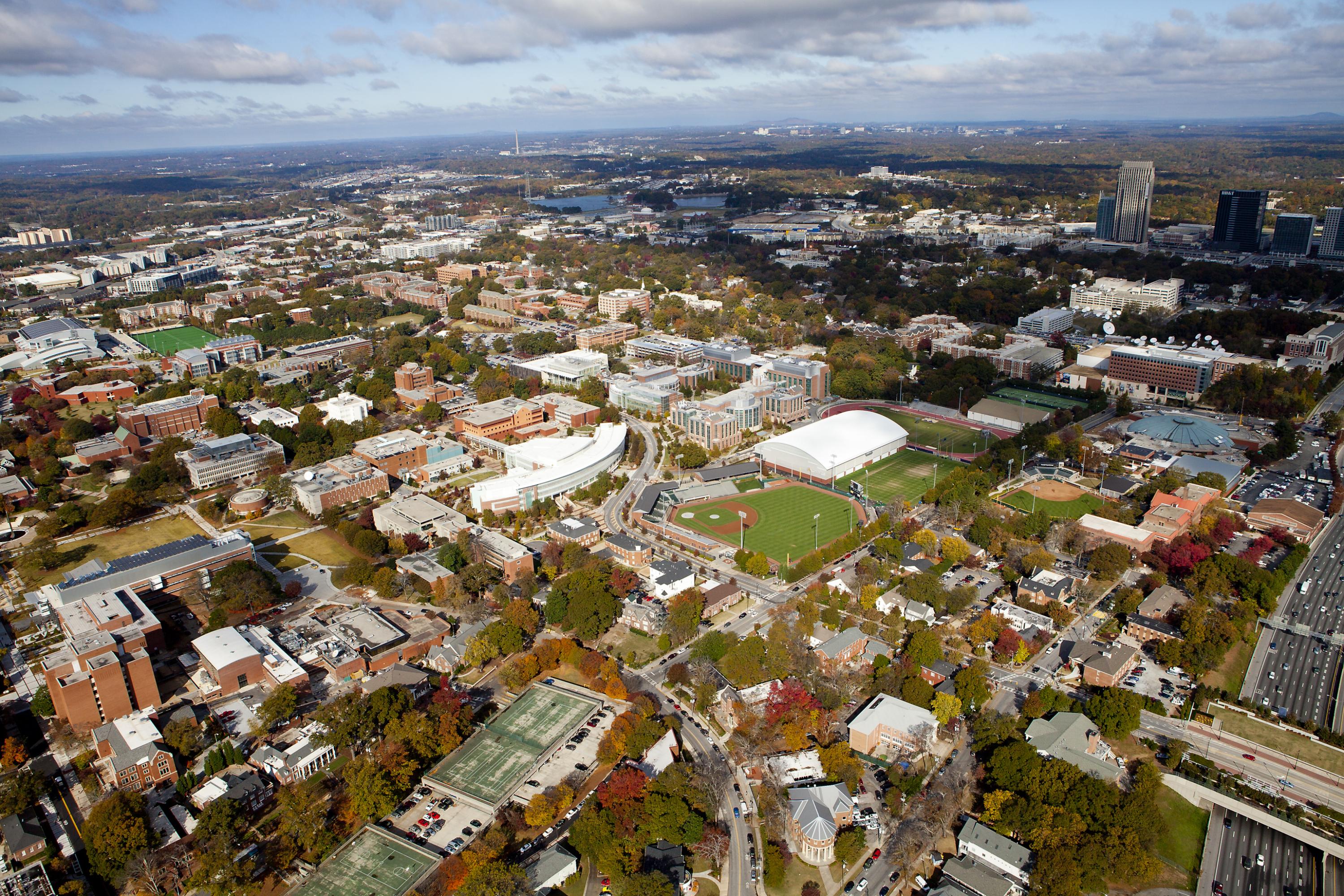
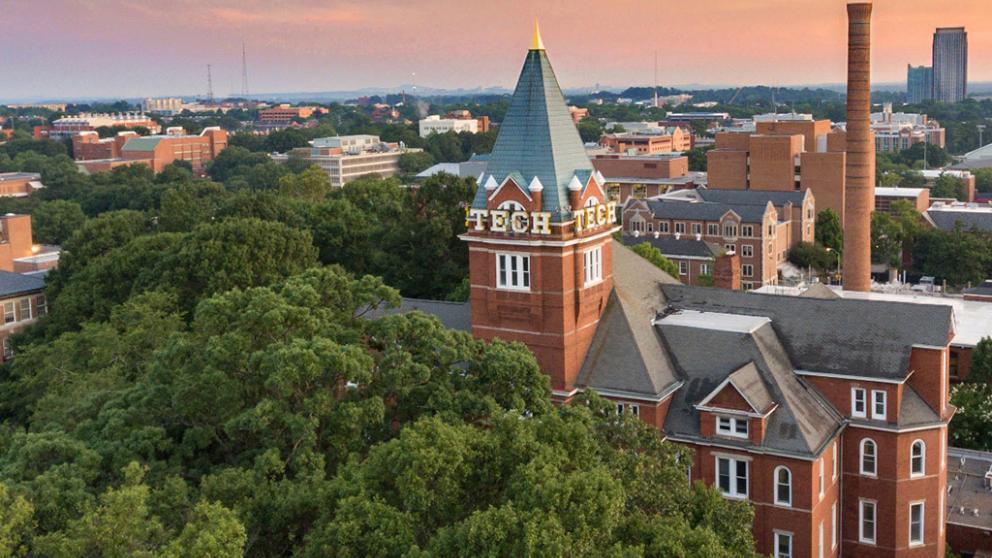
Life at Georgia Tech is a study in contrasts: a demanding, sometimes stressful academic workload set against a vibrant, resource-rich campus in the middle of Atlanta. The campus sits in Midtown, providing immediate access to internships, research partnerships, and the cultural experiences of a major city. Student life is supported by a rich history of co-curricular learning and a vast array of student organizations. However, the student culture is often described as intense and highly focused. Conversations among students and alumni frequently grapple with the balance between work and social life, with some noting the social scene can feel subdued, especially for graduate and international students, due to the sheer volume of academic demands. That said, the institute fosters strong traditions and student pride, with more than 53,000 students across all levels contributing to a forward-looking culture. The overall vibe is one of driven individuals pursuing ambitious goals, with social life often forming around shared academic projects and professional aspirations.
Georgia Tech’s return on investment is staggering and is the central pillar of its reputation. The graduation rate is exceptionally high, with a 94% six-year rate and a rising four-year rate that reached 75% for the Fall 2021 cohort. First-year retention is remarkably strong at 97%. These metrics demonstrate a profound commitment to student success. The payoff comes after graduation: median earnings for alumni are exceptionally high. While the canonical figure for median earnings 10 years after entry is $102,772, other sources report median salaries of nearly $120,000 a few years after earning a degree. This earning power is a direct result of the institute's elite reputation in engineering and tech, its deep ties to industry, and its location in a thriving job market. For the vast majority of students, the rigorous journey culminates in outstanding career placement and financial outcomes.
As a public institution, Georgia Tech has a stark cost differential between in-state and out-of-state students. The published annual cost for a first-year Georgia resident is $10,618, while for an out-of-state student it is $34,604 (not including room and board). However, the average after aid—the canonical figure—is $12,116. Approximately 71% of full-time beginning undergraduates receive grant or scholarship aid, with the average aid package totaling $18,127. Crucially, Georgia Tech operates as a no-loan school. This means the university replaces student loans with grants and scholarships in its financial aid packages for qualifying students, a policy designed to help undergraduates graduate debt-free. The institute also runs specific scholarship programs, like one launched in 2007, aimed at enabling qualified in-state students to graduate without debt.
Georgia Tech stands out for its unmatched combination of scale, price, and payoff. It delivers an education and outcomes comparable to the most elite private tech institutes, but as a public university, it does so at a fraction of the cost for in-state students and a competitive for all. Its location is not an afterthought; being embedded in Atlanta provides continuous access to Fortune 500 companies, startups, and a dynamic professional network that is leveraged for co-ops and internships from day one. The culture is unapologetically intense and focused on tangible results—this is a place for builders and doers. Furthermore, its commitment to removing financial barriers through a no-loan aid policy underscores a mission of access and excellence. You don't just earn a degree here; you earn a proven track record of solving hard problems, which the market rewards handsomely and immediately.
Georgia Institute of Technology-Main Campus seal · sourceMain Campus and Other Teaching Locations · sourceGeorgia Institute of Technology-Main Campus — Admissions, Tuition & Acceptance Rate | Appily · sourceDesigning the Campus of the Future | News Center · source