Admit rate has ranged 31%–41% over the last 5 years — notably volatile. Source: IPEDS via Urban Institute.
Acceptance & SAT from Common Data Set / IPEDS; net price, earnings & graduation from the U.S. Dept. of Education College Scorecard. Figures lag ~1–2 years — verify with the school.
Lafayette College is a distinctive, tradition-rich liberal arts institution with a powerful engineering twist. Nestled in Easton, Pennsylvania, it combines the intimate, residential feel of a classic liberal arts college with the robust career pathways of a top-tier engineering school, all underpinned by a significant financial commitment to meeting students' full demonstrated need. The result is a pragmatic, close-knit community where intellectual exploration is directly linked to real-world outcomes.
Admission requirements
Test-optional — scores considered if submitted
Required
High school transcript
Grade point average
Letters of recommendation
TOEFL (non-native English)
Considered (not required)
Class rank
Test scores (SAT/ACT)
College-prep program
Demonstrated competencies
Source: IPEDS Admissions survey (2022) via Urban Institute. Covers formal factors only — it does not reflect essays, extracurriculars, or other holistic criteria.
More details
Undergrad enrollment
2,757
In-state tuition
$65,398
Out-of-state tuition
$65,398
No-Loan Policy
Yes, for families with incomes up to $200,000 (typical assets)
Graduation Rate
88%
Meets Full Need
Yes
ED Share of Class
Substantial (historical data shows a large portion of class filled via ED)
Demonstrated Interest
Not considered
Median Earnings (10yr)
$91,410
First-Year Retention Rate
High (implied by high graduation rate)
Outcomes & value
Outcomes & value
Median earnings (10 yr)
$91,410
Value (earnings ÷ net price)
2.7×
Median debt at graduation
$16,000
Graduation rate
88%
First-year retention
90%
Reducing loan balance (3 yr)
91%
Pell (lower-income) share
12%
First-gen share (among federal-aid recipients)
15%
Financial health
3.0 / 3.0Meets the federal financial-responsibility standard
U.S. Dept. of Education Financial Responsibility Composite Score (FY2022-23). Scale −1.0 to 3.0; ≥1.5 meets the standard. Reported for private nonprofit & for-profit institutions only — public universities are state-backed and not scored, so this is a stability signal, not a ranking.
Top-earning majors
Median earnings by field of study (highest credential), ~2 years after completion.
Engineering, General$72,403
Electrical, Electronics, and Communications Engineering$71,575
Chemical Engineering$68,379
Mechanical Engineering$65,486
Mathematics$65,332
Civil Engineering$65,238
Economics
Applicants here also applied to
The schools that most often appear alongside Lafayette College on applicants’ lists, from our self-reported outcomes corpus.
Co-application frequency from self-reported results — directional peer discovery, not a recommendation.
Campus & location
Campus safety
On-campus violent crimes (2024)
3
On-campus criminal offenses classed as violent (murder/non-negligent manslaughter, rape, robbery, aggravated assault) for the most recent reported year. Source: U.S. Dept. of Education Campus Safety and Security (Clery Act). Counts reflect what’s reported to the school, and urban campuses often report more partly due to non-student incidents nearby — read alongside campus size and setting, not as a standalone safety verdict.
Climate
Pleasant days / yr
87
Summer high
84°F
Winter low
26°F
Annual rain
50.1"
Annual snow
19.8"
Natural-hazard risk
Relatively Moderate
Pleasant days counts days per year with a mean temperature of 55–75°F, a high at or below 90°F, a low at or above 45°F, and little precipitation — a transparent comfort measure, not a weighting we invented. Computed from Open-Meteo ERA5 daily history (2019–2023). Natural-hazard risk is the county’s composite rating from the FEMA National Risk Index.
Deep dive — research, future-scholar output & economic mobility▾
Research output
Institutional h-index
161
Scholarly works
7,883
Institutional research volume and impact from OpenAlex. The h-index reflects large research universities and will be low for teaching-focused liberal-arts colleges — not a measure of undergraduate quality.
Economic mobility
Mobility rate
1.6%
Bottom → top quintile
59%
From bottom quintile
3%
Mobility rate = the share of students who both start in the bottom household-income quintile and reach the top quintile; bottom → top is that chance conditional on starting at the bottom. Source: Opportunity Insights Mobility Report Cards (Chetty, Friedman, Saez, Turner & Yagan). Reflects 1980–82 birth cohorts, so it’s directional, not current.
Quick answers
What is the acceptance rate at Lafayette College?
Lafayette College's acceptance rate is approximately 31% (Easton, PA), based on the most recent figures we compiled from public and primary sources.
What SAT score do you need for Lafayette College?
Admitted students at Lafayette College typically score 1350–1500 on the SAT (the middle-50% range). Scores outside this band are still admitted, especially with strong applications.
How much does Lafayette College cost?
At Lafayette College, the average net price (after aid) is about $34,433 per year. Actual cost varies with financial aid and residency.
How many undergraduates attend Lafayette College?
Lafayette College enrolls approximately 2,757 undergraduate students.
Where is Lafayette College located?
Lafayette College is located in Easton, PA.
Admissions
Gaining admission to Lafayette is a selective but navigable process, with a clear strategic advantage for those who apply Early Decision. The college received a record 10,901 applications for the Class of 2030, admitting 3,518 for an that aligns with its recent historical average. The middle 50% SAT range for admitted students who submit scores is 1350–1500, and the average GPA is 3.56. Lafayette is ; the SAT or ACT (writing section not required) are welcome but not mandatory, and SAT Subject Tests are not required.
The admissions office evaluates a comprehensive set of factors. Academic rigor, GPA, and standardized test scores (if submitted) are very important. Also very important are the application essay, recommendations, extracurricular activities, and character/personal qualities. Class rank, talent/ability, and volunteer work are considered important. Notably, Lafayette does not consider demonstrated interest in the admissions process, as indicated in the factor grid (C7). This means campus visits, contacting admissions officers, or signing up for mailing lists are not factored into decisions.
The most significant edge comes from the binding Early Decision plans (ED I and II). Historical data shows the Early Decision acceptance rate is consistently and substantially higher than the overall rate—often by 10 percentage points or more. For recent cycles, the ED acceptance rate has been around 42-44%, compared to an overall rate in the low 30s. A large portion of the incoming class is filled through ED, making it a critical pathway for committed applicants.
Earnings = median of students working ~10 years after entry; debt = median of graduates. Value divides 10-yr earnings by one year’s net price — read it as earnings per dollar of annual cost, not a full lifetime ROI; it favors lower-cost schools. Source: U.S. Dept. of Education College Scorecard. Figures lag ~2 years and reflect all students, not your intended major.
$58,943
Geological and Earth Sciences/Geosciences$57,318
Source: U.S. Dept. of Education College Scorecard (field-of-study earnings). Figures cover graduates who received federal aid and lag ~2 years; not all programs report data.
Lafayette’s academic identity is defined by a potent hybrid model: the breadth and depth of a liberal arts college fused with a nationally recognized engineering program. It offers over 50 areas of study across four academic divisions: humanities, social sciences, natural sciences, and engineering. This isn't a liberal arts college with a small engineering department tacked on; engineering is a central pillar, comprising about 20% of all majors. The most popular single major is Econometrics and Quantitative Economics, with around 85 degrees awarded annually, reflecting a strong quantitative bent across disciplines.
Majors break down as follows: Social Sciences (32%), Engineering (20%), Biological and Biomedical Sciences (12%), Psychology (10%), and Visual and Performing Arts (5%). Students and observers describe Lafayette as "your classic liberal arts college with a twist," pointing to the "vast array" of opportunities and the "top-quality engineering education." This blend creates a culture where future financiers, writers, biologists, and mechanical engineers share seminar tables and dorm halls, fostering a pragmatic, problem-solving intellectual vibe.
The college emphasizes experiential learning that extends beyond the classroom. This includes undergraduate research, community-based work, off-campus study (both domestic and international), internships, and competitive academic teams. The curriculum is designed to ensure that theoretical knowledge is consistently tested and applied in real-world contexts, a philosophy that prepares students exceptionally well for immediate impact in graduate programs or careers.
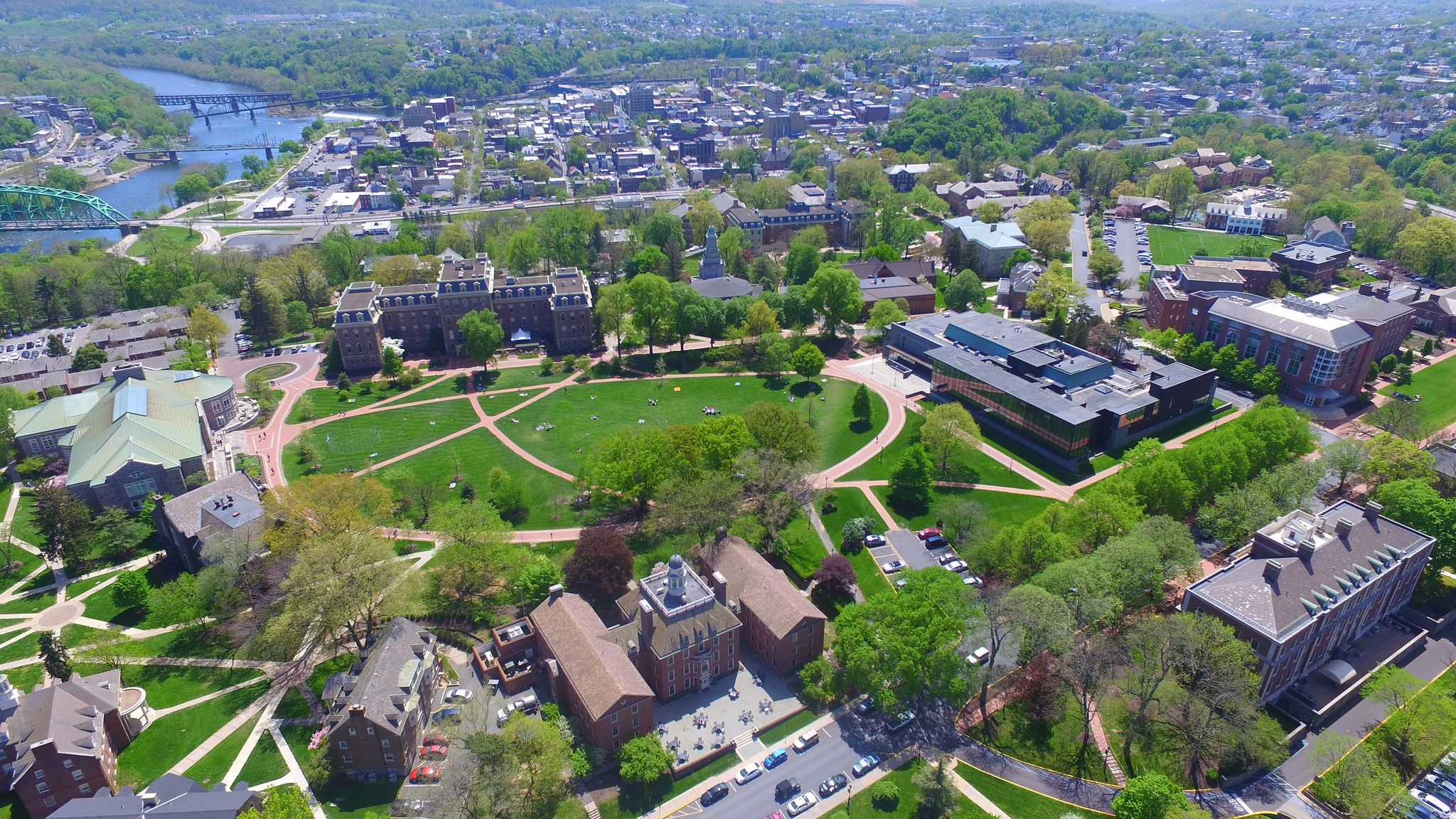
Life at Lafayette is intensely residential and self-contained, with almost all students living on campus. This creates a close-knit, all-in community where the lines between academic, social, and personal life are seamlessly blended. The campus vibe is active and tradition-rich, supported by over 115 student-led clubs and organizations that range from cultural groups to educational seminars. A significant 94% of students report feeling "extremely safe and secure on campus."
Social life is a mix of campus-wide events, club activities, and a visible but not overwhelmingly dominant Greek life presence. Discussions among prospective students often center on the balance of Greek influence, with questions like "Is the Greek life dominant at Lafayette?" indicating it's a factor but not the sole social engine. The residential model ensures there's always something happening, from artistic performances and lectures to intramural sports and campus traditions.
The student body is engaged in a "process of growth and self-discovery within an intentional, residential learning environment." This intentionality means student life is designed to complement the academic mission, offering ample leadership opportunities, community service projects, and spaces for intercultural exchange. The result is a cohesive campus culture where students are deeply involved, know their peers and professors well, and build a strong sense of belonging.
Lafayette delivers on the promise of a high-return investment, with outcomes that significantly outpace national averages. The college's graduation rate is a standout metric, placing it in the top tier of institutions nationwide. The four-year graduation rate is 80%, and the overall six-year rate is exceptionally high.
Financially, Lafayette alumni see strong and growing earning potential. Median earnings six years after graduation are reported at $80,614. Earnings continue to climb with experience, reaching higher levels at the 8-, 9-, and 10-year marks post-graduation. This trajectory underscores the value of the Lafayette degree in the marketplace, particularly given the strong representation of high-earning fields like engineering, economics, and finance among its graduates. The college's focus on experiential learning—research, internships, and hands-on projects—ensures students graduate not just with a diploma, but with a resume and a professional network.
Lafayette College is expensive on paper, but it couples that with one of the most generous and progressive financial aid policies among private liberal arts colleges. Critically, Lafayette guarantees to meet 100% of the demonstrated financial need for all admitted students who meet filing deadlines. This commitment is the bedrock of its access philosophy.
The most transformative aspect of this policy is Lafayette's No-Loan Initiative. For students entering in the 2024-25 academic year and beyond, the college has dramatically expanded this program: accepted students with total family incomes up to $200,000 (with typical assets for that income level) will have their full demonstrated need met with grant and scholarship aid, with no loans required. For students who entered in 2022-23 or 2023-24, a previous version of the initiative applied, replacing federal loans with grants for those with family incomes below $60,000.
This means for a majority of American families, a Lafayette education can be financed without the burden of student loans packaged by the college. Aid packages are built using institutional grants, need-based scholarships, work-study opportunities, and outside scholarships. About 70% of students receive financial aid, with an average aid package of $43,853. The —the actual average cost after grants and scholarships—reflects this substantial institutional investment.
Lafayette College stands out because it successfully operates in a rare and valuable niche, refusing to be pigeonholed. It is not just a liberal arts college, nor is it just an engineering school. It is a deliberate and potent synthesis of both, offering the critical thinking, writing, and broad perspective of the former with the technical rigor, project-based learning, and career immediacy of the latter. This "twist" is its defining feature.
This academic distinctiveness is amplified by a deeply intentional student life model. The near-universal residential requirement fosters a cohesive, all-in community where learning happens everywhere—in labs, libraries, dorm rooms, and at campus events. The college backs this experience with an extraordinary financial commitment. Its expanded No-Loan Initiative, covering families with incomes up to $200,000, is a bold statement that places Lafayette among the most accessible elite private colleges in the country. It dramatically lowers the real and aligns the institution's values with student outcomes, reducing debt burden at graduation.
Finally, Lafayette's admissions process has a clear, data-backed strategy: demonstrated interest doesn't matter, but demonstrating commitment through Early Decision does. This creates a transparent pathway for students who know Lafayette is their first choice. The result is a college that knows exactly what it is: a pragmatic, supportive, and highly effective community that prepares students not just for their first job, but for a lifetime of leadership and adaptation.