Admit rate has ranged 9%–21% over the last 5 years — notably volatile. Source: IPEDS via Urban Institute.
Acceptance & SAT from Common Data Set / IPEDS; net price, earnings & graduation from the U.S. Dept. of Education College Scorecard. Figures lag ~1–2 years — verify with the school.
New York University isn't a campus so much as a state of mind—a sprawling, ambitious academic enterprise woven directly into the fabric of Manhattan and Brooklyn. It attracts a fiercely global, independent, and artistically-inclined student body who come for its powerhouse programs in business, film, and the arts, and stay for the relentless energy of a world-class city as their classroom. This is a place for self-starters who thrive on urban anonymity and immense opportunity, backed by a selectivity that now rivals the Ivy League and a financial aid promise that has fundamentally reshaped its accessibility.
Admission requirements
Test-optional — scores considered if submitted
Required
High school transcript
Grade point average
Letters of recommendation
Demonstrated competencies
Considered (not required)
Class rank
Test scores (SAT/ACT)
College-prep program
TOEFL (non-native English)
Source: IPEDS Admissions survey (2022) via Urban Institute. Covers formal factors only — it does not reflect essays, extracurriculars, or other holistic criteria.
Key deadlines (2026-2027)
Early Decision — Early Decision I
November 1, 2026
ED2 — Early Decision II
January 1, 2027
Regular Decision — Regular Decision
January 5, 2027
Financial Aid — FAFSA Priority Deadline
February 20, 2027
More details
Undergrad enrollment
28,663
In-state tuition
$62,796
Out-of-state tuition
$62,796
No-Loan Policy
Yes, incomes < $100k
Graduation Rate
88%
Meets Full Need
Yes
First-Year Retention
95.5%
Demonstrated Interest
Considered
Median Earnings (10yr)
$82,509
Outcomes & value
Outcomes & value
Median earnings (10 yr)
$82,509
Value (earnings ÷ net price)
2.2×
Median debt at graduation
$20,500
Graduation rate
88%
First-year retention
96%
Reducing loan balance (3 yr)
76%
Pell (lower-income) share
18%
First-gen share (among federal-aid recipients)
21%
Financial health
2.7 / 3.0Meets the federal financial-responsibility standard
U.S. Dept. of Education Financial Responsibility Composite Score (FY2022-23). Scale −1.0 to 3.0; ≥1.5 meets the standard. Reported for private nonprofit & for-profit institutions only — public universities are state-backed and not scored, so this is a stability signal, not a ranking.
Top-earning majors
Median earnings by field of study (highest credential), ~2 years after completion.
Registered Nursing, Nursing Administration, Nursing Research and Clinical Nursing$94,243
Mathematics and Statistics, Other$86,424
Finance and Financial Management Services$84,653
Business/Commerce, General$82,507
Computer and Information Sciences, General$79,957
Computer Engineering
Applicants here also applied to
The schools that most often appear alongside NYU on applicants’ lists, from our self-reported outcomes corpus.
Co-application frequency from self-reported results — directional peer discovery, not a recommendation.
Campus & location
Campus safety
On-campus violent crimes (2024)
20
Per 1,000 students
0.35
On-campus criminal offenses classed as violent (murder/non-negligent manslaughter, rape, robbery, aggravated assault) for the most recent reported year. Source: U.S. Dept. of Education Campus Safety and Security (Clery Act). Counts reflect what’s reported to the school, and urban campuses often report more partly due to non-student incidents nearby — read alongside campus size and setting, not as a standalone safety verdict.
Climate
Pleasant days / yr
90
Summer high
83°F
Winter low
29°F
Annual rain
54.4"
Annual snow
18.3"
Natural-hazard risk
Relatively High
Pleasant days counts days per year with a mean temperature of 55–75°F, a high at or below 90°F, a low at or above 45°F, and little precipitation — a transparent comfort measure, not a weighting we invented. Computed from Open-Meteo ERA5 daily history (2019–2023). Natural-hazard risk is the county’s composite rating from the FEMA National Risk Index.
Deep dive — research, future-scholar output & economic mobility▾
Research output
Institutional h-index
1,374
Scholarly works
276,011
Institutional research volume and impact from OpenAlex. The h-index reflects large research universities and will be low for teaching-focused liberal-arts colleges — not a measure of undergraduate quality.
Future-scholar output
Humanities & social-science PhDstop 12 nationally
Share of this school’s graduates who go on to earn research doctorates (2010–20), by national rank and per-capita yield (NSF institutional-yield ratio). A signal of a research-oriented student culture — not a causal promise, since it partly reflects who enrolls. Only top producers appear. Source: NSF NCSES, Baccalaureate Origins of U.S. Research Doctorate Recipients.
Economic mobility
Mobility rate
3.6%
Bottom → top quintile
Quick answers
What is the acceptance rate at New York University?
New York University's acceptance rate is approximately 9% (New York, NY), based on the most recent figures we compiled from public and primary sources.
What SAT score do you need for New York University?
Admitted students at New York University typically score 1480–1560 on the SAT (the middle-50% range). Scores outside this band are still admitted, especially with strong applications.
How much does New York University cost?
At New York University, the average net price (after aid) is about $37,050 per year. Actual cost varies with financial aid and residency.
How many undergraduates attend New York University?
New York University enrolls approximately 28,663 undergraduate students.
Where is New York University located?
New York University is located in New York, NY.
Admissions
NYU's admissions process has undergone a dramatic transformation over the past decade, evolving from a selective option to a hyper-competitive powerhouse with an that now sits at a mere 9%. This places it among the most selective universities in the country. The academic profile of admitted students is formidable, with the middle 50% SAT range for first-years reported as 1480–1560 and an average unweighted GPA of 3.81. The university receives a staggering volume of applications, with over 120,000 applicants reported for the Class of 2029.
Applying Early Decision is a significant strategic consideration. While NYU does not officially publish its ED acceptance rate, external analyses suggest it is substantially higher than the Regular Decision rate, with estimates ranging from around 30% to as high as 38%. A substantial portion of the incoming class—around 25,000 students applied to either Early Decision I or II for one recent cycle—is filled through this binding option, indicating its importance in enrollment management.
Beyond test scores and grades, NYU's evaluation is holistic. The indicates that the level of an applicant's interest is considered in the admissions process, though it is not listed among the 'very important' factors. This suggests that engagement with the university, while not a primary driver, can be a positive note in a file. The admitted pool is notably international, with 25% of students coming from outside the United States, reinforcing NYU's global identity.
Earnings = median of students working ~10 years after entry; debt = median of graduates. Value divides 10-yr earnings by one year’s net price — read it as earnings per dollar of annual cost, not a full lifetime ROI; it favors lower-cost schools. Source: U.S. Dept. of Education College Scorecard. Figures lag ~2 years and reflect all students, not your intended major.
$77,715
Management Sciences and Quantitative Methods$76,460
Civil Engineering$67,420
Source: U.S. Dept. of Education College Scorecard (field-of-study earnings). Figures cover graduates who received federal aid and lag ~2 years; not all programs report data.
Mobility rate = the share of students who both start in the bottom household-income quintile and reach the top quintile; bottom → top is that chance conditional on starting at the bottom. Source: Opportunity Insights Mobility Report Cards (Chetty, Friedman, Saez, Turner & Yagan). Reflects 1980–82 birth cohorts, so it’s directional, not current.
NYU's academic structure is a constellation of highly specialized, and often top-ranked, schools. There is no single 'NYU experience' academically; a student's path is defined by their school affiliation, whether it's the film powerhouse Tisch School of the Arts, the prestigious Stern School of Business, the broad liberal arts foundation of the College of Arts and Science (CAS), or one of the other numerous colleges. This means a student in CAS studying psychology will have a vastly different core curriculum and peer group than a drama major at Tisch.
The most popular majors reflect this professional and urban focus. According to Niche, the top graduating majors include Management Sciences and Information Systems, Liberal Arts and Humanities, and Information Science. The breadth is immense, with official academic program listings spanning from Accounting and Acting to Acute Care Surgery and Advanced Mathematical Methods. The faculty are recognized leaders in their fields, with Arts & Science professors noted as recipients of major recognitions like the Nobel Prize.
This decentralized model demands a proactive student. Resources are abundant, but they are not handed out; you must seek out opportunities, forge connections with professors, and navigate the bureaucratic boundaries between schools. The education is described as 'internationally focused, academically rigorous, intellectually rich, and forward-thinking,' a direct product of its New York City context where theory constantly meets real-world practice.
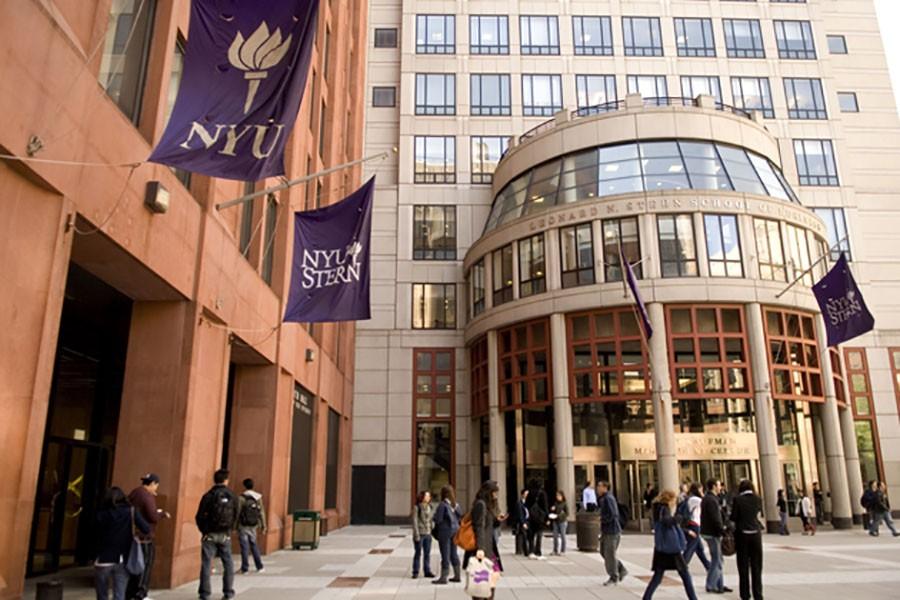
Forget the traditional quad. NYU's campus is the city itself, primarily centered in Greenwich Village and downtown Brooklyn. This creates a student life culture that is inherently independent, fast-paced, and culturally saturated. There is no insulated bubble; students are 'involved in the day-to-day excitement, culture, and opportunity of the city.' This means your social life might be a gallery opening in Chelsea, an indie film screening in the Village, or an internship mixer in Midtown, just as much as a dorm floor event.
This urban integration shapes the community. Students describe the culture as less overtly 'rah-rah' than a typical college town. It attracts a specific type of person: globally-minded, self-sufficient, comfortable with anonymity, and hungry for external stimulation. The residential halls become crucial micro-communities, offering a 'diverse learning experience' by exposing students to a wide array of cultures and backgrounds. Clubs and activities are plentiful, with everything from campus ministries to dance groups, but they compete for attention with the infinite offerings of New York City.
The result is a student body that is often older-feeling, sophisticated, and career-focused from day one. It's not for everyone—some find it lacks the traditional cohesive campus spirit—but for those who thrive on autonomy and world-class resources, it offers an unparalleled launchpad into adult and professional life.
NYU's investment yields strong, tangible returns. The six-year graduation rate is 88%, a figure that places it in the top 5% of institutions nationally. Retention is exceptionally high, with 95.5% of first-years returning for their sophomore year. Disaggregated data shows strong performance across genders, with a 90% graduation rate for female students and 87% for male students.
Financially, outcomes are robust. The median earnings for students ten years after entry is $82,509. This strong earning potential, combined with the average after aid, leads to a favorable return-on-investment calculation, with estimates suggesting graduates can earn back their net educational costs in about 6.1 years. The career paths are as diverse as the majors, funneling graduates directly into the competitive industries of finance, media, tech, and the arts that surround the university.
NYU's sticker price is notoriously high, but its financial aid policy has undergone a revolutionary shift. For first-year undergraduate students admitted to the New York campus, NYU now meets 100% of their demonstrated financial need through a combination of scholarships and grants, explicitly excluding loans from the initial aid package. This landmark policy, known as The NYU Promise, represents a major commitment to accessibility.
A key component of this promise is that families with income less than $100,000 and typical assets will not have to pay tuition. The average after aid—the cost a typical student actually pays—is $37,050. Approximately 29-37% of full-time beginning undergraduates receive grant or scholarship aid, with the average aid package reported as high as $68,216. It's important to note that the varies significantly by school, program, and location, and the net price calculator is an essential tool for prospective families.
This policy fundamentally changes NYU's value proposition. While it remains expensive for those above the income thresholds, the guarantee of meeting full need for admitted students removes a major barrier and aligns its practices with other elite, need-blind institutions.
NYU stands out not for what it has, but for what it has eliminated: the boundary between campus and city. It is the definitive urban university, offering an education that is conducted as much in studios, financial firms, and research hospitals as in classrooms. Its identity is dual: both a collection of world-class, almost conservatory-like professional schools (Stern, Tisch, Rory Meyers College of Nursing) and a broad-based liberal arts institution (CAS), all operating under one globally recognized banner.
Its recent transformation is key to its current stature. The plunge in to the single digits signals its arrival in the highest echelon of selectivity. More importantly, the implementation of The NYU Promise—meeting 100% of demonstrated need without loans for New York campus first-years—marks a profound shift from its historical reputation as a university for the wealthy. It is now aggressively competing for top talent regardless of financial background.
Ultimately, NYU is for the self-possessed, ambitious student who views college not as a pastoral retreat but as an accelerated launch into global professional life. It demands resourcefulness and comfort with complexity, but in return, it provides a network, a brand, and an experiential education that is literally unmatched in scale and immediacy.
New York University seal · sourceNew York University (NYU) - Profile, Rankings and Data | US News Best Colleges · sourceNYU Campus Tour · sourceCollege reviews: New York University – The Patriot · source