Admit rate has ranged 7%–11% over the last 5 years. Source: IPEDS via Urban Institute.
Acceptance & SAT from Common Data Set / IPEDS; net price, earnings & graduation from the U.S. Dept. of Education College Scorecard. Figures lag ~1–2 years — verify with the school.
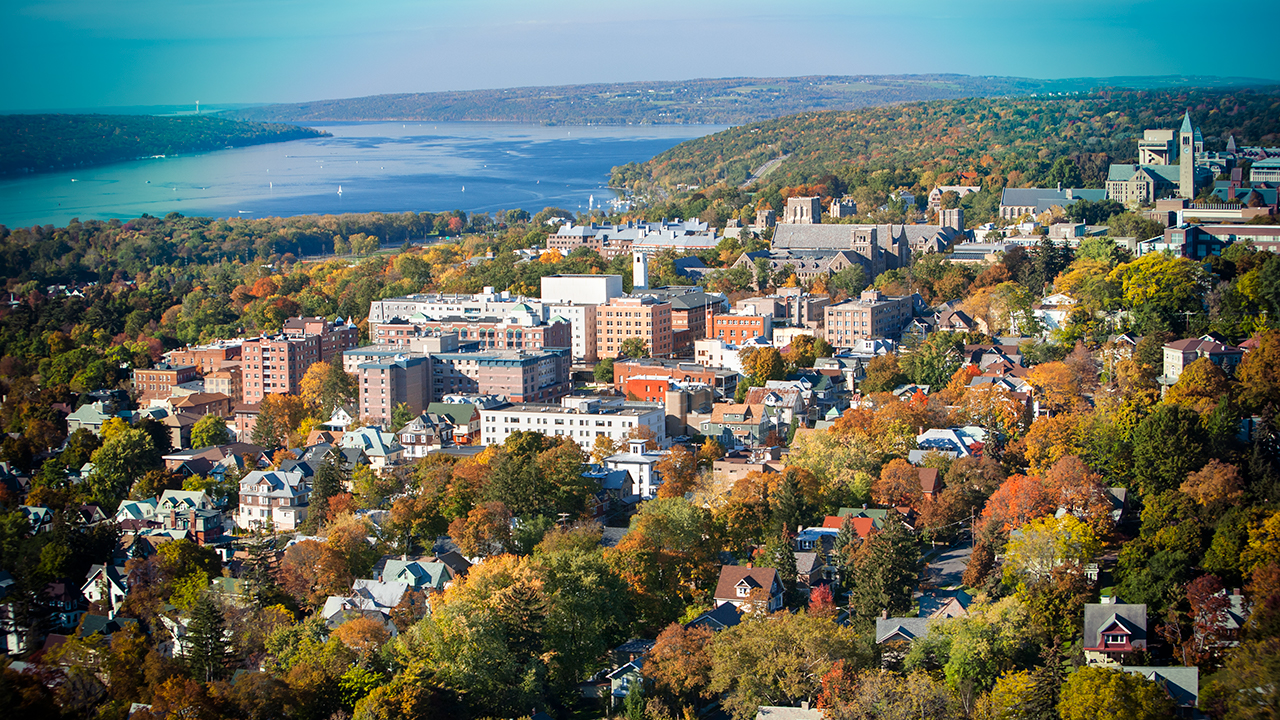
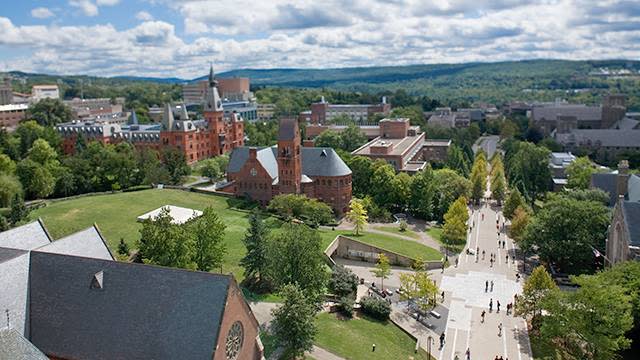
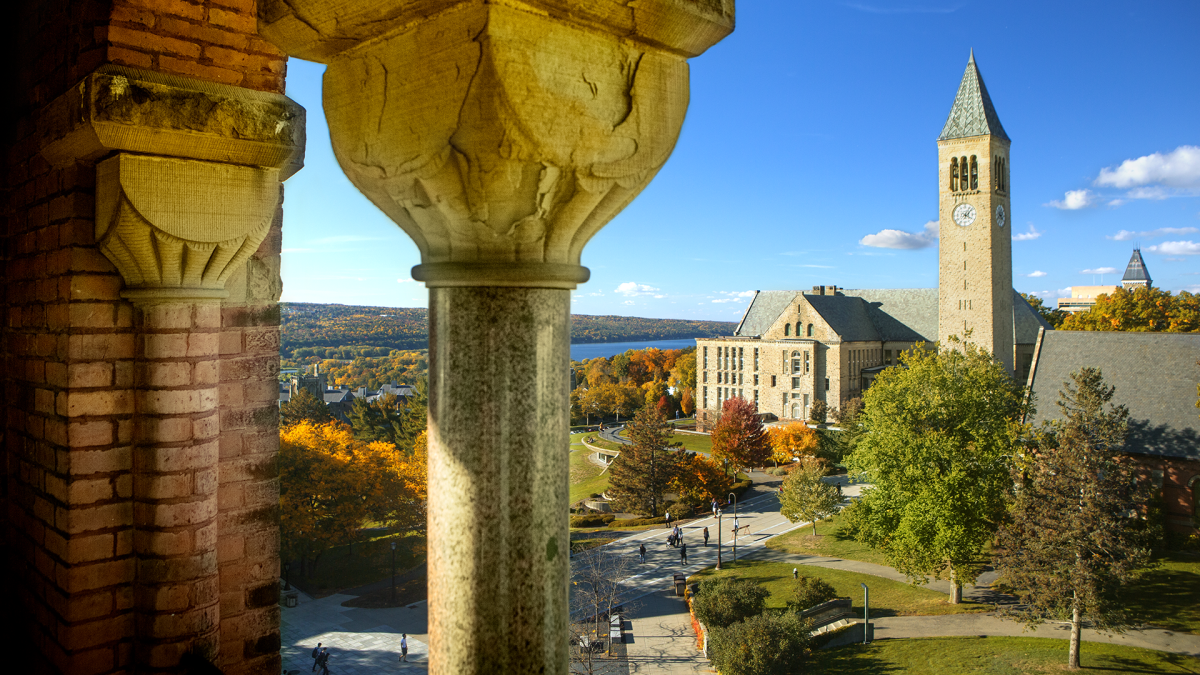
Cornell University is the Ivy League's most expansive and pragmatic outlier, a place where the theoretical and the applied collide with productive friction. Founded as a land-grant institution, its identity is split between the stately humanities of its endowed colleges and the intensely practical, world-leading schools of Hotel Administration, Agriculture, and Engineering. The campus, perched above the gorges of Ithaca, fosters a culture of intense work and quirky traditions, where students are as likely to be managing a student-run hotel as publishing in a literary journal.
Admission requirements
Test-optional — scores considered if submitted
Required
High school transcript
Letters of recommendation
TOEFL (non-native English)
Considered (not required)
Grade point average
Class rank
Test scores (SAT/ACT)
College-prep program
Demonstrated competencies
Source: IPEDS Admissions survey (2022) via Urban Institute. Covers formal factors only — it does not reflect essays, extracurriculars, or other holistic criteria.
Key deadlines (2026-2027)
Early Decision — Early Decision
November 1, 2026
Regular Decision — Regular Decision
January 2, 2027
Financial Aid — CSS Profile & FAFSA
February 15, 2027
More details
Undergrad enrollment
15,995
In-state tuition
$69,314
Out-of-state tuition
$69,314
Graduation Rate
95%
Meets Full Need
Yes
ED Share of Class
~47.7% (Class of 2026)
First-Year Retention
97% (Class of 2024 cohort)
Demonstrated Interest
Not considered
Median Earnings (10yr)
$104,043
Legacy Students (Class of 2024)
14.8%
Outcomes & value
Outcomes & value
Median earnings (10 yr)
$104,043
Value (earnings ÷ net price)
3.6×
Median debt at graduation
$14,000
Graduation rate
95%
First-year retention
98%
Reducing loan balance (3 yr)
87%
Pell (lower-income) share
18%
First-gen share (among federal-aid recipients)
15%
Financial health
2.7 / 3.0Meets the federal financial-responsibility standard
U.S. Dept. of Education Financial Responsibility Composite Score (FY2022-23). Scale −1.0 to 3.0; ≥1.5 meets the standard. Reported for private nonprofit & for-profit institutions only — public universities are state-backed and not scored, so this is a stability signal, not a ranking.
Top-earning majors
Median earnings by field of study (highest credential), ~2 years after completion.
Computer Science$122,485
Electrical, Electronics, and Communications Engineering$92,277
Mathematics$91,211
Operations Research$85,538
Chemical Engineering$83,351
Computer and Information Sciences, General$82,641
Applicants here also applied to
The schools that most often appear alongside Cornell on applicants’ lists, from our self-reported outcomes corpus.
Co-application frequency from self-reported results — directional peer discovery, not a recommendation.
Campus & location
Campus safety
On-campus violent crimes (2024)
28
Per 1,000 students
1.05
On-campus criminal offenses classed as violent (murder/non-negligent manslaughter, rape, robbery, aggravated assault) for the most recent reported year. Source: U.S. Dept. of Education Campus Safety and Security (Clery Act). Counts reflect what’s reported to the school, and urban campuses often report more partly due to non-student incidents nearby — read alongside campus size and setting, not as a standalone safety verdict.
Climate
Pleasant days / yr
90
Summer high
78°F
Winter low
22°F
Annual rain
46.5"
Annual snow
52.3"
Natural-hazard risk
Relatively Low
Pleasant days counts days per year with a mean temperature of 55–75°F, a high at or below 90°F, a low at or above 45°F, and little precipitation — a transparent comfort measure, not a weighting we invented. Computed from Open-Meteo ERA5 daily history (2019–2023). Natural-hazard risk is the county’s composite rating from the FEMA National Risk Index.
Deep dive — research, future-scholar output & economic mobility▾
Research output
Institutional h-index
1,848
Scholarly works
471,803
Institutional research volume and impact from OpenAlex. The h-index reflects large research universities and will be low for teaching-focused liberal-arts colleges — not a measure of undergraduate quality.
Share of this school’s graduates who go on to earn research doctorates (2010–20), by national rank and per-capita yield (NSF institutional-yield ratio). A signal of a research-oriented student culture — not a causal promise, since it partly reflects who enrolls. Only top producers appear. Source: NSF NCSES, Baccalaureate Origins of U.S. Research Doctorate Recipients.
Economic mobility
Quick answers
What is the acceptance rate at Cornell University?
Cornell University's acceptance rate is approximately 9% (Ithaca, NY), based on the most recent figures we compiled from public and primary sources.
What SAT score do you need for Cornell University?
Admitted students at Cornell University typically score 1500–1570 on the SAT (the middle-50% range). Scores outside this band are still admitted, especially with strong applications.
How much does Cornell University cost?
At Cornell University, the average net price (after aid) is about $28,690 per year. Actual cost varies with financial aid and residency.
How many undergraduates attend Cornell University?
Cornell University enrolls approximately 15,995 undergraduate students.
Where is Cornell University located?
Cornell University is located in Ithaca, NY.
Admissions
Getting into Cornell is a feat of academic endurance and strategic positioning. The university is "extremely selective," with an that has hovered between 7.26% and 8.41% for recent classes. The middle 50% SAT range for admitted students is 1500–1570, and an overwhelming majority—over 95%—scored at least 1400 on the SAT. Academic rigor is the paramount consideration; the lists the academic GPA, rigor of secondary school record, and class rank as "very important" factors. Notably, demonstrated interest is explicitly "not considered" in the admissions process, so visiting campus or engaging with admissions officers won't move the needle.
Applying Early Decision provides a significant, though still fiercely competitive, advantage. For the Class of 2026, the Early Decision acceptance rate was 17.55%, more than double the overall rate. Recent data shows Cornell received 9,973 Early Decision applications for one class and accepted 1,161, an 11.6% rate. This pathway is binding and fills a substantial portion of the incoming class. The admitted student profile is academically elite: for the Class of 2024, 83.7% of enrolled students were in the top tenth of their high school class, and 64.2% attended public high schools. status is a factor, with 14.8% of that class being descendants of Cornell alumni.
Earnings = median of students working ~10 years after entry; debt = median of graduates. Value divides 10-yr earnings by one year’s net price — read it as earnings per dollar of annual cost, not a full lifetime ROI; it favors lower-cost schools. Source: U.S. Dept. of Education College Scorecard. Figures lag ~2 years and reflect all students, not your intended major.
Agricultural Business and Management
$80,747
Mechanical Engineering$74,687
Source: U.S. Dept. of Education College Scorecard (field-of-study earnings). Figures cover graduates who received federal aid and lag ~2 years; not all programs report data.
Mobility rate = the share of students who both start in the bottom household-income quintile and reach the top quintile; bottom → top is that chance conditional on starting at the bottom. Source: Opportunity Insights Mobility Report Cards (Chetty, Friedman, Saez, Turner & Yagan). Reflects 1980–82 birth cohorts, so it’s directional, not current.
Cornell's academic structure is uniquely decentralized, with undergraduates applying directly to one of its seven undergraduate colleges, each with its own admissions standards, faculty, and culture. This creates a university of distinct intellectual villages. It offers nearly 80 formal major fields, plus interdisciplinary and dual-degree programs. The most popular majors cluster in Computer and Information Sciences; Business, Management, and Marketing; and Engineering.
The university is renowned for its powerhouse applied programs. The School of Hotel Administration is legendary, essentially creating the modern hospitality industry. The College of Agriculture and Life Sciences is a global leader, and the College of Engineering is consistently top-ranked. For the intellectually independent, the College of Arts & Sciences offers the College Scholar program, where students design their own integrated course of study with faculty guidance, exploring subjects "with a broader integration of related disciplines than most students would attempt." This blend of the intensely practical and the rigorously theoretical defines the Cornell academic experience—a student might take a world-class wine tasting course in the morning and a seminar on Kant in the afternoon.
Life at Cornell is defined by its spectacular, remote setting and a student body that responds by creating a dense, self-sufficient universe on the hill. The university promotes an "open, collaborative and innovative environment" and hosts a vast array of clubs, organizations, and extracurricular activities. Student & Campus Life serves all students, aiming to foster an educational environment where they can thrive.
The social and cultural scene is largely student-driven. There are over 1,000 student organizations, ranging from investment clubs and engineering project teams to cultural associations like the one that hosts "social events, community gatherings, and collaborative programs" for Black engineers and the broader Black community. The isolation of Ithaca in New York's Finger Lakes region forges a strong campus bond, with traditions like Slope Day (a massive end-of-year concert) and Dragon Day (a College of Architecture parade) providing shared rituals. Housing and dining, on-campus jobs, and a pervasive culture of hard work—the infamous "Cornell grind"—are all pieces of the student life puzzle. As one student forum notes, the undergraduate administration and support systems are a frequent topic of discussion, indicating an engaged, if sometimes critical, student body.
A Cornell degree is a powerful launchpad, with outcomes that validate its blend of rigorous theory and practical application. The university boasts a 95% graduation rate. For recent graduates, median earnings are strong, with one source reporting $70,710 and another, more recent adjustment, citing a median of $90,531 for Cornell graduates, which adjusts to $107,480 in 2025 dollars. This places a high percentage—88%—of graduates earning more than a high school graduate.
Drilling into specific programs reveals even more striking results. Graduates of the Bachelor of Science in Applied Economics and Management program report a 93% offer within four months of graduation, with a median base salary of $100,000 (non-U.S.-work-authorized graduates reported a median of $110,000). Cornell Career Services provides interactive tools to explore outcomes by major, school, and industry, underscoring the university's focused attention on postgraduate success. The high graduation rate and strong early-career earnings reflect both the quality of the student body and the effective career scaffolding provided by the colleges, particularly the professionally oriented ones.
Cornell tackles its high sticker price with one of the most robust financial aid commitments in the Ivy League. The university "meets 100 percent of demonstrated financial need for all eligible undergraduates" with aid packages that prioritize grants and scholarships. This commitment is reiterated across all official financial aid publications. For admitted students, this means aid offers are built with Cornell grants and endowed scholarships, aiming to minimize debt.
The policy is designed to promote access and affordability. While the aid materials mention "zero or low student loans," the definitive feature is the 100% need-met guarantee. Families can use Cornell's Calculator to get an early estimate of their eligibility. The average net price after aid is a critical figure for prospective students, representing the real annual cost after grants and scholarships are applied.
Cornell stands out for its foundational contradiction: it is both an Ivy League university and a land-grant college, embracing the elite and the practical without apology. This duality is baked into its structure—the private, endowed colleges like Arts & Sciences and Architecture coexist with the statutorily defined units like the College of Agriculture and Life Sciences. Nowhere else in the Ivy League can you earn a world-beating degree in Hotel Administration, manage a vineyard for credit, or participate in cutting-edge agricultural research as an undergraduate.
This creates a distinct campus culture. It's less uniformly pre-professional than the University of Pennsylvania but more hands-on and applied than Princeton or Yale. The student body is famously hard-working, a reputation born from demanding programs in engineering and the sciences, but also from the sheer range of opportunities that ambitious students feel compelled to tackle. Its stunning, isolated campus in Ithaca fosters intense camaraderie and a wealth of quirky traditions, making the Cornell experience uniquely cohesive and self-defined. It's a university for those who want the Ivy League pedigree but crave a tangible, impactful education that connects directly to the world's work.
Cornell University seal · sourceAbout Ithaca | Cornell University · sourceCornell University · sourceCornell University | Botanic Gardens & Lab of Ornithology · source