Admit rate has ranged 32%–53% over the last 5 years — notably volatile, though the latest figure above (63%) falls outside that window. Source: IPEDS via Urban Institute.
Acceptance & SAT from Common Data Set / IPEDS; net price, earnings & graduation from the U.S. Dept. of Education College Scorecard. Figures lag ~1–2 years — verify with the school.
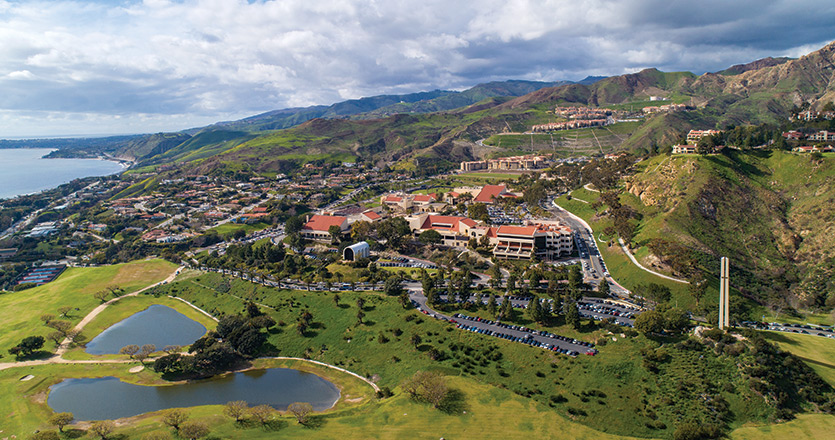
Perched on bluffs overlooking the Pacific in Malibu, Pepperdine University offers an education that is as much about the view as it is about the view of the world. This private Christian institution, affiliated with the Churches of Christ, blends rigorous academics in business and communications with a distinctively sunny, service-oriented, and conservative-leaning campus culture. It's a place where spiritual life is woven into the fabric of daily routines, where the student body skews affluent and preppy, and where the staggering natural beauty of the location is a central character in the college experience.
Admission requirements
Test-optional — scores considered if submitted
Required
High school transcript
Grade point average
Letters of recommendation
TOEFL (non-native English)
Considered (not required)
Test scores (SAT/ACT)
Source: IPEDS Admissions survey (2022) via Urban Institute. Covers formal factors only — it does not reflect essays, extracurriculars, or other holistic criteria.
More details
Undergrad enrollment
3,553
In-state tuition
$69,918
Out-of-state tuition
$69,918
Campus Vibe
Preppy, affluent, conservative Christian
Student Safety
99% feel extremely safe
Graduation Rate
83%
Most Popular Majors
Business, Communications, Social Sciences
Early Action Deadline
November 1
Median Earnings (10yr)
$82,939
Outcomes & value
Outcomes & value
Median earnings (10 yr)
$82,939
Value (earnings ÷ net price)
1.4×
Median debt at graduation
$23,510
Graduation rate
83%
First-year retention
88%
Reducing loan balance (3 yr)
74%
Pell (lower-income) share
20%
First-gen share (among federal-aid recipients)
18%
Financial health
2.7 / 3.0Meets the federal financial-responsibility standard
U.S. Dept. of Education Financial Responsibility Composite Score (FY2022-23). Scale −1.0 to 3.0; ≥1.5 meets the standard. Reported for private nonprofit & for-profit institutions only — public universities are state-backed and not scored, so this is a stability signal, not a ranking.
Top-earning majors
Median earnings by field of study (highest credential), ~2 years after completion.
Accounting and Related Services$62,508
International Business$58,673
Business Administration, Management and Operations$57,770
Finance and Financial Management Services$57,318
Economics$47,260
Political Science and Government$46,478
Applicants here also applied to
The schools that most often appear alongside Pepperdine on applicants’ lists, from our self-reported outcomes corpus.
Co-application frequency from self-reported results — directional peer discovery, not a recommendation.
Campus & location
Campus safety
On-campus violent crimes (2024)
8
Per 1,000 students
0.89
On-campus criminal offenses classed as violent (murder/non-negligent manslaughter, rape, robbery, aggravated assault) for the most recent reported year. Source: U.S. Dept. of Education Campus Safety and Security (Clery Act). Counts reflect what’s reported to the school, and urban campuses often report more partly due to non-student incidents nearby — read alongside campus size and setting, not as a standalone safety verdict.
Climate
Pleasant days / yr
252
Summer high
79°F
Winter low
48°F
Annual rain
19.2"
Natural-hazard risk
Very High
Pleasant days counts days per year with a mean temperature of 55–75°F, a high at or below 90°F, a low at or above 45°F, and little precipitation — a transparent comfort measure, not a weighting we invented. Computed from Open-Meteo ERA5 daily history (2019–2023). Natural-hazard risk is the county’s composite rating from the FEMA National Risk Index.
Deep dive — research, future-scholar output & economic mobility▾
Research output
Institutional h-index
176
Scholarly works
8,501
Institutional research volume and impact from OpenAlex. The h-index reflects large research universities and will be low for teaching-focused liberal-arts colleges — not a measure of undergraduate quality.
Economic mobility
Mobility rate
1.9%
Bottom → top quintile
43%
From bottom quintile
4%
Mobility rate = the share of students who both start in the bottom household-income quintile and reach the top quintile; bottom → top is that chance conditional on starting at the bottom. Source: Opportunity Insights Mobility Report Cards (Chetty, Friedman, Saez, Turner & Yagan). Reflects 1980–82 birth cohorts, so it’s directional, not current.
Quick answers
What is the acceptance rate at Pepperdine University?
Pepperdine University's acceptance rate is approximately 63% (Malibu, CA), based on the most recent figures we compiled from public and primary sources.
What SAT score do you need for Pepperdine University?
Admitted students at Pepperdine University typically score 1290–1450 on the SAT (the middle-50% range). Scores outside this band are still admitted, especially with strong applications.
How much does Pepperdine University cost?
At Pepperdine University, the average net price (after aid) is about $58,098 per year. Actual cost varies with financial aid and residency.
How many undergraduates attend Pepperdine University?
Pepperdine University enrolls approximately 3,553 undergraduate students.
Where is Pepperdine University located?
Pepperdine University is located in Malibu, CA.
Admissions
Pepperdine's admissions process is selective but not hyper-competitive, positioning it as a reach school for many but not an impossibility. The university is , accepting the Common Application, and does not offer a binding Early Decision program—only Early Action with a November 1 deadline for a decision by January 10. While the overall admit rate is moderate, the competition for a spot in the freshman class is real; one acceptance letter noted the university reviewed "over 12,370 remarkable applications for 950 openings." The admitted student profile is strong, with a middle 50% SAT range of 1290–1450 and an average GPA around 3.61. Notably, the rate—the percentage of admitted students who enroll—is reported to be low, around 12%, indicating that many admitted students choose other options. The suggests the university considers a range of factors in admissions, though the specific weight given to 'demonstrated interest' is not detailed in the provided sources.
Application Platform: Common Application
Testing Policy: Test-optional (for 2025-26 cycle)
Early Option: Early Action (non-binding), deadline November 1
Regular Decision Deadline: January 15
Admitted Student Profile: Mid-50% SAT: 1290–1450; average GPA ~3.61
Earnings = median of students working ~10 years after entry; debt = median of graduates. Value divides 10-yr earnings by one year’s net price — read it as earnings per dollar of annual cost, not a full lifetime ROI; it favors lower-cost schools. Source: U.S. Dept. of Education College Scorecard. Figures lag ~2 years and reflect all students, not your intended major.
Public Relations, Advertising, and Applied Communication$46,156
Liberal Arts and Sciences, General Studies and Humanities$45,696
Source: U.S. Dept. of Education College Scorecard (field-of-study earnings). Figures cover graduates who received federal aid and lag ~2 years; not all programs report data.
Pepperdine is composed of six distinct schools, with Seaver College serving as the undergraduate liberal arts core. The academic environment is rigorous, taught by distinguished faculty, and is recognized for several standout programs. The most popular majors consistently cluster in business and communications, reflecting the university's strengths and student interests. According to U.S. News, the top majors include:
Business, Management, Marketing, and Related Support Services
Communication, Journalism, and Related Programs
Social Sciences
Psychology
Parks, Recreation, Leisure, Fitness, and Kinesiology
Other sources note particular popularity in Business Administration and Management, Psychology, and Public Relations. The curriculum is designed to develop leadership skills, and the university offers a range of full- and part-time bachelor's degree programs. The undergraduate experience is comprehensive, with resources and opportunities framed within the institution's Christian mission.
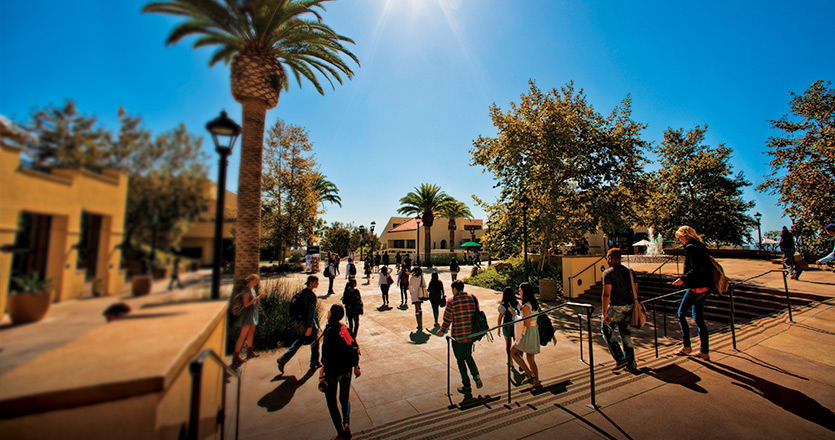
Life at Pepperdine is defined by its breathtaking coastal setting, close-knit community, and pervasive Christian identity. The campus vibe is often described as preppy, affluent, and conservative. A candid take from College Confidential summarizes it as "a perfect college for white, upper class, preppy, WASPY, conservative, Protestant religious types who don't mind retiring at 10 pm every night," which, while reductive, points to real cultural currents. The religious aspect is a central feature, encompassing rich spiritual opportunities through the Churches of Christ affiliation; some students on Reddit have questioned if it ever feels overbearing, indicating it's a noticeable and active part of the environment.
Student life is structured around involvement: academic clubs, student organizations, cultural events, and athletics foster connection. A remarkable 99% of students report feeling extremely safe and secure on campus. The university promotes a life rich in traditions and daily opportunities for engagement, from campus events to simply enjoying the iconic Malibu backdrop. It's a sheltered, beautiful, and intentional community where the Pacific Ocean is the default backdrop for everything from studying to socializing.
Pepperdine graduates enjoy strong post-graduation outcomes, with a track record of timely degree completion and successful career launch. The university's six-year graduation rate is a solid 84%, a figure that has seen slight fluctuation but remains a key indicator of student success and support. For the most recent graduating class surveyed, an impressive 96% of graduates achieved positive outcomes within six months of graduation. Of the 82.4% who had settled into a next step within that timeframe:
56% were employed
24% were continuing their education
Approximately 1% were engaged in volunteer service or military service
Alumni earnings data varies by source, with early career averages reported around $54,000—which College Factual notes is about $5,000 better than expected given the mix of majors. The university actively tracks and promotes these 'Success After Seaver' outcomes, underscoring a institutional commitment to tangible results beyond the diploma.
Attending Pepperdine is a significant financial investment, with a high sticker price partially offset by institutional aid. The average after aid and scholarships is $58,098. A majority of students (54.21%) receive financial aid, with the average aid package totaling $44,096. Financial support comes in several forms:
Institutional Scholarships: Awarded based on merit, academic achievement, leadership, or specific talents. These do not require repayment and are not need-based.
Need-Based Aid: The university offers need-based grants, such as the Pepperdine Grant, determined by the FAFSA.
Federal Loans: Both subsidized (for students with demonstrated need) and unsubsidized (available to all students) Direct Loans are part of the aid landscape.
Private Loans: An option for covering remaining costs after exhausting other aid.
The university provides a Net Price Calculator to help families estimate their individual cost. It's important to note that while exists, a significant portion of institutional money is allocated to merit-based scholarships, and the university does not advertise a no-loan policy for low-income students.
Pepperdine is singular. It's not just a university with an ocean view; the Malibu campus is an integral, defining element of its identity, shaping a serene, privileged, and physically stunning collegiate experience. Its commitment to the Christian mission, specifically through the Churches of Christ, is not a sidebar but a core curriculum and community principle, attracting students seeking an education infused with faith and service. This combination creates a specific niche: a conservative, affluent, and service-minded student body pursuing top-tier programs in business and communications within one of the most enviable geographic settings in American higher education. It's for students who want rigorous academics without cutthroat competition, a tight-knit community with a strong moral compass, and the daily privilege of watching the sun set over the Pacific from their campus.
Pepperdine University seal · sourcePepperdine University Malibu Campus | About Us | Pepperdine University · sourceSchedule a Pepperdine Campus Tour | About Us | Pepperdine University · sourceLocations and Maps | Christian University | Pepperdine University · source