Admit rate has ranged 18%–26% over the last 5 years — notably volatile, though the latest figure above (16%) falls outside that window. Source: IPEDS via Urban Institute.
Acceptance & SAT from Common Data Set / IPEDS; net price, earnings & graduation from the U.S. Dept. of Education College Scorecard. Figures lag ~1–2 years — verify with the school.
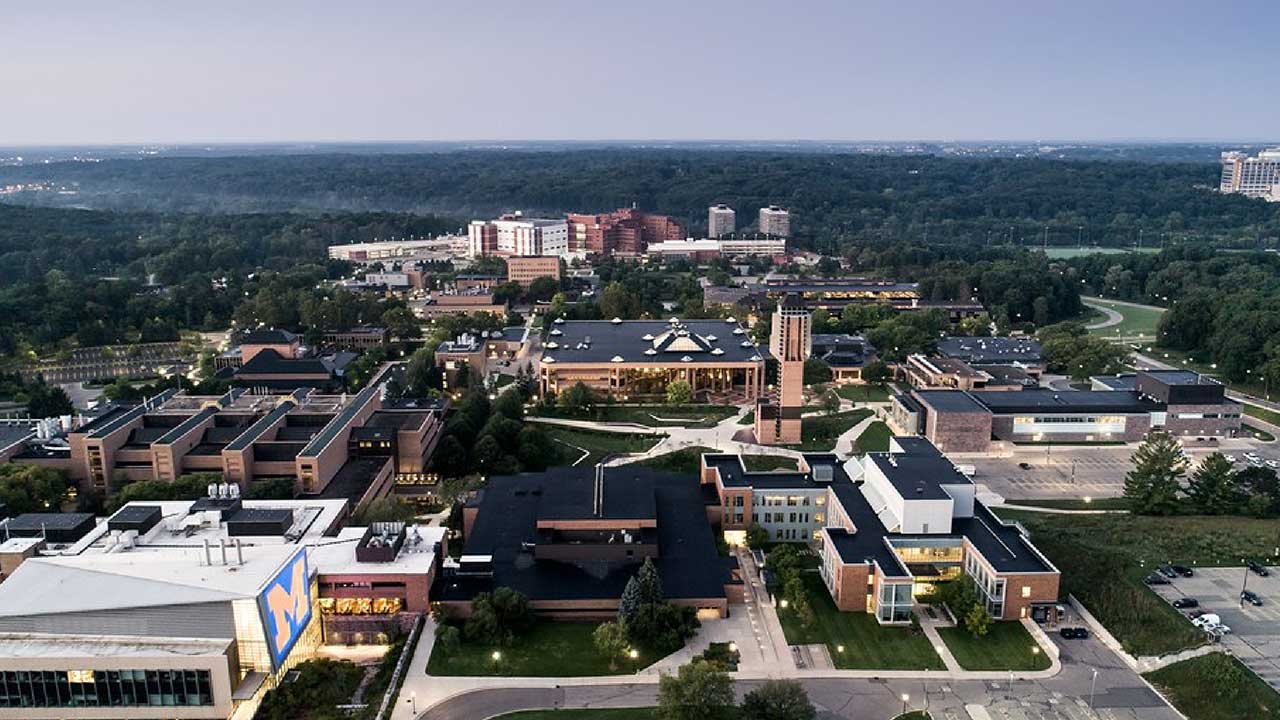
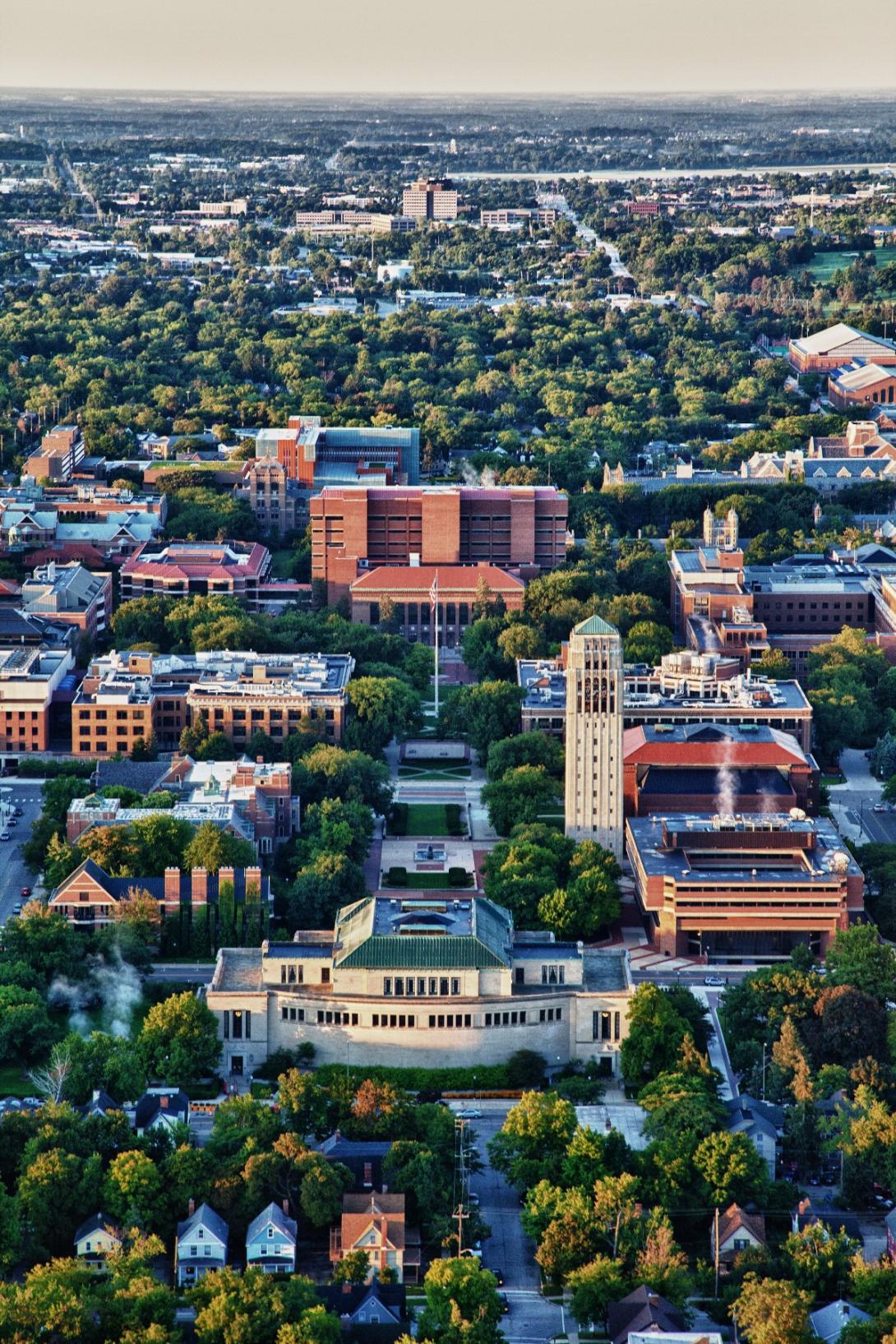
The University of Michigan-Ann Arbor is a sprawling, powerhouse public research university that operates with the ambition and selectivity of an Ivy. It’s a place where world-class academics in engineering, business, and the arts collide with a fiercely loyal, football-obsessed student culture in a quintessential college town. You come here not for a cozy, curated experience, but for immense scale, relentless school spirit, and a degree that carries serious weight from Wall Street to Silicon Valley.
Admission requirements
Test-optional — scores considered if submitted
Required
High school transcript
Letters of recommendation
TOEFL (non-native English)
Considered (not required)
Grade point average
Class rank
Test scores (SAT/ACT)
College-prep program
Source: IPEDS Admissions survey (2022) via Urban Institute. Covers formal factors only — it does not reflect essays, extracurriculars, or other holistic criteria.
More details
Undergrad enrollment
34,177
In-state tuition
$17,736
Out-of-state tuition
$60,946
Graduation Rate
93%
Meets Full Need
Yes, for Michigan residents
Demonstrated Interest
Not considered
Average Time to Degree
4.1 years
Median Earnings (10yr)
$83,648
First-Year Retention Rate
97%
Outcomes & value
Outcomes & value
Median earnings (10 yr)
$83,648
Value (earnings ÷ net price)
6.4×
Median debt at graduation
$19,500
Graduation rate
93%
First-year retention
97%
Reducing loan balance (3 yr)
79%
Pell (lower-income) share
18%
First-gen share (among federal-aid recipients)
21%
Top-earning majors
Median earnings by field of study (highest credential), ~2 years after completion.
Computer and Information Sciences, General$94,281
Business Administration, Management and Operations$83,177
Electrical, Electronics, and Communications Engineering$82,123
Computer Engineering$79,389
Industrial Engineering$77,235
Information Science/Studies
Applicants here also applied to
The schools that most often appear alongside Michigan on applicants’ lists, from our self-reported outcomes corpus.
On-campus criminal offenses classed as violent (murder/non-negligent manslaughter, rape, robbery, aggravated assault) for the most recent reported year. Source: U.S. Dept. of Education Campus Safety and Security (Clery Act). Counts reflect what’s reported to the school, and urban campuses often report more partly due to non-student incidents nearby — read alongside campus size and setting, not as a standalone safety verdict.
Climate
Pleasant days / yr
93
Summer high
81°F
Winter low
22°F
Annual rain
36.8"
Annual snow
31.8"
Natural-hazard risk
Relatively Moderate
Pleasant days counts days per year with a mean temperature of 55–75°F, a high at or below 90°F, a low at or above 45°F, and little precipitation — a transparent comfort measure, not a weighting we invented. Computed from Open-Meteo ERA5 daily history (2019–2023). Natural-hazard risk is the county’s composite rating from the FEMA National Risk Index.
Deep dive — research, future-scholar output & economic mobility▾
Future-scholar output
Science & engineering PhDstop 3 nationally
Humanities & social-science PhDstop 4 nationally
Share of this school’s graduates who go on to earn research doctorates (2010–20), by national rank and per-capita yield (NSF institutional-yield ratio). A signal of a research-oriented student culture — not a causal promise, since it partly reflects who enrolls. Only top producers appear. Source: NSF NCSES, Baccalaureate Origins of U.S. Research Doctorate Recipients.
Economic mobility
Mobility rate
1.5%
Bottom → top quintile
50%
From bottom quintile
3%
Mobility rate = the share of students who both start in the bottom household-income quintile and reach the top quintile; bottom → top is that chance conditional on starting at the bottom. Source: Opportunity Insights Mobility Report Cards (Chetty, Friedman, Saez, Turner & Yagan). Reflects 1980–82 birth cohorts, so it’s directional, not current.
Quick answers
What is the acceptance rate at University of Michigan-Ann Arbor?
University of Michigan-Ann Arbor's acceptance rate is approximately 16% (Ann Arbor, MI), based on the most recent figures we compiled from public and primary sources.
What SAT score do you need for University of Michigan-Ann Arbor?
Admitted students at University of Michigan-Ann Arbor typically score 1360–1530 on the SAT (the middle-50% range). Scores outside this band are still admitted, especially with strong applications.
How much does University of Michigan-Ann Arbor cost?
At University of Michigan-Ann Arbor, the average net price (after aid) is about $13,138 per year. Actual cost varies with financial aid and residency.
How many undergraduates attend University of Michigan-Ann Arbor?
University of Michigan-Ann Arbor enrolls approximately 34,177 undergraduate students.
Where is University of Michigan-Ann Arbor located?
University of Michigan-Ann Arbor is located in Ann Arbor, MI.
Admissions
Gaining admission to Michigan is a fiercely competitive endeavor, placing it among the most selective public universities in the country. The university evaluates applicants holistically, with the rigor of a student's secondary school record and their academic GPA marked as "Very Important" factors in the . While the overall is highly competitive, the university has recently introduced an Early Decision option, a strategic shift that is projected to further concentrate the applicant pool and potentially lower the overall admit rate. The middle 50% of admitted students who submit scores are exceptionally strong, with SAT scores ranging from 1360 to 1530 and ACT scores from 31 to 35. The university states that demonstrated interest is not considered in the admissions process, focusing the evaluation squarely on the applicant's academic and personal record.
Earnings = median of students working ~10 years after entry; debt = median of graduates. Value divides 10-yr earnings by one year’s net price — read it as earnings per dollar of annual cost, not a full lifetime ROI; it favors lower-cost schools. Source: U.S. Dept. of Education College Scorecard. Figures lag ~2 years and reflect all students, not your intended major.
$76,460
Mechanical Engineering$76,070
Chemical Engineering$75,104
Source: U.S. Dept. of Education College Scorecard (field-of-study earnings). Figures cover graduates who received federal aid and lag ~2 years; not all programs report data.
Michigan’s academic offering is defined by staggering breadth and depth. The university offers more than 250 degree programs across its 19 schools and colleges, providing an almost limitless menu of intellectual pursuits. This scale allows for powerhouse departments that are consistently ranked among the nation's best. The most popular majors reflect both student demand and institutional strength: Computer and Information Sciences, Economics, and Business Administration top the list. Students frequently cite the quality of specific schools—like the Ross School of Business and the College of Engineering—as primary reasons for choosing Michigan, drawn by the faculty, resources, and career pipelines these units provide. The academic culture is one of high achievement; the university reports that 97% of first-year students return for their sophomore year, a testament to both student satisfaction and the supportive academic infrastructure. It’s an environment where you can study virtually anything, but you’re expected to navigate its vastness with initiative and drive.
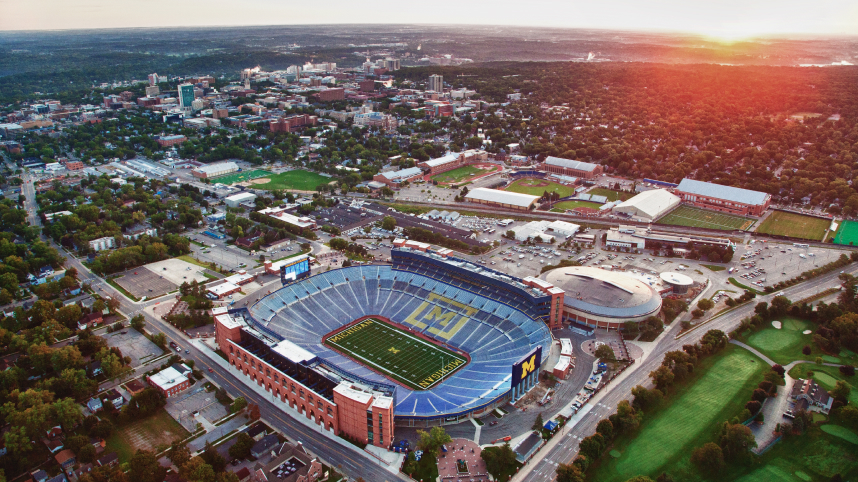
Life at Michigan is a masterclass in the big, vibrant, all-encompassing college experience. The campus is described by students as welcoming, friendly, and secure despite its large size. The university actively cultivates this environment through a dedicated Student Life division that provides resources for housing, health, wellbeing, and a packed calendar of events. The arts and culture scene is particularly rich, with performances, museums, and galleries woven into the fabric of campus. However, the true heartbeat of student life is the profound sense of community and school spirit, famously centered around Michigan Football at the Big House. This spirit creates a powerful network; as one student noted, 'Michigan alumni like to help their own,' making the campus an excellent place for both social and professional networking. The trade-off for this epic scale is that students must be proactive to find their niche and build connections, but the opportunities for immersion—in academics, clubs, sports, and the vibrant city of Ann Arbor—are virtually endless.
A Michigan degree is a powerful launchpad, delivering outstanding graduation rates and strong career trajectories. The university's graduation rate is exceptionally high, placing it in the top tier nationally. This efficiency is underscored by an average time to degree of just over four years. The career outcomes are equally impressive. Alumni report high levels of career satisfaction, and data shows that Michigan graduates earn more than peers from other institutions. The value of the degree extends well beyond the first job; the median earnings for graduates a decade after entry are significant, reflecting the long-term ROI of a Michigan education. In short, students who navigate Michigan's rigorous academics are rewarded with a credential that commands respect in the job market and sets them on a path to financial and professional success.
As a premier public university, Michigan strives to make its education accessible through a robust financial aid program, though its policies differ significantly for in-state and out-of-state students. The university has made a clear commitment to meet the full demonstrated financial need of admitted Michigan residents. For these students, aid packages are primarily need-based, with the university noting that scholarships for admitted freshmen 'tend to be need based, not merit based.' The —the average cost after grants and scholarships—varies dramatically by family income, with lower-income families often seeing a substantially reduced cost. It is critical for all applicants to complete the FAFSA by the March 1 deadline to be considered for the full array of aid. While the university meets full need for residents, its policies for non-residents are different and loans may be a component of aid packages, meaning it is not considered a universal 'no-loan' institution for all students.
The University of Michigan-Ann Arbor stands out because it masterfully combines the heft and resources of a world-class research institution with the visceral, tradition-steeped soul of a classic American college. At peer public flagships, you often get one or the other. At Michigan, you get both at full volume. It’s a place where you can work in a top-five engineering lab by day and lose your voice screaming in a stadium of 110,000 by Saturday. This duality creates a unique culture of confident ambition—students here expect to compete at the highest level academically and professionally, but they do so within a community bound by an almost tribal loyalty. The education is not handed to you; you have to navigate its vastness and claim your opportunities. But for those who do, the payoff is a network and a brand (the Block 'M' is instantly recognizable globally) that opens doors for a lifetime. It’s the definitive 'public Ivy,' not just for its selectivity, but for producing graduates who carry its particular blend of brilliance and blue-collar grit into every field imaginable.
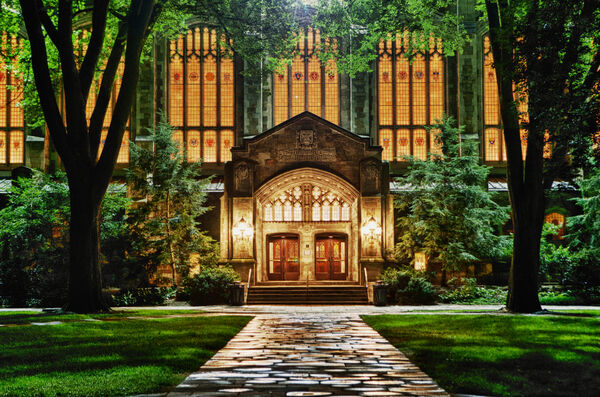
University of Michigan-Ann Arbor seal · sourceExplore the Ann Arbor Campus · sourceHistory | Campus Information · sourceExplore the Ann Arbor Campus · source