Admit rate has ranged 50%–59% over the last 5 years — notably volatile, though the latest figure above (62%) falls outside that window. Source: IPEDS via Urban Institute.
Acceptance & SAT from Common Data Set / IPEDS; net price, earnings & graduation from the U.S. Dept. of Education College Scorecard. Figures lag ~1–2 years — verify with the school.
Sarah Lawrence College is not a place for the intellectually passive. It’s a fiercely individualistic, seminar-driven liberal arts enclave in Bronxville, New York, where the traditional curriculum is replaced by a student-designed 'conference' system of one-on-one tutorials. The vibe is creative, introspective, and often described as cliquey, attracting self-starters who thrive on academic freedom and deep, interdisciplinary inquiry. Its outcomes are defined not by a single career pipeline, but by a high rate of graduate school attendance and alumni who pursue eclectic, self-directed paths.
Admission requirements
Test-optional — scores considered if submitted
Required
High school transcript
Grade point average
Letters of recommendation
TOEFL (non-native English)
Considered (not required)
Class rank
Test scores (SAT/ACT)
College-prep program
Demonstrated competencies
Source: IPEDS Admissions survey (2022) via Urban Institute. Covers formal factors only — it does not reflect essays, extracurriculars, or other holistic criteria.
More details
Undergrad enrollment
1,530
In-state tuition
$66,862
Out-of-state tuition
$66,862
No-Loan Policy
No
Meets Full Need
For a portion of recipients
Demonstrated Interest
Considered
Median Earnings (10yr)
$53,603
Graduation Rate (6-year)
71%
First-Year Retention Rate
84%
Average Financial Aid Package
>$45,000
Students Receiving SLC Grant/Scholarship
>80%
Outcomes & value
Outcomes & value
Median earnings (10 yr)
$53,603
Value (earnings ÷ net price)
1.3×
Median debt at graduation
$27,000
Graduation rate
71%
First-year retention
87%
Reducing loan balance (3 yr)
83%
Pell (lower-income) share
12%
First-gen share (among federal-aid recipients)
11%
Financial health
2.3 / 3.0Meets the federal financial-responsibility standard
U.S. Dept. of Education Financial Responsibility Composite Score (FY2022-23). Scale −1.0 to 3.0; ≥1.5 meets the standard. Reported for private nonprofit & for-profit institutions only — public universities are state-backed and not scored, so this is a stability signal, not a ranking.
Top-earning majors
Median earnings by field of study (highest credential), ~2 years after completion.
Liberal Arts and Sciences, General Studies and Humanities$21,873
Source: U.S. Dept. of Education College Scorecard (field-of-study earnings). Figures cover graduates who received federal aid and lag ~2 years; not all programs report data.
Applicants here also applied to
The schools that most often appear alongside Sarah Lawrence College on applicants’ lists, from our self-reported outcomes corpus.
Co-application frequency from self-reported results — directional peer discovery, not a recommendation.
Campus & location
Campus safety
On-campus violent crimes (2024)
7
Per 1,000 students
4.01
On-campus criminal offenses classed as violent (murder/non-negligent manslaughter, rape, robbery, aggravated assault) for the most recent reported year. Source: U.S. Dept. of Education Campus Safety and Security (Clery Act). Counts reflect what’s reported to the school, and urban campuses often report more partly due to non-student incidents nearby — read alongside campus size and setting, not as a standalone safety verdict.
Climate
Pleasant days / yr
95
Summer high
83°F
Winter low
29°F
Annual rain
54.8"
Annual snow
21"
Natural-hazard risk
Relatively High
Pleasant days counts days per year with a mean temperature of 55–75°F, a high at or below 90°F, a low at or above 45°F, and little precipitation — a transparent comfort measure, not a weighting we invented. Computed from Open-Meteo ERA5 daily history (2019–2023). Natural-hazard risk is the county’s composite rating from the FEMA National Risk Index.
Deep dive — research, future-scholar output & economic mobility▾
Research output
Institutional h-index
72
Scholarly works
1,386
Institutional research volume and impact from OpenAlex. The h-index reflects large research universities and will be low for teaching-focused liberal-arts colleges — not a measure of undergraduate quality.
Share of this school’s graduates who go on to earn research doctorates (2010–20), by national rank and per-capita yield (NSF institutional-yield ratio). A signal of a research-oriented student culture — not a causal promise, since it partly reflects who enrolls. Only top producers appear. Source: NSF NCSES, Baccalaureate Origins of U.S. Research Doctorate Recipients.
Economic mobility
Mobility rate
1.2%
Bottom → top quintile
Quick answers
What is the acceptance rate at Sarah Lawrence College?
Sarah Lawrence College's acceptance rate is approximately 62% (Bronxville, NY), based on the most recent figures we compiled from public and primary sources.
What SAT score do you need for Sarah Lawrence College?
Admitted students at Sarah Lawrence College typically score 1240–1430 on the SAT (the middle-50% range). Scores outside this band are still admitted, especially with strong applications.
How much does Sarah Lawrence College cost?
At Sarah Lawrence College, the average net price (after aid) is about $41,437 per year. Actual cost varies with financial aid and residency.
How many undergraduates attend Sarah Lawrence College?
Sarah Lawrence College enrolls approximately 1,530 undergraduate students.
Where is Sarah Lawrence College located?
Sarah Lawrence College is located in Bronxville, NY.
Admissions
Sarah Lawrence operates with a moderately selective admissions process, where the academic narrative and intellectual fit often carry more weight than sheer stats alone. The college reports an of 62%, with admitted students typically presenting strong academic records—about 60% of admitted students have a GPA of 3.75 or higher. Standardized testing is optional, but for those who submit, the middle 50% SAT range is 1240–1430 and the ACT range is 28–31.
The application calendar offers multiple decision plans. Early Decision, which is binding, historically shows a significantly higher acceptance rate—sources cite rates around 50% to 65.89% for recent cycles—compared to the overall pool. Early Action is a non-binding option where applicants receive a decision by late December. Demonstrated interest is a factor in admissions, as indicated by its classification in the .
—the percentage of admitted students who enroll—is a critical metric for understanding the college's draw. The admissions office must convert a substantial number of admits to build a class, reflecting the niche appeal of its distinctive educational model.
Earnings = median of students working ~10 years after entry; debt = median of graduates. Value divides 10-yr earnings by one year’s net price — read it as earnings per dollar of annual cost, not a full lifetime ROI; it favors lower-cost schools. Source: U.S. Dept. of Education College Scorecard. Figures lag ~2 years and reflect all students, not your intended major.
34%
From bottom quintile
4%
Mobility rate = the share of students who both start in the bottom household-income quintile and reach the top quintile; bottom → top is that chance conditional on starting at the bottom. Source: Opportunity Insights Mobility Report Cards (Chetty, Friedman, Saez, Turner & Yagan). Reflects 1980–82 birth cohorts, so it’s directional, not current.
The academic engine at Sarah Lawrence is its signature seminar-and-conference system, a radical departure from the lecture-hall model. Every course is a small seminar, and each seminar is paired with a bi-weekly, one-on-one 'conference' project. In these private meetings with their professor, students design an original research or creative project that deepens the seminar work—this is where the education becomes intensely personalized.
There are no traditional majors. Instead, students craft their own course of study by choosing from over 50 disciplines organized into four broad, interdisciplinary areas: Creative & Performing Arts; History & the Social Sciences; Humanities; and Natural Science & Mathematics. The expectation is to combine fields, leading to truly interdisciplinary work. The culture prizes intellectual rigor, academic curiosity, and creativity above all. This model demands a high degree of self-motivation and intellectual independence; it’s ideal for the student who has a burning question they want to pursue, and less ideal for those who prefer a structured, predefined path.
The faculty are hired first and foremost as teachers and mentors for this system. The student-faculty ratio supports the intensive conference work, fostering close mentoring relationships that often define the Sarah Lawrence experience.
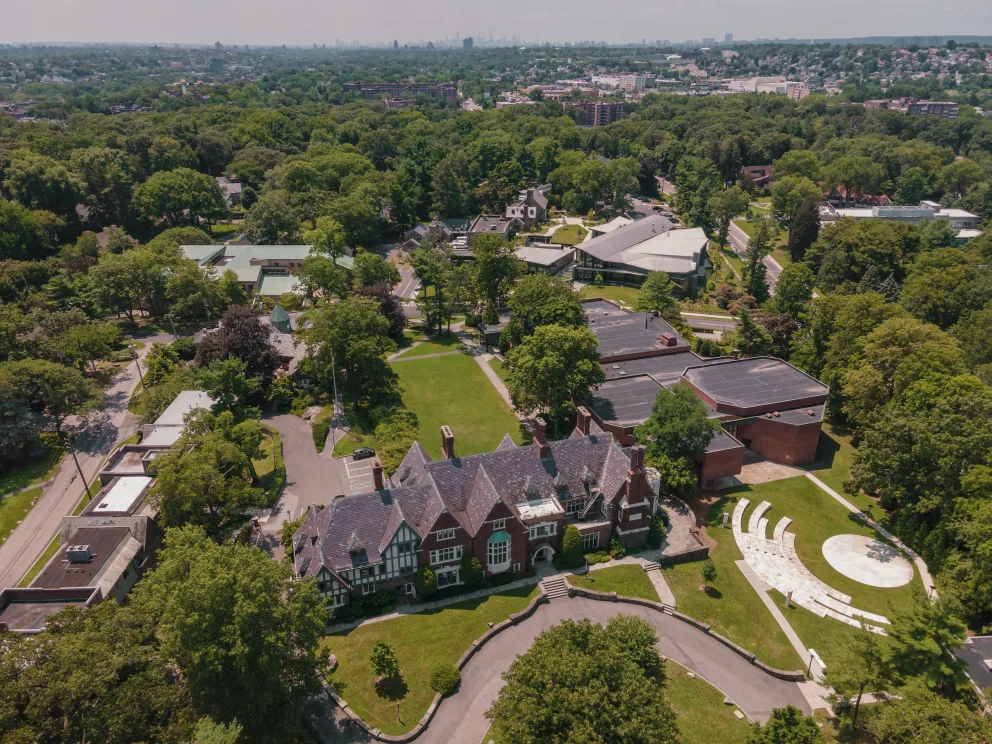
Life on the wooded, suburban campus in Bronxville (just 30 minutes from Manhattan) reflects its academic intensity. The student community is often described as diverse, creative, and passionately engaged in their work, but also introverted and sometimes cliquey. Socializing can be a challenge for some, as the culture leans more toward deep conversations in dorm rooms or the library than large-scale campus events. It’s a place where friendships are forged through shared intellectual passions.
The college actively works to foster a sense of belonging and community through orientation and ongoing programming, aiming to support students from admission through graduation. Student life is framed around collaboration, community building, leadership, and engagement. The proximity to New York City is a defining asset, offering unparalleled access to internships, museums, performances, and a counterpoint to the insular campus vibe. Students learn to balance the freedom and responsibility of their self-directed academics with being part of a close-knit, creative community.
Sarah Lawrence measures success not in uniform starting salaries, but in the advanced degrees and eclectic career paths its graduates pursue. The six-year graduation rate is 71%, which places it within the top 25% of colleges nationally. The college reports that its graduates enroll in graduate programs at higher-than-average rates compared to peer institutions.
Career trajectories are exceptionally varied, reflecting the individualized nature of the education. Alumni successfully pursue a wide range of fields in the arts, writing, academia, social sciences, and advocacy. The median earnings ten years after entry are $53,603. The outcome is less about funneling students into specific industries and more about equipping them with the research, writing, and critical thinking skills to forge their own unique professional and intellectual journeys.
As a private institution, Sarah Lawrence carries a high sticker price, but it mitigates this with substantial institutional aid. The average financial aid package is more than $45,000, and over 80% of students receive a Sarah Lawrence grant or scholarship. The average after aid is $41,437.
Financial aid is need-based, with eligibility determined by a family's demonstrated financial need. The college does not advertise a universal 'no-loan' policy where loans are eliminated from aid packages for all qualifying students. Instead, aid packages typically include a combination of grants, scholarships, and loans. Students and families should use the Net Price Calculator for an early estimate, as the actual composition of aid can vary significantly. The college meets the full demonstrated need for a portion of its aid recipients, but not for all.
Sarah Lawrence stands out as one of the last bastions of pure, unadulterated liberal arts pedagogy in the United States. Its conference system is not an add-on or an honors program—it is the entire curriculum. This creates an educational experience of unparalleled depth and personalization, but it also acts as a natural filter. It attracts and cultivates a specific type of student: the autodidact, the interdisciplinary thinker, the artist-scholar who is comfortable with ambiguity and self-direction.
Its distinctiveness comes with trade-offs. The lack of conventional majors and grades (narrative evaluations are used instead) can require extra explanation to graduate schools or employers. The social scene is intimate, not rah-rah. Yet, for the right student—one who is intellectually voracious, self-possessed, and eager to build a unique education in close collaboration with faculty—Sarah Lawrence offers a transformative experience that few other colleges can match. It’s less a factory for credentials and more a greenhouse for singular minds.
Sarah Lawrence College seal · sourceAbout Sarah Lawrence College | Sarah Lawrence College · sourceSarah Lawrence College - Profile, Rankings and Data | US News Best Colleges · sourceSarah Lawrence College | Bronxville NY · source