Admit rate has ranged 38%–52% over the last 5 years — notably volatile, though the latest figure above (36%) falls outside that window. Source: IPEDS via Urban Institute.
Acceptance & SAT from Common Data Set / IPEDS; net price, earnings & graduation from the U.S. Dept. of Education College Scorecard. Figures lag ~1–2 years — verify with the school.
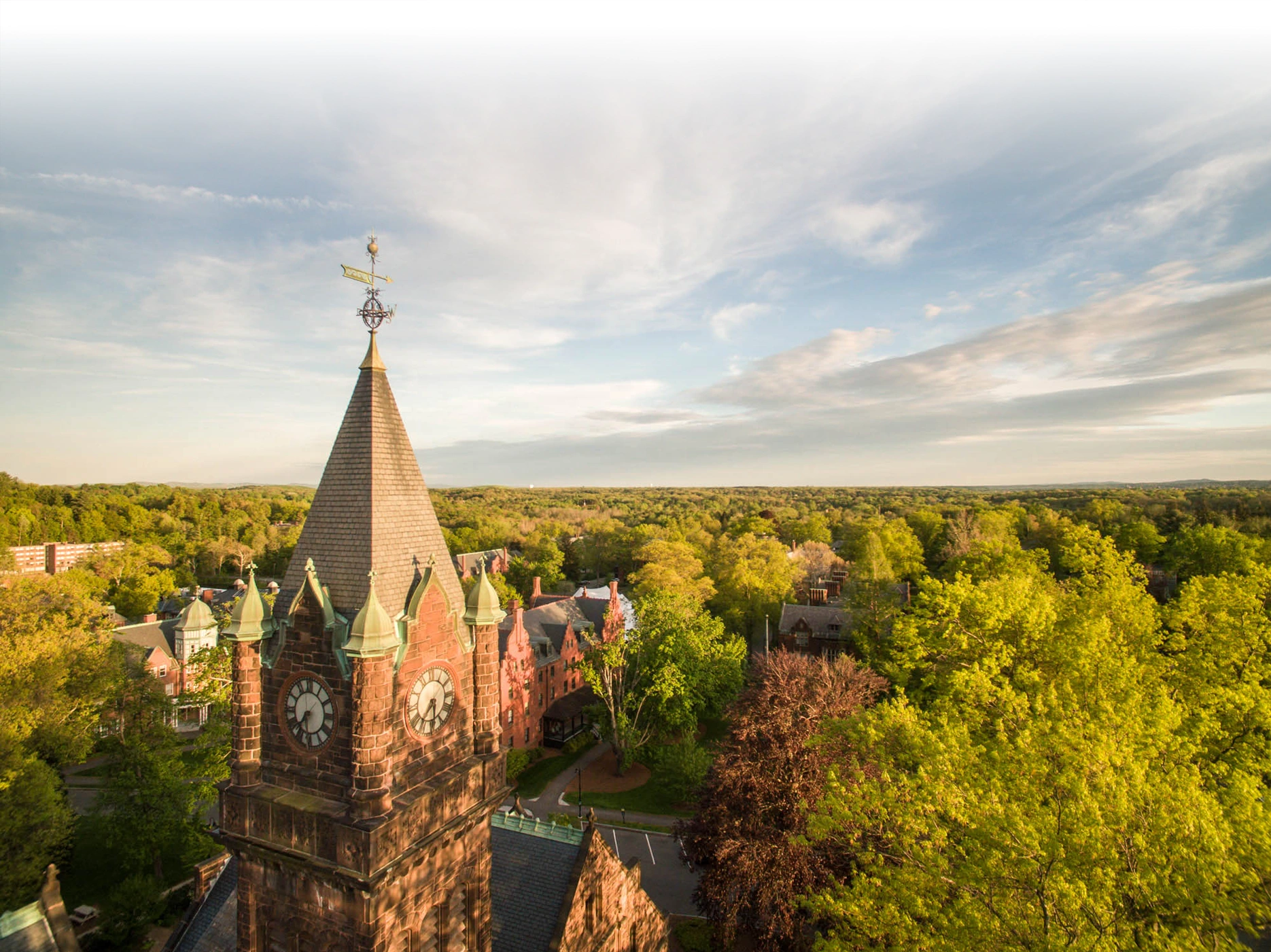
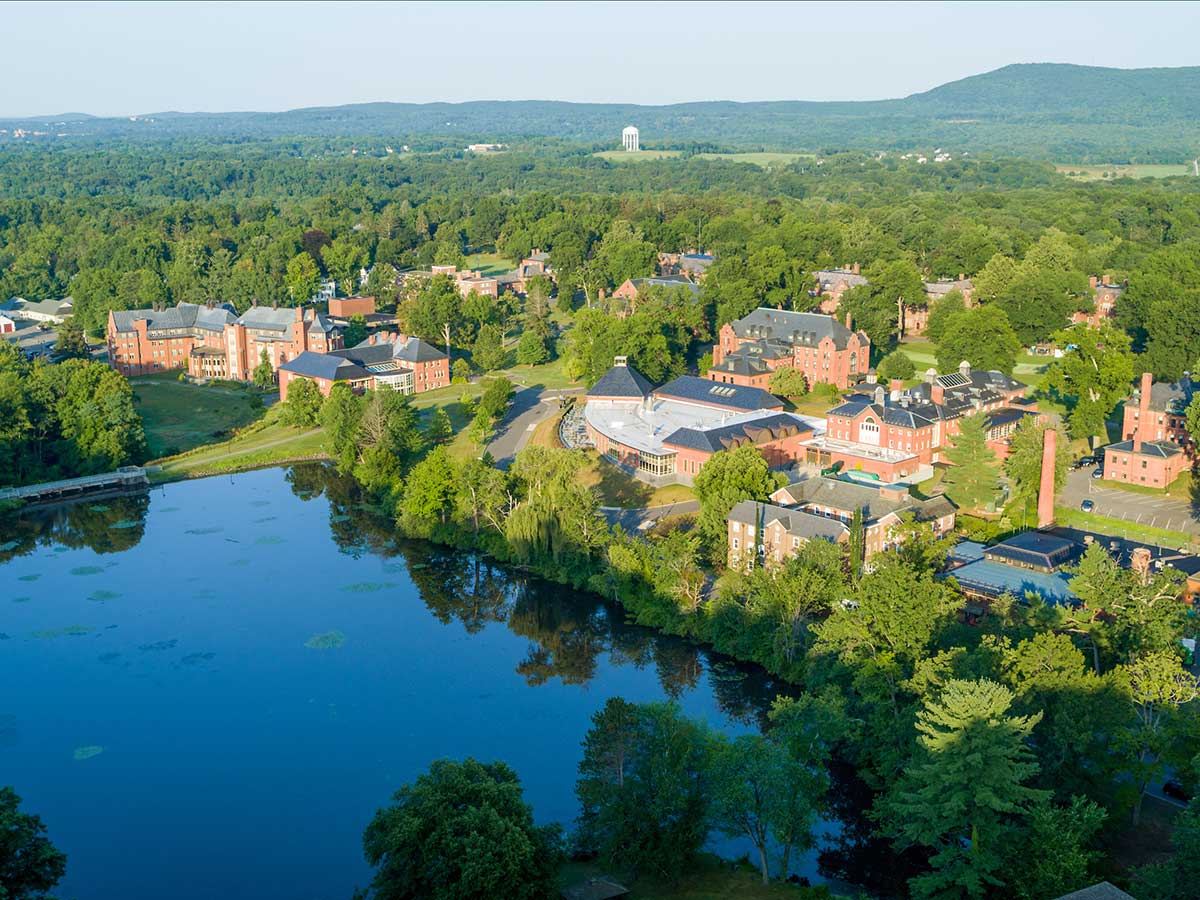
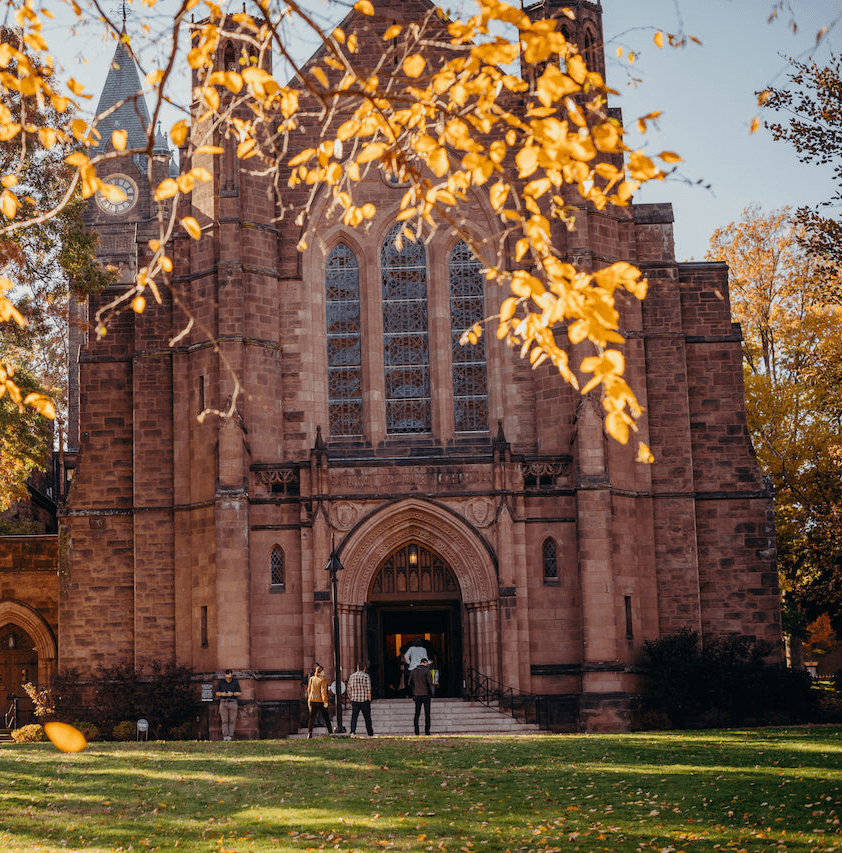
Mount Holyoke College isn't just a women's college; it's a fiercely intellectual, tradition-steeped liberal arts powerhouse with a pragmatic streak. Known for its rigorous science programs and a culture that champions independence, it offers a classic New England campus experience wrapped in a progressive, globally-minded community. The college's 'Mount Holyoke Commitment'—a no-tuition promise for many U.S. families—makes its distinctive education surprisingly accessible.
Admission requirements
Test-optional — scores considered if submitted
Required
High school transcript
Letters of recommendation
College-prep program
TOEFL (non-native English)
Considered (not required)
Grade point average
Class rank
Test scores (SAT/ACT)
Demonstrated competencies
Source: IPEDS Admissions survey (2022) via Urban Institute. Covers formal factors only — it does not reflect essays, extracurriculars, or other holistic criteria.
More details
Undergrad enrollment
2,169
In-state tuition
$67,018
Out-of-state tuition
$67,018
No-Loan Policy
Yes, incomes < $150k pay no tuition
Graduation Rate
84%
Meets Full Need
Yes
ED Share of Class
~72%
Demonstrated Interest
Not considered
Median Earnings (10yr)
$58,418
Outcomes & value
Outcomes & value
Median earnings (10 yr)
$58,418
Value (earnings ÷ net price)
2.2×
Median debt at graduation
$22,902
Graduation rate
84%
First-year retention
89%
Reducing loan balance (3 yr)
80%
Pell (lower-income) share
22%
First-gen share (among federal-aid recipients)
19%
Financial health
3.0 / 3.0Meets the federal financial-responsibility standard
U.S. Dept. of Education Financial Responsibility Composite Score (FY2022-23). Scale −1.0 to 3.0; ≥1.5 meets the standard. Reported for private nonprofit & for-profit institutions only — public universities are state-backed and not scored, so this is a stability signal, not a ranking.
Top-earning majors
Median earnings by field of study (highest credential), ~2 years after completion.
International Relations and National Security Studies$45,696
Sociology$43,798
Economics$38,289
Romance Languages, Literatures, and Linguistics$36,852
Education, Other$36,560
Political Science and Government$35,060
Applicants here also applied to
The schools that most often appear alongside Mount Holyoke on applicants’ lists, from our self-reported outcomes corpus.
Co-application frequency from self-reported results — directional peer discovery, not a recommendation.
Campus & location
Campus safety
On-campus violent crimes (2024)
2
Per 1,000 students
0.88
On-campus criminal offenses classed as violent (murder/non-negligent manslaughter, rape, robbery, aggravated assault) for the most recent reported year. Source: U.S. Dept. of Education Campus Safety and Security (Clery Act). Counts reflect what’s reported to the school, and urban campuses often report more partly due to non-student incidents nearby — read alongside campus size and setting, not as a standalone safety verdict.
Climate
Pleasant days / yr
86
Summer high
82°F
Winter low
23°F
Annual rain
53.1"
Annual snow
34.6"
Natural-hazard risk
Relatively Low
Pleasant days counts days per year with a mean temperature of 55–75°F, a high at or below 90°F, a low at or above 45°F, and little precipitation — a transparent comfort measure, not a weighting we invented. Computed from Open-Meteo ERA5 daily history (2019–2023). Natural-hazard risk is the county’s composite rating from the FEMA National Risk Index.
Deep dive — research, future-scholar output & economic mobility▾
Research output
Institutional h-index
186
Scholarly works
6,189
Institutional research volume and impact from OpenAlex. The h-index reflects large research universities and will be low for teaching-focused liberal-arts colleges — not a measure of undergraduate quality.
Share of this school’s graduates who go on to earn research doctorates (2010–20), by national rank and per-capita yield (NSF institutional-yield ratio). A signal of a research-oriented student culture — not a causal promise, since it partly reflects who enrolls. Only top producers appear. Source: NSF NCSES, Baccalaureate Origins of U.S. Research Doctorate Recipients.
Economic mobility
Quick answers
What is the acceptance rate at Mount Holyoke College?
Mount Holyoke College's acceptance rate is approximately 36% (South Hadley, MA), based on the most recent figures we compiled from public and primary sources.
What SAT score do you need for Mount Holyoke College?
Admitted students at Mount Holyoke College typically score 1380–1530 on the SAT (the middle-50% range). Scores outside this band are still admitted, especially with strong applications.
How much does Mount Holyoke College cost?
At Mount Holyoke College, the average net price (after aid) is about $26,441 per year. Actual cost varies with financial aid and residency.
How many undergraduates attend Mount Holyoke College?
Mount Holyoke College enrolls approximately 2,169 undergraduate students.
Where is Mount Holyoke College located?
Mount Holyoke College is located in South Hadley, MA.
Admissions
Mount Holyoke operates with a selective but accessible admissions process, where applying early can be a significant strategic advantage. The college is test-flexible, with only about a third of recent entering classes submitting SAT or ACT scores; for the class of 2029, that figure was 36%. The mean composite SAT score for the class of 2028 was 1453, with an ACT composite mean of 32. The admissions office does not consider demonstrated interest as part of its evaluation, focusing instead on academic record, recommendations, essays, and extracurricular involvement. A defining feature of the admissions landscape is the substantial advantage for Early Decision applicants. While the overall is selective, data suggests the Early Decision acceptance rate can be notably higher than the Regular Decision rate, with one analysis indicating an ED rate around 46% compared to a much lower RD rate. Furthermore, a significant portion of the incoming class—potentially just under 72%—is filled through Early Decision rounds, making the Regular Decision pool exceptionally competitive.
Earnings = median of students working ~10 years after entry; debt = median of graduates. Value divides 10-yr earnings by one year’s net price — read it as earnings per dollar of annual cost, not a full lifetime ROI; it favors lower-cost schools. Source: U.S. Dept. of Education College Scorecard. Figures lag ~2 years and reflect all students, not your intended major.
Anthropology
$32,925
Ethnic, Cultural Minority, Gender, and Group Studies$30,409
Source: U.S. Dept. of Education College Scorecard (field-of-study earnings). Figures cover graduates who received federal aid and lag ~2 years; not all programs report data.
Mobility rate = the share of students who both start in the bottom household-income quintile and reach the top quintile; bottom → top is that chance conditional on starting at the bottom. Source: Opportunity Insights Mobility Report Cards (Chetty, Friedman, Saez, Turner & Yagan). Reflects 1980–82 birth cohorts, so it’s directional, not current.
Academics
The academic core of Mount Holyoke is a rigorous, real-world-relevant liberal arts curriculum built on freedom and depth. Students choose from 48 departmental and interdepartmental majors, with particular strength in the sciences and psychology. The most popular majors reflect this blend: Experimental Psychology leads at 14%, followed by Computer Science and Biology/Biological Sciences (each at 8%), and English Language and Literature. The college explicitly promotes data science as a key offering. The atmosphere is described as one of "unprecedented opportunities in sciences" within a broader liberal arts framework, fostering a "VERY, VERY strong sense" of community and intellectual engagement. This creates an environment where students are encouraged to follow their interests across disciplines, supported by a faculty dedicated to undergraduate teaching.
Life on the scenic South Hadley campus is defined by a deep sense of community, over 100 student organizations, and rich traditions. The college fosters belonging through dedicated cultural and community centers, which serve as hubs for programming and connection around shared identities and new perspectives. Residential life is central, with a focus on creating a welcoming environment that makes campus feel like home. Students build their social lives through a wide array of activities: performances, parties, residence hall events, athletic teams, and more. The overall student experience is billed as an invitation to 'live big,' exploring everything from wellness resources to 'College adventures' within a vibrant co-curricular landscape.
Mount Holyoke graduates are well-prepared for life after college, with strong graduation rates and positive career trajectories. The college reports that 92% of graduates from the class of 2025 were employed, pursuing graduate school, or engaged in other meaningful pursuits within six months of graduation, with 86% of all class of 2025 graduates achieving these outcomes. Earnings growth is notable: while early-career salaries start around the mid-$30,000s, median earnings five years after graduation rise to approximately $54,985. This trajectory underscores the long-term value of the Mount Holyoke degree in the job market.
Mount Holyoke has made affordability a cornerstone of its mission through the 'Mount Holyoke Commitment.' This bold initiative guarantees that U.S. families with total incomes up to $150,000 pay no tuition. The college states it has long met 100% of demonstrated financial need for admitted students. This is a primary tool, with 75% of students receiving aid that does not need to be repaid (grants and scholarships). In addition to this comprehensive need-based program, MHC also offers competitive merit scholarships. For many families, this results in a significantly reduced , making a Mount Holyoke education more accessible than the sticker price might suggest.
Mount Holyoke distinguishes itself through a powerful combination of historic identity, academic heft, and progressive accessibility. As a founding member of the Seven Sisters, it carries the of women's education but channels it into a fiercely modern and intellectually demanding environment, particularly renowned for punching above its weight in the sciences. The campus culture cultivates a strong, self-directed community. What truly sets it apart, however, is the Mount Holyoke Commitment. By eliminating tuition for a broad swath of the American middle class and meeting full demonstrated need, the college doesn't just talk about equity—it financially engineers it. This transforms it from an elite liberal arts college into an aspirational and attainable one, ensuring its student body is defined by talent and drive, not just family wealth. It's a place where tradition meets tangible opportunity.
Mount Holyoke College seal · sourceCollege Facts and Student Outcomes | Mount Holyoke College · sourceMount Holyoke College | Liberal Arts College in New England · sourceMount Holyoke College Comprehensive Campus Plan · source