Admit rate has ranged 46%–59% over the last 5 years — notably volatile, though the latest figure above (44%) falls outside that window. Source: IPEDS via Urban Institute.
Acceptance & SAT from Common Data Set / IPEDS; net price, earnings & graduation from the U.S. Dept. of Education College Scorecard. Figures lag ~1–2 years — verify with the school.
Texas A&M International University (TAMIU) leverages its unique position on the U.S.-Mexico border, offering a culturally immersive, career-focused education in business, nursing, and criminal justice at a remarkably low average net price of $3,637. While its 46% graduation rate and median earnings of $48,386 reflect the challenges and opportunities of its predominantly regional student body, the campus buzzes with a distinctive bicultural energy. With an acceptance rate of 44%, it serves as a vital and affordable gateway to professional degrees for South Texas.
Admission requirements
Test scores required
Required
High school transcript
Class rank
Test scores (SAT/ACT)
College-prep program
TOEFL (non-native English)
Source: IPEDS Admissions survey (2022) via Urban Institute. Covers formal factors only — it does not reflect essays, extracurriculars, or other holistic criteria.
More details
Undergrad enrollment
6,667
In-state tuition
$7,894
Out-of-state tuition
$19,454
Popular Majors
Criminal Justice (14%), Business (14%), Nursing (12%)
4-Year Grad Rate
28%
Median Early Earnings
$36,427
Students Receiving Aid
99.67%
Outcomes & value
Outcomes & value
Median earnings (10 yr)
$48,386
Value (earnings ÷ net price)
13.3×
Median debt at graduation
$15,000
Graduation rate
46%
First-year retention
78%
Reducing loan balance (3 yr)
53%
Pell (lower-income) share
65%
First-gen share (among federal-aid recipients)
49%
Top-earning majors
Median earnings by field of study (highest credential), ~2 years after completion.
Registered Nursing, Nursing Administration, Nursing Research and Clinical Nursing$64,990
Teacher Education and Professional Development, Specific Levels and Methods$46,087
Special Education and Teaching$44,747
Bilingual, Multilingual, and Multicultural Education$44,356
Mathematics$44,170
Management Information Systems and Services
Applicants here also applied to
The schools that most often appear alongside Texas A & M International University on applicants’ lists, from our self-reported outcomes corpus.
On-campus criminal offenses classed as violent (murder/non-negligent manslaughter, rape, robbery, aggravated assault) for the most recent reported year. Source: U.S. Dept. of Education Campus Safety and Security (Clery Act). Counts reflect what’s reported to the school, and urban campuses often report more partly due to non-student incidents nearby — read alongside campus size and setting, not as a standalone safety verdict.
Climate
Pleasant days / yr
103
Summer high
100°F
Winter low
52°F
Annual rain
18"
Natural-hazard risk
Relatively Moderate
Pleasant days counts days per year with a mean temperature of 55–75°F, a high at or below 90°F, a low at or above 45°F, and little precipitation — a transparent comfort measure, not a weighting we invented. Computed from Open-Meteo ERA5 daily history (2019–2023). Natural-hazard risk is the county’s composite rating from the FEMA National Risk Index.
Deep dive — research, future-scholar output & economic mobility▾
Research output
Institutional h-index
134
Scholarly works
3,524
Institutional research volume and impact from OpenAlex. The h-index reflects large research universities and will be low for teaching-focused liberal-arts colleges — not a measure of undergraduate quality.
Economic mobility
Mobility rate
8.1%
Bottom → top quintile
25%
From bottom quintile
32%
Mobility rate = the share of students who both start in the bottom household-income quintile and reach the top quintile; bottom → top is that chance conditional on starting at the bottom. Source: Opportunity Insights Mobility Report Cards (Chetty, Friedman, Saez, Turner & Yagan). Reflects 1980–82 birth cohorts, so it’s directional, not current.
Quick answers
What is the acceptance rate at Texas A & M International University?
Texas A & M International University's acceptance rate is approximately 44% (Laredo, TX), based on the most recent figures we compiled from public and primary sources.
What SAT score do you need for Texas A & M International University?
Admitted students at Texas A & M International University typically score 890–1090 on the SAT (the middle-50% range). Scores outside this band are still admitted, especially with strong applications.
How much does Texas A & M International University cost?
At Texas A & M International University, the average net price (after aid) is about $3,637 per year. Actual cost varies with financial aid and residency.
How many undergraduates attend Texas A & M International University?
Texas A & M International University enrolls approximately 6,667 undergraduate students.
Where is Texas A & M International University located?
Texas A & M International University is located in Laredo, TX.
Admissions
TAMIU is selective but accessible, with a 44-46% according to multiple sources. Of the 8,499 applicants in a recent year, about 3,740 were admitted. Mid-50% SAT scores range from 400-500 in Critical Reading and 420-520 in Math, while ACT composites fall between 16-21—well below national averages. The university doesn't emphasize standardized testing; its admissions process likely prioritizes regional students from the Laredo area. Notably, deferred admission is an option, allowing accepted students to postpone enrollment by a term or year.
Earnings = median of students working ~10 years after entry; debt = median of graduates. Value divides 10-yr earnings by one year’s net price — read it as earnings per dollar of annual cost, not a full lifetime ROI; it favors lower-cost schools. Source: U.S. Dept. of Education College Scorecard. Figures lag ~2 years and reflect all students, not your intended major.
$39,369
Systems Engineering$38,289
Political Science and Government$29,685
Source: U.S. Dept. of Education College Scorecard (field-of-study earnings). Figures cover graduates who received federal aid and lag ~2 years; not all programs report data.
Co-application frequency from self-reported results — directional peer discovery, not a recommendation.
TAMIU offers over 100 degree programs across its A.R. Sanchez, Jr. School of Business, Colleges of Arts & Sciences, Education, and Nursing & Health Sciences. The most popular majors reflect its vocational bent:
Criminal Justice/Police Science (14%)
Business Administration (14%)
Nursing (12%)
Psychology (11%)
Standout programs include a rare Double Major option combining Biology and Chemistry, and a BAAS (Bachelor of Applied Arts and Sciences) for career-focused students. The curriculum leans practical, with fewer liberal arts offerings than typical universities. Faculty are described as 'gifted' in marketing materials, though no external teaching awards or research distinctions are cited.
Life at TAMIU revolves around cross-cultural exchange, befitting its border location. Signature events include:
Holi Festival of Colors: A vibrant Hindu spring celebration
Chinese New Year: Lunar calendar festivities
Café Du Monde: Likely a nod to French-Louisiana culture
While sources mention 'student organizations' and 'Greek life,' specifics are scarce—this isn’t a rah-rah campus. The International Student Association provides community for those far from home, but most social life likely extends into Laredo’s Mexican-American community. No D1 sports here; recreation is casual.
Graduation rates are a challenge: Only 26-28% finish in four years, per federal and Niche data. Six years post-graduation, median earnings are $36,427—$9K below what CollegeFactual predicts for similar schools. Key stats:
4-year grad rate: 28% (US News)
Early-career earnings: $36K (Niche)
Mid-career earnings: Not reported
Most alumni stay regional, with nursing and criminal justice grads likely filling local roles. The low earnings may reflect Laredo’s economy (median household income: ~$47K) rather than program quality.
Affordability is the selling point. After aid, the is $5,383—with 99.67% of students receiving assistance. Aid packages average:
Federal grants: $6,415
State grants: $4,869
Institutional grants: $5,195
Pell Grants: $6,306
The TAMIU Fund$Finder system helps students scour for scholarships. For context, Laredo’s poverty rate is ~30%, making this a lifeline for many students.
TAMIU is unapologetically regional—a gateway for Laredoans and Mexican-American students seeking affordable degrees with local ROI. Its border culture infuses campus life (think Holi meets Cinco de Mayo), while programs like nursing and criminal justice feed into community needs. The outcomes data is middling, but for students rooted in South Texas, it’s a pragmatic choice where 99% get aid and professors presumably 'get' their backgrounds. Don’t expect Ivy-tier rigor or Aggie football frenzy—this is commuter-college meets cultural crossroads.
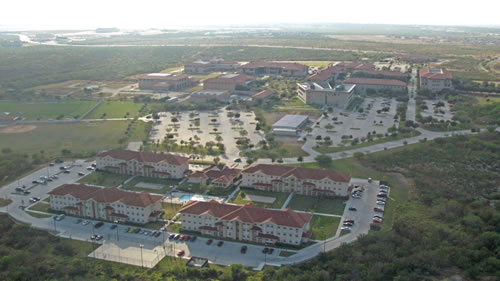
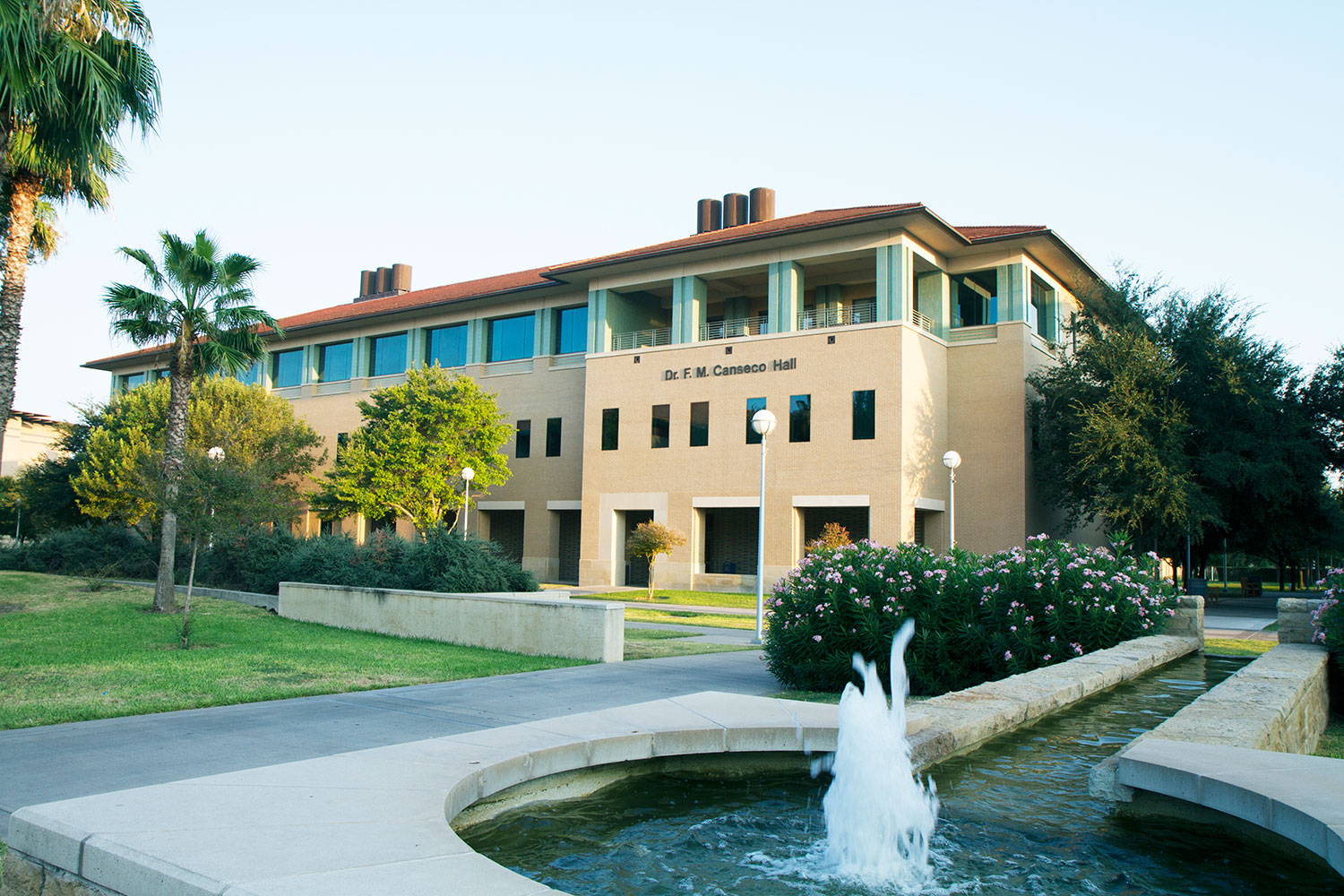
Texas A & M International University logo · sourceTexas A&M International University - Profile, Rankings and Data | US News Best Colleges · sourceTexas A&M International University · sourceTexas A&M International University · source