Loading…
← All schools
Acceptance
50%
SAT 25–75
1200–1480
Avg net price
$14,600
Earnings (10 yr)
$72,424
Graduation rate
83%
Admit rate has ranged 50%–69% over the last 5 years — notably volatile. Source: IPEDS via Urban Institute.
Acceptance & SAT from Common Data Set / IPEDS; net price, earnings & graduation from the U.S. Dept. of Education College Scorecard. Figures lag ~1–2 years — verify with the school.
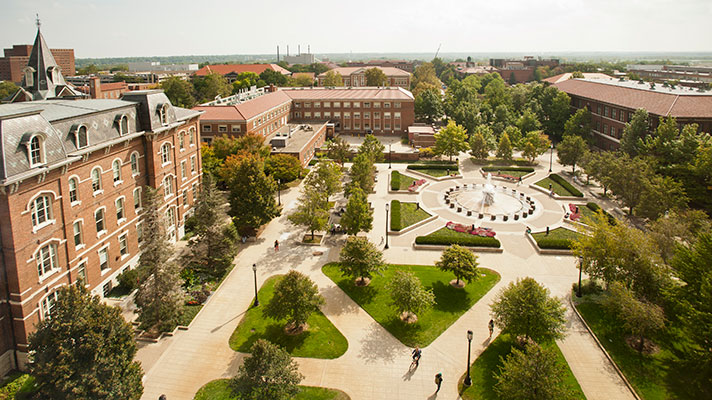
Purdue University is a massive, land-grant powerhouse in West Lafayette, Indiana, where the ethos is relentlessly practical and the scale is industrial. It's a place where world-class engineering and aviation define the brand, but where over 200 majors across agriculture, business, and the sciences create a sprawling, work-hard academic ecosystem. The vibe is collaborative, not cutthroat, set on a classic Big Ten campus where school spirit runs high and the return on investment—in terms of strong career outcomes and a relatively modest net price—is a central part of its appeal.
Admission requirements
Test scores required
Required
- High school transcript
- Test scores (SAT/ACT)
- TOEFL (non-native English)
Considered (not required)
- Class rank
- Letters of recommendation
- College-prep program
- Demonstrated competencies
Source: IPEDS Admissions survey (2022) via Urban Institute. Covers formal factors only — it does not reflect essays, extracurriculars, or other holistic criteria.
More details
- Undergrad enrollment
- 44,503
- In-state tuition
- $9,992
- Out-of-state tuition
- $28,794
- No-Loan Policy
- No
- Graduation Rate
- 83%
- Meets Full Need
- No
- Demonstrated Interest
- Not considered
- Median Earnings (10yr)
- $72,424
- Early Action Share of Applicants
- >73%
Outcomes & value
Outcomes & value
- Median earnings (10 yr)
- $72,424
- Value (earnings ÷ net price)
- 5.0×
- Median debt at graduation
- $19,500
- Graduation rate
- 83%
- First-year retention
- 93%
- Reducing loan balance (3 yr)
- 78%
- Pell (lower-income) share
- 13%
- First-gen share (among federal-aid recipients)
- 19%
Top-earning majors
Median earnings by field of study (highest credential), ~2 years after completion.
- Computer Science$85,981
- Construction Engineering$78,343
- Computer Engineering$72,448
- Mechanical Engineering$71,255
- Industrial Engineering$70,057
- Chemical Engineering$69,897
- Electrical, Electronics, and Communications Engineering
Applicants here also applied to
The schools that most often appear alongside Purdue on applicants’ lists, from our self-reported outcomes corpus.
Campus & location
Campus safety
- On-campus violent crimes (2024)
- 20
- Per 1,000 students
- 0.34
On-campus criminal offenses classed as violent (murder/non-negligent manslaughter, rape, robbery, aggravated assault) for the most recent reported year. Source: U.S. Dept. of Education Campus Safety and Security (Clery Act). Counts reflect what’s reported to the school, and urban campuses often report more partly due to non-student incidents nearby — read alongside campus size and setting, not as a standalone safety verdict.
Climate
- Pleasant days / yr
- 85
- Summer high
- 83°F
- Winter low
- 25°F
- Annual rain
- 39"
- Annual snow
- 19.6"
- Natural-hazard risk
- Relatively Moderate
Pleasant days counts days per year with a mean temperature of 55–75°F, a high at or below 90°F, a low at or above 45°F, and little precipitation — a transparent comfort measure, not a weighting we invented. Computed from Open-Meteo ERA5 daily history (2019–2023). Natural-hazard risk is the county’s composite rating from the FEMA National Risk Index.
Quick answers
- What is the acceptance rate at Purdue University-Main Campus?
- Purdue University-Main Campus's acceptance rate is approximately 50% (West Lafayette, IN), based on the most recent figures we compiled from public and primary sources.
- What SAT score do you need for Purdue University-Main Campus?
- Admitted students at Purdue University-Main Campus typically score 1200–1480 on the SAT (the middle-50% range). Scores outside this band are still admitted, especially with strong applications.
- How much does Purdue University-Main Campus cost?
- At Purdue University-Main Campus, the average net price (after aid) is about $14,600 per year. Actual cost varies with financial aid and residency.
- How many undergraduates attend Purdue University-Main Campus?
- Purdue University-Main Campus enrolls approximately 44,503 undergraduate students.
- Where is Purdue University-Main Campus located?
- Purdue University-Main Campus is located in West Lafayette, IN.
Admissions
Purdue's admissions process is a tale of two universities: one highly selective for its flagship programs, and another more accessible for the institution as a whole. While the overall sits at 50%, admission is conducted by individual college, and the numbers tell a starkly different story depending on your intended major. The College of Engineering is fiercely competitive, with an admit rate of just 34.7% and a middle 50% SAT range of 1380–1520 for admitted students. In contrast, the College of Agriculture admits about 55.8% of its applicants. This college-by-college review means a student's chances are entirely dependent on their chosen field. Purdue is also a test-recommending school, with the middle 50% of admitted students scoring between 1200 and 1480 on the SAT. Geographic origin matters significantly; for recent classes, the in-state admission rate held steady at 71%, while the out-of-state rate dropped to 39%, reflecting heightened national demand. The university offers an Early Action (not Early Decision) plan, and a substantial majority of applicants—over 73% for a recent class—apply through this non-binding route, though Purdue does not publish separate EA acceptance rates. Notably, Purdue does not consider demonstrated interest as a factor in admissions decisions, focusing instead on academic metrics.
Compare Purdue
See colleges similar to Purdue →Sources
- Common Data Set - Purdue University
- How to Use the Purdue Common Data Set - Admit Report
- Purdue University 2026 Common Data Set: Visualized - GradGPT
- Common Data Set: Home
- [PDF] Purdue University Common Data Set - ftp.arcchurches.com
- [PDF] Purdue University Common Data Set - hris.mohs.gov.sl
- Purdue University Class Profile - Admissions and Statistics
- Purdue University--Main Campus Admissions
- Complete Guide: Purdue SAT Scores and GPA - PrepScholar
- Purdue First-Year Admission Criteria - Requirements & Process