Admit rate has ranged 67%–71% over the last 5 years, though the latest figure above (73%) falls outside that window. Source: IPEDS via Urban Institute.
Acceptance & SAT from Common Data Set / IPEDS; net price, earnings & graduation from the U.S. Dept. of Education College Scorecard. Figures lag ~1–2 years — verify with the school.
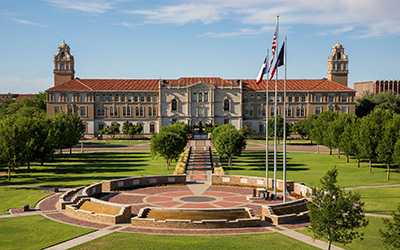
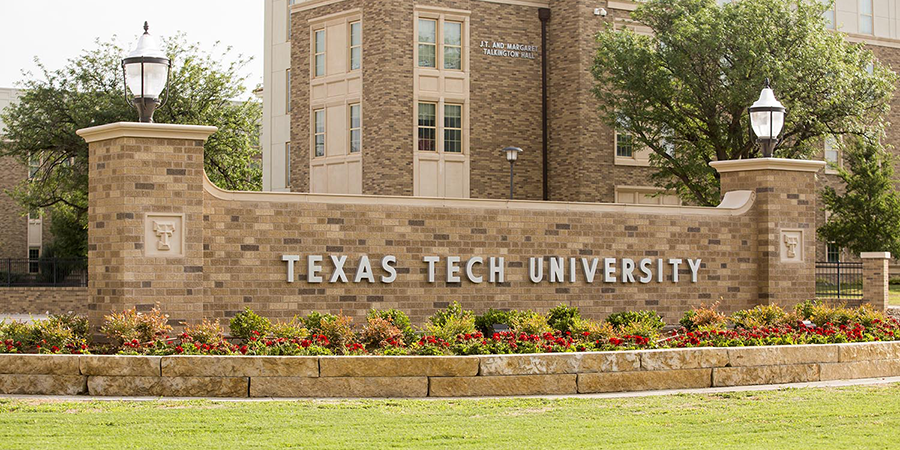
Texas Tech University is a sprawling public research university in Lubbock, Texas, where school spirit runs as deep as the West Texas plains. With an acceptance rate hovering around 73%, it's an accessible but ambitious institution known for strong programs in business, engineering, and agricultural sciences—plus a rabid fan base for its Red Raiders athletics. The campus combines Spanish Renaissance architecture with a tight-knit community vibe, where over 600 student organizations and a 67% six-year graduation rate reflect both opportunity and support.
Admission requirements
Test-optional — scores considered if submitted
Required
High school transcript
Grade point average
Class rank
TOEFL (non-native English)
Considered (not required)
Letters of recommendation
Test scores (SAT/ACT)
College-prep program
Demonstrated competencies
Source: IPEDS Admissions survey (2022) via Urban Institute. Covers formal factors only — it does not reflect essays, extracurriculars, or other holistic criteria.
More details
Undergrad enrollment
32,394
In-state tuition
$11,852
Out-of-state tuition
$24,451
Campus Size
1,839 acres
Public/Private
Public
Student Organizations
600+
Six-Year Graduation Rate
67%
Median Earnings (6 Years Post-Grad)
$52,588
Outcomes & value
Outcomes & value
Median earnings (10 yr)
$62,454
Value (earnings ÷ net price)
3.3×
Median debt at graduation
$21,500
Graduation rate
69%
First-year retention
85%
Reducing loan balance (3 yr)
65%
Pell (lower-income) share
28%
First-gen share (among federal-aid recipients)
32%
Top-earning majors
Median earnings by field of study (highest credential), ~2 years after completion.
Petroleum Engineering$83,325
Computer Engineering$74,017
Computer and Information Sciences, General$73,562
Electrical, Electronics, and Communications Engineering$73,530
Mechanical Engineering$69,596
Chemical Engineering$69,338
Applicants here also applied to
The schools that most often appear alongside Texas Tech University on applicants’ lists, from our self-reported outcomes corpus.
Co-application frequency from self-reported results — directional peer discovery, not a recommendation.
Campus & location
Campus safety
On-campus violent crimes (2024)
17
Per 1,000 students
0.42
On-campus criminal offenses classed as violent (murder/non-negligent manslaughter, rape, robbery, aggravated assault) for the most recent reported year. Source: U.S. Dept. of Education Campus Safety and Security (Clery Act). Counts reflect what’s reported to the school, and urban campuses often report more partly due to non-student incidents nearby — read alongside campus size and setting, not as a standalone safety verdict.
Climate
Pleasant days / yr
92
Summer high
93°F
Winter low
33°F
Annual rain
14.3"
Annual snow
4.9"
Natural-hazard risk
Relatively High
Pleasant days counts days per year with a mean temperature of 55–75°F, a high at or below 90°F, a low at or above 45°F, and little precipitation — a transparent comfort measure, not a weighting we invented. Computed from Open-Meteo ERA5 daily history (2019–2023). Natural-hazard risk is the county’s composite rating from the FEMA National Risk Index.
Deep dive — research, future-scholar output & economic mobility▾
Research output
Institutional h-index
647
Scholarly works
98,841
Institutional research volume and impact from OpenAlex. The h-index reflects large research universities and will be low for teaching-focused liberal-arts colleges — not a measure of undergraduate quality.
Future-scholar output
Humanities & social-science PhDstop 47 nationally
Share of this school’s graduates who go on to earn research doctorates (2010–20), by national rank and per-capita yield (NSF institutional-yield ratio). A signal of a research-oriented student culture — not a causal promise, since it partly reflects who enrolls. Only top producers appear. Source: NSF NCSES, Baccalaureate Origins of U.S. Research Doctorate Recipients.
Economic mobility
Mobility rate
1.6%
Bottom → top quintile
Quick answers
What is the acceptance rate at Texas Tech University?
Texas Tech University's acceptance rate is approximately 73% (Lubbock, TX), based on the most recent figures we compiled from public and primary sources.
What SAT score do you need for Texas Tech University?
Admitted students at Texas Tech University typically score 1090–1280 on the SAT (the middle-50% range). Scores outside this band are still admitted, especially with strong applications.
How much does Texas Tech University cost?
At Texas Tech University, the average net price (after aid) is about $19,070 per year. Actual cost varies with financial aid and residency.
How many undergraduates attend Texas Tech University?
Texas Tech University enrolls approximately 32,394 undergraduate students.
Where is Texas Tech University located?
Texas Tech University is located in Lubbock, TX.
Admissions
Texas Tech maintains a moderately selective admissions process with a 72.6% acceptance rate, admitting about three-quarters of applicants. The middle 50% of admitted students score between 1110–1270 on the SAT, and the university does not require SAT/ACT scores for all applicants ( policies may apply).
Earnings = median of students working ~10 years after entry; debt = median of graduates. Value divides 10-yr earnings by one year’s net price — read it as earnings per dollar of annual cost, not a full lifetime ROI; it favors lower-cost schools. Source: U.S. Dept. of Education College Scorecard. Figures lag ~2 years and reflect all students, not your intended major.
Construction Engineering$68,139
Science, Technology and Society$67,420
Source: U.S. Dept. of Education College Scorecard (field-of-study earnings). Figures cover graduates who received federal aid and lag ~2 years; not all programs report data.
Mobility rate = the share of students who both start in the bottom household-income quintile and reach the top quintile; bottom → top is that chance conditional on starting at the bottom. Source: Opportunity Insights Mobility Report Cards (Chetty, Friedman, Saez, Turner & Yagan). Reflects 1980–82 birth cohorts, so it’s directional, not current.
Academics
Texas Tech offers 150+ undergraduate majors across 13 colleges, with particularly strong programs in:
Business, Management, and Marketing (most popular major)
Engineering (notably hands-on learning)
Agricultural Sciences & Natural Resources (leveraging West Texas’s landscape)
Health and Human Sciences
The university emphasizes workforce preparation, ranking 9th nationally in that category according to student feedback. The College of Arts & Sciences provides broad liberal arts foundations, while the Honors College offers enhanced curricula for high-achievers.
Life at Texas Tech revolves around its 600+ student organizations, spirited athletics culture, and sprawling 1,839-acre campus described as 'ridiculously beautiful.' Key aspects:
Housing: 23% of students live on campus; 77% live off-campus
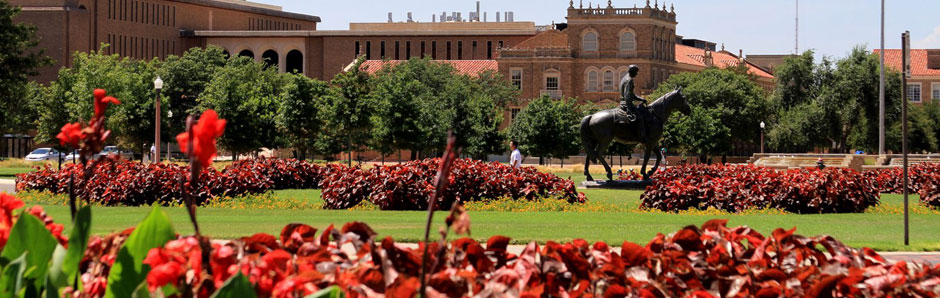
Traditions: From the Masked Rider (horse-riding mascot) to raucous basketball games at United Supermarkets Arena
Lubbock vibe: The city leans into its 'Hub City' nickname with live music, tech startups, and a surprisingly diverse food scene
Greek life: Active but not dominant—about 14% of students join fraternities/sororities
Students praise the 'strong sense of community' and school pride, with one noting: 'The networking opportunities here are unreal.'
Texas Tech graduates see solid returns, with a 67% six-year graduation rate (above the national average) and median earnings of $52,588 six years post-graduation. Key data points:
Four-year graduation rate: 51%
Five-year post-grad earnings: $63,247 (Niche)
Retention rate: 85% of freshmen return for sophomore year
Top employers: Texas Tech Health Sciences Center, Lockheed Martin, and regional school districts
The university’s 'Handshake' career platform connects students with 300,000+ employers nationwide, particularly strong in Texas and the Southwest.
Texas Tech carves its niche by blending big-school resources with a surprisingly intimate feel—where professors know students by name and the 'Guns Up' hand sign is ubiquitous. Its strengths are unmistakable:
Workforce-ready grads: Top-10 national ranking for career preparation
Undergrad research: From wind energy to viticulture, opportunities rival private universities
Spirit traditions: The Goin’ Band from Raiderland (marching band) and 'Fearless Champion' ethos
Architectural grandeur: Spanish Renaissance-style buildings with red-tile roofs
As one Reddit user put it: 'You get the education of a Tier 1 research university with the heart of a land-grant school.'
Texas Tech University logo · sourceInstitutions of the TTU System | Texas Tech University System · sourceTraveling to Campus | Visit & Events | Undergraduate Admissions | TTU · sourceCampuses & Academic Sites | Texas Tech University System · source