Loading…
← All schools
Towson University
Towson, MDpublicwww.towson.edu/
Acceptance
82%
SAT 25–75
950–1235
Avg net price
$17,413
Earnings (10 yr)
$64,390
Graduation rate
69%
Admit rate has ranged 76%–88% over the last 5 years — notably volatile. Source: IPEDS via Urban Institute.
Acceptance & SAT from Common Data Set / IPEDS; net price, earnings & graduation from the U.S. Dept. of Education College Scorecard. Figures lag ~1–2 years — verify with the school.
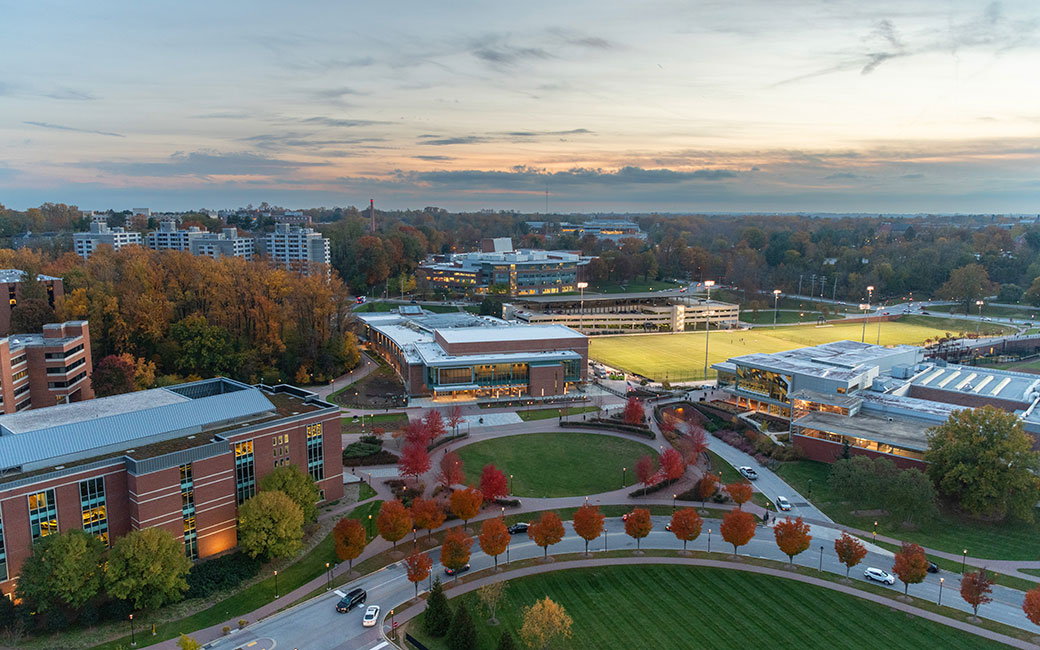
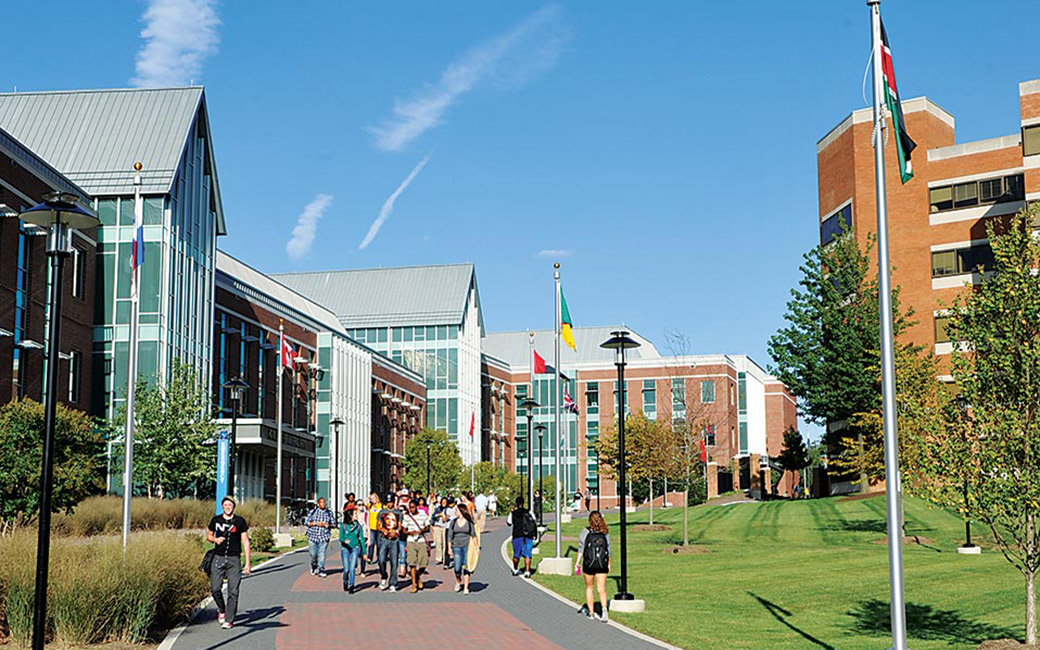
Towson University is a large, public anchor institution in suburban Baltimore that operates less like a cutthroat research fortress and more like a pragmatic, high-access engine of upward mobility. Its identity is built on a sprawling menu of over 110 majors—with business, nursing, and psychology drawing the biggest crowds—and a campus life fueled by Division I athletics and a remarkably diverse student body. Think of it as Maryland's workhorse university: unpretentious, deeply connected to the region's professional pipelines, and focused on delivering a solid return on investment for a broad cross-section of students.
Admission requirements
Test-optional — scores considered if submitted
Required
- High school transcript
- Grade point average
- TOEFL (non-native English)
Considered (not required)
- Class rank
- Test scores (SAT/ACT)
- College-prep program
Source: IPEDS Admissions survey (2022) via Urban Institute. Covers formal factors only — it does not reflect essays, extracurriculars, or other holistic criteria.
More details
- Undergrad enrollment
- 16,136
- In-state tuition
- $11,728
- Out-of-state tuition
- $29,820
- Graduation Rate
- 69%
- Most Popular Major
- Business Administration (12%)
- Demonstrated Interest
- Not considered
- Early Action Deadline
- November 1
- Median Earnings (10yr)
- $64,390
- Student Clubs & Organizations
- 250+
- First-Year Receiving Grants/Scholarships
- 73%
- Most Racially Diverse University in Maryland
- Yes
Outcomes & value
Outcomes & value
- Median earnings (10 yr)
- $64,390
- Value (earnings ÷ net price)
- 3.7×
- Median debt at graduation
- $18,718
- Graduation rate
- 69%
- First-year retention
- 83%
- Reducing loan balance (3 yr)
- 68%
- Pell (lower-income) share
- 36%
- First-gen share (among federal-aid recipients)
- 29%
Top-earning majors
Median earnings by field of study (highest credential), ~2 years after completion.
- Registered Nursing, Nursing Administration, Nursing Research and Clinical Nursing$66,984
- Computer Science$66,821
- Information Science/Studies$56,544
- Computer and Information Sciences, General$55,813
- Accounting and Related Services$54,717
- Mathematics
Applicants here also applied to
The schools that most often appear alongside Towson University on applicants’ lists, from our self-reported outcomes corpus.
Co-application frequency from self-reported results — directional peer discovery, not a recommendation.
Campus & location
Campus safety
- On-campus violent crimes (2024)
- 12
- Per 1,000 students
- 0.62
On-campus criminal offenses classed as violent (murder/non-negligent manslaughter, rape, robbery, aggravated assault) for the most recent reported year. Source: U.S. Dept. of Education Campus Safety and Security (Clery Act). Counts reflect what’s reported to the school, and urban campuses often report more partly due to non-student incidents nearby — read alongside campus size and setting, not as a standalone safety verdict.
Climate
- Pleasant days / yr
- 91
- Summer high
- 84°F
- Winter low
- 30°F
- Annual rain
- 60.7"
- Annual snow
- 14.3"
- Natural-hazard risk
- Relatively Moderate
Pleasant days counts days per year with a mean temperature of 55–75°F, a high at or below 90°F, a low at or above 45°F, and little precipitation — a transparent comfort measure, not a weighting we invented. Computed from Open-Meteo ERA5 daily history (2019–2023). Natural-hazard risk is the county’s composite rating from the FEMA National Risk Index.
Deep dive — research, future-scholar output & economic mobility
Research output
- Institutional h-index
- 197
- Scholarly works
- 13,710
Institutional research volume and impact from OpenAlex. The h-index reflects large research universities and will be low for teaching-focused liberal-arts colleges — not a measure of undergraduate quality.
Quick answers
- What is the acceptance rate at Towson University?
- Towson University's acceptance rate is approximately 82% (Towson, MD), based on the most recent figures we compiled from public and primary sources.
- What SAT score do you need for Towson University?
- Admitted students at Towson University typically score 950–1235 on the SAT (the middle-50% range). Scores outside this band are still admitted, especially with strong applications.
- How much does Towson University cost?
- At Towson University, the average net price (after aid) is about $17,413 per year. Actual cost varies with financial aid and residency.
- How many undergraduates attend Towson University?
- Towson University enrolls approximately 16,136 undergraduate students.
- Where is Towson University located?
- Towson University is located in Towson, MD.
Admissions
Towson's admissions process is defined by high access and a straightforward, numbers-focused review. With an of 82%, the university is categorically less selective, positioning itself as a primary destination for Maryland students seeking a comprehensive public university experience. The middle 50% SAT range for admitted students is 950–1235. The university offers an Early Action deadline of November 1, with decisions released by mid-January, and a Regular Decision deadline of February 1. An early acceptance rate of 84.7% suggests a slight advantage for those who apply by the Early Action deadline. The admitted freshman profile is notably diverse: 69% identify as a historically-underrepresented race or ethnicity, 12% are international students hailing from 20 different countries, and a significant portion are college students. Demonstrated interest is not considered in admissions decisions, as confirmed by Section C7, meaning campus visits or contact with admissions officers won't move the needle—it's all about the transcript and test scores.
Compare Towson University
See colleges similar to Towson University →Sources
- Common Data Set - Towson University
- [PDF] Common Data Set 2022-2023 - Towson University
- [PDF] Common Data Set 2019-2020 - Towson University
- Common Data Set: Home
- [PDF] Common Data Set 2021-2022 - Towson University
- Why Won't Some Colleges Publish Their Common Data Sets?
- Freshman Profile | Towson University
- Towson University Admissions - BigFuture College Search
- Towson University SAT Scores and GPA - PrepScholar
- Towson University - Tuition and Acceptance Rate - Peterson's
- Freshman FAQs - Towson University